
SURREY—A refugee family feels blessed to be in the care of St. Matthew’s Parish.
“I feel more comforted than the Syrian refugees sponsored by the government,” said Rana, the mother of the family, from her cozy Guildford-area apartment. The B.C. Catholic agreed not to print her last name because the family fears their relatives may be persecuted in their home country.
Many government-sponsored refugees “don’t find the people they need to help them, to speak with them, to support them. Our church is taking care of us too much.”
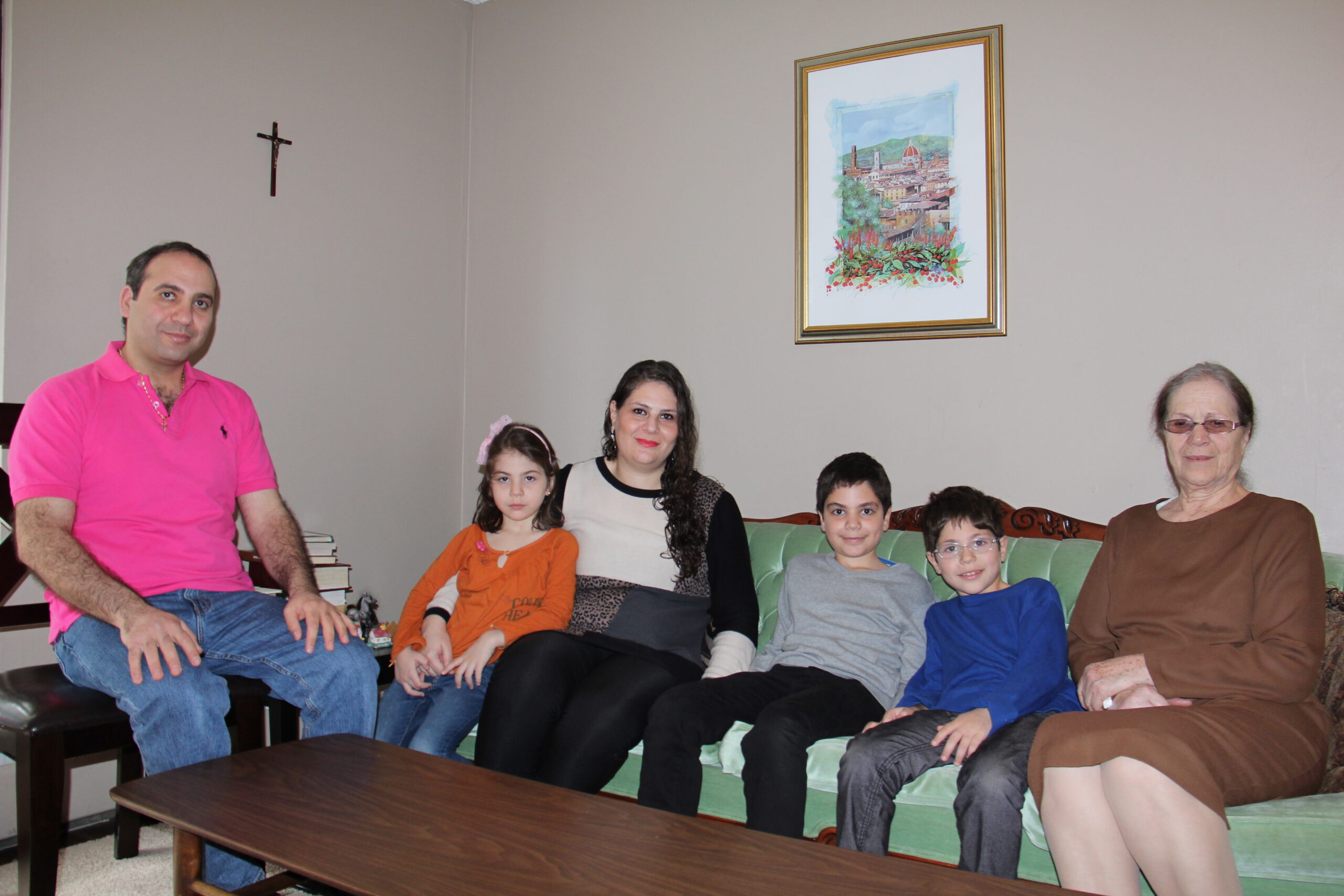
Rana poured small, dark Arabic coffees for her guests, including Eric and Cheryl Andres of St. Matthew’s Parish, as she spoke about her family’s new life in Surrey.
Rana, her husband Michil, their three children, and her mother Atfa landed at Vancouver International Airport Aug. 31 after a 28-hour trip from Lebanon. She said St. Matthew’s parishioners had paperwork, a stocked refrigerator, and a fully furnished apartment ready and waiting for them.
“We had a dinner and a welcome party. We went to the church. We felt it was like our wedding. They celebrated us too much and we were very shy.”
The family was amazed to find such a warm welcome and attention to detail, right down to clothing for the children in the correct sizes. They received hundreds of dollars in grocery gift cards and were enrolled in English classes. Someone even donated a car.
Eric Andres, the head of the Society of St. Vincent de Paul at St. Matthew’s, said the benefit of parish sponsorship is that personal touch.
“When you’re government sponsored, the government gives you money, and now what? Now you’re trying to get help from many agencies. There are many agencies out there and they all try their best, but their positions are there for everybody, not just for one family,” he said.
“We are able to make that personal connection. To me, that’s the wonderful part of private sponsorship.”
His wife Cheryl said they praise God for bringing things together, such as finding a suitable apartment and finding a job for Michil, who only spoke Russian and Arabic when he arrived at the airport. Within four days he was working.
“So many people have really stepped up, and it’s a pleasure to be part of a community that has so much spirit,” said Eric.
Now, seven months after moving in, the family still receives calls from St. Matthew’s parishioners like Eric and Cheryl daily. “They phone us. They take care of everything for us: our jobs, our schools, our food, our rent!”
This is not the kind of future Michil expected when he fled Syria. “When the war started, I wanted to leave with my family, with my kids,” he said. “We have a very dirty war. It’s a war between each Syrian together.”
Michil, a dentist and translator, had been personally targeted for voicing his views about the conflict. After his car was stolen and his clinic was snatched from him, he took his family to Lebanon.
“The most important thing we worried about was our children,” Rana said. “There are bombs everywhere. We don’t know what time the bombs will fall down.”
Some of Michil’s relatives paid a small fortune to take a crowded boat across the Mediterranean Sea and slowly made their way to Holland.
“They go by sea and by forest. They put them in camps,” Rana said. “We are so lucky that we came in a regular way.”
Seven months after stepping into their new three-bedroom apartment in Surrey, the family is faring well. Michil has switched from working night shifts cleaning at a YMCA to a daytime job that lets him spend time with his children after they come home from school.
Atfa, his mother-in-law, called Canada a beautiful country. “I feel safe here,” she said in Arabic.
Michil’s sons David and Edmon are enrolled in Grades 5 and 2. “It’s better than the Syrian school,” David said with a smile, adding that the only thing he misses about his home country is his other grandmother. Their shy young sister Diana is in a Strong Start program, getting ready for kindergarten.
Rana, who taught English in Syrian elementary schools, has dreams of getting back into the classroom.
“It’s difficult to go to another country with a new culture, with new people, and don’t know anybody there,” she said.
“When we arrived here, thank God, we found families here.”