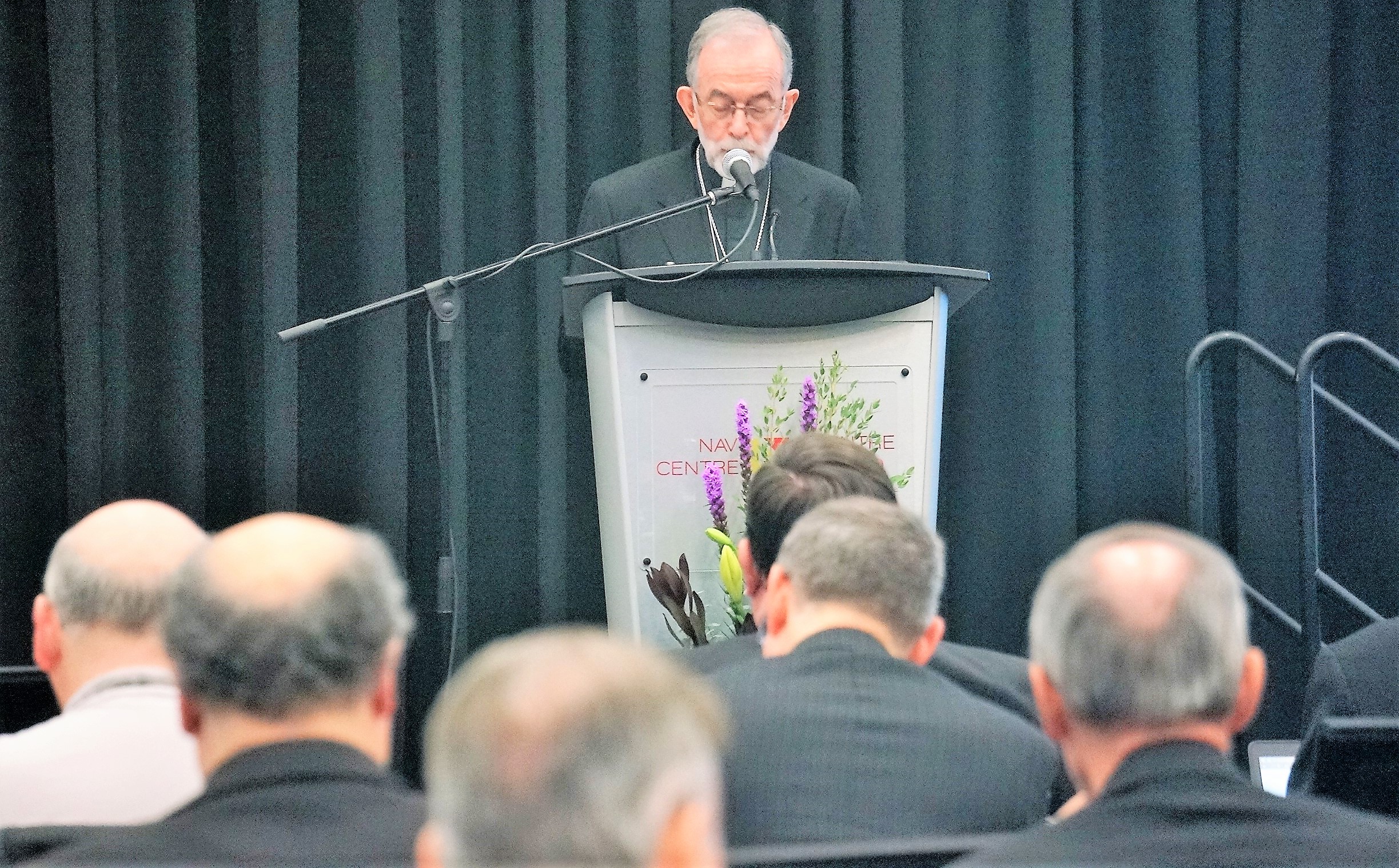

OTTAWA (CCN)—The impact of the COVID-19 pandemic on the Catholic Church in Canada will be a key theme of the first-ever online plenary assembly of the Canadian Conference of Catholic Bishops when the annual meeting of the CCCB gets underway on Sept. 21.
And while the global pandemic has driven the plenary assembly online this year, the move by the Church’s leadership to meet and do its business over the internet in this instance is just one of the ways that the international health crisis that has killed just over 9,000 Canadians so far in 2020 will change the Church forever going forward, CCCB president Winnipeg Archbishop Richard Gagnon told Canadian Catholic News.
“The situation with COVID has obviously had a large impact on the Church and we will be definitely be talking about that and about how the Church moves forward in these unprecedented times,” Archbishop Gagnon said in a telephone interview from Winnipeg.
“All the regions in the country are going to give a report on how they have had to deal with the pandemic on their operations and what their experiences have been and how these experiences may be able to help the Church move forward as this situation continues and hopefully eventually we get back to a form of a more normal way of doing things,” he said.
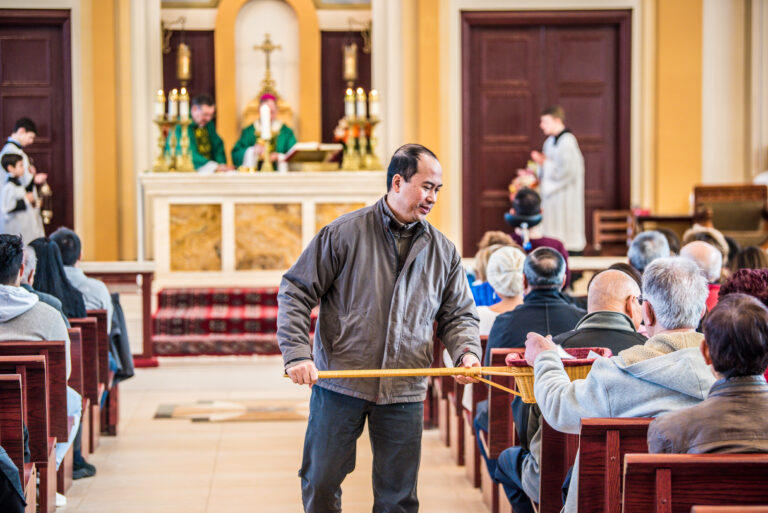
But Archbishop Gagnon said he thinks the new normal for the Church across Canada will include offering more and more services online. That was born of necessity of having to close places of worship to parishioners during the height of the pandemic, when Canadian health officials severely curtailed the number of people who could gather together in public. The public health measures effectively shut down all places of worship for a few months, until Catholic churches could open again with limited attendance. That situation remains the new normal for now, with the restrictions on how many people can attend a place of worship depending on the rate of COVID-19 in each province.
“There has always been some level of online presence of the Church,” Archbishop Gagnon said, but now those in the Church who may have been hesitant to use modern technology to its fullest can see the possible benefits of offering some services online.
“This technology was used before, but never to the extent that it has been now,” Archbishop Gagnon said. “I think any of that past opposition to having online services is not there anymore because of the situation and the experience of having to do it,” he said.
But while the marriage of the Church and modern technology that has been needed to get through the pandemic may indeed have long-range implications for how the Church operates in the future, there is still a deep commitment to one-on-one interaction between clergy and their parishioners.
“While we have heard of the positive experiences that going online has offered our churches and parishioners, we have also heard how important in-person gatherings and the personal connection that has for people and how important that is in people’s lives,” Archbishop Gagnon said.
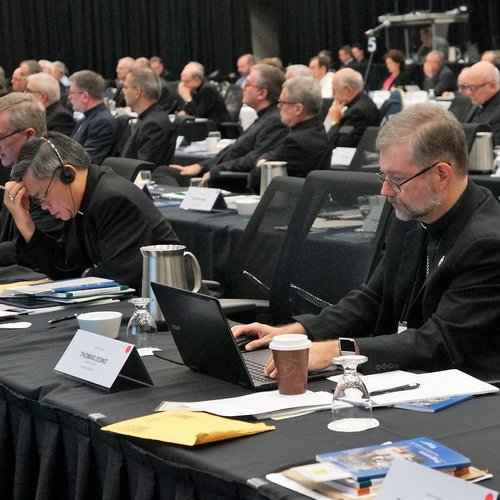
The decision by the CCCB to hold its annual plenary assembly online means some features of past assemblies, normally held in Cornwall, Ont., will not be part of this year’s event that runs from Sept. 21 to Sept. 25. There will be no keynote speaker or representatives of Catholic lay organizations who usually attend the assembly as observers.
“In order to allow for fruitful dialogue and meaningful deliberation by the bishops during the Plenary, this year’s timetable and agenda were streamlined to focus on the most essential ecclesial and administrative matters for the conference,” said a statement released by CCCB communications coordinator Lisa Gall on Sept. 14.
“It was for this same reason that this year there will not be any ecumenical observers from other churches nor any of the traditional observers representing a number of national Catholic organizations.”
Along with how the COVID-19 pandemic has affected the Church, other topics include “national priorities for the upcoming year (2020-2021); responsible ministry; pastoral care of Indigenous peoples; an update on the organizational changes involving the Canadian Catholic Organization for Development and Peace as well as recommendations from a joint CCCB-CCODP review of the latter’s international partners; and various concerns regarding initiatives and proposals by the federal government,” the CCCB’s Sept. 14 statement said.
Gagnon said the bishops will limit their online discussions to two hours a day to avoid screen-time burnout. Keeping the online discussions to short intervals each day is “an act of mercy,” Archbishop Gagnon joked.
The proceedings can be followed via the CCCB’s Twitter feed (@CCCB_CECC) and the CCCB’s website cccb.ca. Daily briefings will be provided on Salt and Light TV at saltandlighttv.org/cccb/ daily at 3 p.m. PT.