
Many people have described this period of the COVID-19 pandemic as one of “unprecedented times.”
But to read century-old editions of the Monthly Bulletin (a predecessor of The B.C. Catholic) published during the Spanish flu of 1918-1919 is to find some striking similarities. Thanks to the help of the Archdiocese of Vancouver’s Archives Office, we look at some of the parallels between pandemics 100 years apart and their effects on local Catholics.
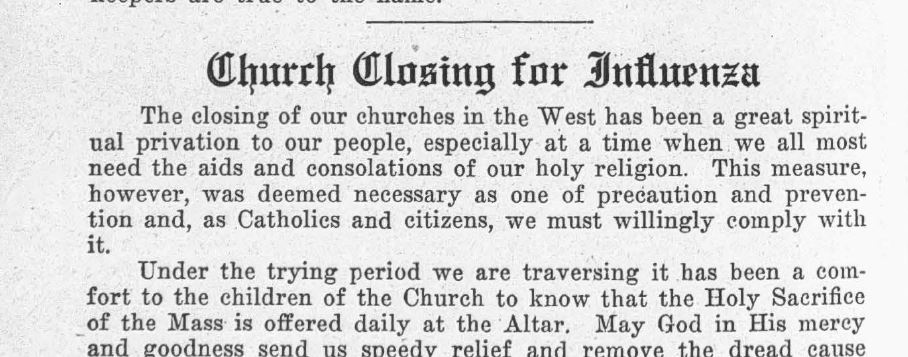
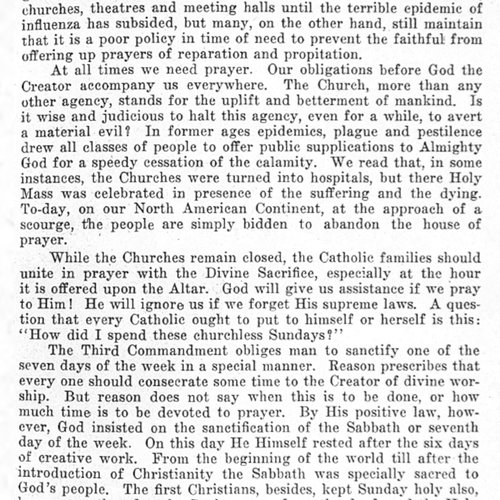
Churches were closed in the fall of 1918 in response to the Spanish flu, and many church leaders decried the closures, describing them as unfair treatment.
Under the editorship of Father W.P. O’Boyle, OMI, an unsigned Monthly Bulletin article in November 1918 called the closing of churches “a great spiritual privation to our people, especially at a time when we all most need the aids and consolations of our holy religion.”
Addressing the controversy, the article said, “presence of mind and calm judgment are not always the gift of those in authority when some sudden calamity strikes a community or a nation at large. Was it advisable to stop all public worship on Sundays? Opinions differ even among public officials.”
The article noted that while some people supported the church closings, others “maintain that it is a poor policy in time of need to prevent the faithful from offering up prayers of reparation and propitiation.”
Another article reported the flu-related death of Father Joseph F. McNeill, who became ill after making a pastoral visit.
“Father McNeill died a victim to zealous charity. The fatal pneumonia was contracted on a sick call, which he would not be denied. He fought strenuously to remain to serve in the reduced ranks of the clergy of the Coast, the country of his adoption, but when God’s call was plain, his resignation was as edifying as his previous will to live. Fortified by the last consoling sacraments, surrounded by brother priests and devoted sisters of Saint Paul’s (Vancouver), he breathed out his priestly soul on the night of November 4th.”
The newspaper also reported on Cardinal James Gibbons of Baltimore, who in January of 1919 said while he sympathized with health officials trying to do their best to keep people safe, he believed brief morning services should be allowed.
Feelings of fear “might be considerably allayed by the reassurance of religion,” he said.
“I regret that the medical authorities thought proper to close the churches absolutely, whilst, as I say, the stores are filled with customers, the markets are surrounded, and the cars crowded. I think there is much less danger of spreading the disease in the churches than in other places I have mentioned.”
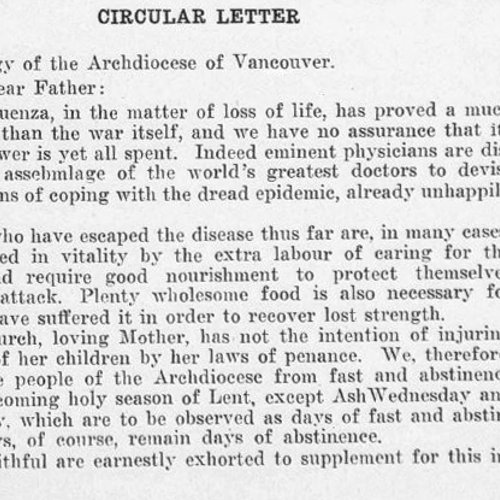
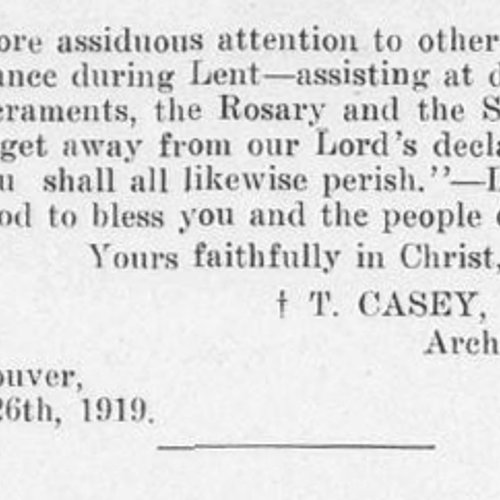
About a month later, Archbishop Timothy Casey of Vancouver, recognizing that Lent was on its way, wrote a letter offering a dispensation from some practices of fasting and abstinence, saying “good nourishment” is important for people recovering from the flu as well as for healthy people protecting themselves from it.
He described the virus as “a much greater evil than the (First World) war itself.” The war concluded in 1918 after the pandemic began. It seems that daily Mass was being offered at the time of his letter.
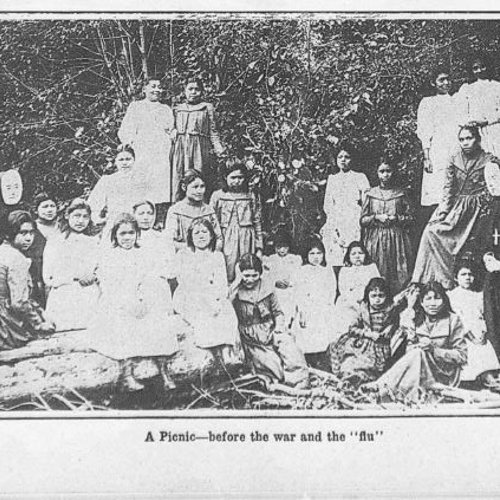
The Spanish flu was considered over in 1920. Estimates of its death toll typically range between 20 and 50 million people worldwide, with its “second wave” in the fall of 1918 being particularly dangerous. People aged 20-40 years (including military personnel) accounted for many of the deaths.
Fast-forward to 2020, when COVID-19 was declared a pandemic March 11. Today, just over a year later, the worldwide deaths of this virus are estimated at 2.6 million, and those most at risk of succumbing have been elderly.
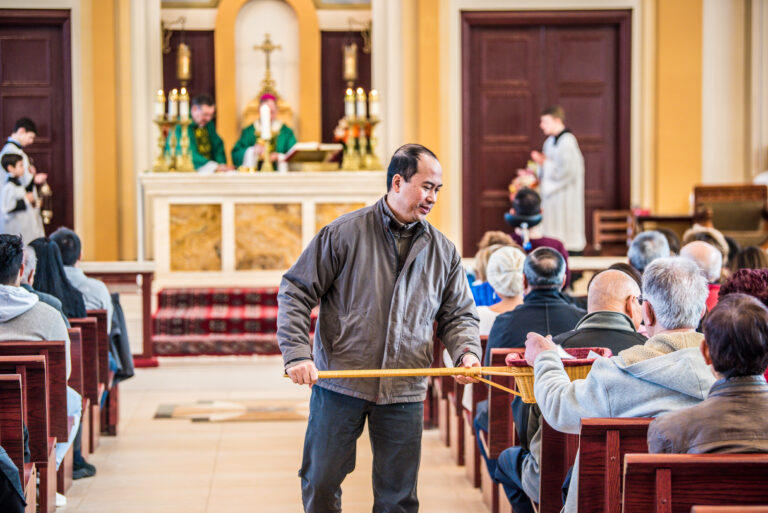
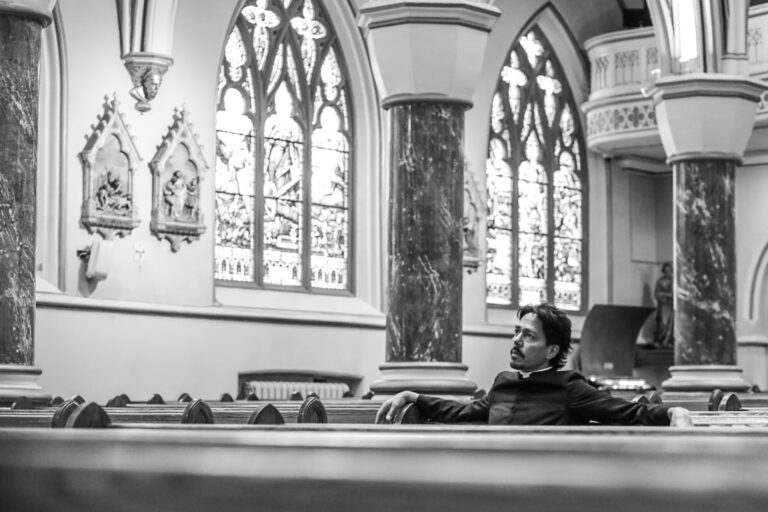
Many churches have been closed by health officials this time around as well. Religious leaders including Vancouver’s current archbishop have been calling for them to re-open.
In both eras, people were urged to wear masks, keep distances, and stay home if feeling unwell. Fines for not doing so have jumped from $5 in 1918 to at least $230 today.