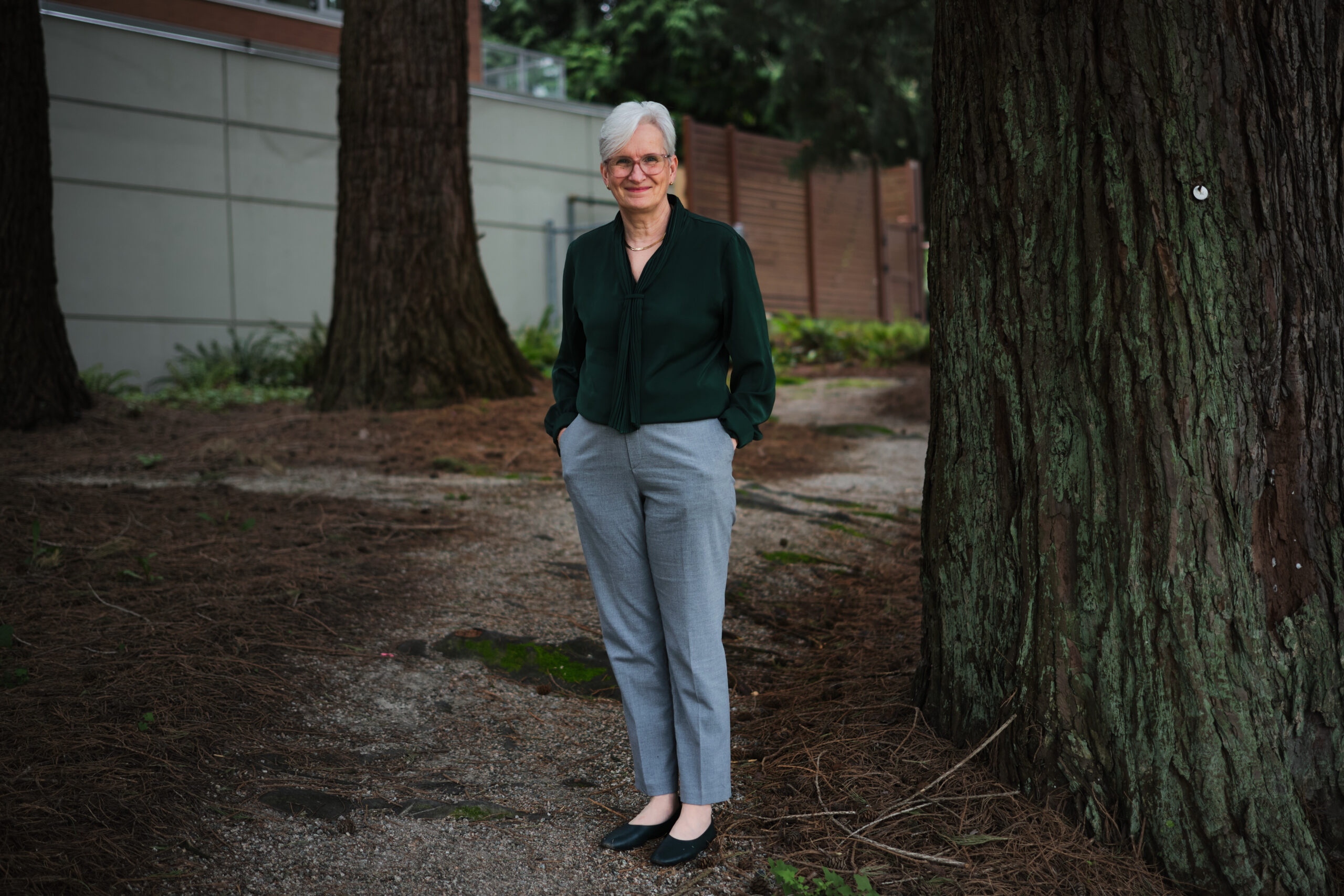

It was providential that the Archdiocese of Vancouver’s newly formed Mental Health Ministry launched with its new coordinator, Jane Waldock, just as news broke of the tragedy at the Vancouver Lapu Lapu Festival on Saturday, April 26.
“The Church has a place in supporting the mental health of the whole community,” Waldock told The B.C. Catholic, “and that really has been my focus from Sunday morning on.”
In response to the carnage, the Archdiocese quickly published best practices for supporting trauma victims, along with lists of resources for those struggling in the wake of the tragedy. Parishes across the region also held memorial Masses for the deceased.
Beyond the immediate crisis, Waldock said the launch of a mental health ministry is timely. Nearly three in four members of Canadian congregations report either struggling with mental illness themselves or have a close relationship with someone who does.
“There has been a felt need for a long time,” she said. “Pope Francis has said that mental health ministry is essential. The goal is to help all of us be aware of what mental illness is, what supports good mental health, and to overcome the stigma that keeps people from reaching out to our parishes for help.”
The ministry won’t provide therapy but will focus on training parishioners to listen well and to welcome into parish life those facing mental health challenges.
Waldock, who has a background in psychology, is a licensed PRH (Personality and Human Relations) educator. She helped lay the foundations of the ministry alongside Father Brian Duggan, who provides counseling services for the archdiocese and Sister John Mary Sullivan, a licensed family therapist and director for the archdiocese’s Ministry and Outreach office, and felt called to step into the coordinator role as the initiative took shape.
She is also certified as a mental health first aid facilitator and will soon offer a one-day course to equip participants with a basic toolkit for responding to mental health situations—and for maintaining their own mental wellness.
At the institutional level, Waldock hopes to see at least one parish per deanery become a local hub for mental health ministry. These parishes would organize outreach and educational initiatives for surrounding communities.
The ministry’s mission is rooted in three key principles: awareness, accompaniment, and advocacy.
Waldock says the stigma that surrounds mental health and those struggling with it is a core problem. People who need it often won’t seek help because of shame or lack of understanding.
Some of the problems are cultural, and Waldock admits that within the Church, there has been a long-standing, vocal skepticism towards psychologists and psychiatrists. “The formation of a mental health ministry, headed by lay people, goes a long way to normalizing mental health care within the local Church,” said Waldock.
Widespread misunderstandings about demonic possession can also be a problem, and there is a tendency among some parts of the Catholic community to over-spiritualize mental health issues.
“There is a concern that a person will be shunned or rejected by the Church community if they reach out for help,” said Waldock. “If someone has a physical ailment, prayers are requested and abundantly offered, but when it comes to mental health concerns, requests for assistance are less likely.”
“This will be a legacy of the Jubilee” with its theme Pilgrims of Hope, said Waldock, “because it’s bringing hope to people who are behind walls of stigma in our communities.”
Waldock brings over 15 years of parish ministry experience, having served in various parish leadership roles since 2008, including PREP, RCIA, and Family Ministry.
Your voice matters! Join the conversation by submitting a Letter to the Editor here.