
OTTAWA—The Archdiocese of Vancouver’s report on historic cases of sexual abuse may have far reaching repercussions across the country as other Canadian dioceses take note of what has been done in Vancouver.
The report, made public Nov. 22 by an Archdiocese of Vancouver review committee on clerical sexual abuse, makes 31 recommendations and names Vancouver priests who have been criminally convicted, are named in already settled lawsuits, or are the subject of other public cases. But the public report does not name “credibly accused” priests, something that survivors of abuse have been demanding and which the report also recommended.
Vancouver Archbishop J. Michael Miller, who ordered the review, said in a pastoral letter included with the report “no expression of regret can repair the horror of what happened.”
The issue of releasing the names of “credibly accused” priests is a key point that the Catholic Church in Canada is struggling with. The Canadian Conference of Catholic Bishops, while emphasizing the steps the Church has taken in recent years to address the scourge of sexual abuse of minors in Canada, says it is up to each individual diocese to determine the best way to forward on the issue.
“Bishops recognize that while the current procedure offers very clear guidelines on their pastoral and civil responsibilities, there remains an important question to consider related to the publication of names of the ‘credibly accused’ who have not been charged and convicted,” a CCCB statement Nov. 15 said.
“It is evident that a simple ‘yes’ or ‘no’ answer cannot be given to such a complex matter when seen through the lens of privacy laws at the federal and provincial levels, the Canadian Charter of Rights and Freedoms, and the well-being of victims-survivors, some of whom do not wish for the names of their offenders to be published for fear they themselves will be re-victimized or identified.
“Bishops are obliged to weigh all of these factors as they discern their individual responses to this question,” the CCCB statement said.
In an interview included in the Archdiocese of Vancouver report, lawyer Mary Margaret MacKinnon, who chaired the Case Review Committee, said it’s important to differentiate between Canada and the United States when it comes to publicizing names.
MacKinnon said “credibly accused” is a term that is not used by lawyers in Canada, where defamation laws are different and the provinces and territories each have their own privacy legislation.
“We have to figure out a way to balance our legal obligations with the public’s desire to know. A lot of study and discussion is taking place right now to see how we can make this happen.”
The response of other dioceses across Canada to what has been done in Vancouver is mixed, with many taking a wait-and-see approach to review what Vancouver has done in relation to the individual circumstances within their own diocese.
Neil MacCarthy, communications director of the Archdiocese of Toronto, said the diocese is “open to look” at what Vancouver has done, adding he expects all dioceses across Canada will be doing the same.
He said when it comes to naming the “credibly accused,” there are privacy issues involved requiring a balancing between not “revictimizing victims while at the same time the competing desire to get as much information out as possible.”
Other dioceses have been quick to make public their own actions.
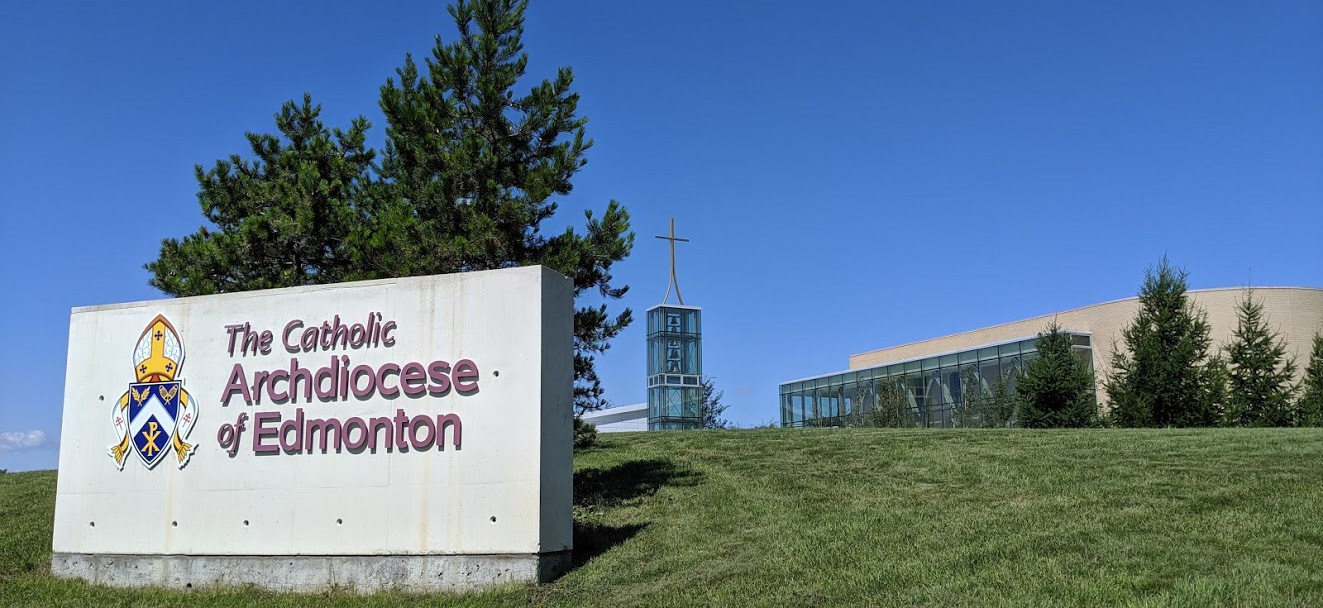
The Archdiocese of Edmonton will publish revised policies and protocols on abuse prevention and reporting next month after a pledge from Archbishop Richard Smith in 2018 after the CCCB released its new guidelines on Protecting Minors from Sexual Abuse. It is also doing an historical review of past cases. Whether it will publish names of abusers is still being determined.
A statement from the archdiocese said several victims and families it consulted advised against publishing names of priests who have been accused, but not convicted, of a crime.
“Without exception, they have advised us that publication of names of these offenders and details of the offences would serve only to re-traumatize them,” said the statement. “Many had decided not to report their complaints to police and/or explicitly requested that there be no publicity of their complaints.”
On Nov. 25, the Archdiocese of Montreal announced it has hired a former Quebec judge to conduct an independent review into the case of Brian Boucher, a priest who was recently found guilty of sexually assaulting minors.
“We want to get to the bottom of things to uncover the truth regarding how the concerns and complaints about Brian Boucher were received and handled,” said Archbishop Christian Lépine, adding the investigation was twofold: “First, determining who knew what and when, and then making recommendations to ensure that our policies and procedures improve, thereby avoiding that such crimes would occur again.”
The archdiocese has promised to make the results public once the investigation is complete.
As well, five Quebec dioceses announced in March that they had commissioned a retired judge to conduct an audit of their archives to assess the number and the nature of sexual abuse allegations made against Catholic clergy, however the judge has since died, delaying the process.
With files from Canadian Catholic News