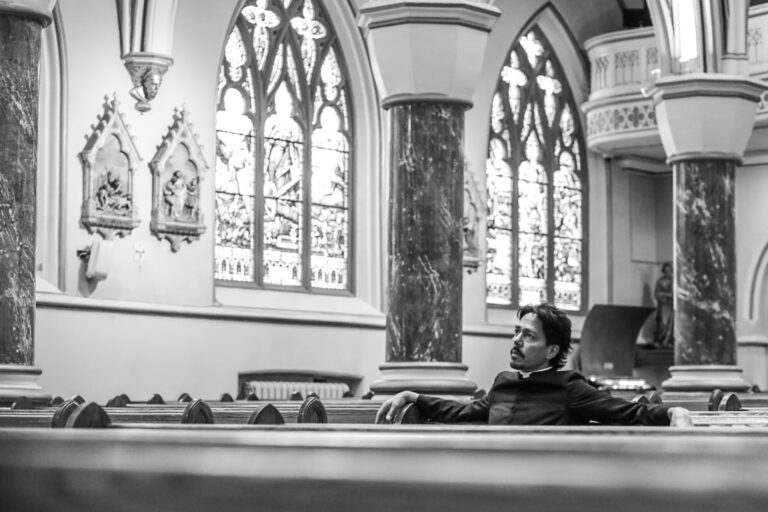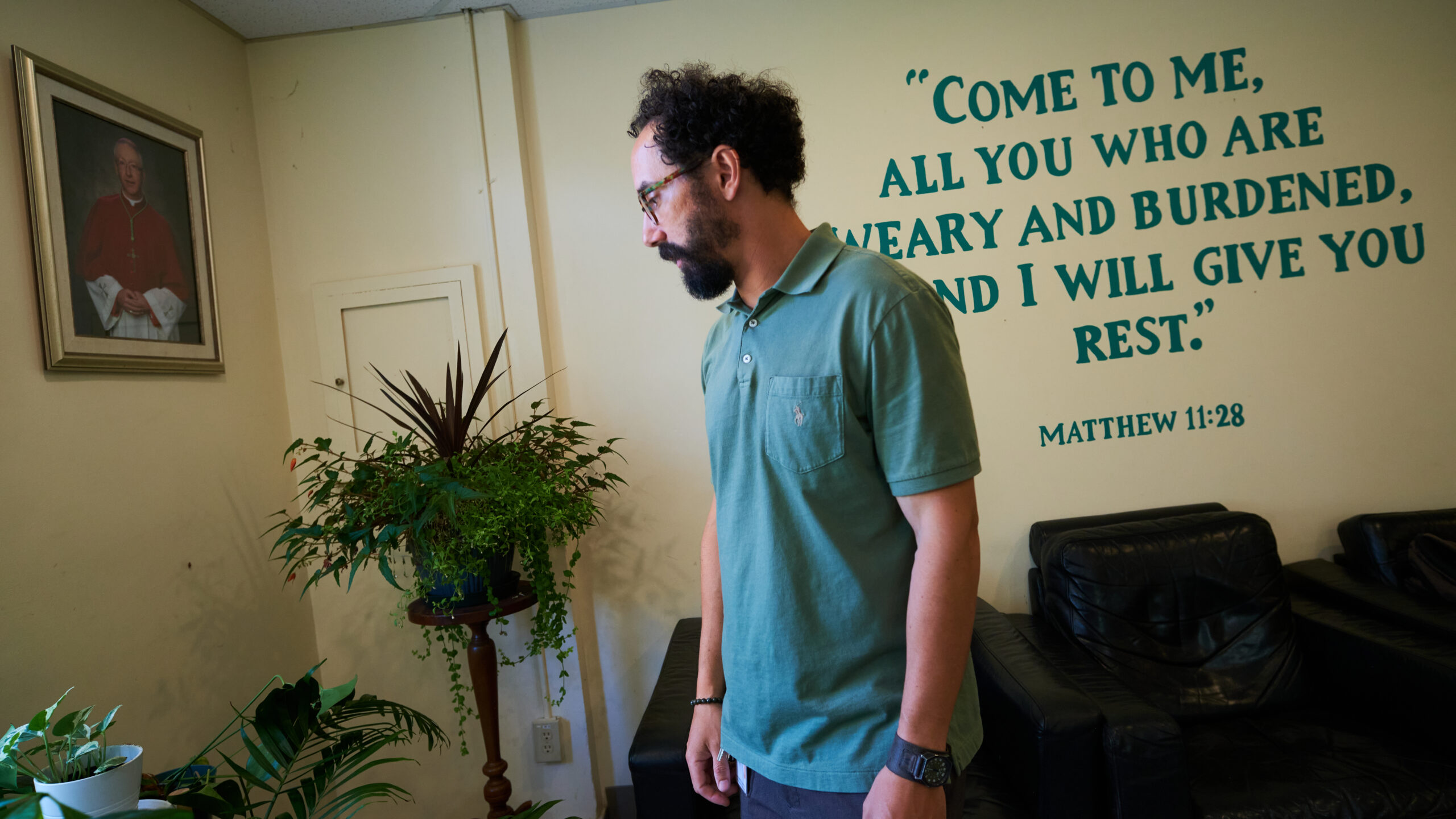

When Justin Milad was confirmed in the Catholic Church last December, he didn’t expect that he would soon manage the downtown Catholic Charities Men’s Shelter. But the journey that brought him to his new managerial role, in his words, was “more providential than planned.”
That’s partly because his road to Catholicism has been long and winding, but also because he nearly recommended the job to his girlfriend a year earlier.
“She’s much better at operations than I am,” he said with a laugh. “We worked together at A&W, and she’s always had a heart for service.”
Milad’s background is in the fast-paced world of franchise restaurants. His family owns several A&W restaurants, and he has been in the business for most of his life. However, the restaurant industry was never his ultimate goal. Music tugged at him, too, and in January 2024 he released a folk-country album titled The Most Likes I Ever Got. Something deeper was stirring.
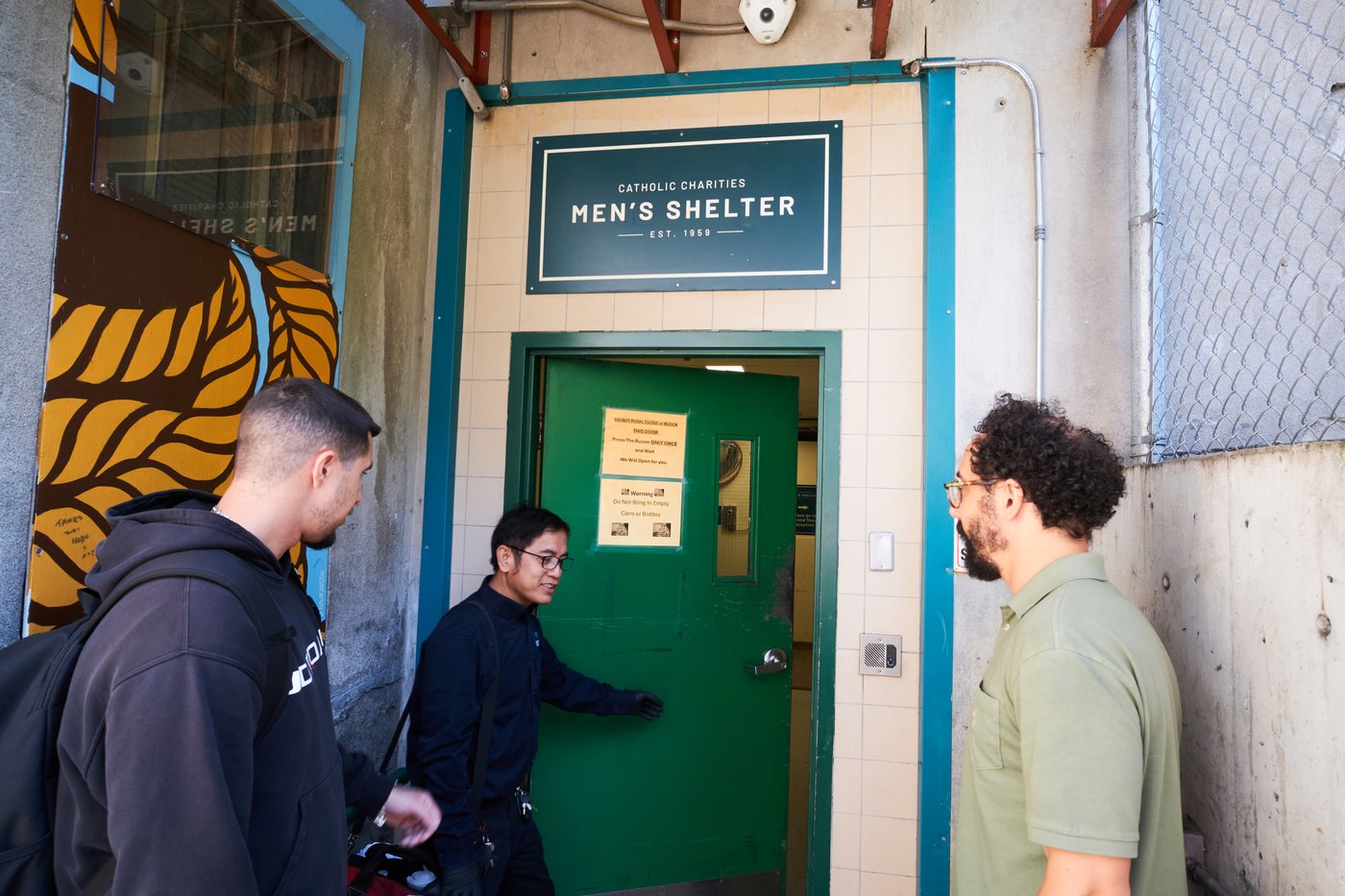
“I always had one foot in and one foot out of the business,” he said. “There was a pull toward responsibility and legacy in the family company. But I also had this artistic bent. I needed to explore both.”
In many ways, his attraction to the Men’s Shelter also illustrates this tension, and that internal conflict came to a head in a Vancouver International Airport food court. Milad was applying for jobs and considering his options — A&W being one — but something about the secular offerings just didn’t feel right.
“I was just sitting there asking God if this was really where I was supposed to be,” he said. “I prayed and told myself I’d apply to a few other jobs when I got home, and if anything came up, I’d take that as a sign.”
The shelter job, still posted a year later, was the first listing he revisited. This time, he applied.
He was nearly hired on the spot.
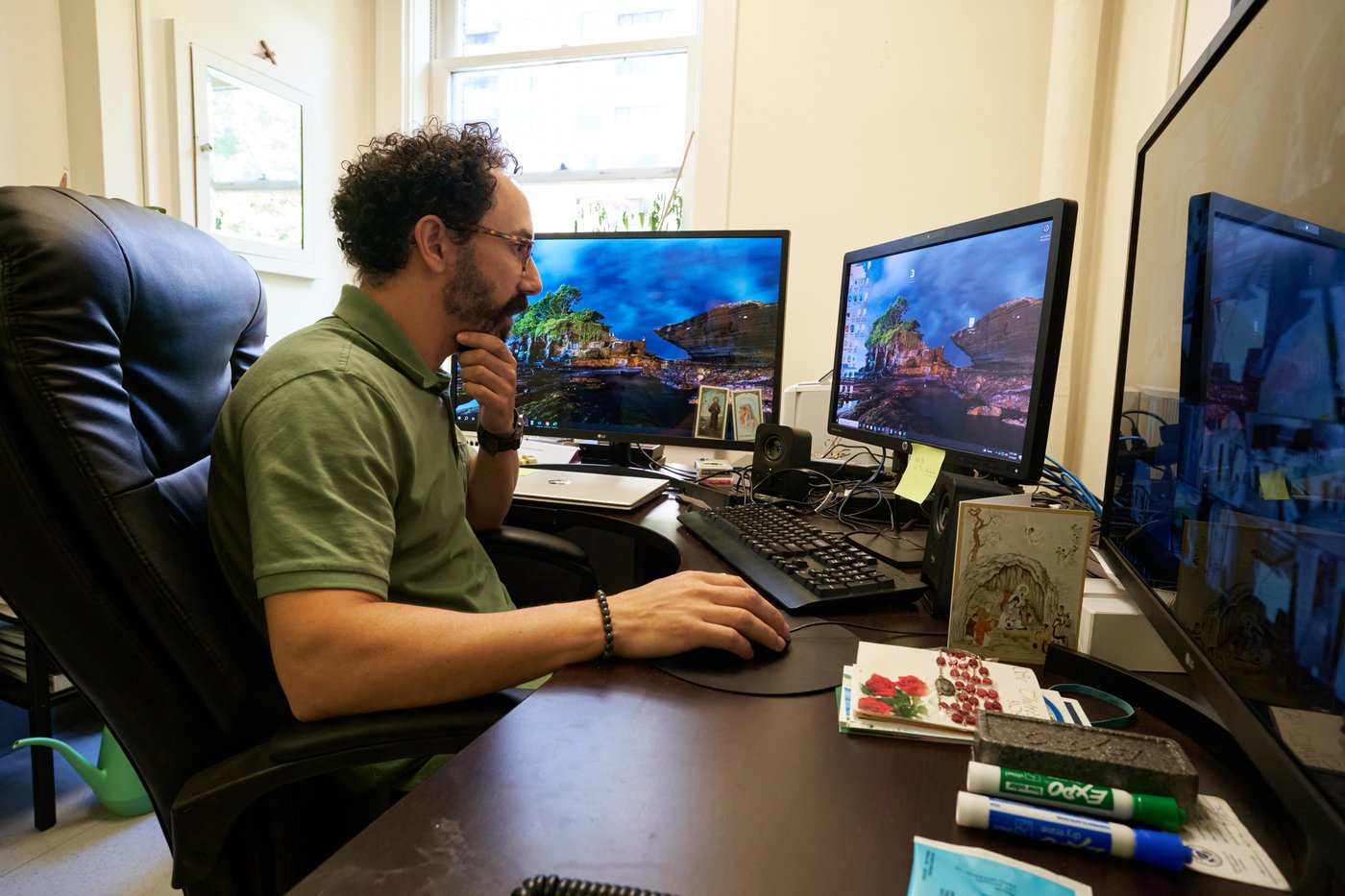
A convert from Protestantism, Milad’s path into the Church began years earlier while studying biblical studies at Trinity Western University in Langley.
“One of the big things for me was realizing that it wasn’t the Bible that assembled itself — it was the Church that gave us the canon,” he said. “That really highlighted the authority of tradition, and the Catholic Church holds that tradition in a way that’s deeply rooted.”
He says at first he was a “closet Catholic.” Drawn to Catholicism’s mysticism, devotional life, and broad vision of vocation, Milad began attending Mass with his girlfriend, a convert from Islam. The two eventually entered the Church together.
“There’s a richness in Catholicism that I never found in my previous tradition,” he said. “It’s deeply intellectual, but also deeply practical. It gives you a place to offer your life in service.”
That offering of service is reflected in his new job. “I always liked helping people — whether that was staff or guests in the restaurant world,” he said. “But here, I get to do that in a way that’s about restoring dignity and hope. That’s the Christian call.”
Milad sees the shelter’s mission as more than simply providing beds and meals. In terms of Catholic social teaching, it is recognizing the dignity of the human person. “The shelter is more than a place to sleep,” he said. “It’s a place where men can begin again.”
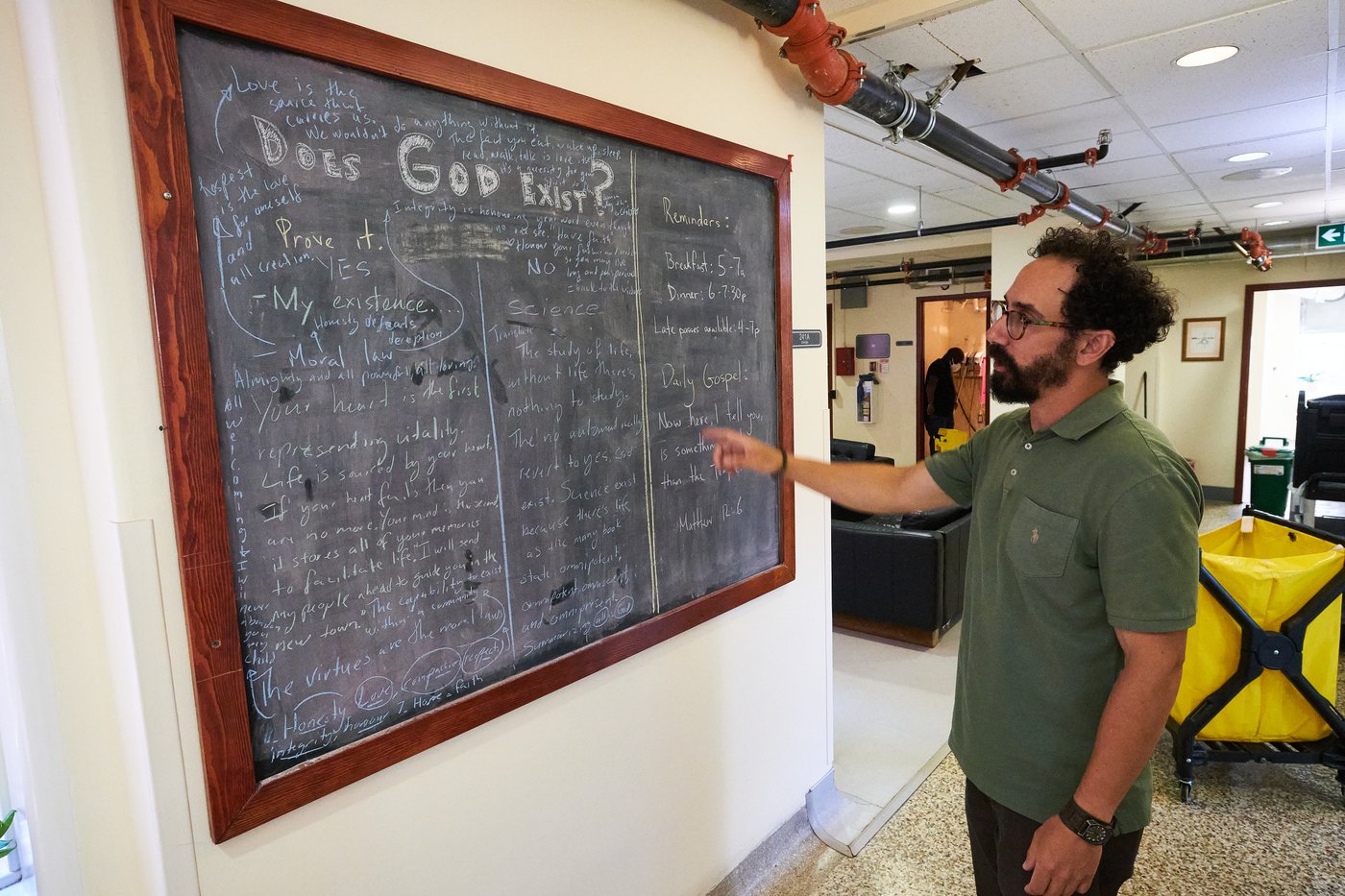
Milad wants to build on that foundation, saying “I also see how much more it could become.”
Although the shelter currently provides essential services such as hot meals, showers, a safe bed, and up to 90 days of shelter, Milad hopes to grow its “gateway services” — those supports that help men transition into stable housing, recovery programs, and employment.
Some plans are still just plans. “We do the essentials really well,” he said. “But a lot of the referrals we make are external (detox, job training, housing supports). I’d love to bring more of those in-house.”
His first major change has been to reduce initial stays to 30 days, but offer 30-day extensions tied to progress on personal goals like employment, sobriety, or housing applications. “It’s about creating momentum and accountability,” he said. “If someone’s showing initiative, we walk with them. We don’t cut them off at 90 days just because the clock ran out.”
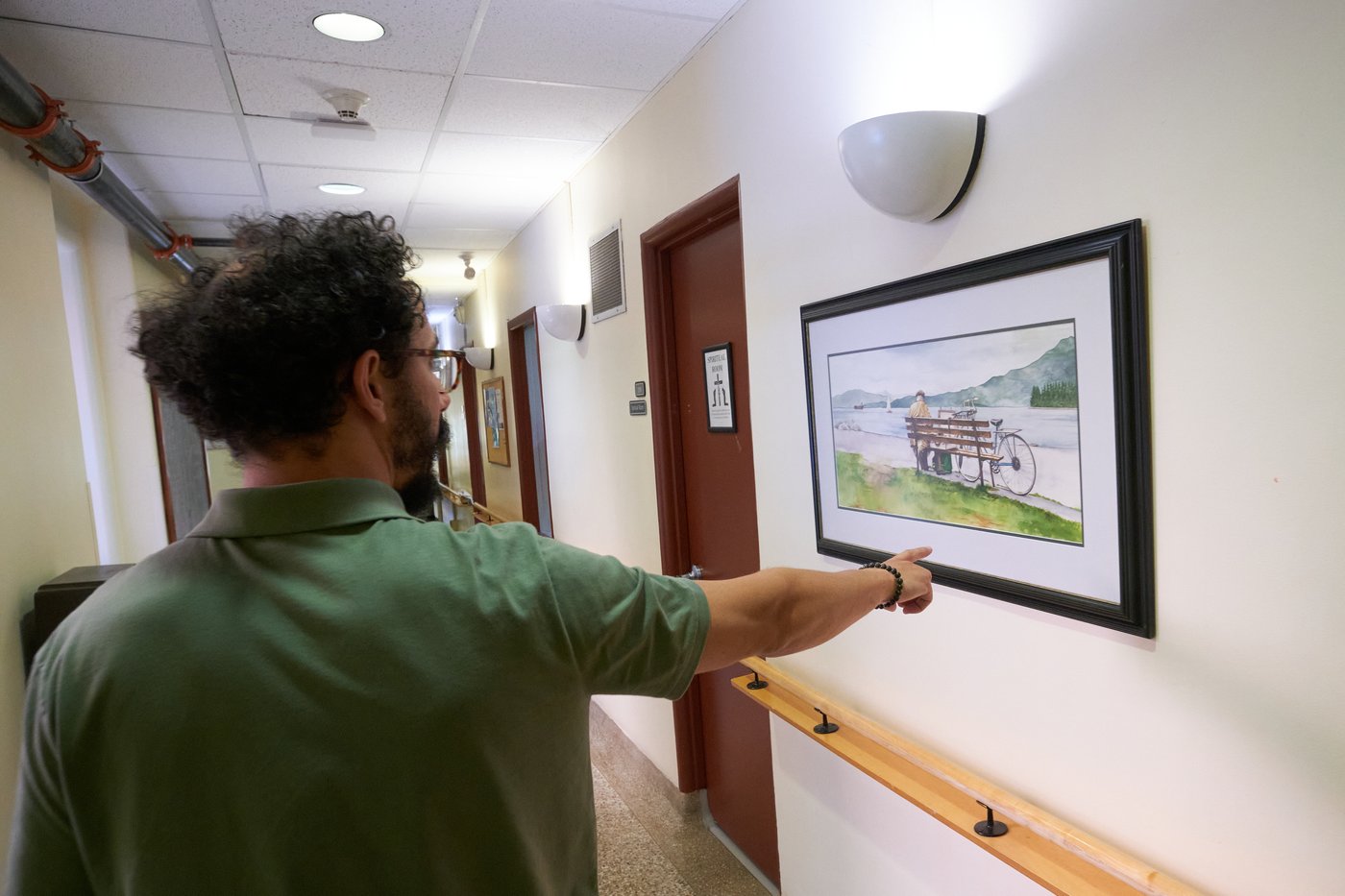
For now, Milad is two months into the role and energized by what he sees. “Some of the men won’t get off the street — their mental health or addiction issues are too severe. But that doesn’t mean they don’t deserve dignity. We shelter them, we love them, we walk with them. That’s our job.”
Others, however, just need someone to believe in them and walk with them a little farther than most feel capable of.
“It’s hard work. It’s messy, but it’s sacred,” Milad said. “This place is a seed, and I think with God’s help it can grow into something even more beautiful.”
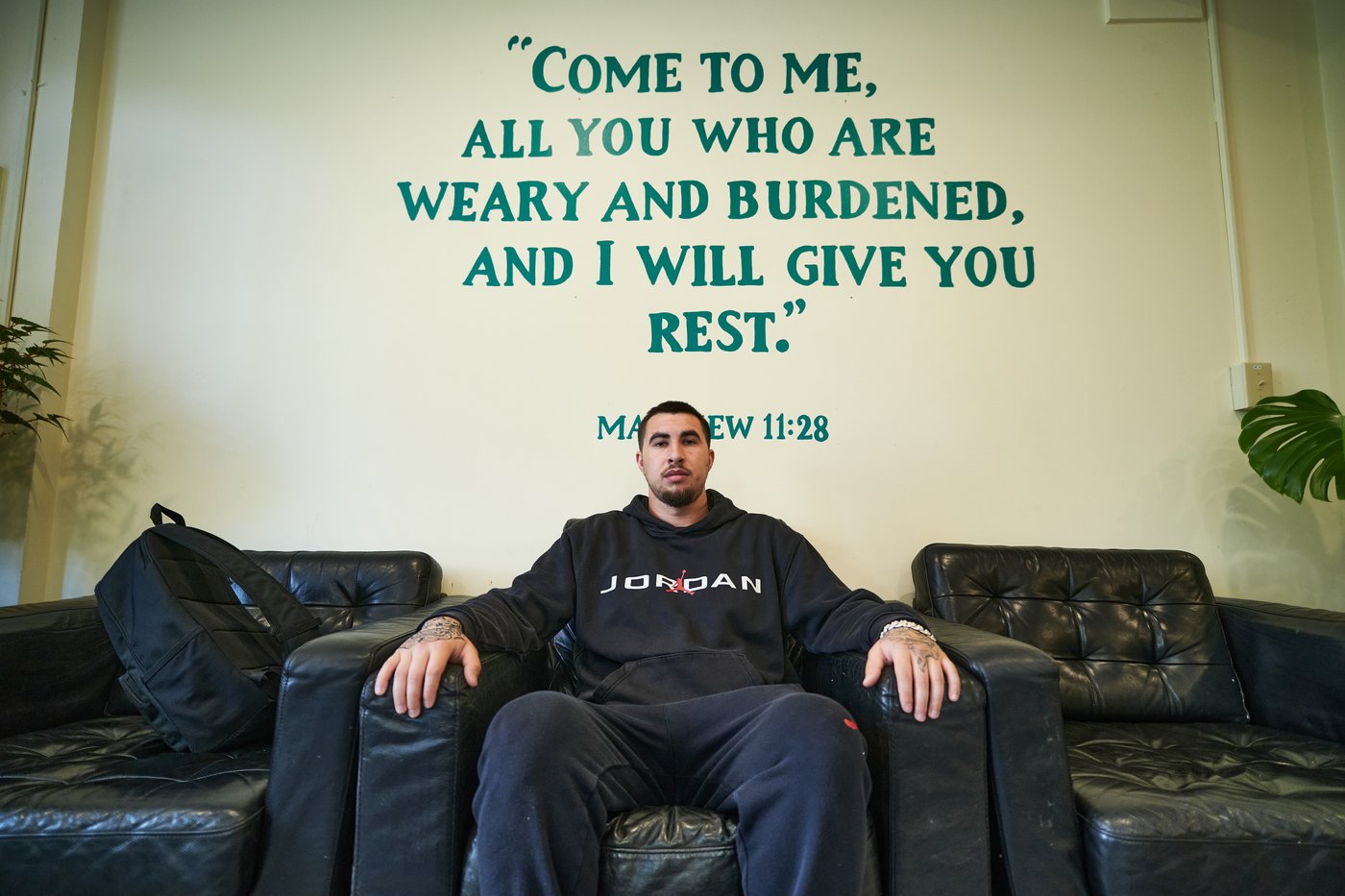
‘It’s a full circle’: how the Men’s Shelter helped Danny rewrite his story
The shelter has many success stories, and in spite of his relatively short stay at the shelter — around two weeks in 2023 — Danny Bale is one of them.
It is still unfolding.
Bale has a long history with drugs. As early as 12, he remembers doing methamphetamine with his mother. He was something of a drifter, looking for a home in numerous American states, including Washington, Oregon, and Utah. He hoped that moving to Canada would offer a brighter future, but without the right choices, he felt trapped.
“Poverty will follow you anywhere you go if you don’t change it,” he told The B.C. Catholic.
He became homeless after losing his place and all his possessions. A duffle bag was all he had left. He spent six months homeless in the Downtown Eastside and bounced from shelter to shelter. Even when he found a room at a low-barrier shelter, a violent altercation cost him his place.
He was directed to the Catholic Charities Men’s Shelter, and when he walked through the doors, his drug use had started to wane, but he was exhausted. “I was still heavily addicted,” he admits, “but I didn’t want to use anymore.”
He fell asleep on the front foyer sofa. Upon awaking, his belongs were still next to him, and he had been left undisturbed.
For Bale, the Men’s Shelter felt different from other places he had stayed. There were standards of behaviour for the men staying there, and he was impressed by how residents followed the rules. The enforced routine around meals helped him take small steps toward responsibility.
After encouragement from a volunteer, he left the shelter and entered detox. Today, he’s pursuing a career in social work. He has most of the necessary credentials and is now completing the work-hour requirements for a position at RainCity Housing.
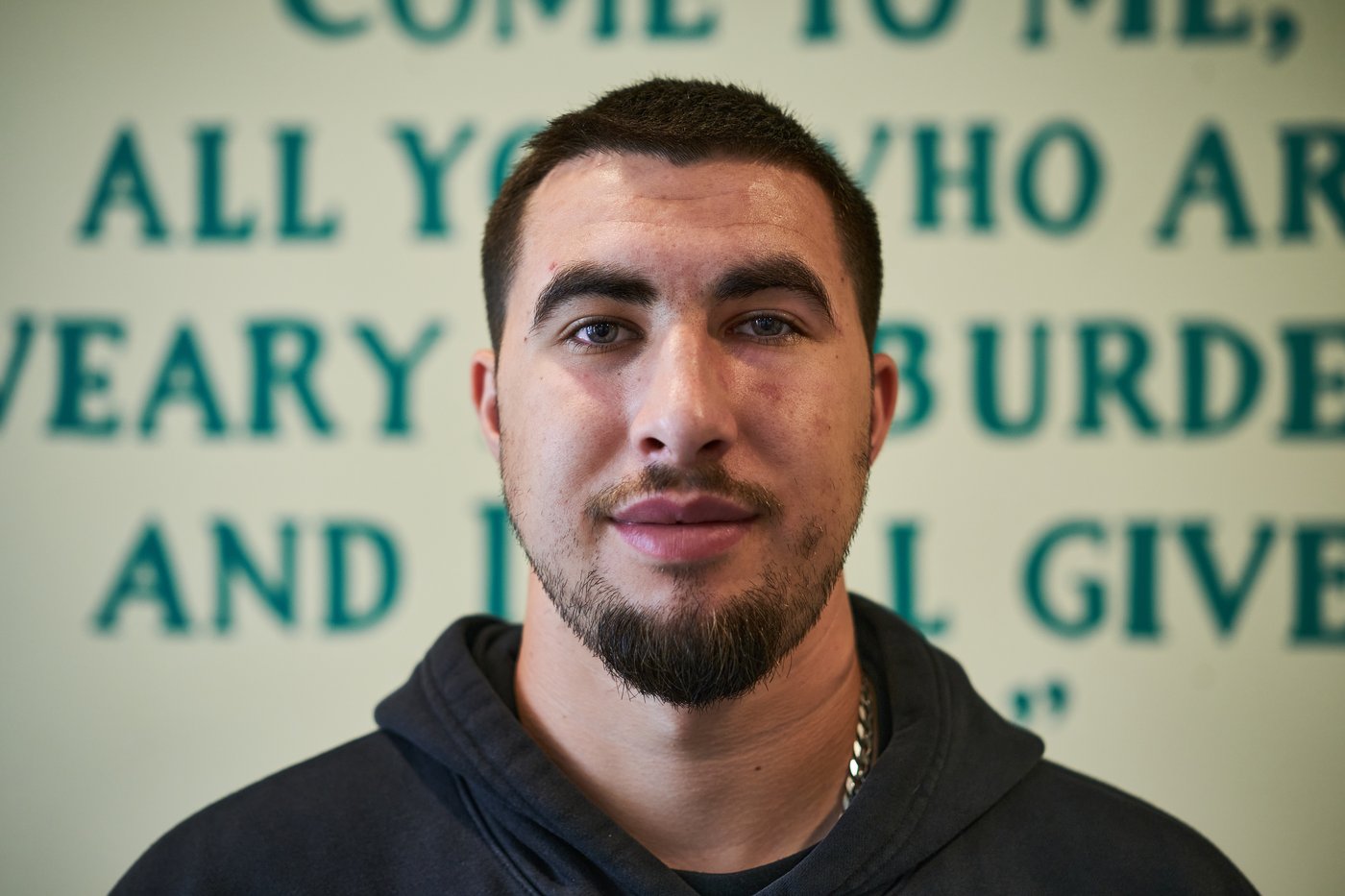
He splits his time between occasional farm labour and working as a peer observer who keeps an eye on drug users at a safe injection site.
At the end of the day, he just wants to help people.
“Sometimes you can get lost down the road where you don’t find that better path. A lot of people can get lost in the cracks,” he said. “The loneliness, the sadness … it takes a toll on your mental health. Struggling every day is really hard alone. It makes you pretty sad at the end of the day to know that you’re stuck in a position where you can’t get out of it.”
His studies and life experience have taught him a lot about addiction and homelessness, and he wishes people had more empathy and understanding. Those who are struggling with homelessness and addiction have experienced deep pain and loss. They need hope.
“They can have a better life, or they stay where they are. That’s it,” Bale said.
“People see [the homeless and addicted] as hopeless and lost,” he said, “but … ‘hopeless and lost’ doesn’t mean you should forget them; you shouldn’t count them out. At the end of the day, they’re still people. They still deserve a chance — whether they’re old, young, battered, bruised, beaten, just in bad shape. They still deserve a chance.”
Giving back is important for Bale because he knows how bad things can get. “If I can’t have that faith in other people, then eventually, over time, I will lose it for myself. You can only keep what you have by giving it back,” he said.
“That’s the only way that you can actually help people in the world … if you can give it to someone else and share that thought, whether it’s wisdom, kindness, empathy, passion, or whatever, for somebody who might not have it for themselves,” he said.
“It’s a full circle,” he said. “If somebody decides to stop, then it won’t keep going around.”
Your voice matters! Join the conversation by submitting a Letter to the Editor here.