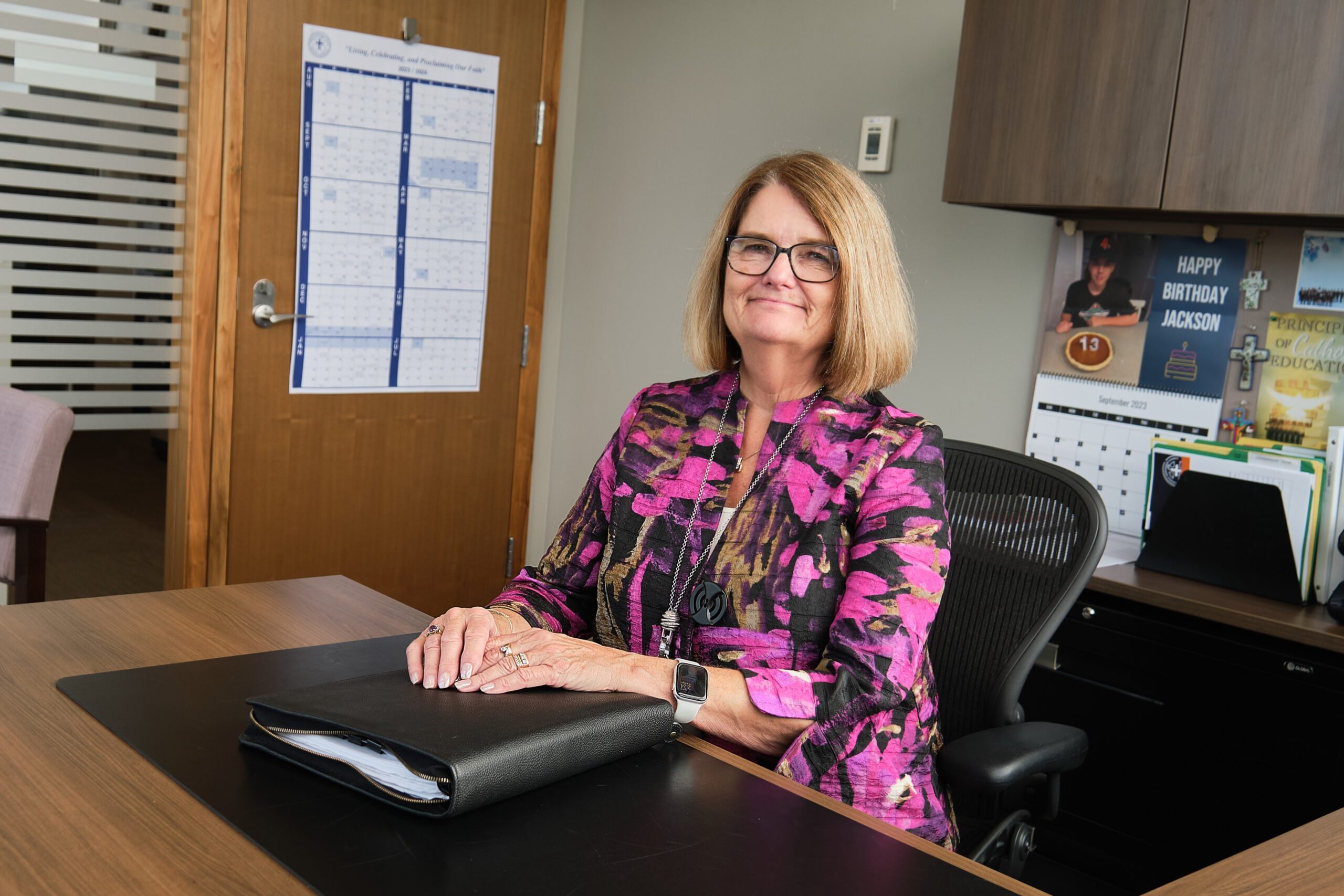

Speaking like a true teacher, newly instated Catholic schools Superintendent Sandra Marshall says her highest priority as she starts her new role is the academic and spiritual success and well-being of students in Vancouver Catholic schools.
Ultimately Marshall says this school year will be about determining the best path forward for the Archdiocese of Vancouver’s Catholic schools in the wake of years of pandemic restrictions that hit students particularly hard. That will mean asking questions, listening, and discerning.
“At the end of the year I hope there is more of a sense of where we need to go from here,” said Marshall, referencing the “synodal spirit” sweeping through the Church. “It’s about listening deeply and asking, ‘what is standing in our way?’”
In addition to solutions for post-COVID suffering, Marshall said the faith and evangelization of families will be at the centre of inquiry for her and her administrative team.
Her early conversations with priests across the Archdiocese have revealed pastors are concerned that families with students attending Catholic schools are often absent from Sunday Mass and may disappear entirely after high school graduation.
While this isn’t the sole responsibility of the schools – parish community and family life join schools as the three legs that support a student’s faith development – Marshall said evangelization will continue to be one of the core motivating principles for Catholic schools. She is taking the concerns of local pastors seriously and hopes to find solutions through the coming year.
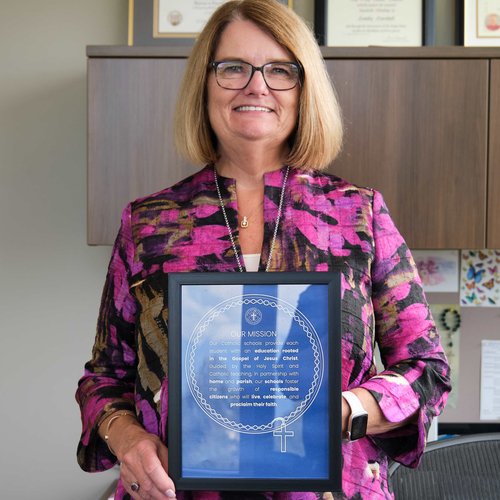
When speaking with principals, the picture is somewhat different. Principals share the core concerns of pastors but seem satisfied with how CISVA supports them and their teachers in terms of professional and faith development. They have recommended changes to some operational practices around communication and school policy.
Marshall has heard from principals that they appreciate the faith formation their staff received through various retreats, access to resources, and the strength of CISVA schools in general, in particular their Catholicity.
Marshall wants to continue building that Catholic identity into the very fabric of the schools. “Our learning priority is to bring Catholicism into everything we teach,” she said. “We need to be much more than just a better public school.”
Sustainability in terms of both infrastructure and personnel is also a concern. Maintaining personnel has been tricky, with staffing shortages plaguing school systems across B.C.
Fortunately the Catholic school system has the benefit of its core Catholic values, and there has been an increase in teachers leaving the public system for the traditional standards of the Catholic school system.
Assistant Superintendent Lesya Balsevich said Vancouver Catholic schools have experienced the same recruiting challenges as other school systems, but all teaching positions have been filled this year.
Hiring for Catholic schools has the added challenge that teachers must be authentically Catholic in addition to having the necessary technical skills and aptitude, Balsevich said. One constant in hiring, however, has been the return of Catholic school graduates to teach in the Catholic system.
“The predominant narrative is that ‘I went through Catholic school, it’s home, and it’s what I feel called to,” said Balsevich, who interviews the majority of CISVA applicants.
“It’s not just a job, I want a deeper sense of belonging,” applicants tell her.
She highlighted the influx of international applications, especially from Ireland, as another reason all positions have been filled.
Teachers usually come from Ireland on a two-year work visa, and while they don’t all stay after it expires – Balsevich estimates one in four remain – they return home speaking positively about their experience, prompting others to apply.
Even with economic stress blunting the influx of applicants from out of province, Balsevich still says she interviews an average of three to six applicants a week year-round.