Filmmakers support plan to study negative public health effects
The B.C. Catholic
Two activists have released a new documentary aiming to expose the prevalence and danger of pornography.
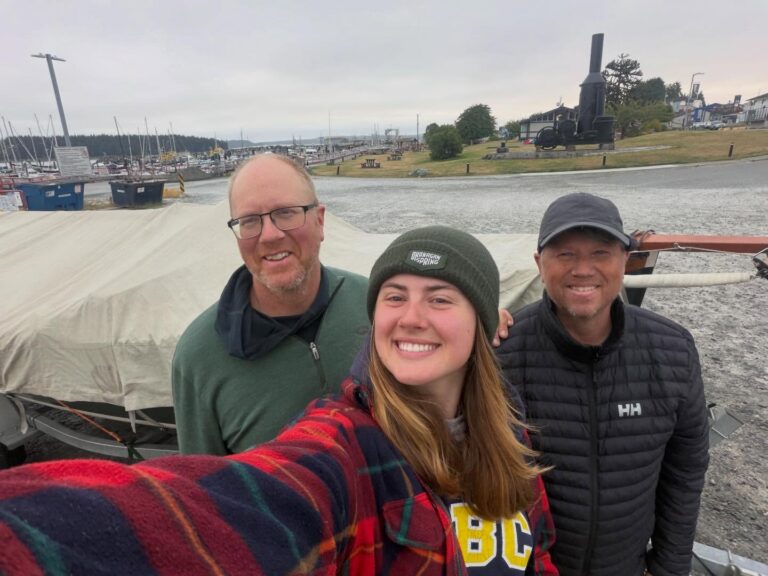
Filmmakers Jared and Michelle Brock say the industry has come a long way from teens stashing magazines under the bed. “I was 10 years old when I first saw pornography,” said Jared during a showing of their latest film, Over 18.
It wasn’t intentional. He’d been watching a basketball game on TV, and after he watched several minutes, he turned it off and didn’t pursue it again.
“But if I had had porn in my pocket on a cellphone, accessible 24 hours a day, 7 days a week, 365 days a year, for free, in HD, from that first moment of exposure, I would not be standing here before you in Vancouver tonight,” he said.
“How would anyone exposed at such a young age not be addicted to pornography?”
Jared and Michelle arrived in Vancouver for a showing of Over 18 at the John Paul II Pastoral Centre Nov. 7. The hall was packed; nearly 200 people came to view the film.
Over 18 approaches the topic from all angles; the Brocks interview directors, former pornography actors, parents, recovering addicts, and others.
“Kids growing up today have never known a world without instant access to pornography,” through the Internet, cellphones, and tablets, he said. “Ninety per cent of boys and 60 per cent of girls see porn before the age of 18.”
The content of pornography has also changed in recent years, becoming more violent and degrading to women than in the past, he explained. Of the top 300 most watched pornography films in 2015, “88 per cent had physical aggression towards women.”
The film-making duo hope to make a difference, and not just through documentary screenings. Jared and Michelle encouraged the audience to sign a petition in favour of motion M-47 in parliament asking for study of the issue (see story Page 13).
“The last time they studied the effects of pornography was 1985, pre-Internet.”
Steven Ching, a volunteer with the archdiocesan Overcoming Pornography Initiative, appreciated the film. “They portray, very realistically, what happens for someone who has a dependence on pornography,” he said.
His group supports people “who have been impacted by pornography and are looking for strategies to avoid it, overcome it, and heal from it.”
Father Richard Soo, SJ, often hears Catholics admit to pornography addictions in the confessional. “It’s a surprisingly common problem.” He worried the industry is “tied up with greed” while “hurting men and women are exploited on film” and other “hurting people are watching it.”
Anthony De Souza, a member of Immaculate Conception Parish in Delta, said tackling pornography must begin with a change of heart. “We need to change our views and how we see our women in our homes, in our schools, in our workplaces,” he said.
“We have to change our mindset and set a really good example. What kind of life do we want for our children? What kind of Canada do we want? I want a Canada that respects women, that respects children. We don’t need pornography.”