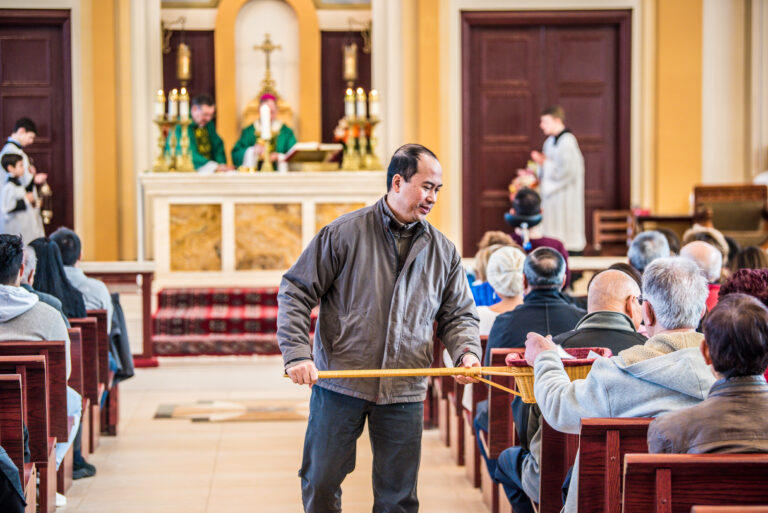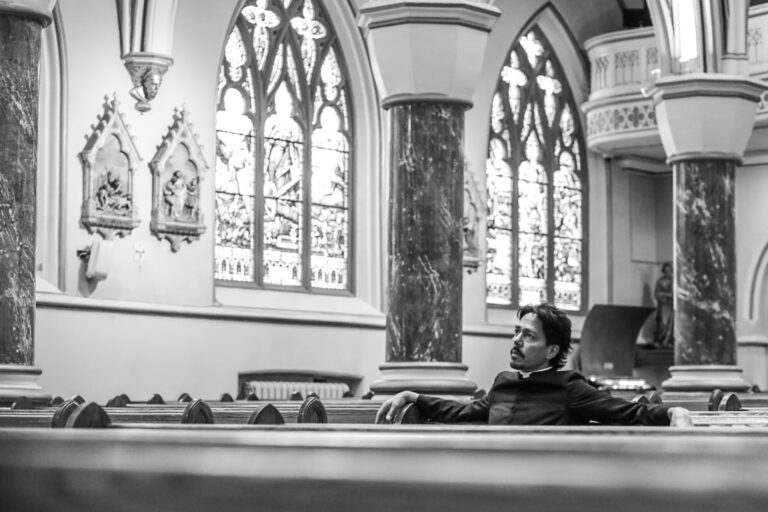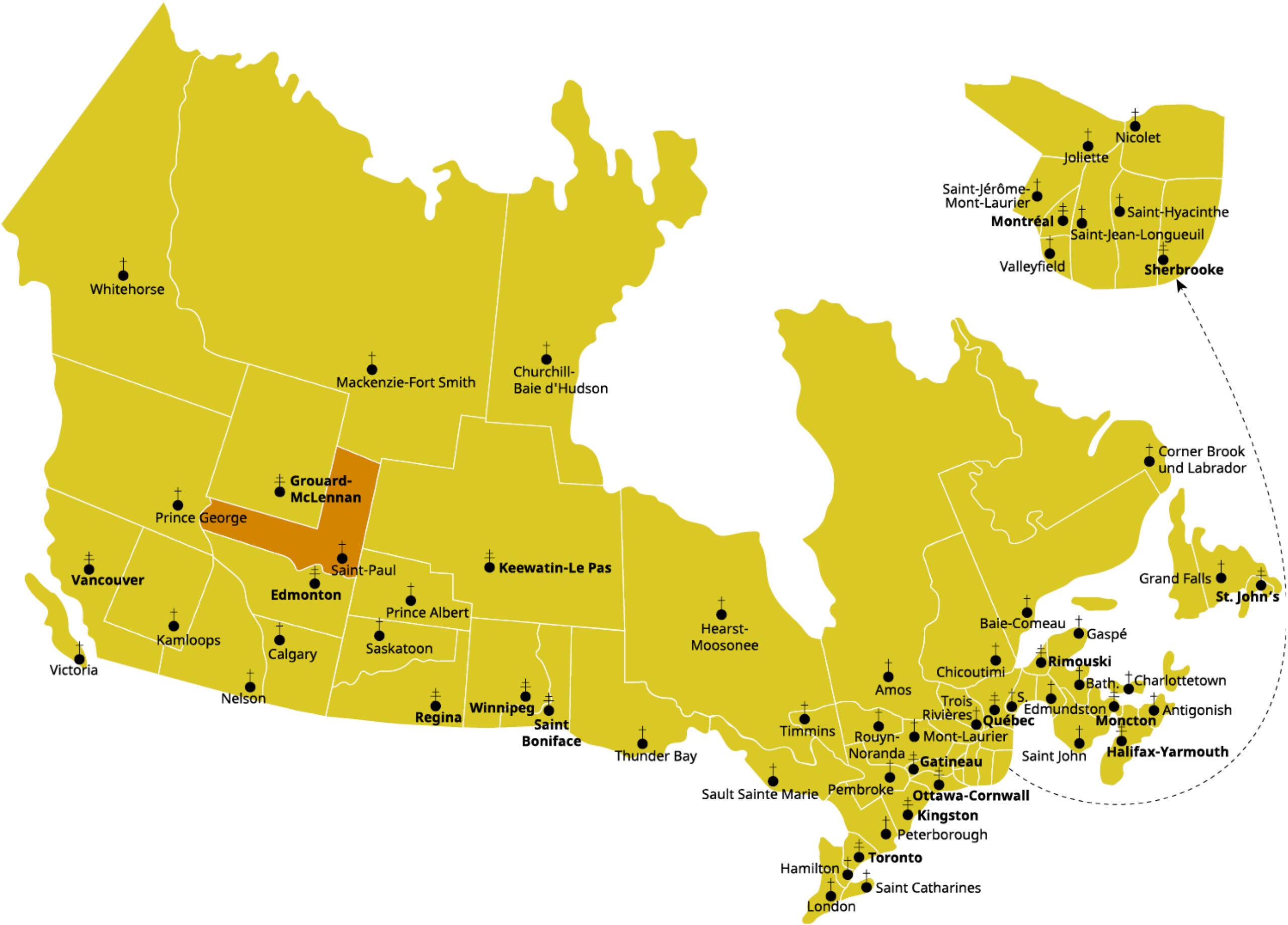

Encompassing a land area larger than the state of Arizona, the Diocese of St. Paul consists of 20 parishes, at least 21 missions (including Cree and Dene First Nations), and nearly 30 priests serving in parish ministry. With a Catholic population of nearly 110,000, the Diocese of St. Paul Alberta has come a long way from the 19,000 Alberta faithful who made up the community on its official creation in 1948.
Around the year 1859, the Roman Catholic Church in Alberta worked to establish mission sites devoted to the Métis people. Organized by the Oblates of Mary Immaculate, the missions were intended not just to serve Métis spiritual needs but also to help smooth the transition towards a more agricultural, roots-based community and economy – away from the harshness and difficulty of living the more itinerant hunting and trading lifestyle that had been dominant to that point in history.
In 1892, well-known missionary Father Albert Lacombe, OMI, began lobbying the federal government for help in putting together an organized agricultural settlement for the Métis. By 1895, St. Paul-des-Métis had become a reality thanks to the bishops of St. Boniface and St. Albert, along with Father Lacombe as superintendent/treasurer and Father Joseph-Adeodat Thérien as manager, creating a syndicate to formally lease four townships of land from the Canadian government.
Aided by the arrival of the Sisters of the Assumption, the new settlement grew into a modest community of 30 families, along with a sawmill plus an industrial school. Unfortunately, after a series of significant disasters, including a fire that destroyed the school, the organized site was abandoned in 1908.
While disappointing, the setbacks did allow for a general settlement which began in 1909. Under the care of Father Thérien, some 450 people were registered as homesteaders over two days. By 1920, the town had constructed a 48-km railroad track, further connecting the village with the larger Canadian expanse, eventually evolving into the town known as St. Paul today.
Of the numerous structures built by the original founding colony, only the old St. Paul rectory, built in 1896 as the administrative centre for the Oblate priests, stands to this day. Designated an Alberta Provincial Historical Resource, the rectory is a two and one half-storey building located in the downtown core of St. Paul. The building’s design embodies the nineteenth century and a Canadian French-Colonial architectural vision thanks to its three-sided wooden, covered veranda, and a general lack of exterior ornamentation.
Aliens welcome
Deacon Bruce Fraser had some exciting news for Father Gary Franken at a recent farewell celebration at the John Paul II Pastoral Centre. After searching online, he discovered “two kilometres from your future office is a UFO landing pad … which tells me that ecumenism is a big thing in St. Paul!”
Judging from the laughter that greeted the remark, most in the audience had certainly become aware of St. Paul’s best-known tourist attraction, the world’s first UFO landing pad.
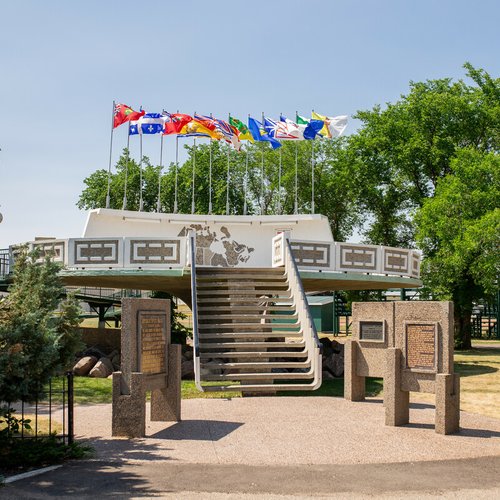
Constructed in 1967 as part of the 100-year Canadian Centennial celebrations, the idea (credited to former town Mayor Jules Van Brabant and local business owners) was to draw attention to the town and attract tourists. With a blueprint by a local designer and the concrete and steel donated by local firms, the plan was set in motion.
Weighing in at just over 130 tons, the massive – and very flat – concrete landing structure also features a large map of Canada, stones taken from each of her provinces and territories, along with a time capsule to be opened in 2067.
The 1990s saw the addition of a rounded, saucer-shaped tourist info centre/museum showcasing UFO memorabilia and photographs of (alleged) landing sites, mysterious cattle mutilations, and crop circles. A sign placed beside the landing pad reads:
“The area under the World’s First UFO Landing Pad was designated international by the Town of St. Paul as a symbol of our faith that mankind will maintain the outer universe free from national wars and strife. That future travel in space will be safe for all intergalactic beings, all visitors from earth or otherwise are welcome to this territory and to the Town of St. Paul.”
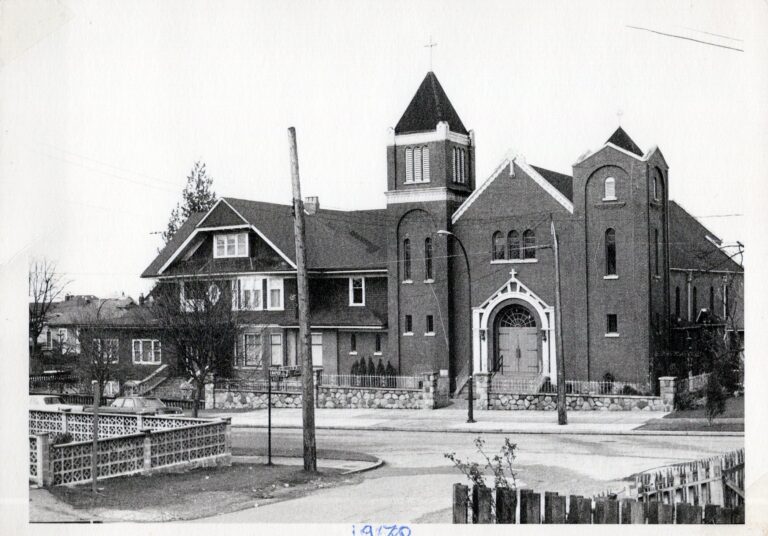
While tongue in cheek, the sentiment is surprisingly consistent considering the missionary efforts of Father Albert Lacombe in the 1800s and his desire to provide a safe, welcoming spot of support and goodwill to any newcomers arriving in the area. Today, St. Paul Cathedral stands as a reminder that it was the original “landing pad” for new arrivals back in 1859.
Send us a letter to the editor about this or any other article.