
The 96-hour rollercoaster of emotions for Catholics gearing up for Easter this year has ended on a low note.
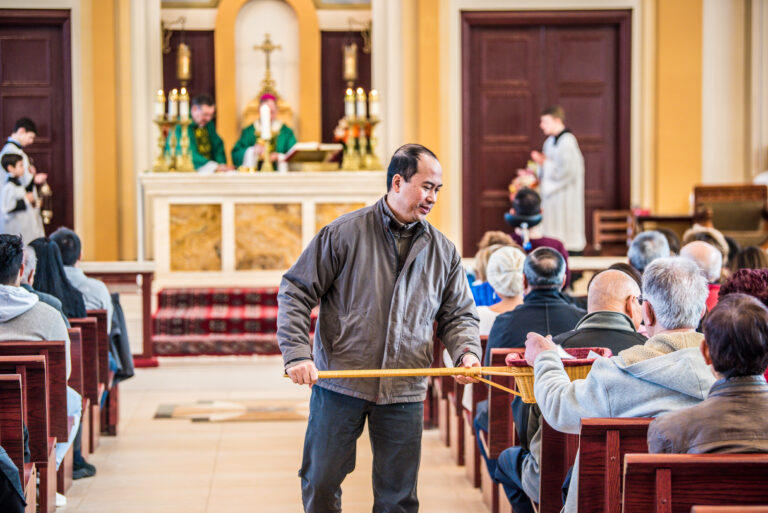
On Thursday, March 25, just days before the start of Holy Week, health officials announced religious organizations could safely open their doors to indoor worship for four days, as long as they kept to numerous precautions including 10 per cent of capacity or a maximum of 50 people.
It wasn’t exactly what Archbishop J. Michael Miller, CSB, had been hoping for (he had sought an exemption for Catholics for 10 per cent of church capacity, without the 50 person or four-day limits) but it was something.
The archbishop said Holy Thursday, Good Friday, Easter, and Divine Mercy Sunday would be the indoor Masses in the Archdiocese of Vancouver.
Pastors and parish staff kicked into high gear to arrange as many Masses during those four days as they could manage, some preparing to open up school gyms or parish halls to accommodate as many people as possible.
Catholics who had been barred from indoor public worship since before Christmas were enthused by the opportunity to attend at least one Mass again, inundating parishes with reservations.
Two hours after St. Joseph’s Parish in Langley opened registration for Holy Week and Divine Mercy Sunday services, all 525 available seats across 11 services were booked up. St. Matthew’s Parish in Surrey had at least 90 per cent of its seats (representing an estimated 1,500 people across several locations and services) snatched up in 12 hours.
At St. Patrick’s in Vancouver, a congregation accustomed to participating in Mass by parking their cars outside the church and watching priests celebrate Mass on the concrete steps heard plans were being prepared to finally allow some of them back inside.
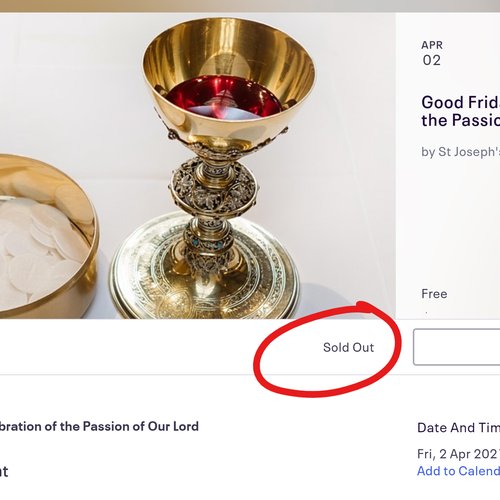
By March 29, all those plans were undone. At a press conference Monday afternoon, B.C. officials rescinded the health order variance they had offered to religious groups days earlier, banning indoor services before any had started. They also imposed a last-minute order against indoor dining at restaurants and indoor group fitness activities.
B.C. health officer Bonnie Henry attributed the measures to high daily COVID-19 case numbers, which hit 996 on Friday and surpassed 800 on Saturday and Sunday.
Many churchgoers were devastated.
Father Steny Mascarenhas had arranged for 19 services across four days at St. Edmund’s, including seven Masses crammed in the schedule for Easter. “You would not find room to register. Practically, all services were full,” he said.
“Now, we feel so disappointed.”
Father Maciej Wos, SDS, said in a message to parishioners at St. Clare of Assisi the community’s “great hopes” for Easter were short-lived. “We will not be given an opportunity to have Easter celebrations in person. We are deeply disappointed, but we will go through it, no matter what. If this helps our community stay healthier and build resilience, so be it.”
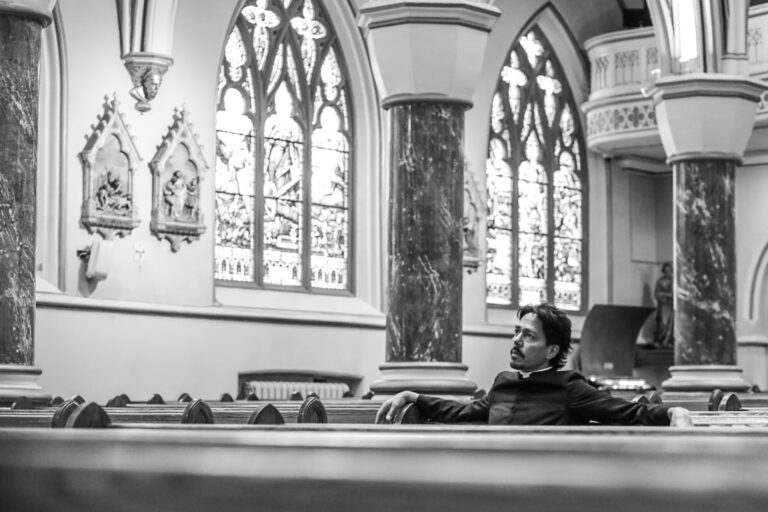
As a result, participation in Mass this Easter will look very much as it did on Christmas day: accessible to most Catholics only through livestream while pastors celebrate Mass in empty churches.
“We’re disappointed, as we were given over to a hopeful situation and then it felt like it got taken away, but we understand why,” said St. Patrick’s pastor Father James Hughes.
“We’re called to a sense of creativity for these moments and to realize that Christ is our hope. Yes, it is disappointing, but we cannot be like the disciples who went away toward Emmaus from Jerusalem … with their heads down. As Christians, we can’t lose hope.”
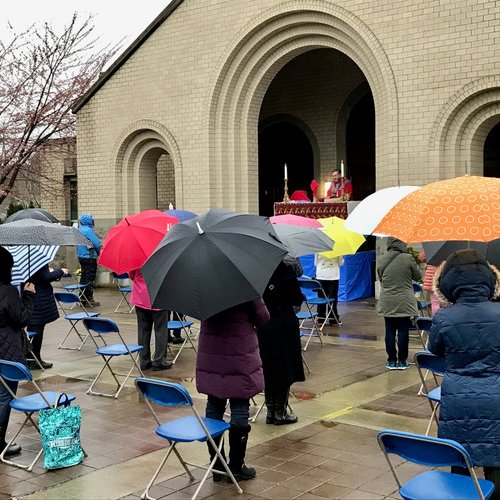
Some parishes, including his, are planning drive-in Masses, permitted by B.C. officials as long as attendance at each outdoor parking lot service is limited to 50 cars with passengers, plus 50 people. An outdoor service like this is permitted any day of the week (not just Easter), as is private prayer with up to 10 persons inside the church.
Archbishop Miller encouraged families to watch their parish livestreams and celebrate Holy Week and Easter as best they can at home.
“You’re not in the ‘parish’ church, you’re in the church of the home, the domestic church,” he said, suggesting families take up practices such as a festive meal in thanksgiving for the Eucharist on Holy Thursday, quiet time without media or entertainment on Good Friday, and lighting candles for the Easter vigil.
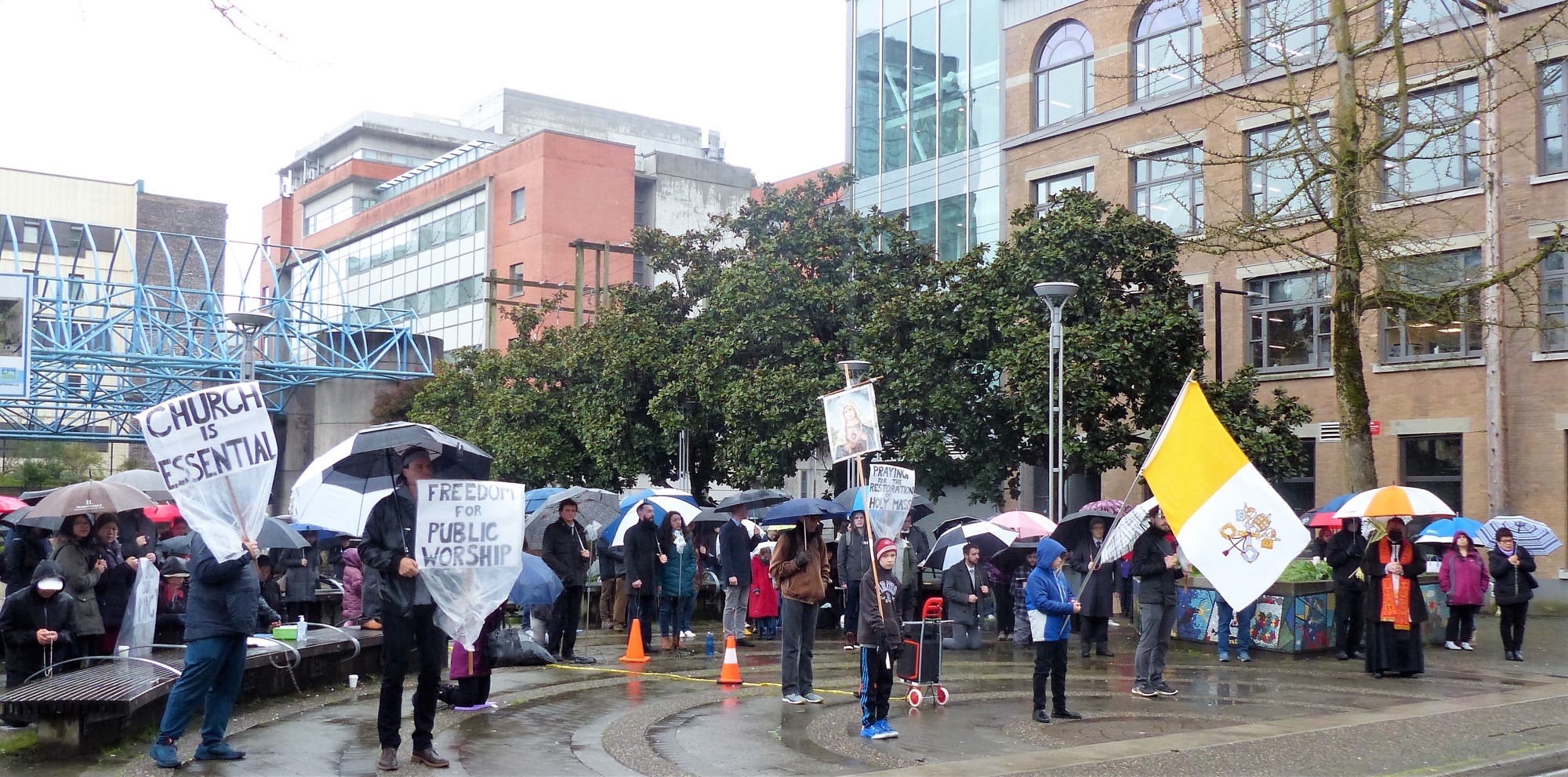
Meanwhile, about 170 Catholics continue to meet outside Holy Rosary Cathedral every Sunday to sing and pray aloud for public worship to restart again. Some hold signs saying “church is essential” or “freedom for public worship.”
Matthew Palmer, one of the organizers, told The B.C. Catholic that for some people, the outdoor gatherings are a vital part of their religious practice.
“I get people every week that say, ‘if it wasn’t for this pilgrimage, I would have no means of worshipping.’ It’s a very small substitute for the divine liturgy and for the Holy Mass and the Eucharist, but we’re called to keep holy the Sabbath day.”
Palmer said although the Sunday obligation to attend Mass has been lifted temporarily, the obligation to keep the Lord’s day holy is a divine commandment. “For most people who come to the pilgrimage, it’s their only opportunity as a community to keep holy the Sabbath day.”
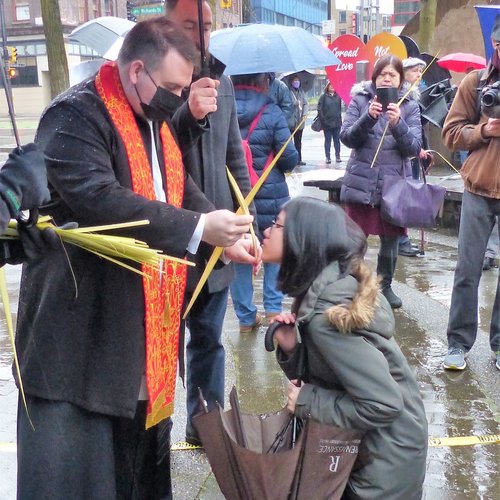
On Palm Sunday, March 28, the group sang an account of the Passion and distributed blessed palms to all present. Palmer said plans are in the works to make the outdoor pilgrimage on Easter Sunday a special celebration.
The group began gathering after indoor worship was banned by a B.C. health order Nov. 19. Palmer said many are committed to gathering every Sunday until the order is lifted, admitting it may be a while until that happens.
“Among the organizers, but also amongst the people that come, there’s a certain resignation, that we’re in this for the long haul. One of the bright sides is we’re going into the fair weather period. We’ve persevered through snow and rain pretty much every week since we started.”