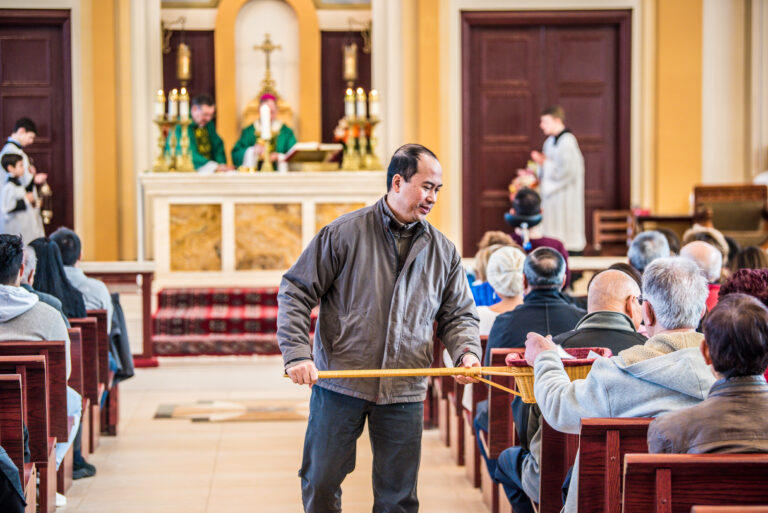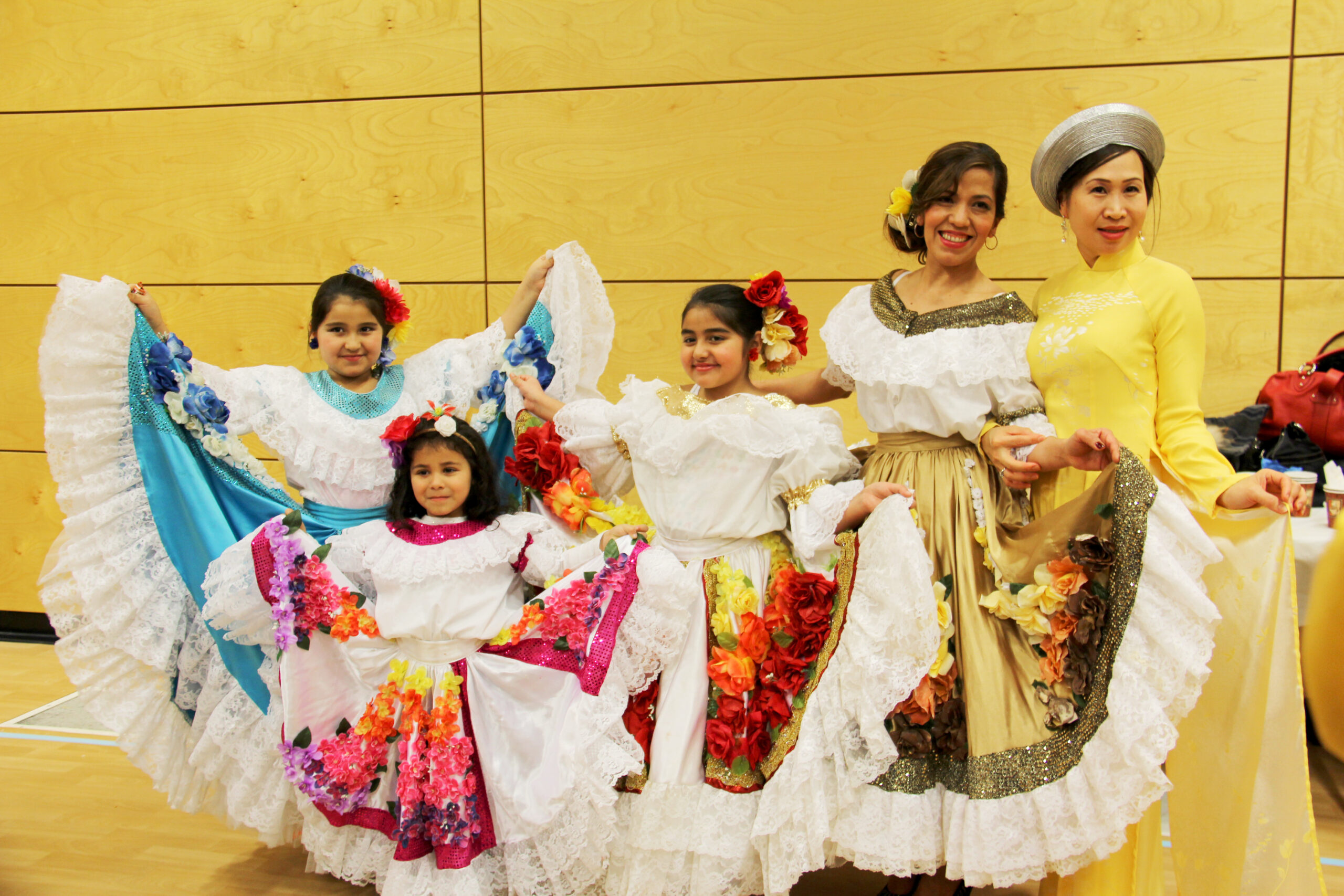

VANCOUVER—People in traditional dress of vibrant colours filled the pews at Our Lady of Sorrows Church on the 101st World Day of Prayer for Migrants and Refugees.
Five hundred immigrants, refugees, temporary workers, and their children joined in the Mass Jan. 18, which included prayer in 14 languages.
“We live in a country of immigrant peoples,” Archbishop J. Michael Miller, CSB, said during his homily.
“All of us here have come from families of migrants to Canada, whether they have been here perhaps for several generations or have recently arrived. That is who we are as a people.”
One in five Canadians was born outside the country, according to Statistics Canada. In 2013, about 14 per cent of immigrants to this country landed in B.C.
“Our archdiocese is now home to so many people of different nations, ethnic backgrounds, and cultures,” Archbishop Miller said.
“Your presence, dear friends, enables us to understand a little more deeply what we mean when we say in our creed: ‘I believe in one, holy, catholic church.'”
This was the fourth time the Archdiocese of Vancouver had celebrated this international day of prayer. At the Mass, readings were in two languages and prayers were in nine. Three choirs sang the Mass parts: African, Polish, and Portuguese.
After Mass, the faithful filed into a school gymnasium, where people from different ethnic backgrounds laid out traditional food and items of popular piety.
“I’m really glad my parents immigrated,” said Luisa Ribeiro, whose mother and grandparents emigrated from Portugal in 1962.
Ribeiro’s mother was 1 when her family moved to Canada, seeking work and economical stability. Some family members who had immigrated previously sponsored them.
The Mass and reception reminded Ribeiro of European festivals. “I like seeing other people’s cultures. I’m always around mine in my parish.”
Ribeiro attends Our Lady of Fatima Church in Vancouver, one of many that celebrate Mass in languages other than English. The archdiocese provides Mass in a total of 22 languages every week.
Many immigrants said they came with their children to Canada for “a better life.” Ray Eyee was born here to parents from China and Hong Kong.
“It’s a sacrifice of love, to have a better life in the future,” he reflected. “Seeing everyone else in different communities go through the same story, to come here for a better life, is cool to see.”
He stood behind a figure of Our Lady of Sheshan at the Chinese booth. Eyee said it originated during a period of severe persecution of the Church in Shanghai. Mary is shown holding the child Jesus high above her head while standing on a dragon.
“It’s a picture of Mary presenting Jesus to the world. The dragon is representing sin and Satan.”
Agnes Ru, a member of St. Andrew Kim Parish, came from Korea in 1999. She was looking for better opportunities for her daughters, then aged 8 and 3.
“I liked Canada’s education system, that’s why I chose here,” Ru explained. She had visited New York and Vancouver, but the choice was easy based on how her daughters reacted.
“My daughters really love living here. They want to have a family here.” Ru, still fond of schools, has been teaching for 10 years and is the manager of the Early Childhood Education Centre at her parish.
The World Day of Prayer for Migrants and Refugees made a treasured impression on her. “For me, my meaning is: united,” Ru explained.
“We are all Catholic, we are all one. That’s why I feel like I belong here.”