
Euthanasia has moved beyond targeting baby boomers and now poses risks to their children’s generation, says Alex Schadenberg, executive director of the Euthanasia Prevention Coalition.
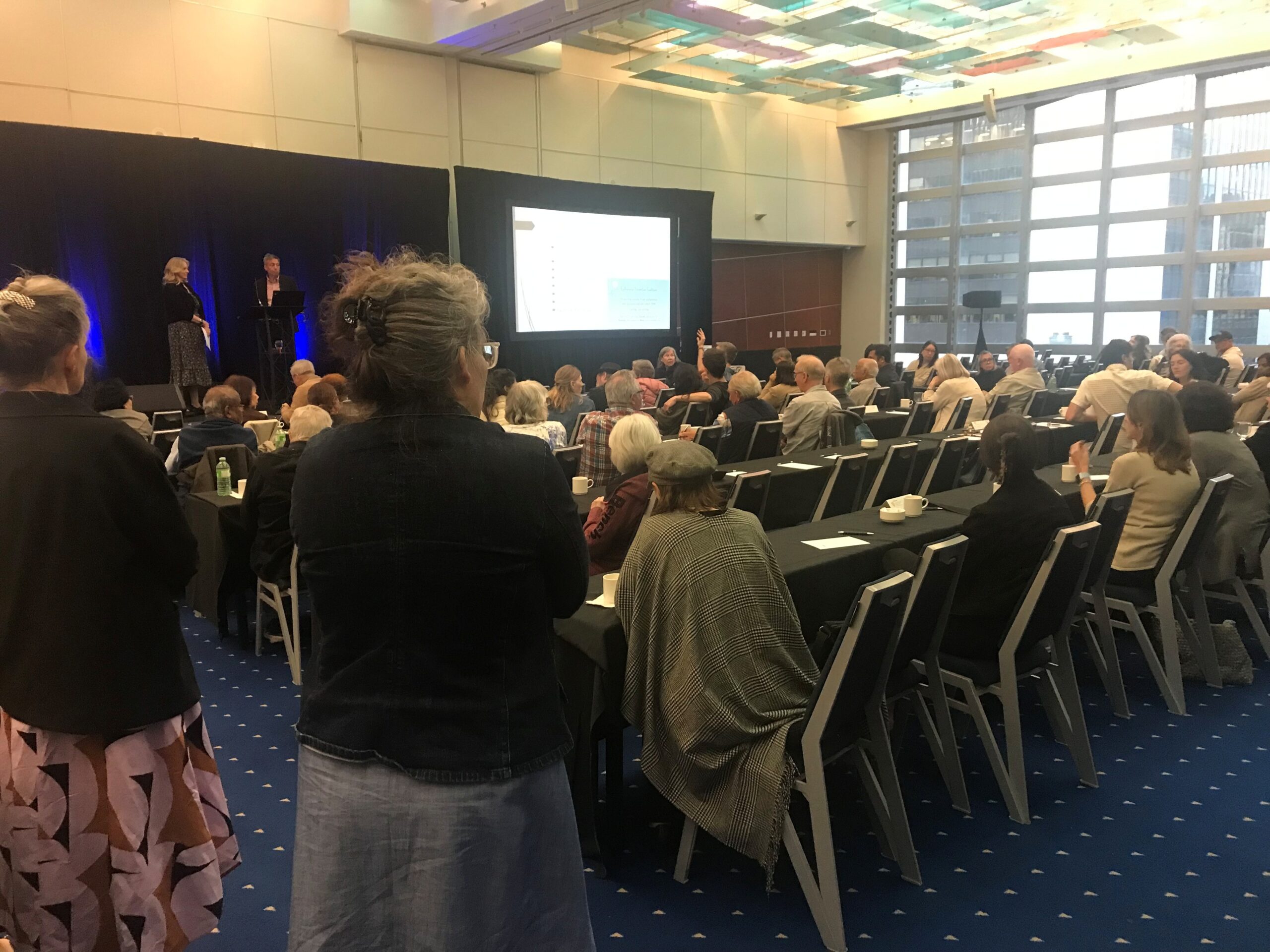
Schadenberg delivered a keynote address for the Euthanasia Prevention Coalition and Euthanasia Resistance BC on May 26 at the Sheraton Vancouver Wall Centre.
Although legally termed Medical Assistance in Dying (MAiD) after being legalized in Canada in 2016, Schadenberg said MAiD is actually a soft word for homicide.
In 2023, Canada reported 15,343 deaths by euthanasia, up from 13,241 in 2022 and 4,493 in 2018. Schadenberg predicts the 2024 totals will hit be over 16,000.
Those are just the official numbers. The actual number of euthanasia deaths is likely much higher since underlying medical conditions are often listed as the cause of death for those who undergo MAiD rather than the euthanasia procedure itself.
A report by the Ontario Chief Coroner evaluated euthanasia deaths from 2018 to 2023 and found that requests were driven by homelessness, fear, and isolation. Schadenberg said that indicates Canadians with disabilities are needlessly dying by euthanasia.
The Ontario report also found at least 428 non-compliant euthanasia deaths in the province.
In 2021, the federal law was expanded by removing the terminal illness requirement and the 10-day waiting period. There are now two tracks for accessing MAiD: one for the terminally ill with no waiting period, and another for non-terminal cases, which requires a 90-day waiting period. Both tracks require individuals to have an “irremediable medical condition.”
The Canadian government had been moving toward permitting euthanasia solely for mental illness but delayed the expansion until 2027 after opposition from the medical and disability communities.
Psychiatrist Dr. K. Sonu Gaind of the University of Toronto has argued that predicting whether a mental illness is irremediable is impossible since mental suffering is subjective. In an article he co-authored earlier this year, he wrote, “Research shows that assessors attempting to determine whether a mental illness is irremediable would be wrong more than half the time.”
Awareness of those limitations may help explain the delay in allowing MAiD access for mature minors and those with mental illness in a country that is already so permissive when it comes to euthanasia. Schadenberg attributes the pause on MAiD expansion to a wave of media attention reporting controversial cases that emerged after the second expansion of the law.
Take Amir Farsoud, an Ontario man whose doctor suggested MAiD when Farsoud feared becoming homeless. Farsoud made it clear to his doctor that he did not want to die – he simply could not live without financial support.
In another case, a 23-year-old man in Quebec was approved for euthanasia solely due to diabetes, a serious but manageable condition. His mother intervened and prevented his death by bringing national attention to the issue.
Media outlets have also reported that some Veterans Affairs staff suggested MAiD to soldiers suffering from PTSD or struggling to obtain disability supports, such as a wheelchair lift.
Angelina Ireland, of the Delta Hospice Society, told the audience that her number one concern is protecting people from “inside the system.”
The society has developed a “Do Not Euthanize Defence Kit,” available free on its website. The kit includes registration in a national database, a legal document rejecting euthanasia, and a wallet-sized card to present to health-care providers.
Ireland described the case of a medical practitioner and two witnesses who approached elderly patients, discussed MAiD, and attempted to obtain consent. The card, now nicknamed “that damn card” in some circles, clearly communicated the patient’s refusal.
“Legalizing euthanasia is not about freedom, but about abandonment,” said Schadenberg, who, like Ireland, emphasizes compassion and community as the most effective response to the euthanasia crisis.
Support for those considering MAiD can come through friendship and practical assistance such as providing meals or housing, they said, calling on Canadians to speak out against further expansions of the law.
Your voice matters! Join the conversation by submitting a Letter to the Editor here.