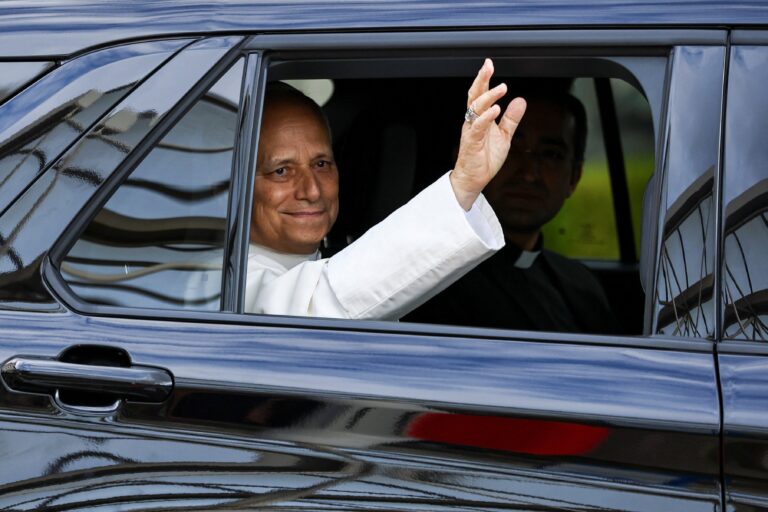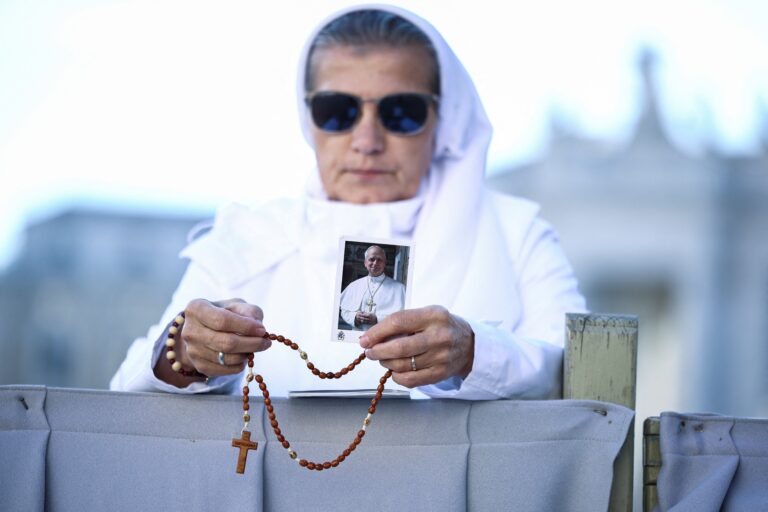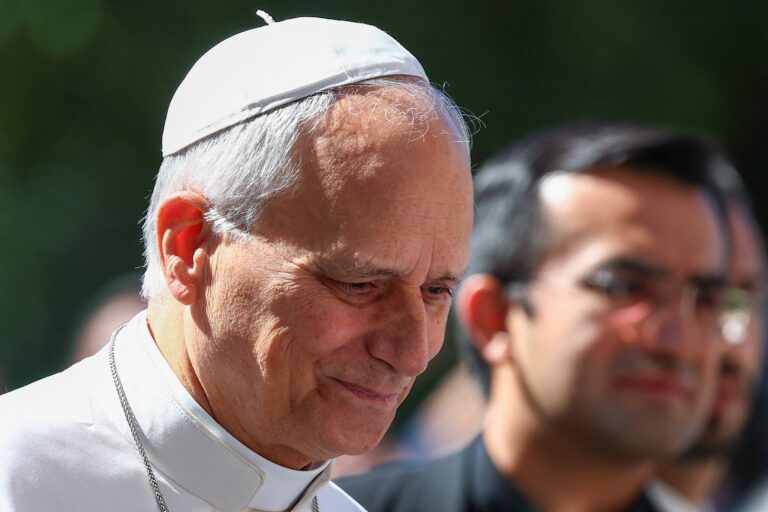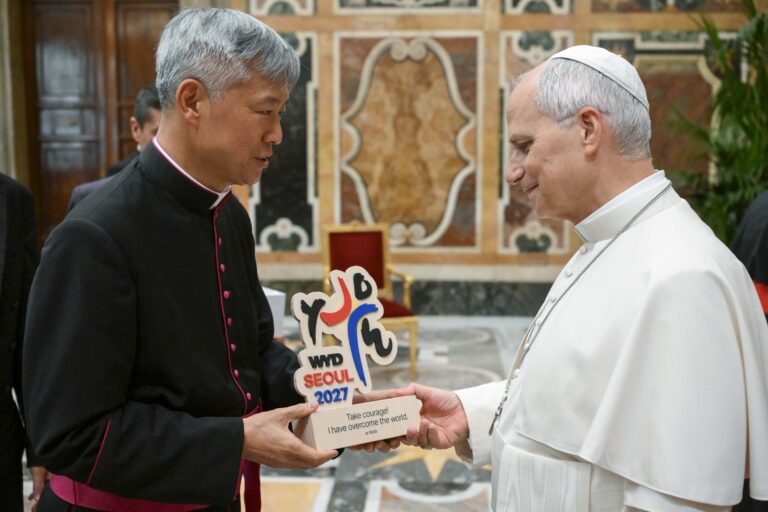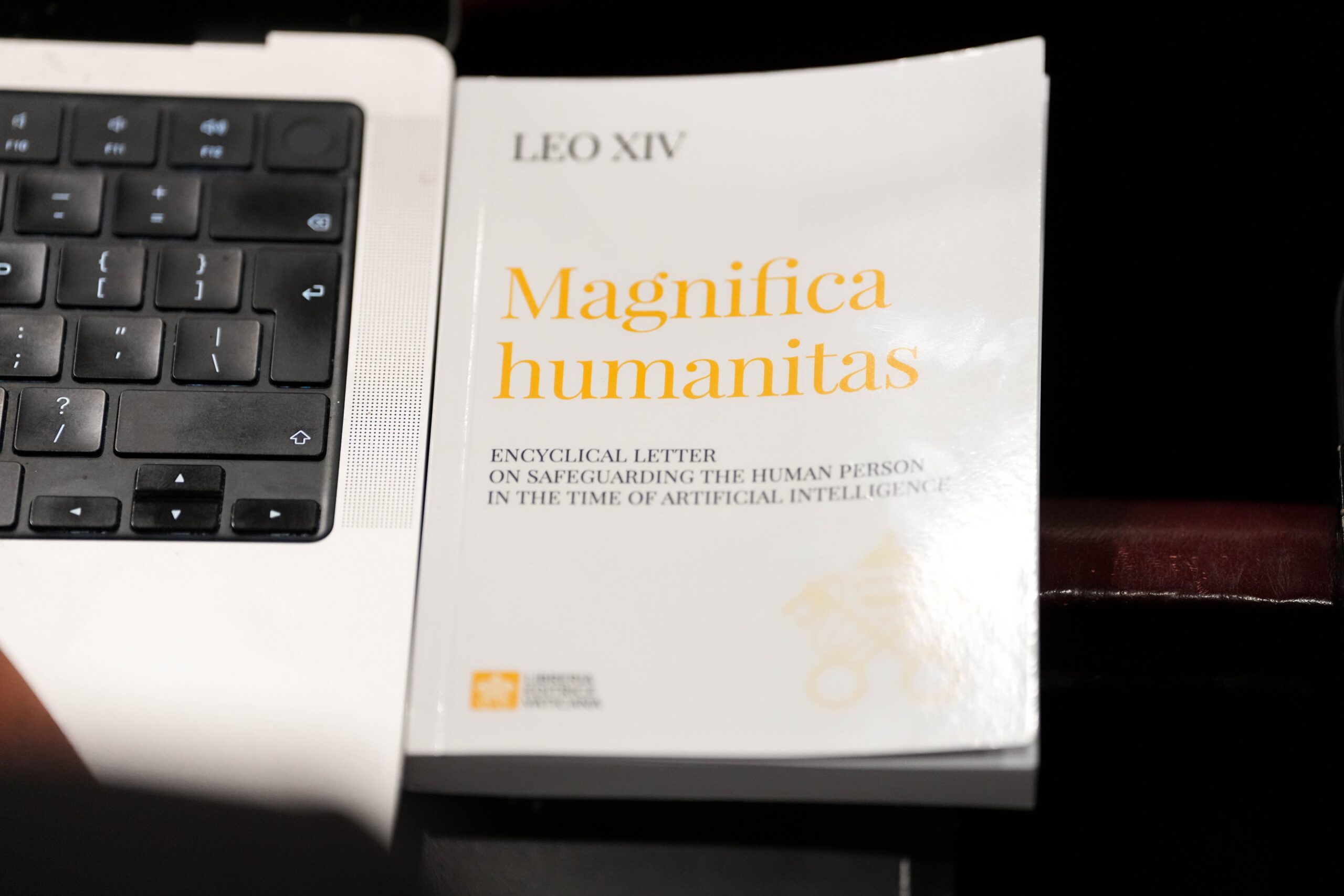

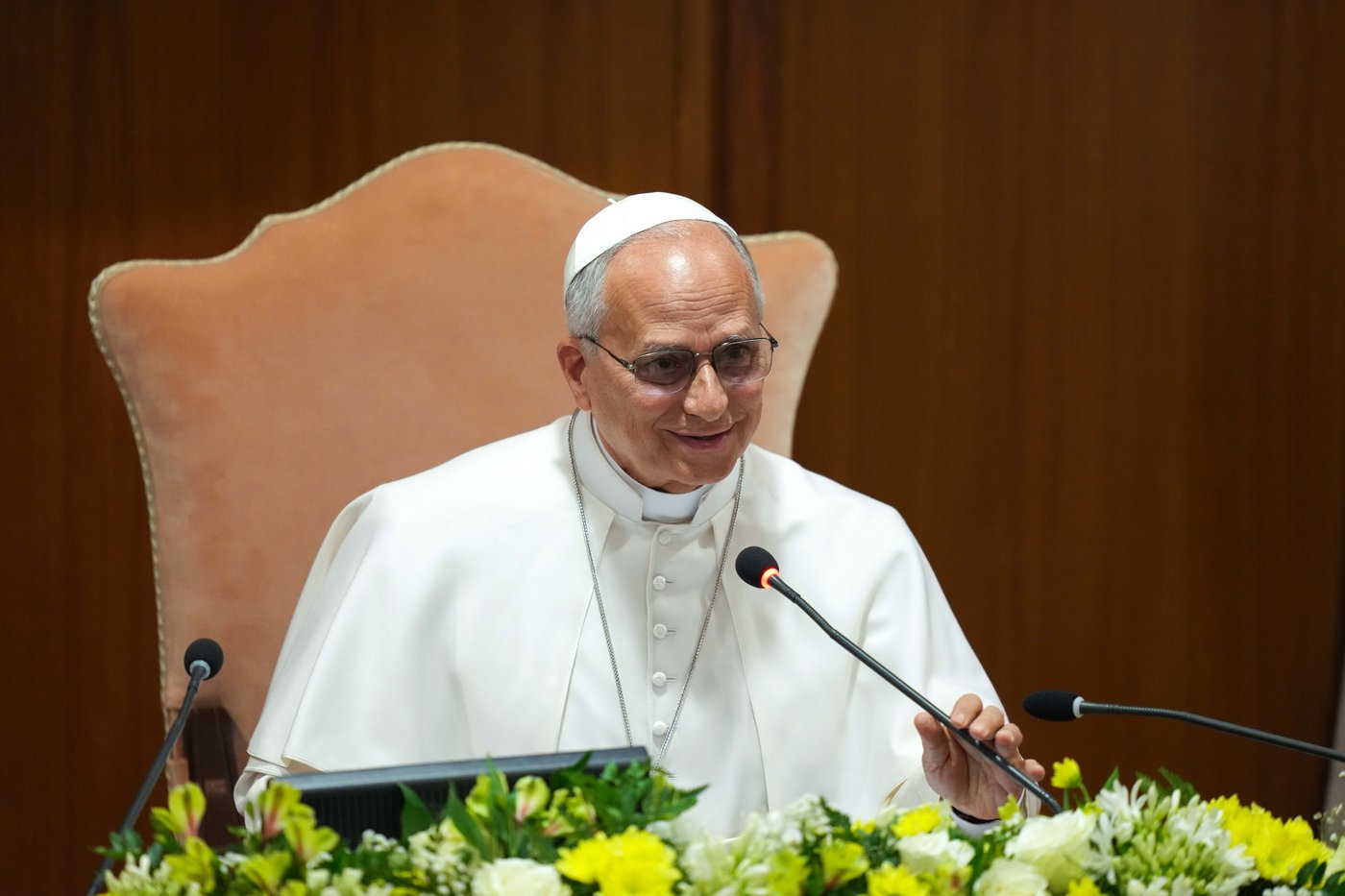
VATICAN CITY —Pope Leo XIV personally attended the presentation Monday of his first encyclical, Magnifica Humanitas, which he said has “even greater consequences” than the Industrial Revolution.
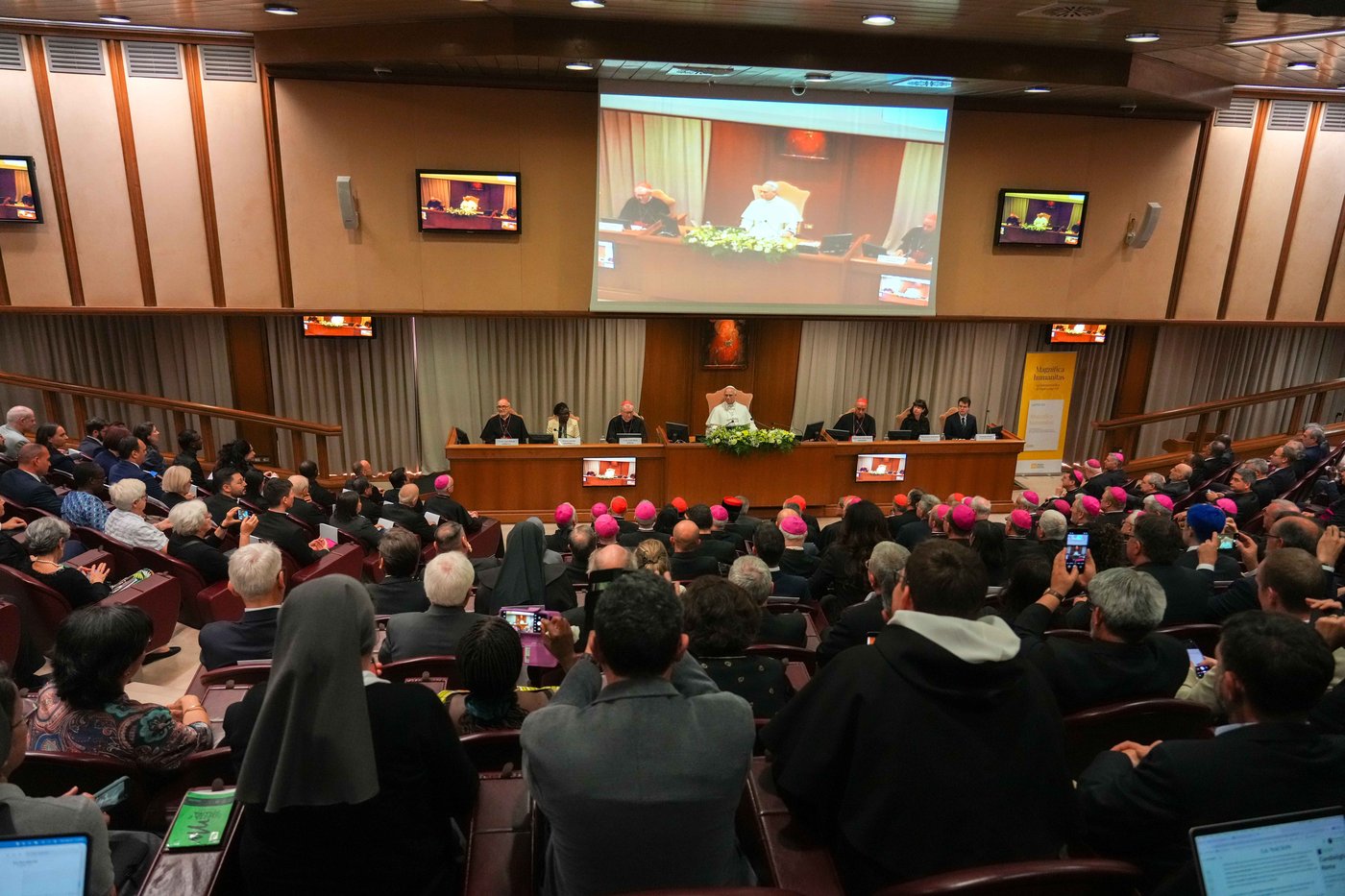
Upon his arrival in the Vatican’s Synod Hall, uncustomary for an encyclical’s release, he was greeted with sustained applause from an audience made up of members of the Roman Curia, representatives of academia, and the diplomatic corps.
The 82-page document, released May 25, the day after Pentecost, addresses “the safeguarding of the human person in the time of artificial intelligence.”
The Canadian Conference of Catholic Bishops issued a statement citing the Vatican’s Dicastery for Promoting Integral Human Development.
“Magnifica Humanitas offers insights into the protection of the human person in the age of artificial intelligence, recognizing a profound epochal shift. It places the dignity of the human person at the centre as the criteria for guiding technical progress. The Church’s social teaching accompanies these transformations, pointing to the common good, solidarity and subsidiarity as the fundamental benchmarks for understanding and interpreting the transformation currently underway. It proposes, as an alternative to the culture of power and war, a civilization of love founded on justice, dialogue and shared responsibility.”
The CCCB also released a collection of resources on artificial intelligence to accompany the encyclical, including Pope Leo’s message for the 60th World Day of Social Communications, Preserving Human Voices and Faces, the Inter-Dicasterial Commission on Artificial Intelligence, Antiqua et Nova, and Pope Francis’ 2024 message on artificial intelligence and communication. (See bottom of story)
Among the speakers at the Vatican presentation was Canadian Christopher Olah, co-founder of the artificial intelligence company Anthropic, one of the world’s leading AI firms. Pope Leo later thanked Olah for attending, saying the exchange reflected the importance of dialogue between the Church, technology leaders and the wider world.
‘What a great sign of hope it is that with our differences we can listen to one another,’ the Pope said.
‘This interchange clearly bespeaks the gravity of the moment, as well as confidence that together we can discern the major questions of our time, and so the future of humanity,’ he added.”
Olah, who said he is not a believer, praised the Church for engaging seriously with the moral questions surrounding artificial intelligence.
‘We need informed critics who will tell the labs when we are failing,’ he said. ‘We need moral voices that the incentives cannot bend.’
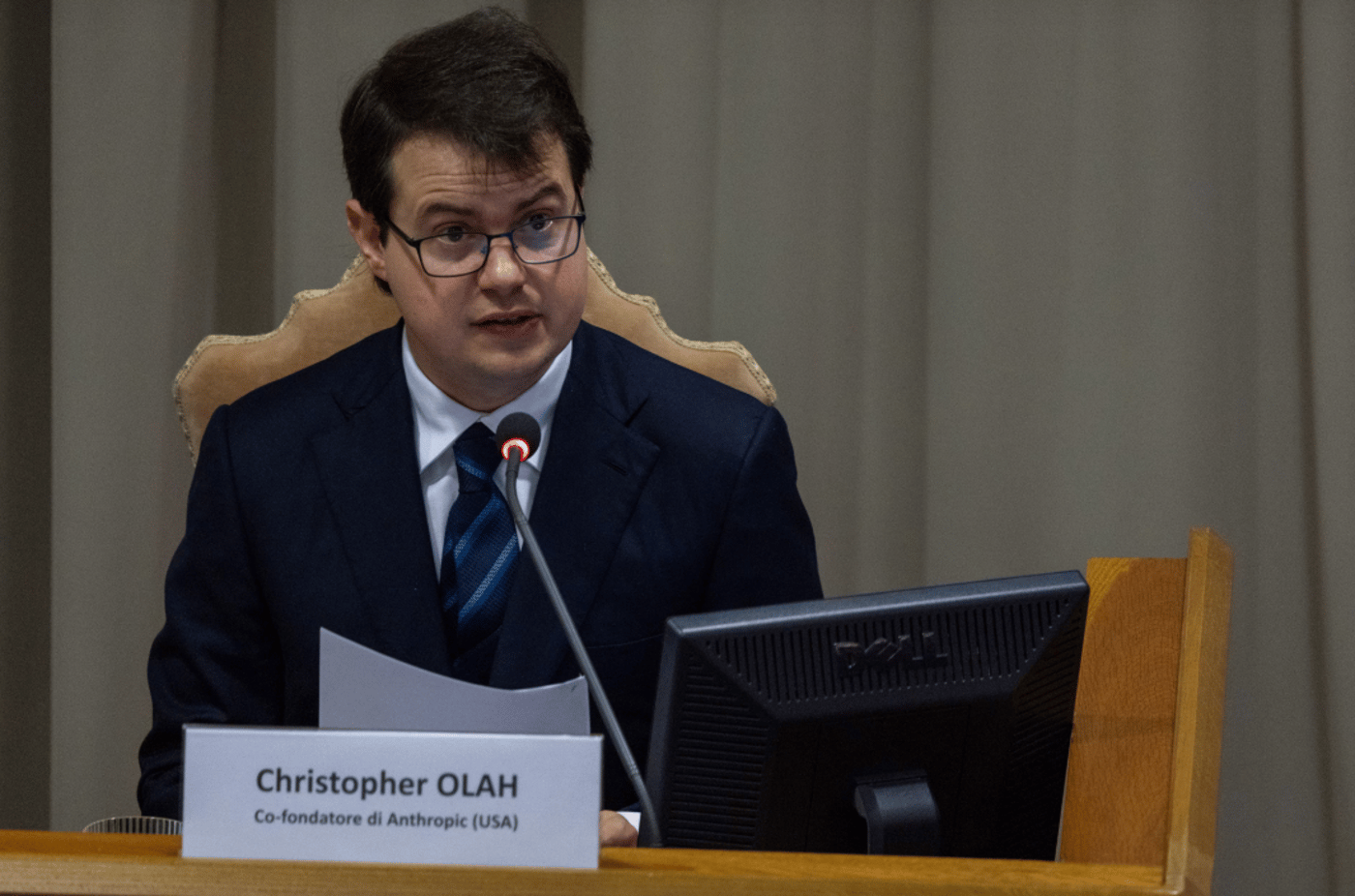
Canadian Christopher Olah, co-founder of AI company Anthropic, says he is grateful to Pope Leo XIV and the Church for “taking up this work of discernment” on artificial intelligence, during his address at the presentation of the encyclical Magnifica Humanitas on May 25, 2026, in the Synod Hall of the Vatican. (Daniel Ibáñez/EWTN News/Vatican Pool)
He also urged religious communities, governments and civil society groups to follow the Pope’s example by engaging closely with the development of AI technologies.
It is no coincidence that Leo XIV signed his first encyclical on May 15, the same date on which his predecessor Leo XIII promulgated Rerum Novarum (“On New Things”) in 1891 in response to the dehumanization brought about by the Industrial Revolution. As the Pope explained, the world today faces a transformation of perhaps even greater scope.
The document, signed May 15, marked the 135th anniversary of his namesake’s landmark social encyclical, which reflected on society, the economy and politics, and ushered in what is now known as the social doctrine of the Church.
“When some objected that the Church should not waste energy on worldly matters, but instead focus on communicating the message of eternal life, Leo XIII responded with realism and wisdom, saying that the proclamation of the Gospel cannot overlook the concrete lives of people,” Pope Leo wrote.

While Leo XIII focused on the Industrial Revolution’s impact on the human being and society, Pope Leo looked at the consequences of the digital revolution in the 21st century and how best to safeguard the human person in the time of artificial intelligence.
“Today we find ourselves facing a transformation of similar magnitude, with perhaps even greater consequences. Artificial intelligence already touches many areas of our lives and affects decisions that shape human coexistence,” he said.
Pope Leo used nearly the first half of the document to outline the role and development of the Church’s social teaching, and why and how it continues to be needed in a world facing old and new challenges.
“Today, the Social Doctrine of the Church is a legacy of wisdom, where we find principles for thought, criteria for discernment and judgment, and concrete guidelines for action” to “clearly interpret the challenges of the present and identify appropriate ways for living out a clear Christian witness, with joy and in service to the world,” he wrote.
“It is not an inert set of concepts, but a living corpus of truth that safeguards and interprets humanity’s vocation to a full and just life. I therefore wish to add my own voice to this living tradition,” he added.
Listening to and engaging with the wider world, especially those active in science, technology, academia and politics, he wrote, is crucial to a process of “shared discernment” to identify and heal the spiritual and cultural roots of present-day problems rather than issuing reactive pronouncements or “risk letting the succession of emergencies dictate the direction of our path.”
While the Church is concerned with theological, “anthropological” and social questions, it is also “necessary to establish adequate regulatory tools capable of upholding justice and curbing the distorting effects of technological power,” the Pope wrote.
“Nevertheless, the issue is not limited to regulation. As Pope Francis warned, we must realistically ask ourselves who holds this power today and how they use it,” he added.
“Humanity, created by God in all its grandeur, is today facing a pivotal choice: either to construct a new Tower of Babel or to build the city in which God and humanity dwell together,” he wrote. Every generation has the same duty of “guiding history to become a place where the dignity of every person is safeguarded, justice is promoted and fraternity is made possible.”
The Pope expressed particular concern about the impact of new technologies on the conduct of war, which, he warned, is changing dramatically.
“Like the earlier Leo, I feel entrusted to look upon another huge transformation with eyes of faith, with lucidity of reason, with openness to mystery, and with cries of the poor and the earth resounding in my heart,” he said.
He decried today’s “culture of power” that was “normalizing” war, increasing military arsenals, and fomenting fear and polarization. He also reinforced the Vatican’s long-standing opposition to leaving the decision to use lethal force to artificial intelligence or “to opaque or automated processes.”
“Today, more than ever, without prejudice to the right to self-defense in the strictest sense, it is important to reaffirm that the ‘just war’ theory, which has all too often been used to justify any kind of war, is now outdated,” he wrote.
“Humanity possesses far more effective and capable tools for promoting human life and resolving conflicts, such as dialogue, diplomacy and forgiveness. The use of force, violence and weapons reflects a relational poverty that always has disastrous consequences for civilian populations,” the document said.
The Pope also condemned what he called today’s “false realism,” saying it is “truly irresponsible” to stoke resignation by pretending war is inevitable and peace and dialogue are “utopian or irrational positions that ignore the risks at stake.”
“In fact, peace is neither a naïve hope nor merely the absence of war; instead, it is always possible as the fruit of justice and charity,” he wrote.
Pope Leo also proposed five paths toward daily and public responsibility: “the need to disarm words; building peace through justice; adopting the perspective of victims; cultivating a healthy realism; and reviving dialogue and multilateralism.”
The Holy Father also described the method behind the drafting of this magisterial document, which began in July 2025 at the papal residence in Castel Gandolfo. In it, he seeks to reaffirm what makes us human in a society shaped by technology.
He emphasized that Magnifica Humanitas was born from listening: “I have listened to scientists and engineers who work with sincere enthusiasm on technologies capable of alleviating immense suffering, to political leaders and public officials who have perseveringly sought just rules, to parents and teachers who are deeply concerned for the future of younger generations,” he said, without naming individuals.
At the same time, he acknowledged hearing other troubling voices: “Other very troubling voices have also reached me about increasingly autonomous weapons systems practically beyond any human reach to govern them effectively.”
“I hear very troubling accounts of algorithms that can block access to healthcare, employment, and security on the basis of data tainted by prejudice and injustice. And Iʼve heard the silence of those who have no voice when decisions are made — decisions likely to generate new forms of exclusion and suffering,” he lamented.
While the document was written “in a time of artificial intelligence,” it also included a wide range of continuing problems, including the exploitation of people and nature, war, the arms race, disrespect for human life, threats to democracy and the common good, discrimination against the poor and women, and new forms of slavery.
“Human trafficking must be recognized as a contemporary form of slavery and a grave violation of human dignity. Failing to respond firmly, or tolerating these practices in any way, is in some way to become complicit in today’s sins, which are akin to those of the past when slavery was being concealed and justified,” Pope Leo wrote.
While the Catholic Church constantly affirmed the dignity of every human being, he wrote, “neither can we deny or diminish the delay with which both society and the Church came to denounce the scourge of slavery,” noting it was not until the 19th century “that a formal, absolute and universal condemnation of slavery was clearly articulated, notably under Pope Leo XIII.”
“This development offers a clear example of the Church’s growth in understanding the perennial truths of Revelation that she safeguards,” he wrote, “even if it took eighteen centuries for its full incompatibility with slavery to be explicitly recognized.”
“This constitutes a wound in Christian memory, one from which we cannot consider ourselves detached,” he wrote, and “for this, in the name of the Church, I sincerely ask for pardon.”
In line with the document, which states that artificial intelligence is not morally neutral, the Pope called for AI to be “disarmed.”
“The word is strong, I know, but deliberately chosen because this moment needs words capable of attracting attention, awakening consciences, and indicating paths forward for humanity,” he warned.
“The Church has long been working for nuclear disarmament, aware that every great technical power can affect peopleʼs lives, and so must be accompanied by adequate moral discernment and public control. Nuclear disarmament remains a service to peace and the dignity of the human family,” he added.
It is “a shared responsibility,” he wrote, for all members of the human family to come together and discern “Where are we going? Toward what goal do we wish to orient ourselves? What direction should we choose as a people and as a human community?”
“The search for the truth in public life, education in the digital environment, the transformation of work, the fragility of families and new forms of slavery are not isolated phenomena,” he wrote. “Rather, they reflect a common underlying issue, namely that if technology becomes the ultimate criterion, the human person risks being reduced to data, a cog in a machine or a commodity.”
“If, however, technology is integrated with a wise perspective, it can become an instrument of growth, justice and fraternity,” he added.
Innovation can genuinely serve integral human development and integral ecology, Pope Leo wrote, “rather than becoming a source of exclusion and dominance.”
Fundamentally, he added, what is needed is the Christian view of humanity and understanding of God’s plan for his creation.
“As a believer among believers, I invite everyone to contemplate, in the face of the Son of God, the grandeur of humanity that shines a light also on the era of AI,” he wrote. “In Christ, we are called to cooperate in the work of creation, rather than be disinterested observers of technological processes that limit our freedom and responsibility.”
“The dignity inscribed in each of us by the Holy Spirit can also be seen in our capacity to reflect critically, choose and love freely, and form authentic relationships,” Pope Leo wrote.
“No computational system, however sophisticated, can create a heart that gives itself, or a conscience that discerns good from evil,” he wrote. “Even when machines excel in efficiency, a human face that asks to be gazed upon remains the center of our history.”
Also speaking at the presentation were three cardinals of the Roman Curia: Secretary of State Cardinal Pietro Parolin; Cardinal Víctor Manuel Fernández, prefect of the Dicastery for the Doctrine of the Faith; and Cardinal Michael Czerny, SJ, prefect of the Dicastery for Promoting Integral Human Development.
Two theologians also spoke: Anna Rowlands, a specialist in Catholic social teaching and migration ethics at Durham University, and Leocadie Lushombo, an expert in political theology and Catholic social thought at the Jesuit School of Theology of Santa Clara University in California.
Resources
- Message of His Holiness Pope Leo XIV for the 60th World Day of Social Communications: Preserving Human Voices and Faces
- Inter-Dicasterial Commission on Artificial Intelligence
- Message of Pope Leo XIV to Participants in the Second Annual Conference on Artificial Intelligence, Ethics, and Corporate Governance
- Antiqua et Nova: Note on the Relationship Between Artificial Intelligence and Human Intelligence
- Message of His Holiness Pope Francis for the 58th World Day of Social Communications – Artificial Intelligence and the Wisdom of the Heart: Towards a Fully Human Communication
This story was originally published by ACI Prensa, EWTN News’ Spanish-language news service. It has been translated and adapted by EWTN News English. With files from Catholic News Service in Rome
Your voice matters! Join the conversation by submitting a Letter to the Editor here.