Prior judicial review requested by disability advocate groups
OTTAWA (CCN)
Members of the Justice Committee reviewing assisted-suicide Bill C-14 on May 9 defeated many amendments that would have strengthened safeguards.
Among them, a Conservative amendment requiring a prior judicial review of all assisted-suicide requests lost by 6-3 vote.
A prior judicial review is one of the recommendations in the Vulnerable Persons Standard signed by disability advocate groups such as the Canadian Association for Community Living, bioethicists such as Margaret Somerville and Sr. Nuala Kenny, palliative care experts such as Dr. Balfour Mount and Dr. Harvey Chochinov, and organizations that care for vulnerable peoples such as L’Arche Canada and the Catholic Health Alliance of Canada.
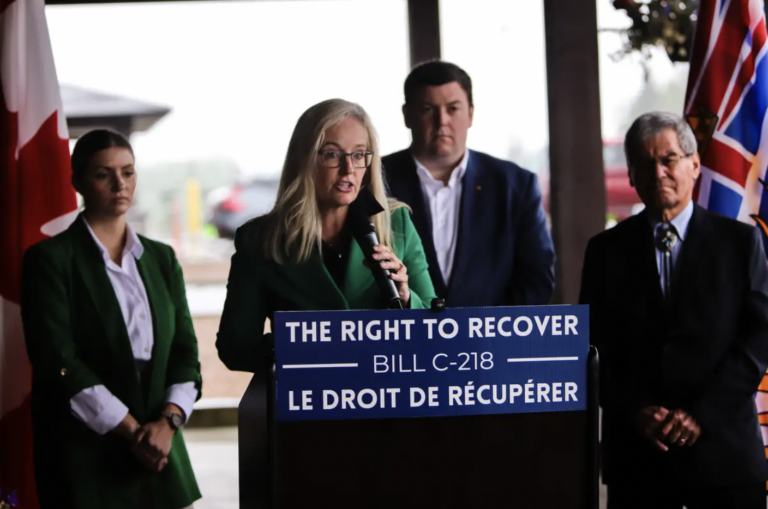
Justice Committee Conservative co-chair Ted Falk said in an interview he put forward the amendment so “a judge will take a look and make sure all the boxes are checked, that witnesses are eligible to be witnesses and the individual has met all the conditions [for a medically assisted death.]”
“Having an assisted-suicide request go before a judge would make sure “psychological evaluations are happening and people receiving physician-assisted suicide and doing it with a clear mind,” Falk said.
Liberal MP Chris Bittle opposed the amendment, arguing it would “make a lot of lawyers rich,” and make medical assisted dying “only available for the rich.”
Liberal MP Ahmed Hussein pointed out the risk of a time delay due to clogged courts. New Democrat Justice Committee co-chair Murray Rankin warned the amendment would limit access, especially in remote communities.
Conservative MP Rob Nicholson said courts move quickly in matters of urgency such as court injunctions. He argued requests for assisted dying “would be handled in an expeditious manner.”
Conservative MP Garnett Genuis pointed out doctors are more expensive than lawyers, but the government pays for doctors. “There is no reason the government couldn’t cover the lawyers’ time if they wanted to,” he said.
Falk pointed out the Supreme Court of Canada has set up a judicial review for those seeking an assisted suicide during the extension it granted Parliament to pass its assisted suicide legislation. “I think when it comes to this piece of legislation, if I’m going to err on anything, I’m going to err on the side of caution,” Falk said, describing a “judicial sign off” as an “important safeguard.
Conservative MPs put forward a number of amendments of other amendments to strengthen safeguards met with similar defeat.
Conservative MP Arnold Viersen an amendment to restrict assisted suicide to those who are terminally ill as a safeguard to protect members of the disability community. This amendment was defeated 6-3.
Falk introduced an amendment to ensure patients who can self-administer a suicide drug should do so in the presence of a nurse practitioner and doctor. Only when a person could not self-administer would a medical professional administer the drug, he said. “I think this puts the onus back on the patient,” Falk said. The patient has requested a physician- assisted suicide, he said. “We’re providing medical aid to do that.” The majority of the Justice Committee rejected this amendment as well.
Conservative MP Mark Warawa, who introduced a private member’s bill C-268 on May 5, to protect conscience rights of medical professionals by making intimidating or compelling them to
“take part, directly or indirectly, in the provision of medical assistance in dying,” and offence.
Warawa said he hoped he could get an amendment to Bill C-14 to protect conscience rights to pass.
Other Conservative defeated amendments included making sure those with underlying psychiatric conditions had a psychiatric evaluation before an assisted suicide care; that people have proper information about what is available regarding palliative care and pain management; and a requirement for a ministerial sign-off for a medically-assisted death.
New Democratic Justice Committee co-chair Murray Rankin, however, met with similar defeat when he tried to loosen the criteria for an assisted death. He introduced an amendment to introduce advanced directives for those who have a diagnosis of dementia.
In an interview, Falk said most of the Liberal amendments involved “tightening up definitions, and getting rid of ambiguity, for the most part not very onerous amendments.”
Falk told the committee he was concerned the bill made no statement with respect to the “sanctity of life,” and has insufficient safeguards. The Carter decision never said there was a right to assisted suicide, but a granting of exemptions in certain cases, he stressed.
The Justice Committee has scheduled extended hours to expedite the passage of Bill C-14 so it can return to the House of Commons for a Third Reading vote and then go on to the Senate. This could happen as early as the week of May 15-21.
The Liberal government shut down debate on Bill C-14 on May 4. The House of Commons then passed the bill during a Second Reading vote of 235-75 and referred it to the Justice Committee.
Bill C-14 was referred to the Justice Committee on May 4 after the Liberal government shut down debate and forced a Second Reading vote.