
VANCOUVER—Grassroots efforts are key to alleviating climate change and poverty, three church leaders heard from a group of Vancouver residents.
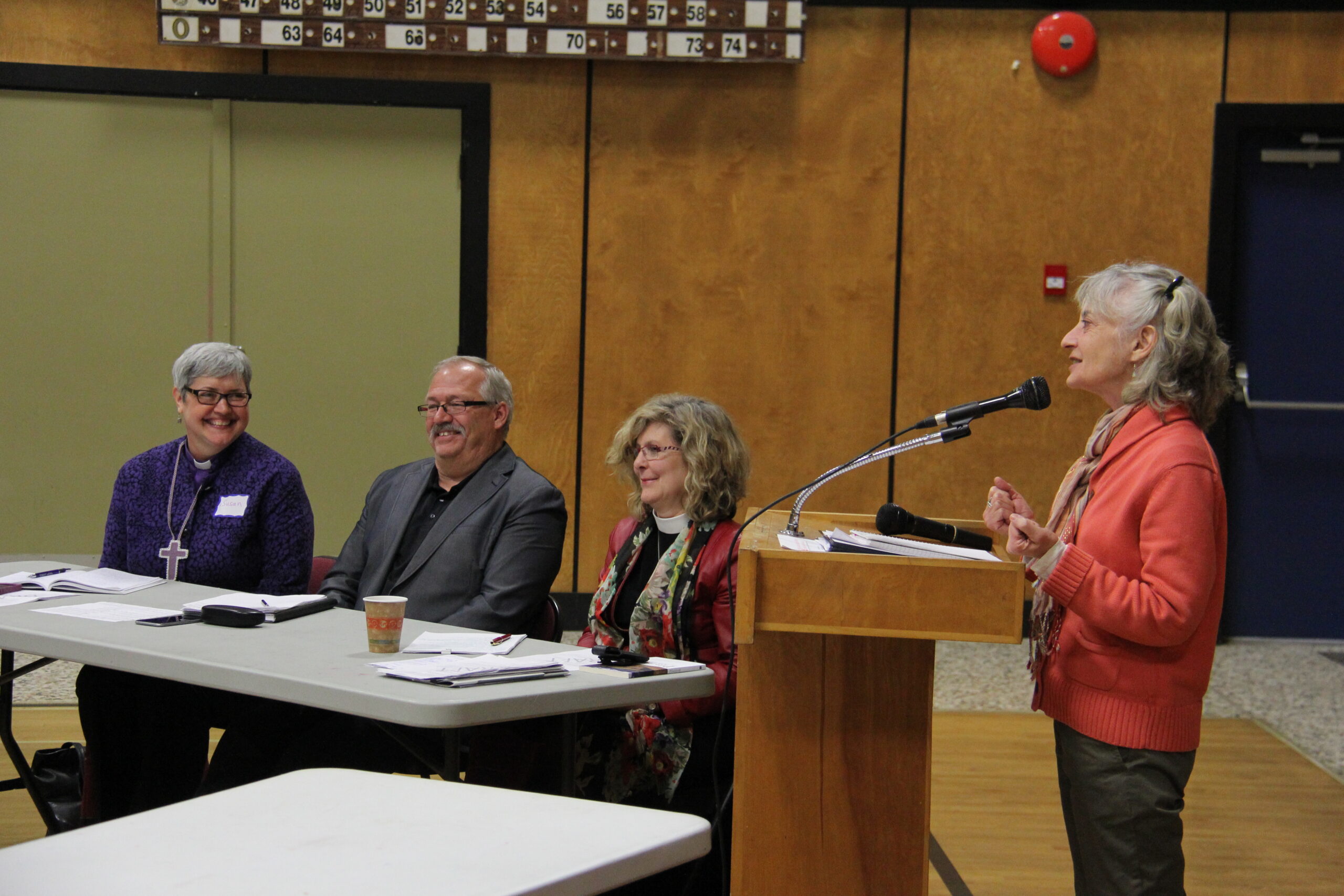
About 50 locals met with the Christian representatives in Our Lady of Sorrows Parish gym April 13 and shared their concerns and suggested solutions. It was the second stop of a countrywide Justice Tour by the three leaders.
“I would love to advocate that we know our places,” suggested Markku Kostamo, head of A Rocha Canada, a Christian environmental justice organization.
“Get to know the native plants, the wildlife, the birds. When we know our place, we love it. We care for our people; we care for our place.”
Deborah Littman, head of the Metro Vancouver Alliance, told the church leaders she agreed with the need for locally based projects.
“Not even that long ago, 40-50 years, people were embedded in communities. They grew up in places where they knew each other: they knew each other’s families, they went to church together, they worked together, and they socialized together,” she said.
“The things that mattered to people just kind of bubbled up from the grassroots. When you worked on something, it didn’t necessarily have to be for you, but it was for that neighbour that you had known all your life.”
She said that sense of community has since fractured. To address properly issues like poverty and environmental justice, citizens have to “be very intentional about rebuilding” that community sense.
Littman also encouraged faith groups to be more vocal about their values when engaging in social projects. “It’s not just that there’s a good business case for a living wage,” she said; it’s also part of our values.
“There is a point to saying: ‘It’s just the right thing. This is the kind of society we want to live in, where people are not waking up every morning and wondering where their next meal will come from or whether they will be evicted or whether their children will be able to participate in school. It’s just good.'”
Chief Robert Joseph of the Truth and Reconciliation Commission said he had hope in the fruits of the tour: “I think with the Justice Tour, it’s about reconciliation. It’s about finding a new way forward.”
Willard Metzger, the executive director of Mennonite Church Canada and one of the three church leaders, was “struck by the common theme of relationship, connectedness, working as a community for a common cause.”
Susan Johnson of the Evangelical Lutheran Church in Canada, and Karen Hamilton, the general secretary of the Canadian Council of Churches, said they hope to present the findings of their tour to the CCC and the federal government.
“We want to hear what it is you are doing and how we can work together nationally, regionally, and locally,” Hamilton said.
The CCC and Citizens for Public Justice collaborated on similar documents on poverty and climate change in 2011. Hamilton said with four UN conferences touching on these topics in 2015, it’s an important year to address them again.
Vancouver was the first city on the Justice Tour. It was scheduled to pass through Edmonton, Saskatoon, Winnipeg, Kitchener, Halifax, Montreal, and Ottawa by mid-May.
More information is available at www.canadiancouncilofchurches.ca.