Launch of portal to information on tens of thousands of documents was Nov. 3
OTTAWA (CCN)
A newly released digital inventory of Vatican archives is making possible new insights into Canadian history.
The documents themselves are not accessible through the website carrying the inventory. That would take years of work and the funding for it. What is now available is a precis of the documents, and their location, so interested people can contact the Vatican archive to obtain copies.
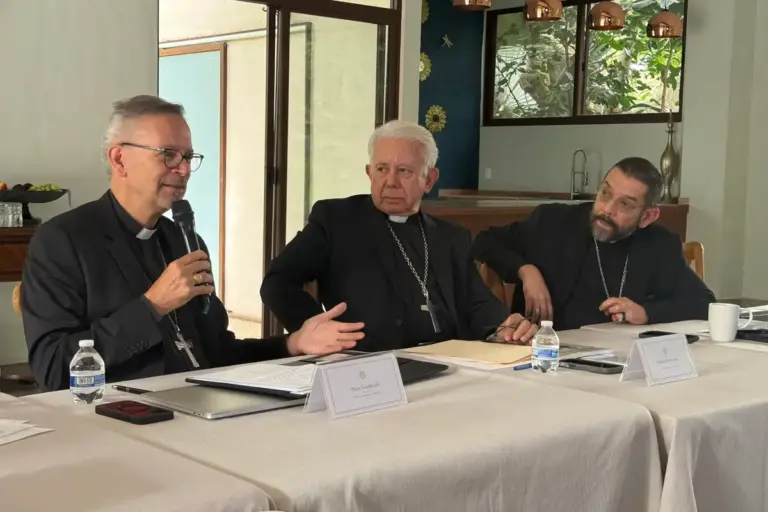
Genoa University professor emeritus Luca Codignola and Saint Paul University professor Father Pierre Hurtubise were at the Nov. 3 launch of Saint Paul University’s online portal to the information on tens of thousands of documents concerning Canada from 1622 to 1922.
Printing these documents or committing them to microfiche seemed a monumental task, Father Hurtubise said. “We needed to find better and less costly ways.” Then came the “invention of the personal computer and its spectacular accomplice, the Internet,” he said.
Retired Canadian archivist Victorin Chabot and Codignola, along with Father Hurtubise, were involved in the project from the very beginning.
In the 1990s, the Canadian Archives cut funding to the project, but Chabot, who was about to retire, had already digitized many of the inventories of the tens of thousands of documents, Father Hurtubise said.
The inventories reveal new information about church, religious, and Catholic history in Canada, said Codignola, such as the presence of more than 60 Capuchin missionaries in Acadia during the years 1639 to 1656, “a very large number for such a small population.”
A similar number of Jesuits, who are much more famous, were in Acadia and Canada at the same time, he said.
The discovery of the Capuchins gives new insights into the relationships of the missionaries with Canada’s indigenous peoples as well as with other missionary orders, Codignola said.
The documents also undermine the perception of Rome documents as only formal in nature and therefore uninteresting, Codignola said. For example, the appointment of Quebec’s first Bishop, St. Francois Laval, was the subject of much discussion in Rome before the decision was made.
Among the considerations: Would Rome or Versaille would be in charge of Canada? Was a new bishop needed? Was Laval the best candidate? Who would pay for registering the papal bull and supporting the new bishopric?
In the early 19th century, when it came time to carve up the huge Quebec diocese, the documents show Bishop Joseph-Octave Plessis did not cling to power or try to keep Irish, Scottish, and western communities under the strict control of francophone clergy from Quebec, he said.
The Vatican Archives and Canada project can be accessed through Saint Paul University’s website: ustpaul.ca/RCRHC. The calendars or inventories of the archives are found in the menu on the left-hand side.
The joint project of the Public Archives of Canada (now Library and Archives Canada), Saint Paul’s Research Chair for the Religious History of Canada, and Italian scholars like Codignola began in 1977, said Father Hurtubise.
Canadian documents in France and England had been accessible to historians, but those in the Vatican archives had not been as well explored, he said.