
This week we’re stepping beyond the traditional book review to hear directly from Canadian Catholics about books they have written or contributed to. Each book addresses the tension between personal convictions and prevailing cultural beliefs and how the writers dealt with challenges to their faith, identity, or principles.
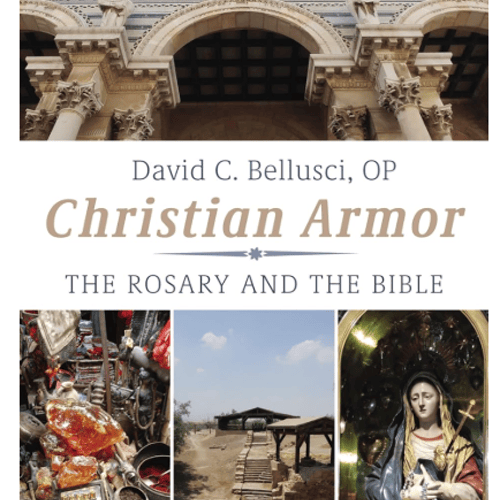
Christian Armor:
The Rosary and the Bible
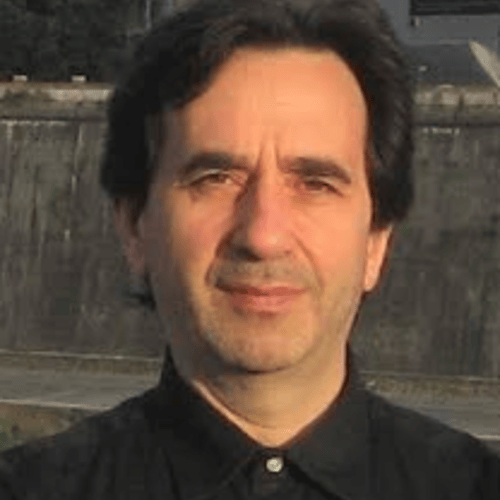
Father David Bellusci, OP, shares the journey of faith and study that led to his writing a meditation on the Rosary’s mysteries as a source of prayer, virtue, and spiritual defence.
Writing a book on the Rosary seems fitting as a Dominican endeavour.
The Rosary is associated with St. Dominic, who relied on Incarnational meditations to combat Gnostic-based heresies in the 13th century. St. Pius V, the Dominican Pope, turned to the Rosary as a weapon in the 17th-century Battle of Lepanto.
As a member of the Order of Preachers, which has been transmitting God’s Word for eight centuries, I decided to explore and deepen the 20 mysteries of the Rosary as biblical meditations. Moreover, we need the Rosary and the Bible as “armour”: the spiritual means by which we defend ourselves against the deception of the evil one.
My confusing encounter with the Bible goes back to my university experience in Montreal. I practised my faith by going to daily Mass. But when I joined two Bible study groups on campus offered by Evangelicals, I found I could not answer their questions concerning Catholic practices, nor could I respond to their criticism. This happened while I was studying modern philosophy, where I was left questioning God’s existence.
Finally, an international speaker came to the university, invited by the Religious Studies Department. I went to listen to his lecture on the Book of Isaiah; the scholar’s aim was to demythologize the Book of Isaiah. I left very confused about what I believed at that point.
I had a crisis of faith that night, lasting until dawn. I had a Salvador Dali painting hanging in my room with the Virgin Mary looking at her Son resurrecting on the Cross. I came to believe certain truths: my existence depended on a being greater than I who was the source of my life; without a doubt, I needed a Saviour for my sins; truth is one, unifying, and unchanging; Jesus left us his mother to intercede for us. Conclusion: these truths are found in the Catholic Church.
Christian Armor follows the 20 mysteries of the Rosary in chronological order as the biblical events occur in the Scriptures: Joyful, Luminous, Sorrowful, and Glorious Mysteries.
With each mystery, both the Old Testament and New Testament references deepen the meditation with the Word of God. Christian Armor includes a scripture index and subject index so the reader can conveniently find the Scripture passages used throughout the book.
Each mystery is also divided into two parts: in the first part, the reader finds biblical and archaeological/historical elements to the mystery; in the second part, the focus remains entirely on virtue-building. Prayer and sanctity are shown to be inseparable. Prayer transforms how we live and how we become conformed to Christ.
Catholics draw from both Scripture and Tradition, and have the benefit of 2,000 years of Apostolic succession traced to Saint Peter. At a time when we are exposed to aggressive moral relativism, especially young adults due to ideologies imposed by academic institutions and the political establishment, Tradition helps distinguish true from false teaching, particularly in an age of confusion such as ours.
The virtue-building section of each mystery that builds on the biblical mystery is fundamental to helping us reflect on how we live our lives: if we are following Christ’s teachings, or not; if we are adhering to authoritative Tradition, or not.
So, besides praying the mysteries, the believer deepens in knowledge of the Scriptures, and ultimately, we examine our lives spiritually and morally.
I do not ignore controversy, either. I have taken an apologetic approach to dealing with historical and moral disputes. Christian Armor serves to bring clarity, defend, and spread the Catholic faith.
With the Rosary meditations and Scripture references, ideally, one page or one section can be read during the day, thereby reflecting on the Scripture passage in relation to Mary and Jesus, and one’s own Christian journey. So, Christian Armor serves both as a spiritual reading and a pedagogical instrument for virtue-building.
Christian Armor was written over a five-year period in a variety of settings: Westminster Abbey in Mission, Santa Maria Maggiore in Rome, the Madonna of Oropa shrine in the Italian Alps, and ongoing revisions at the Dominican House in Vancouver. Material for Christian Armor draws from biblical sources in addition to archaeological sites in Israel and Jordan. The pastoral component on virtue-building is the result of years of college, university, and religious formation settings, retreats, missions, and confession ministry in Canada, Colombia, India, Italy, Kenya, Nicaragua, and Rwanda/Burundi.
Christian Armor is available at Catholic bookshops in Vancouver/Langley and Amazon.ca.
Father David Bellusci is a Dominican priest, author, and theologian who teaches at Catholic Pacific College in Langley.
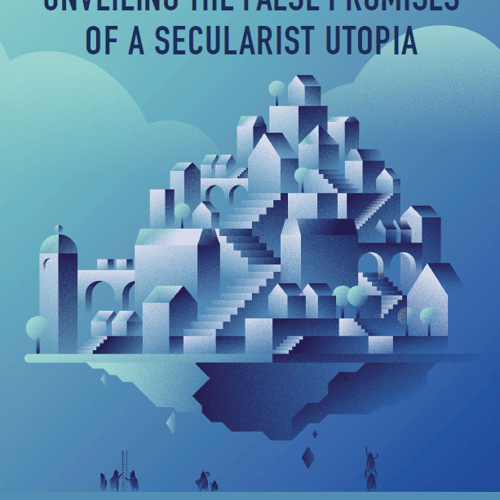
Paradise Cancelled
Anthony Schratz explores whether the modern worldview delivers on its promises of freedom, justice, equality, and tolerance or if a deeper perspective is needed to truly fulfill the longings of the human heart.
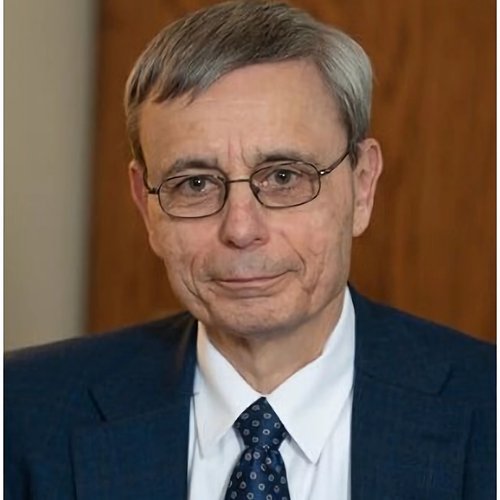
There is a worldview that is permeating our society, and for some time our Canadian society has been on its cutting edge.
It’s a movement without an official name, but it’s often referred to as Expressive Individualism, Secular Liberalism, or Wokeness. It promises a paradise characterized by freedom, equality, tolerance, and human rights.
It’s presented in a very attractive and seductive way, as being open-minded and respectful of different views and opinions. Since it allows for a diversity of lifestyles it is seen as a source of richness for a society and for the individual. This diversity increases the range of available options without forcing any of them on anyone, and so it is presented as a practical way to live in a pluralistic society and to ensure peace, fairness, justice, equality, and human rights.
It allows each one to exercise autonomy with respect to issues like divorce, abortion, same-sex relationships, contraception, euthanasia, transgenderism, promiscuity, consumption of drugs, etc. And it seems to be a mature and critical-minded position, allowing each person to think for himself: “I will decide what is right and wrong for me.”
At the same time, this worldview tends to blame the Catholic Church for much of what it deems wrong with Western Civilization. It portrays religion as basically superstition, and Christians as intolerant, dogmatic, narrow-minded, and judgmental people who want to impose their morality on others. The Church itself is seen as arrogant, since it contends that only it has the truth.
This worldview maintains that all the great achievements of our civilization were only made possible once it freed itself from the control of an obscurantist Church.
What is the best way for a Catholic to meet the challenge of this worldview?
As a celibate member of the Opus Dei Prelature for many years, I have been director of university centres that prepare young men for the challenges awaiting them in life by helping them become virtuous leaders who will make their Catholic faith the guiding principle behind their daily actions. It is our hope that these young men will play an important role in the re-evangelization of our society called for by recent Popes. This has always been a rewarding experience that has filled me with great joy.
Like everyone else, these young men have to face this prevailing worldview. They tend to admire Jordan Peterson and others whose podcasts and videos provide them with a freshness of vision and more self-confidence to challenge the ideals of Expressive Individualism. Yet when they first come into contact with our formation, they lack the intellectual formation required to craft a rigorous critique of this ideology. In working sessions with our new students, we have an easy time exposing the flaws and contradictions inherent in Expressive Individualism and demonstrating that its assault on Christianity is entirely without intellectual merit.
Over the years, I have become increasingly concerned about the vast majority of Catholics who do not have the opportunity to benefit from the formation that we offer. I fear that many of them will either be lured into believing the false claims of Expressive Individualism, or will find themselves unable to craft and articulate a serious critique of this ideology.
It is with that in mind that I set out to write a short book that would provide the reader with a simple, clear, substantial, and easy-to-read explanation of both the Christian worldview and Expressive Individualism, and the contradictions inherent in the latter.
Since I did not want to set up a strawman that would be easy to knock down, I wrote my description of Expressive Individualism in the most convincing way I could, so that someone who espouses that ideology would read it and agree that I had explained it in a completely satisfactory way.
Having done that, I went on in subsequent chapters to expose the fallacies, inconsistencies and errors of that worldview.
Most Catholics will know that the paradise promised by Expressive Individualism is illusory and cannot lead to true happiness. Ultimately, only Christ can fulfill the deepest aspirations of the human heart.
Anthony Schratz is a retired lawyer, educator, and speaker with expertise in Church history and apologetics. He is director of Ernescliff College, an Opus Dei formation centre for young men at the University of Toronto.
Truth Be Told
Terry O’Neill looks at Selina Robinson’s powerful account of her fight against anti-Semitism, the betrayal she faced within her own party, and the lessons on leadership and courage in the face of hatred.

It was said of the French Revolution’s degeneration into a movement that ended up guillotining some of its own most fervent supporters that “the revolution devours its children.”
We might conclude the same of our own era’s “woke” revolution, whose cancel-culture guillotine was responsible for the political beheading of one of British Columbia’s most prominent social democrats, Selina Robinson.
Ms. Robinson’s fatal problem was that, even though she and her left-wing fellow travellers were linked arm in arm on such core “progressive” issues as LGBTQ+ rights, her pro-Israel, pro-Zionism views on the Palestinian question were profoundly out of step with Canada’s left and its political vehicle, the New Democratic Party.
The prevailing orthodoxy of such ideological warriors is that the Jews of Israel are colonialist settlers whose very existence oppresses the Palestinians.
As Robinson—who proudly described herself as “the Jew in the crew” of the B.C. NDP government—points out in her book, Truth Be Told, this ahistorical belief has become a fixation of the left, one that she argues is grounded in de facto anti-Semitism.
Truth Be Told tells the story of how Robinson’s courageous defence of Israel, in the wake of Hamas’ October 2023 massacre of 1,200 Israelis, made her the target of virulent anti-Semitism, for which she received precious little support from her colleagues in government.
It also eventually led to her political decapitation after she flippantly described the territory that Jews were given after the Second World War as a “crappy piece of land.”
Robinson tells of how, even though she quickly and deeply apologized for the remarks, B.C.’s NDP Premier, David Eby, succumbed to relentless demands for her political head on a platter, from Muslim leaders and others who characterized those “four fatal words” as racist because they demeaned the Palestinians who also claimed the area as their own.
After Eby pressured her into resigning from her position as Minister of Post-Secondary Education, Robinson then suffered a final insult when her plan to bring B.C.’s Muslim and Jewish communities together—a plan she had been asked by Eby to develop—was dismissed by Eby’s chief of staff as “too political.”
This was the final straw for Robinson, who decided in March 2024 to quit her party’s caucus and sit as an independent Member of the Legislative Assembly. In a public letter she issued explaining her decision, she said she could no longer tolerate the hypocrisy and “cowardice” of her party.
“This is not the party I signed on with—it has become a party that is afraid to stand with people, people who are hurting. It is now a party that puts politics and re-election before people,” she wrote.
On the subject of politics, while Truth Be Told can best be described as Robinson’s cri de coeur about the importance of standing up to hatred in defence of the truth, it can also be read as a primer on the characteristics of poor leadership, as epitomized by Eby.
I served alongside Robinson for two years on Coquitlam City Council and found her to be a principled politician who did not let dogma stand in the way of doing the right thing for the people she served. She earned my respect.
This important book, for which I provided some pre-publication editorial advice, only deepens this respect.
Terry O’Neill is a B.C. Catholic contributor, long-time journalist, and former municipal councillor.
Your voice matters! Join the conversation by submitting a Letter to the Editor here.