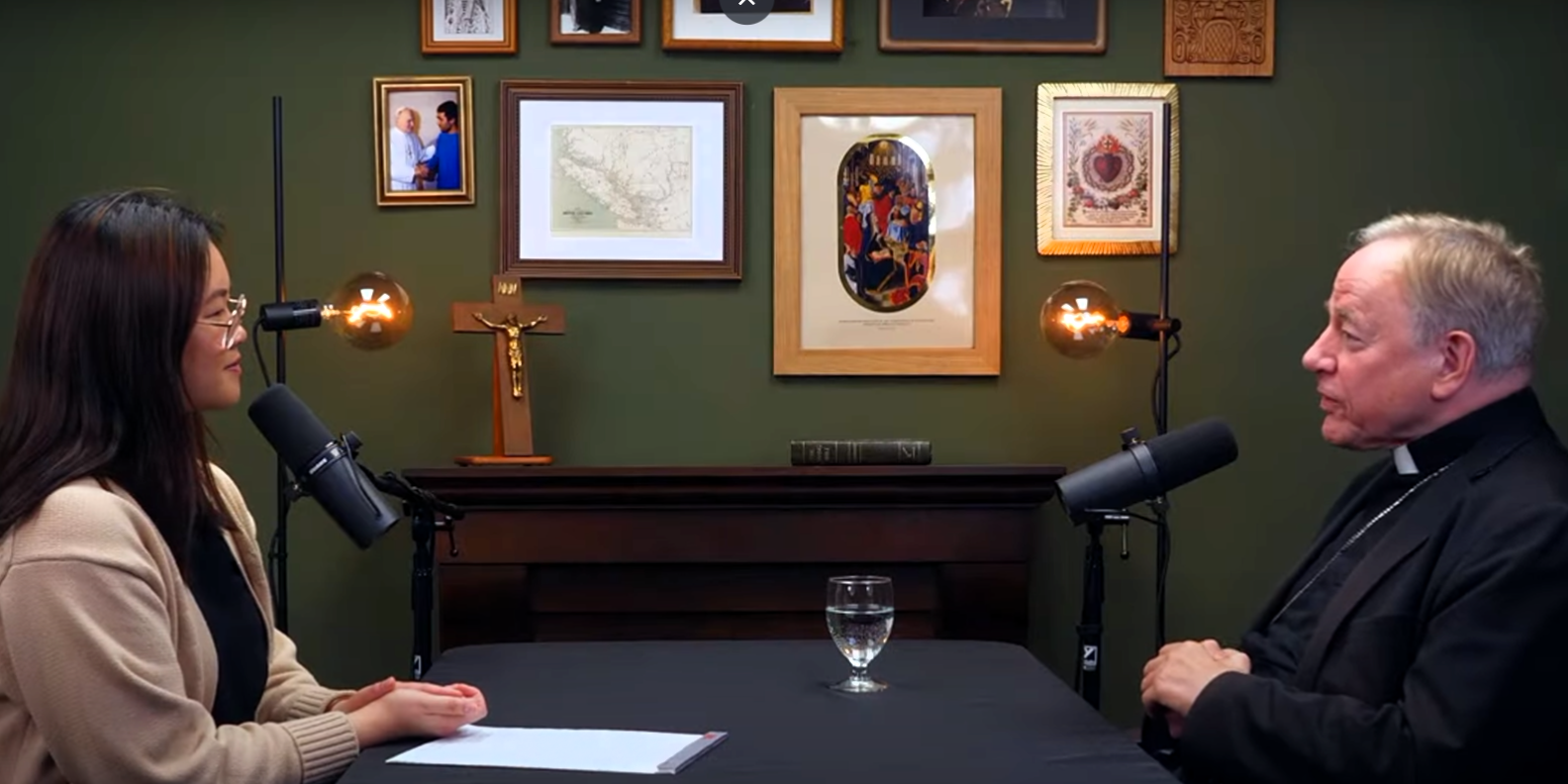

In his last months in Vancouver, Archbishop J. Michael Miller sat down for a series of interviews offering encouragement, reflection, and insight as he prepared to step down after 18 years of ministry. Across three conversations—two podcast appearances and a final farewell interview with the Archdiocese’s former communications director—he spoke candidly about his hopes for the Church, his years in Vancouver, and the path that lies ahead.
“Don’t be a couch potato Christian”
In a conversation with the Archdiocese’s communications team, Archbishop Miller urged Catholics to live the Jubilee Year of Hope through acts of discipleship, charity, and pilgrimage, reminding listeners that hope is found in a faith that is lived, not simply believed.
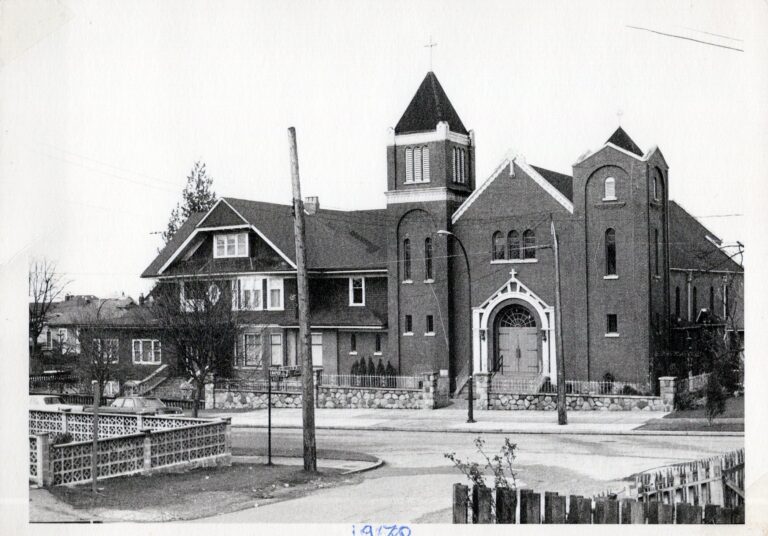
“Pilgrimages have been an ancient practice since the first Jubilee in 1300,” he said, highlighting the three local sites designated as pilgrimage locations during the Jubilee: Holy Rosary Cathedral in downtown Vancouver, St. Jude’s Parish in East Vancouver, and the Shrine of the Santo Niño of Cebu in Agassiz.
Speaking on the challenges facing many today, especially young people, the Archbishop pointed to social and economic pressures that have left many feeling directionless. “It does appear from studies that a lot of people, especially young people, feel a little hopeless,” he said.
To this, he offered a practical and spiritual antidote: movement. “Don’t be a couch potato Christian,” he said, echoing Pope Francis’ challenge to “make a mess” by going out into the world with missionary zeal. “We are agents of hope, and we have a mission to go and make disciples.”
He also warned against the “culture of complaint” that fosters cynicism. “We must remember: God is good, He is with us, and He calls us to share His hope with the world,” he said.
“Set the table for encounter”
In a separate appearance on the Proclaim podcast, Archbishop Miller turned his focus to evangelization, encouraging Catholics to adopt an Apostolic mindset rooted in confidence, joy, and dependence on the Holy Spirit.
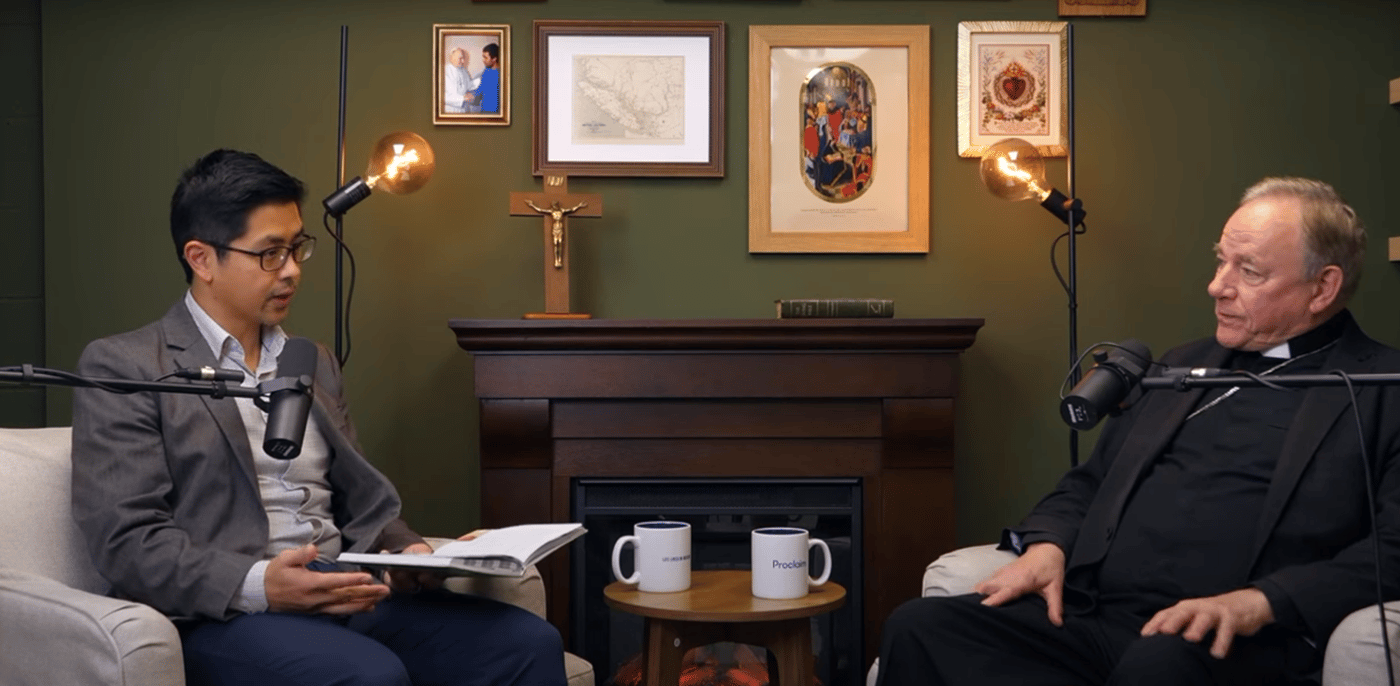
“To take the Commission of the Lord seriously, we have to have a certain mindset,” he said. “We call it Apostolic because we hope it mirrors the enthusiasm of the apostles at Pentecost.”
He cautioned against reducing evangelization to programs or checklists. “We must remind ourselves that conversion of heart and mind is the real goal,” he said. “A parish could run many programs without internalizing a focus on conversion.”
In a culture shaped by relativism, he called for clarity and courage in proclaiming the truth of the Gospel. “The Gospel doesn’t just exhort or edify; it proposes real truth. It tells us about the world as it truly is.”
Above all, he emphasized that evangelization is not something we do alone. “We don’t deliver the Holy Spirit—the Holy Spirit delivers himself,” he said. “Our role is to set the table for that encounter.”
The Proclaim movement, launched in 2019 to support missionary disciples in the Archdiocese, received his praise for helping Catholics share the Gospel with boldness and community. “It’s not just about training individuals,” he said. “It’s about creating a network of support so missionary disciples can thrive.”
A final farewell
In a wide-ranging conversation with former communications director Makani Marquis just before the election of Pope Leo XIV, Archbishop Miller reflected on his 18 years of ministry in Vancouver and the legacy of a local Church that has grown in faith and mission.
He named the reinstitution of the permanent diaconate, the establishment of Redemptoris Mater Seminary, and the building of the Archdiocese’s new pastoral centre among key milestones. He also pointed to a reawakening of evangelization and community life—particularly seen in the growing number of converts, small group initiatives, and renewal efforts across parishes.
“I think people have become more aware of their co-responsibility for proclaiming the Gospel,” he said. “That was clear this past Easter—around 700 people came into the Church, most of them baptized.”
He also expressed deep gratitude for the communities of consecrated women who have come to the Archdiocese. “We’ve had nine new communities of consecrated women come to the Archdiocese—by invitation—and I think that’ll leave a lasting impact.”
Looking ahead, Archbishop Miller said he will be returning to the University of St. Thomas in Houston, where he spent two decades earlier in his priesthood. “We have a residence on campus,” he said. “There are about seven or eight Basilians that I’ll be living with in the residence right across from the library.” He expects to serve as an adviser to the university’s new president and to remain involved in the life of the local Church. “I’m sure I’ll be called upon to give talks and little retreats around the Archdiocese—which is quite huge now.”
Though retirement will offer more quiet, it won’t be idle. “I like activity,” he said.
He may spend some time exploring his family history, particularly his father’s Belgian and English roots, and shared plans to organize his “stacks” of homilies and other documents “that could probably be put into some order.”
Archbishop Miller also expressed confidence in the future leadership of the Archdiocese. “I’m so delighted that Archbishop Richard Smith is my successor,” he said. “I couldn’t be happier about the selection that the Holy Father made. I know that he will do a bang-up job.”
Asked what he will miss most, Archbishop Miller didn’t hesitate: the people. “I’ve been extraordinarily blessed to work with really wonderful people who are competent, good, even holy,” he said. “That’s what I’ll miss.”
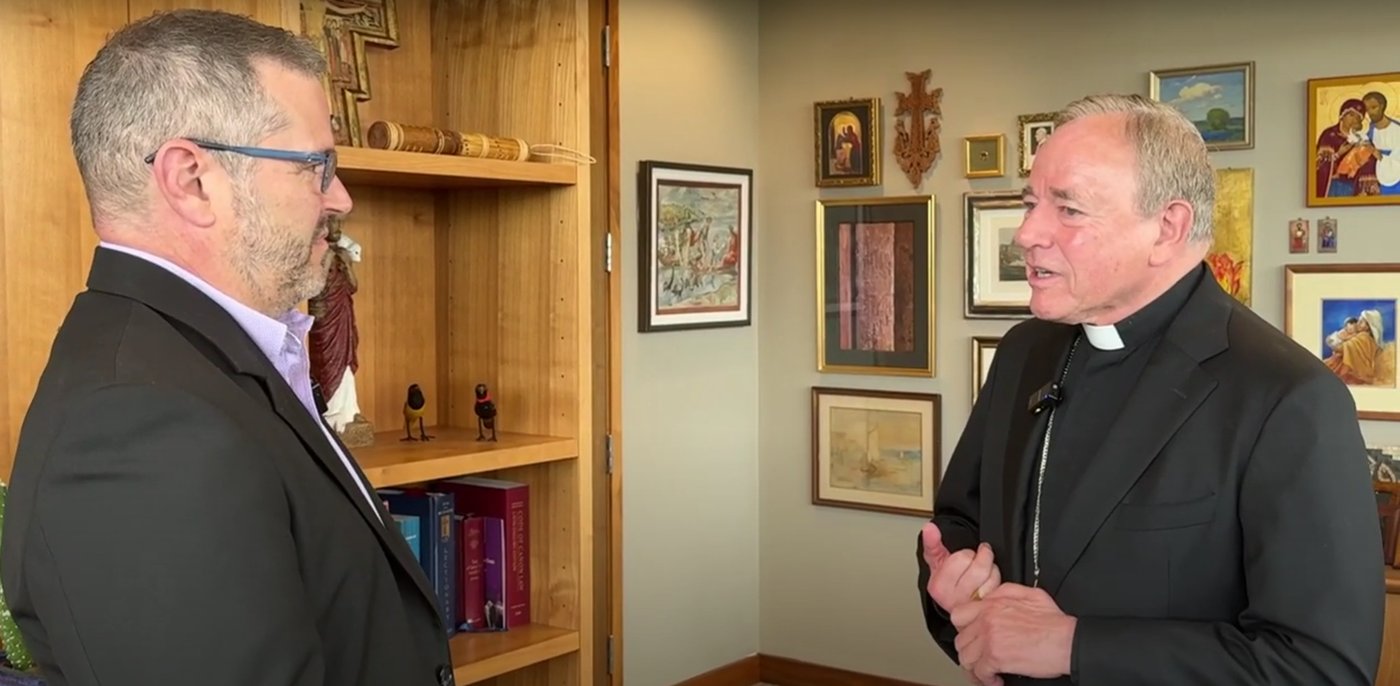
‘I was stunned’: Archbishop Miller recalls his appointment to Vancouver
After years of interviewing Archbishop Miller, Makani Marquis opened what would be their final one with a question he had never asked before:
Makani: Archbishop, I think this will be our final interview in this world. It’s been 18 years. And I don’t know if I’ve ever asked you this question before, but when you first heard the announcement, where were you?
Archbishop Miller: I was in Rome, on my way to work, when I got a call from the Congregation for Bishops. It was Cardinal Giovanni Battista Re (then-Prefect of the Congregation for Bishops), whose office was across the street from mine in the Palazzo del Sant’Uffizio. He said, “Please drop by my office.” I had a bit of a funny feeling, but we often did business between the two congregations.
So I sat down, and without much small talk, he said, “On Saturday night, the Holy Father appointed you to Vancouver.”
Makani: What was your reaction?
Archbishop Miller: I was stunned. He started telling me about Vancouver—how Archbishop Exner wasn’t well, and so on—but I hadn’t had any warning. No inkling. I had only ever been to Vancouver once, about 30 years earlier.
Makani: What brought you to Vancouver that first time?
Archbishop Miller: I thought it was a beautiful city. I stayed at St. Mark’s with the Basilians—we were en route to a retreat in Cochrane. I was coming from Texas and hadn’t been able to make the retreat there, so I joined them in Western Canada. I stayed two days in Vancouver, then we drove to Alberta.
Makani: What do you remember about arriving as Archbishop?
Archbishop Miller: I was picked up at the airport by Rob Mascitti. We went straight to dinner at the house off 33rd with Archbishop Roussin, and [now-Bishop of Saskatoon ] Mark Hagemoen and [now Bishop of Prince George] Stephen Jensen. I spent a couple of days getting oriented, including time at our offices on Robson Street.
Your voice matters! Join the conversation by submitting a Letter to the Editor here.