
At the centre of Dr. Deborah Rodríguez’s ministry is a thankful appreciation for God’s grace, a survivor’s empathy, and the belief that both laity and priests need to develop the skills necessary to help them care for survivors of clerical sexual abuse who might come to the Church searching for healing.
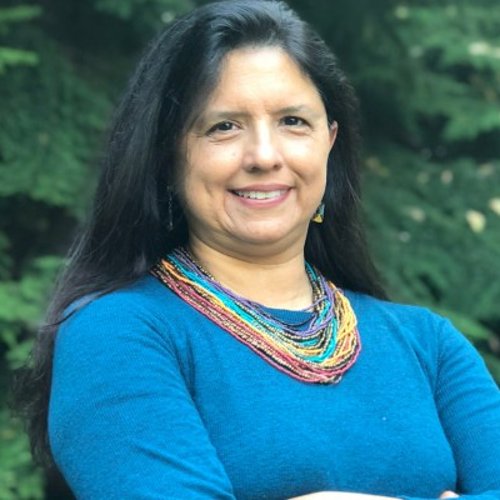
Many people struggle to approach the topic of clerical abuse because of the painful feelings that it brings up. Part of the team at Hopeful Hearts Ministry near Seattle, Dr. Rodríguez works with laity and clergy to help them understand trauma so they can get past those feelings. In her ministry she works to give both clergy and laity a framework for approaching survivors of sexual abuse that is grounded in sound trauma science.
Rodríguez, who contributed to the book: Abuse of Trust: Healing from Clerical Sexual Abuse, gave a talk for priests in the Archdiocese of Vancouver in October to help them learn best practices for receiving survivors’ stories of trauma.
Because of the stigma around trauma it can take time for priests to be comfortable discussing clerical abuse, she said. Their vocation can make it difficult for them to approach the topic talk about it, especially when confronted with a victim, like she is.
“Once that a priest knows I am a survivor of clerical abuse, they go into protection mode,” she told The B.C. Catholic. “There is always an emotional response – [they are] fearful perhaps.” Because she is so familiar with priests’ responses, she knows she has to “wait and acknowledge” that emotion from them.
Her approach to helping priests engage with and move past their discomfort is rooted in the same principles that guide her work with trauma survivors. She says everyone has experienced some kind of trauma in their past, and when she works with priests she is able to present herself as someone who has experienced pain and suffering, just like them. “Once this sameness becomes the foundation of the conversation there is safety and we can move forward,” she said.
When survivors of clerical sexual abuse come to a church looking for healing they often report being retraumatized by the experience. There are a variety of causes, but often it boils down to the fact that priests and other parish workers don’t have the skills or experience necessary to deal with a traumatized individual.
“Survivors don’t feel safe in a lot of church settings,” Rodriguez said. When they disclose their story, “they often are retraumatized because priests and other religious are unfamiliar with how to help a survivor reveal a story.”
Rodriguez has advice for those who want to learn to minister to trauma survivors and more fully manifest Christ in their lives. “All you do is receive the story first. No one has to fix anything, no one has to be a counsellor. You just receive it and sit with it for a while. You sit there with it, then [simply say] ‘thank you for sharing that,’ then ‘what can I do, how can I help?’”
To make the first contact a “safe” experience that leads to healing she recommends using a simple mnemonic device called V.E.E.E.L. Validate, Empathize, Empower, Explain, and Leave the door open.
Some simple phrases and questions illustrate each step of the process: Validate: “I have heard you, thank you for sharing your story with me.” Empathize: “I want to understand how you are feeling / I have to be honest, this makes me feel sad/angry/frustrated.” Empower: “I admire your courage. How can I help you?” Explain: “This is what I know/what I can do/what I cannot do.” Leave the door open: “I will be here for you / I will keep you in my prayers.”
The goal is to create an environment of safety, which is the most important thing Rodríguez wants people to understand about dealing with people who have suffered trauma. Accepting their stories without judgment or critique goes a long way to helping them feel comfortable, which in turn puts them on the road to healing.