Archbishop speaks of the importance of palliative care
OTTAWA (CCN)
As legalized euthanasia becomes a reality in Canada, priests and hospital chaplains could face moral dilemmas when pastoral care comes up against Church teaching.
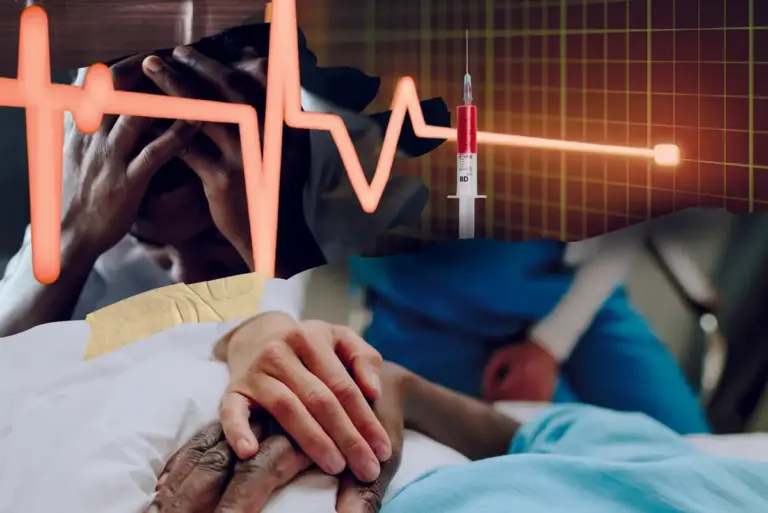
A Catholic could decide upon a physician-assisted death and request a priest administer the Last Rites ahead of time. Or a Catholic could ask his pastor to be present at the bedside when the lethal injection is administered.
“When someone asks for the presence of a priest, whatever the situation, you always say yes,” said Montreal Archbishop Christian Lepine. “You never know what’s going to happen. You do your best to accompany the person.”
“Once you are there, you will never know how it will turn out,” he said. When you are there with the intention to help someone, you discover you receive a lot also.”
Archbishop Lepine said one must always “have a view of hope with people who are sick, who are facing death.”
“Hope means believing God is there with His love for us, and also God is there with those who are sick, so when someone invites a priest, it’s always an occasion,” he said.
The archbishop would not go into specifics regarding the sacraments. He stressed his focus “has to be to promote the sacred character of life from conception to natural death.” He also spoke of the importance of palliative care and a holistic approach to suffering and compassion.
It’s about meeting the person, and their dispositions may evolve “with the experience of walking with someone,” he said. “For me, it’s about that.”
“In the end, suffering, sickness, and death are also a moment of truth about our own lives,” he said. “I don’t see someone who is dying, who has certain ideas about life or death, like a dead end.”
“Meeting people with an open heart and an open mind, also living that moment in truth and love,” needs the “guidance of the Holy Spirit to help us in the moment,” he said, referring to a passage in the Gospel of St. Luke in which Jesus tells the disciples if they are drawn before magistrates or powers, not to think in advance what they will say, for the Holy Spirit will teach you what to say in that moment.
“It’s not about what I’m going to say, but about the Holy Spirit Who will be present and help me find the right words and for the person to open their heart to hope,” he said.
Archbishop Terrence Prendergast, SJ, of Ottawa agreed a priest should go when his presence is requested, even if what he does is pray for the person or try to dissuade them from an assisted suicide.
“God tells us in His Holy Scriptures that to take your life is a grave evil,” he said, noting if you see a person on a bridge ready to jump off you try to persuade them not to. “It’s the same thing with the terminally ill.”
Archbishop Prendergast explained the sacrament of the sick can be celebrated in several ways.
“The ideal and best way is a continuous rite involving penance, anointing and Holy Communion or Viaticum, meaning ‘to take with you,’ if death is very near and the giving of the apostolic pardon,” he said. “The rite involves prayers, confession, readings, responses, anointing, and Holy Communion, and a blessing. It is a very powerful experience for the sick person and often for family gathered around as well.”
There are shortened versions that include only anointing, and abbreviated prayers if death is imminent, or after an emergency such as a car accident, he said.
But someone who has decided to receive a lethal injection from a doctor lacks the proper disposition for the anointing of the sick, he said. “Asking to be killed is gravely disordered and is a rejection of the hope that the rite calls for and tries to bring into the situation.”
“Asking your priest to be present to something that is in direct contradiction to our Catholic values is not fair to the pastor,” he said. “Of course a pastor will try and dissuade a patient from requesting suicide and will pray with them and their family, but asking him to be present is in effect asking him to condone a serious sin,” he said.
He described the withholding of the sacrament as a pastoral way to help the patient realize the gravity of his or her decision.
“The rite is for people who are gravely ill or labour under the burden of years, and it contains the forgiveness of sins as part of the rite, in either form,” he said. “But we cannot be forgiven pre-emptively for something we are going to do, like ask for assisted suicide when suicide is a grave sin.”
“The rite forgives sins and may indeed with God’s grace result in a physical healing or an improvement in the condition,” he said. “Priests ordained for many years have experiences of people who have experienced healings and improvements that science cannot account for either in extent or speed of recovery.”
Because he has never served as a parish priest, Archbishop Prendergast said he has not had a great deal of experience in anointing the sick. He recalled a time he was filling in on night duty for a hospital while archbishop of Halifax.
He was called to give the sacrament to a man whose death was imminent. When he didn’t notice the man’s obituary in the paper, he asked what happened to him and found out he had recovered and gone home.
Archbishop Prendergast said he will probably have a pastoral day in May to prepare his priests for legalized euthanasia the Supreme Court has said will be in effect June 6.
Hospital chaplains will also face similar quandaries. “We have a little bit of a similar situation on abortion wards,” he said. People will say, “I’m going to have an abortion, will you pray for me?”
Catholic priests can only pray the person will “turn away from it,” he said. Chaplains may have to be divided among “those who uphold the teachings of the Church and those who do not.”
No specific guidelines for pastors from the Canadian Conference of Catholic Bishops are in the works, though the CCCB has made many public statements on the bishops’ moral opposition to euthanasia and assisted suicide.
The Alberta bishops issued a statement Feb. 11, on the World Day of the Sick, that clearly outlines the moral implications of physician-assisted death.
“We want to be clear that, from a Catholic perspective, the intentional, wilful act of killing oneself or another human being is morally wrong,” the Alberta bishops write. “Therefore, no Catholic may advocate for, or participate in any way, whether by act or omission, in the intentional killing of another human being either by assisted suicide or euthanasia.”
Archbishop Lepine’s approach is mirrored in the Assembly of Catholic Bishops of Quebec’s pastoral letter of December 2015: “Approach Death with Christ.” Issued when euthanasia became legal in Quebec, the document stresses so-called “medical aid in dying” is the deliberate causing of death and cannot be considered an option, nor is it health care.
It emphasizes that Church’s sacraments, especially the anointing of the sick, represents the tenderness and mercy of God and can help strengthen Catholics to meet the suffering of their last days with hope.