Senator later asked why the government ignored committee’s recommendations
OTTAWA (CCN)
Euthanasia and assisted suicide Bill C-14 passed second reading in the Senate June 3 and was sent to the Senate’s legal and constitutional affairs committee.
The committee, however, had already studied the bill and submitted a set of amendments to MPs in the House of Commons on May 18. Though these amendments were not specifically voted upon, similar ones put forward by Conservative MPs concerning conscience rights and improved safeguards were voted down by a wide majority on May 30.
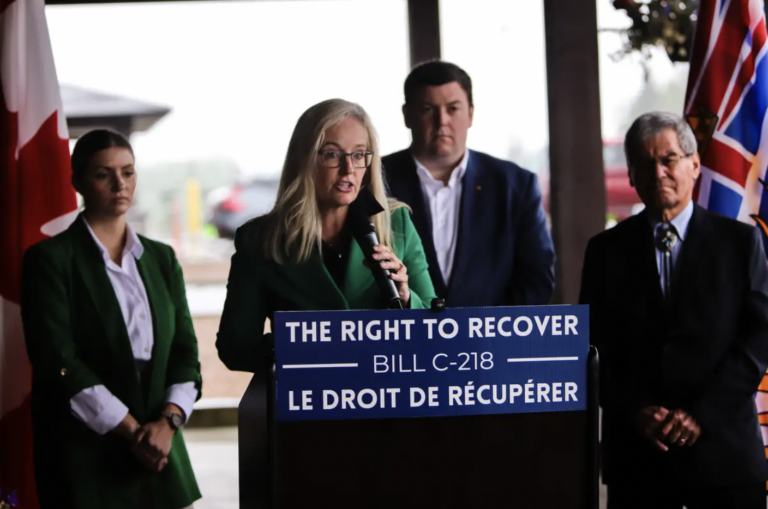
When Justice Minister Jody Wilson-Raybould appeared before the Senate June 1, Senator Denise Batters, a member of the legal and constitutional affairs committee asked her why the government had ignored the committee’s recommendations.
“Our Senate Legal Committee’s pre-study heard from 66 witnesses and took 20 hours of committee study,” Batters said. “We concluded with 10 recommendations for amendment of Bill C-14, five of which were even unanimously agreed to by our Senate Legal Committee, a committee which contains Conservatives, Liberals, and one independent.”
The Justice Minister said the government had considered the pre-study’s recommended additional safeguards.
There is a June 6 supreme court deadline for the Carter decision to go into effect, striking down portions of the criminal code outlawing assisted suicide and opening the way for outright euthanasia.
Bill C-14 passed to the Senate May 31 by a 186-137 vote in the House of Commons. It is uncertain how long the Senate committee will debate it before sending it back to the Senate for more debate on third reading, perhaps with amendments. If the Senate passes the Bill with amendments, it will have to go back to the House of Commons.
The Justice Minister warned of leaving the country with no consistent legal framework if the bill is not passed, but that is already the situation with abortion.
“The court acknowledged that giving someone the ability to legally end human life creates risks for vulnerable individuals, risks which did not exist under the previous absolute prohibition,” she said.
She also explained why the bill did not include advance directives for those with dementia diagnoses, pointing out jurisdictions that allow them, such as the Netherlands, find doctors unwilling to carry them out. She said the government would be open to “thoughtful amendments.”
Health Minister Jane Philpott told the Senate June 1 the bill’s language recognizes conscience rights of providers. She noted that the provinces and territories are responsible for the implementation of conscience rights of institutions and providers.
The Senate debated the Bill for a day and a half before voting on second reading to send it to committee. Though there were senators opposed, the vote was not recorded.
Senator Betty Unger and others urged the invoking of the notwithstanding clause to give more time to craft a bill. Unger, Batters, and others oppose euthanasia on principle.
“As Cardinal Thomas Collins from Toronto recently said, the fact that we have to call it medical assistance in dying shows that there’s something wrong,” Unger said. “Why don’t we call it what it is: killing?”
She accused the Trudeau government of using misleading language to cloud the issue. “We are creating a category of legal homicide,” she said. “If any of my fellow senators think this is an exaggeration, then they clearly do not understand the legislation.”
Some senators challenged the bill as unconstitutional because some categories of people were left ineligible. Several senators brought up advance directives and told personal stories of dealing with dying parents and relatives.
Senator Murray Sinclair, a former judge, pointed out, “We were appointed primarily to review and to advise, but with an inherent power to prevent government abuses.”