Filmmaker, now priest, Father Larry Lynn brings jail stories to the screen
The B.C. Catholic
“If you could change the past, you would?”
Filmmaker Larry Lynn asks a teenage boy that question in Kids in Jail, a heart-wrenching documentary just released online by the National Film Board of Canada.
“I came in here for killing two innocent people. They did nothing to me,” the boy replies to his mentor on camera.
“The only thing I would want to change is to just bring those lives back. Honestly, that’s the only thing. Not about me being free, just about getting those lives back.”
Kids in Jail
Filmmaker and now priest Father Larry Lynn brings the raw, real-life lives of young prisoners at the Burnaby Youth Custody Centre to the screen in Kids in Jail.
Teens in dark green T-shirts and sweatpants, with faces blurred to protect their identities, hold nothing back from him. In personal, unfiltered interviews, they talk about the challenges they faced growing up, the reasons they are in custody, and about a romance between two young inmates.
“I didn’t want to tell them how to talk. They had to be themselves. They had to be totally relaxed with me there. It gave me access. I could be in their room in the quiet and they could really open up and talk.”
Father Lynn spent years volunteering at centre before he started the documentary. He gained the trust of the young inmates, who then gave him unprecedented access to their lives and stories.
“All the kids knew me.” He spent whole days following around 10 individual prisoners as he made this documentary.
“I would be there when the kid woke up and I would stay with them all day until they went to bed. I had really good rapport with them.”
Father Lynn is now the assistant pastor of St. Anthony’s Parish in West Vancouver, but when he pulled out a camera at the Burnaby Youth Custody Centre in 2005, he was a husband, father, and filmmaker.
Behind the scenes
“I had been shooting a film in an abandoned prison in Quebec,” years earlier, he said. Histoire de Pen, released in 2002, “was fiction, but it was based on something that really happened in the prison.”
As he worked on set, he was struck by the very real challenges prisoners faced, and the call in the Gospel of St. Matthew to visit them.
“These people in prison are people who need help. They need a light. When I came back from Quebec, I was just thinking: I must go visit prisoners and bring a little light into their lives.”
The cinematographer joined a parish program that took volunteers on prison visits. He visited several prisons in the Fraser Valley before he heard about the Burnaby youth custody centre. “Kids in jail. Those two words seem like they don’t even belong in the same sentence.”
He started volunteering there in 2001 and soon began a filmmaking program for the teens. He and his wife, actress Babz Chula, taught them how to come up with stories, act, and use camera equipment.
“I was doing different little projects with them, mostly around filmmaking and storytelling,” he said. “Some people were really good singers and musicians. I tried to encourage whatever they were talented in.”
Short films
Soon the pair, who became mentors for the teenage boys and girls in the prison, were helping them create short films.
After scripts were finished, the duo invited young actors into the prison to play the roles while inmates their age worked the cameras, microphones, and lighting.
“It was a great thing,” Father Lynn said. “They were all dressed the same, so you can’t tell who’s a prisoner and who’s a kid actor.”
They produced two short films: Broken House (2006) and A Gesture (2009). Both were nominated for awards in the Yorkton Short Film Festival, and Broken House won the Leo Award for Best Short Drama.
“It gets you good and has a great message,” the proud filmmaker said of Broken House. He was working on Kids in Jail on the side.
Film within a film
He started making his documentary in 2005 and shot film in prison for three years.
Then he got the National Film Board involved, and found out he’d have to re-shoot the documentary: technology had changed and so had the kids. A maximum sentence was about two years.
He started again and filmed for one year, gaining access to young prisoners’ lives, thoughts, and dreams. He met Diamond and Phoenix (names changed in the film), two inmates who fell in love and tried to communicate using hand motions in a gender-segregated prison system. They became the protagonists.
“We’ve done many films over the years about at-risk youth, but not about incarcerated youth,” said Michelle van Beusekom, the executive director of the National Film Board’s English program.
The topic is “sensitive and difficult to treat in a documentary for obvious reasons around ethics, consent, and access. Director Larry Lynn spent a lot of time volunteering at the Burnaby Facility before this documentary project even started, which established his motives as a storyteller and earned him the trust of the kids and the administration. That’s what made this film possible.”
The editing process took a long time. The faces and names of the prisoners had to be concealed for their privacy, and the team had to ensure the film was legally airtight.
The director’s wife died of cancer during the editing process, in 2010. “She was a great actress and a great teacher of acting and a mentor for many young actors,” Father Lynn said.
Kids in Jail is dedicated to her.
Release date
Though the film was finished in 2013, the National Film Board released it only recently.
“Documentaries are a window on the world,” said van Beusekom. “They evoke thoughts and feelings about life, about who we are, and the decisions we make as a society. I hope the film will give people insight into a world of experience many have no access to, and raise in their minds questions about how we as a society respond to at-risk youth.”
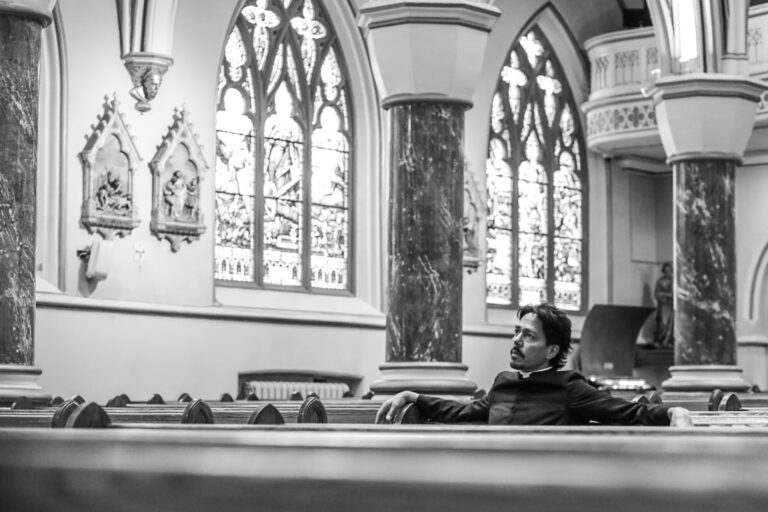
Its director, a widower and parent of three, has since discerned a call to the priesthood, gone to seminary, and been ordained. What is the message Father Lynn hoped to get across?
“If we could love one another more, things would be better,” he said.
“These kids needed love. They were getting either the wrong kinds of love or no love at all. That’s where things fall apart for people.”