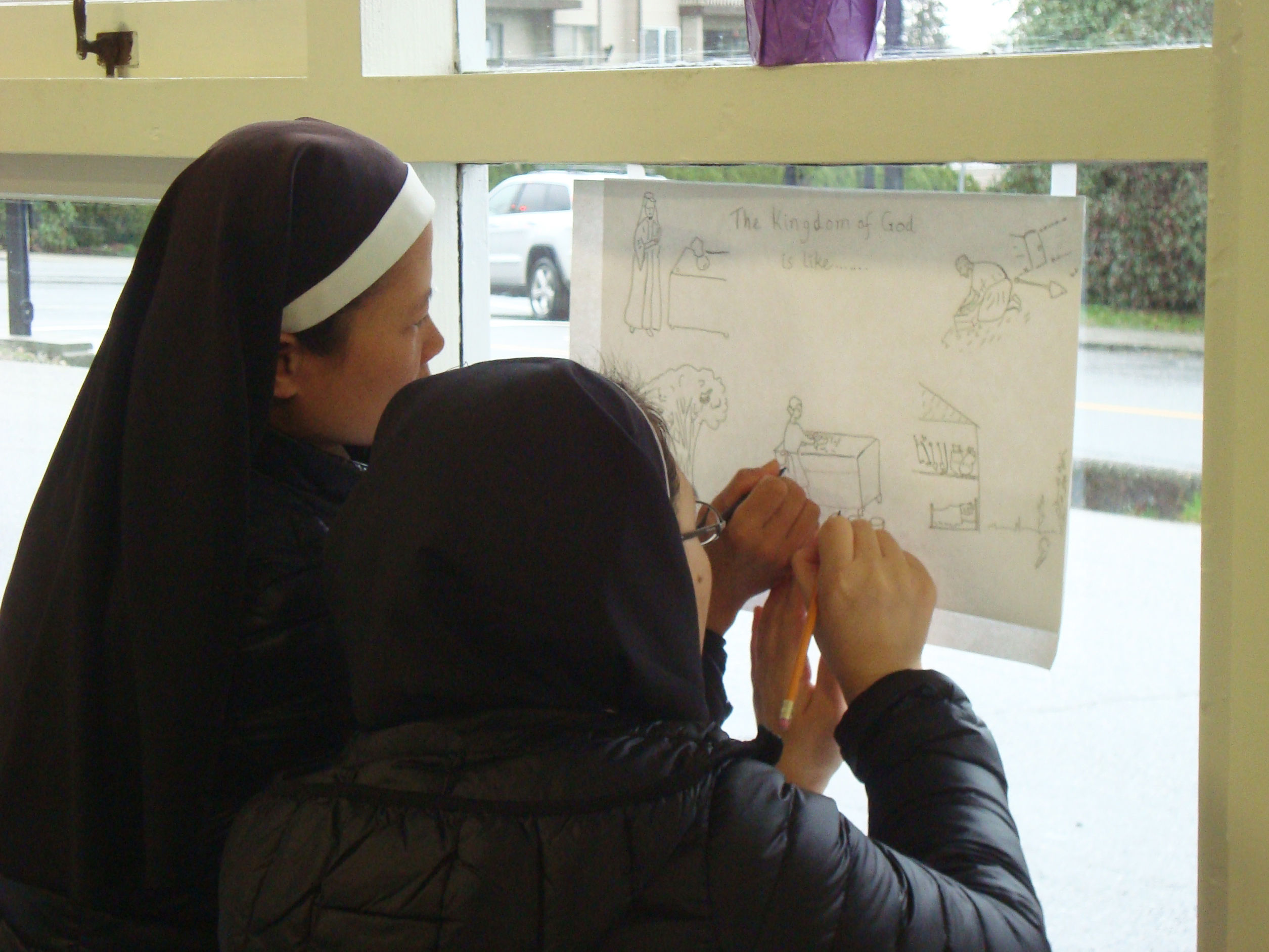

An innovative program has revamped religious education at St. Francis of Assisi Parish in Vancouver.
According to Father Eugenio Aloisio, since the parish moved from a lecture-style classroom to the interactive Catechesis of the Good Shepherd, the church’s youngest Catholics have been far more interested in their faith.
“I think it’s the way of the future,” said Father Aloisio. “Kids nowadays learn in such different ways just because of the use of mass media and technology.”
He swapped the parish’s PREP program with CGS after he’d learned about it at a priests’ study day nearly two years ago, and he hasn’t looked back.
“In the old program, there was a teacher in front of the classroom and going over material in the book. Then, they would be dismissed,” said Father Aloisio.
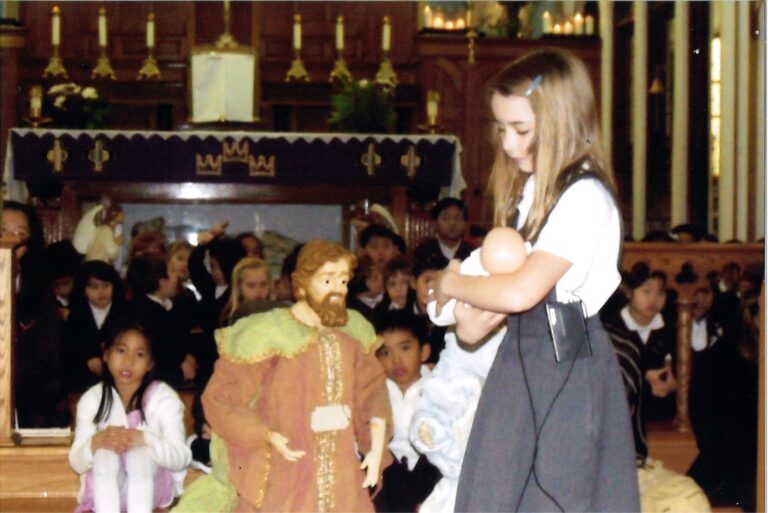
With CGS, children are invited to explore child-size versions of actual elements they might see at Mass, like a miniature altar, baptismal font, Easter candle, or tabernacle, in a Montessori-inspired classroom.
“It motivates the children on their level to enter into the liturgy or to understand the liturgical year or the different elements of the sacraments,” the pastor said.
“It moves from a passive retention of the Catechism to an active process by which the kids can claim as their own the Catechism.”

There are 17 children in St. Francis of Assisi’s religious education classes right now. It’s a relatively small number (most children in the parish attend St. Francis of Assisi Elementary), which made the transition easy.
“Seeing how it worked out well at the parish, it’s something I’m thinking about bringing into the school,” said Father Aloisio. He admits that would be a much more challenging feat: many more CGS teachers would need to be trained.
CGS is used in 21 classrooms across the archdiocese. There are more than 60 Level 1 (ages 3-6) CGS teachers in the archdiocese of Vancouver, and at least a dozen who can also teach Level 2 (ages 6-9).
Level 3 is for ages 9-12, but according to coordinator Murita Chua, only teachers who have completed Level 1 can go on to Level 2, then 3, making for a tedious training process.
Chua herself is training to become the archdiocese’s first teacher trainer, and will become so next year. Then, she will be certified to train new teachers for Vancouver herself, instead of importing trainers from out of town and paying for their travel costs, as she does now.

It’s not just children who are being inspired by this program. Religious sisters, deacons, and lay people study CGS to teach religious education, but like Sister Xaviera Bilung, MC, find it personally rewarding.
“The Catechesis of the Good Shepherd has proven to be very effective because it enables the child to encounter Christ, the Good Shepherd, in a very concrete and personal way,” said Sister Bilung, a Missionary of Charity living in Vancouver.
“It is focused on what is essential: human formation, the Word of God, and the liturgy. It catechizes the heart; it motivates; it attracts.”
She said being a facilitator for a class requires her to deepen her faith.
“There is an awareness, on the part of the facilitator, of the capacity of the child for a deep and profound relationship with God, and therefore the child is given the space and aid to grow in that relationship in their own particular way and in God’s own time,” said Sister Bilung.
“Facilitators must also give space and time for our personal relationship with Almighty God, because what we share is meant to be the overflow of our union with God in silence, study, prayer, and liturgy.”
CGS seems to be picking up steam in the Archdiocese of Vancouver. Another Level 2 training session will be held Oct. 14, followed by the first-ever national CGS conference to hit Vancouver Oct. 19-21.
The annual conference will attract catechism teachers from across Canada, including those involved in Liturgy of the Word With Children, PREP, and Rite of Christian Initiation.