Speakers, activities, chaplet, and homily draw attention to God’s amazing gift
The B.C. Catholic
SURREY
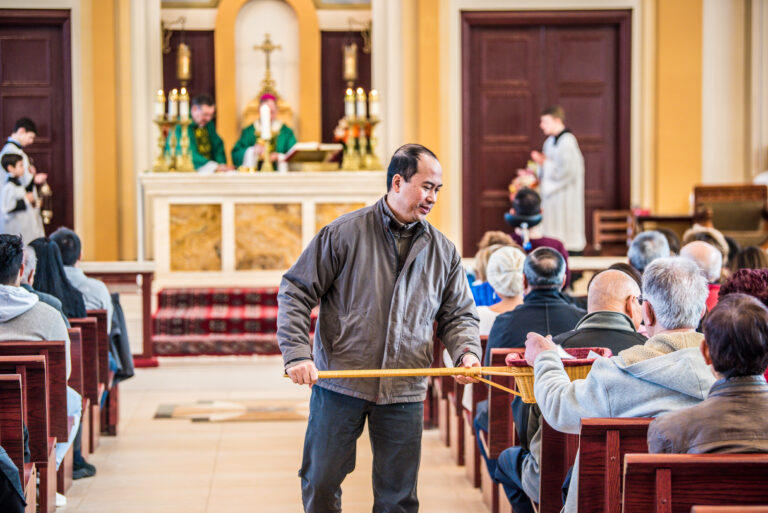
Hundreds of the faithful streamed into St. Matthew’s Church to celebrate the Jubilee Year of Mercy in a special way this Divine Mercy Sunday.
The major feast, instituted by St. John Paul II, comes one week after Easter Sunday and celebrates God’s love and forgiveness for His children.
“St. Faustina, St. John Paul II, and many of the great saints remind us that a God of mercy will never be outdone, even with all of our own failings, our frailty, and our good works,” said Father James Hughes, pastor of St. Patrick’s Parish in Vancouver.
“Let us remember that this prayer, this time for confession, is a time to say, ‘Alleluia, praise the Lord!'”
The church was nearly
filled to capacity as families listened to engaging speakers, received the sacrament of confession, sang the Chaplet of Divine Mercy, venerated a relic of St. Faustina, and participated in Mass April 3.
“It is so easy to identify individuals in our families with their wrongs, with their limitations,” said speaker Sister John Mary Sullivan, FSE, the head of the archdiocesan Life, Marriage, and Family Office.
“My brother Paul, who caused quite a bit of trouble growing up, was known as the troublemaker, as if that was the whole of his identity. I was Mary the procrastinator.” These labels place a heavy load on family members.
To lighten the burden, the Franciscan sister said, other family members should eschew labels and love people despite their mistakes. For example, when Jesus encounters the woman caught in adultery, he sees her not as an adulteress, but “loves her and mercifully calls her beyond the wrong.”
“Hold on to the moral demand, the ideal, of what our family members should be living, for their own good, and be merciful when they fall.”
The parable of the prodigal son is a prime example of mercy. After the son rejects his father, takes his inheritance, spends it recklessly, and returns home penniless, the father runs to him with open arms.
“He doesn’t stop and say, ‘Are you sorry? What did you do with that money?'”
She said all Christians are called to that kind of generosity. “Our Holy Father says it’s only if we live this radical witness of mercy that our Church has any credibility at all in the world.”
Meanwhile, down the hall, local psychologist Denis Boyd gave a presentation for grandparents.
“We have a role as grandparents to be transmitters of the faith,” said the grandfather of four. He encouraged them to recognize their value and challenged them to re-evaluate the ways they show love and pass the faith to children and grandchildren.
“What kind of ‘bridge’ are you? Are you a suspension bridge that blows in the wind and is really hard to cross? Are you a toll bridge? Do you love your grandchildren, your kids? Do you make them pay a price for that love? Do you give them something financial and never let them forget it? We have to be careful,” he said.
He urged them to be loving at all costs. “If there is any mandate we have as Christians, there is one simple mandate, it seems to me, and that is to love: always, anywhere, anybody, all the time.”
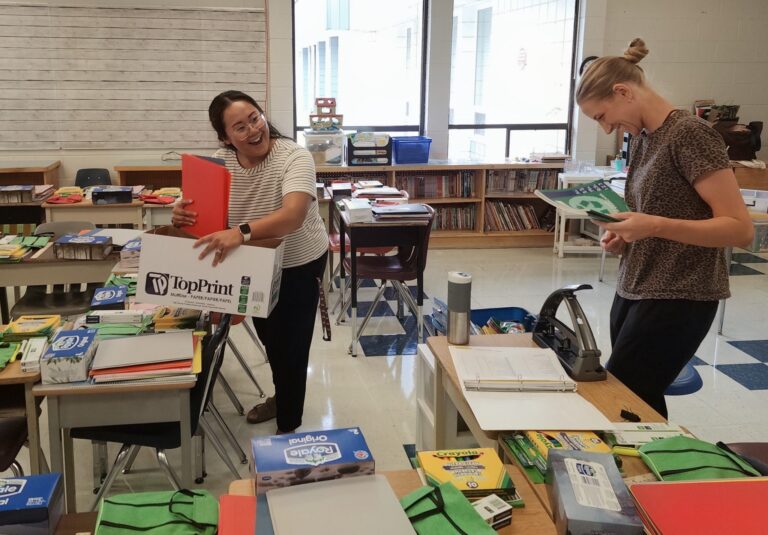
While adults listened to inspiring speeches, children learned about works of mercy through arts and crafts and teens shared ways they have shown mercy around the world. They came together at the end to sing the Chaplet of Divine Mercy and join in Mass with Archbishop J. Michael Miller, CSB, and many priests, deacons, and seminarians.
In his homily, Archbishop Miller reflected on St. Thomas’s encounter with Jesus after the Resurrection.
“The wounds of Jesus were on His risen body. He wanted to convey that even in His risen state, in His members, in us, He continues to suffer,” he said.
“We don’t see those wounds as Thomas saw them, but we can find them where? In doing the works of mercy. In the bodies and the souls of our injured brothers and sisters, no farther away than the person beside us.”
He urged the faithful, “recipients of mercy,” to treat Jesus’s wounds.
“Our mission in our parishes, our movements, our associations, our communities, our families, is to witness to mercy received, gratitude, joy, and to be instruments of that mercy to others.”