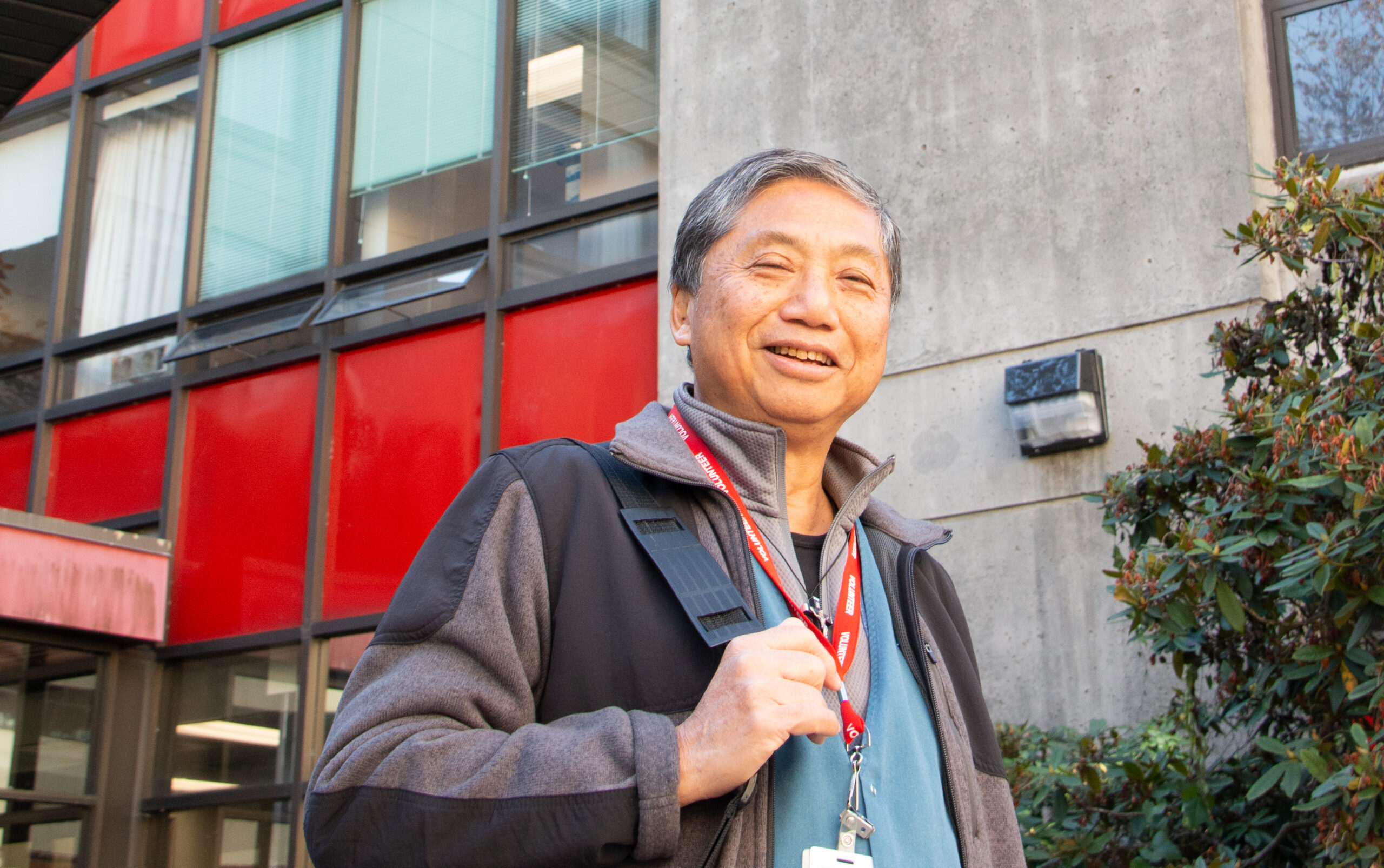

When he first visited the grouchy patient at the UBC Hospital, Stephen Tang didn’t know what to do.
Tang, an extraordinary minister of holy Communion and pastoral care worker, visits people in long-term care in the hospital and brings Communion to Catholics who request it. But when he entered this room, he met a gruff man who looked a little like he spent his days collecting bottles off the streets.
“At first, he wouldn’t talk to me,” said Tang. Along with the consecrated hosts he travels with, Tang packs around a small devotional book. Despite the man’s rejection, Tang offered a kind word and prayer, and made a note to continue to visit him.
“I talked to him for almost a year. Now, he listens a lot. He says: ‘See you next week.’”
For Tang, that is a victory. In more than two years of visiting the sick, he has ministered to many people who need friendly visits in a vulnerable time of their lives.
“I like helping people,” said Tang. “They are in need, most of them here. That’s why I keep coming back.”
The situations of the people he visits are as diverse as the people themselves. Some are bedridden; some have no one to visit them; some have so many grandchildren that they have lost count of them.
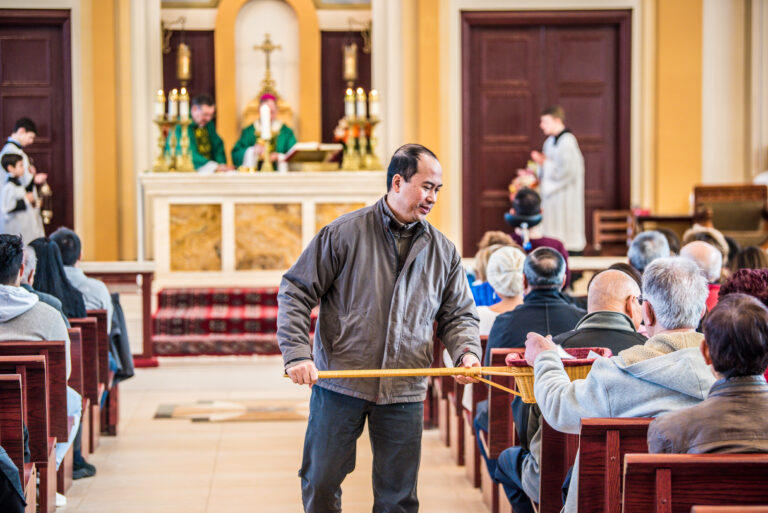
Most parishes in the Archdiocese of Vancouver have men and women appointed as Eucharistic ministers to help distribute Communion at Mass as well as to Catholics in hospitals or homes who wish to receive the sacrament but can’t for health reasons travel to church.
Eight Eucharistic Ministers regularly serve at the UBC hospitals and hospice, coming from St. Mark’s, St. Augustine’s, and Our Lady of Perpetual Help parishes in Vancouver.
Tang’s passion for people in need goes back to when he was 19 years old and landed his first job after high school, in social work. Over four years, he saved enough money to move from Hong Kong to the United States for a university education in business and accounting. He graduated, moved to Canada, and had a long career in finance – but he never forgot his inner drive to help others.
He volunteered for various groups during his working years in Canada. After retiring about a decade ago, he ran into a friend who introduced him to the pastoral care ministry program at St. Mark’s College. He enrolled, started visiting the sick as a class assignment, and vowed not to leave it behind after graduating from the program in 2018.
“I’ll be doing it until the time I cannot walk,” he said.
Not far down the road from Tang, Jim Rogers of St. Mark’s Parish volunteers at St. John’s Hospice. Rogers brings Communion to people who have less than a month to live. He has been doing it for about three years and, like Tang, finds it a rewarding experience.
“The first thing I’ve learned is, you’re blessed if you have time. All of us want to square something up, perhaps not necessarily with God, but with family members you may be estranged from,” Rogers said.
There are some things Rogers doesn’t talk about. He won’t ask patients how they are feeling or tell them he hopes their condition improves. Instead, he asks about their childhood, family, occupation, and faith journey. He prays the Hail Mary, Our Father, and Glory Be, and distributes the Eucharist.
“Often there are family members there,” he said. “Some of them are not Catholics, though the person in the bed has claimed to be Catholic, and you get a chance to evangelize others as they watch you.”
Sometimes a patient who is close to the end is no longer able to speak or receive Communion. Rogers continues making weekly visits and reaching out to any family members in the room who need someone to talk to.
In this age of legalized euthanasia, he said the fear of suffering or being a burden is something that can be addressed. “Palliative care and hospice care will leave very few people in pain.”
Tang said the biggest challenges of his volunteer work are the deaths of the people he visits.
“It’s hard. Sometimes I’ve been talking with them and I see their smile, and the next week, I hear they are gone. But these things happen, and if I’m going to comfort other people, I should be able to do it to myself,” he said.
His pastor and other parish members encourage him by saying, “When you go up there [to heaven], they will be standing there at the entrance welcoming you.”
Eucharistic ministers from across the diocese are invited to a workshop at St. Mark’s Church Nov. 2. The workshop will focus on reaching out to people suffering pain and loneliness during illness by local palliative care expert and doctor Romayne Gallagher, an advocate of giving patients alternatives to assisted suicide.