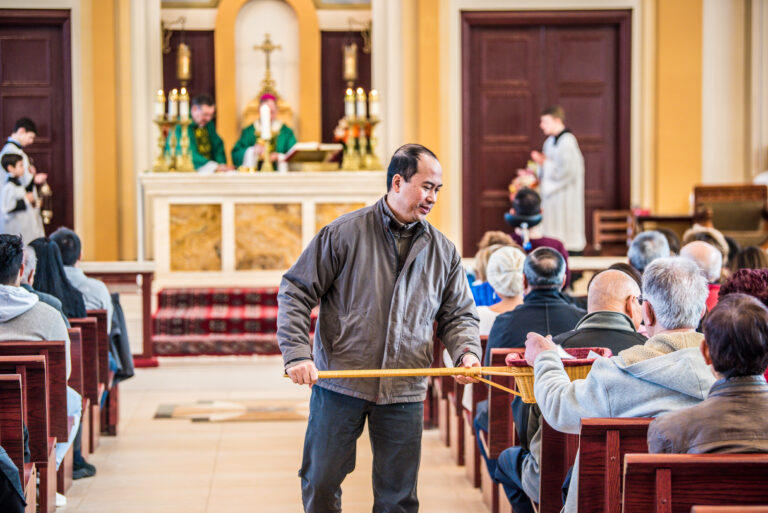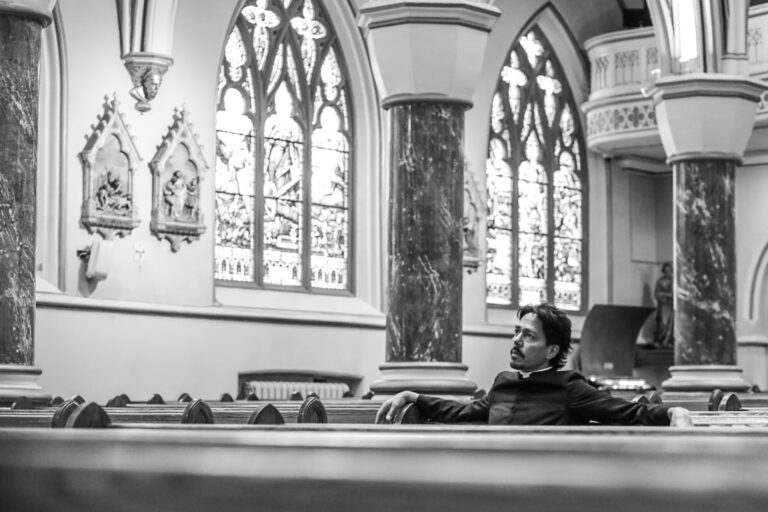

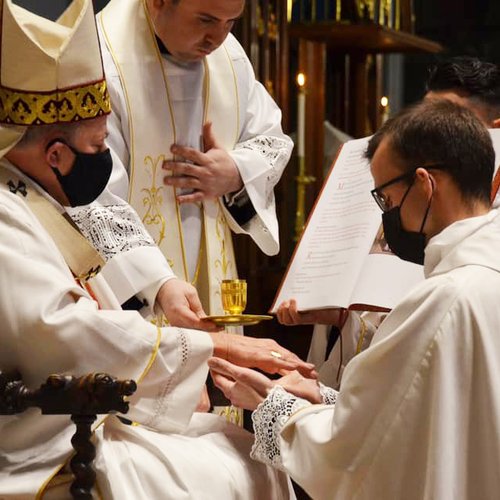
When looking back at 2020, photos snapped over the past year will tell a story of physical distancing, faces covered with masks, and empty churches.
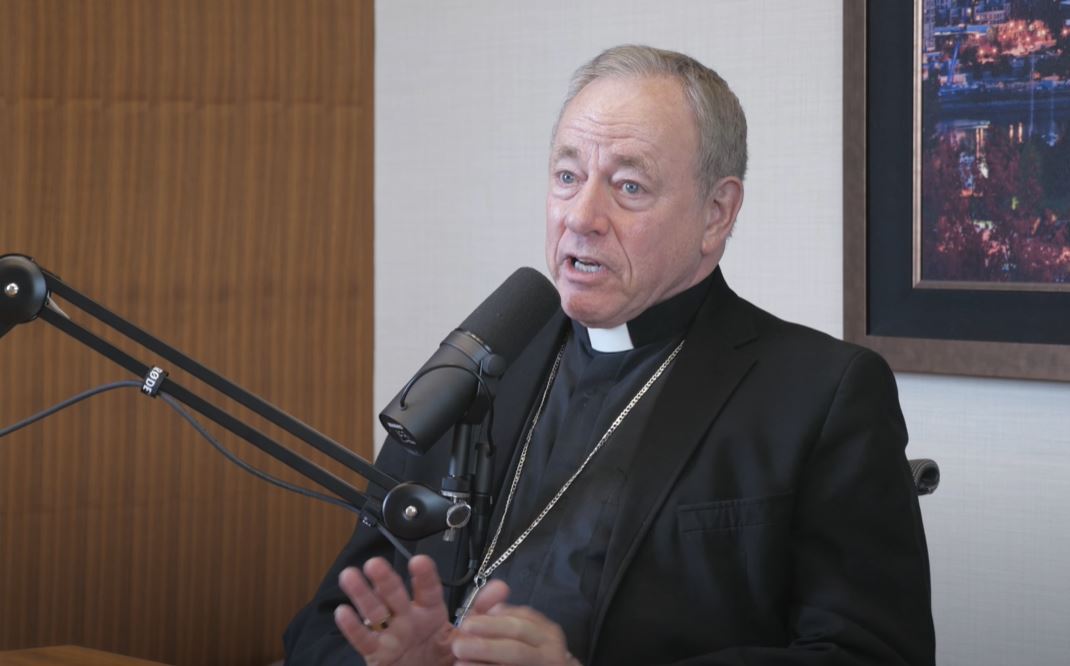
But photographs only capture the immediate changes on society, and when it comes to the longer-term effects of the pandemic, they won’t be as readily apparent, says Archbishop J. Michael Miller.
The most obvious major change for Catholics, he told The B.C. Catholic, “has been the deprivation of the normal Eucharistic life of the majority, if not the vast majority, of the Catholic population here in the archdiocese.”
Catholics missed Christmas and Easter celebrations in 2020 and faced half a year without access to Mass in person.
Although it was an unfamiliar experience for most Catholics, the archbishop has used it to point out that being deprived of access to the sacraments is not uncommon in some parts of the world. “Many of our brother and sister Catholics who live without the Eucharist for prolonged periods of time” experience this “suffering and fast” as a fact of life, he said.
“Maybe it has made us more sensitive to them and … developed in ourselves a deeper yearning (for what) the Eucharist plays in Catholic life … we are a Church of sacraments.”
At the same time he is concerned that some Catholics may have become comfortable watching Mass online. He wonders whether they’ll return to public services once they are allowed again.
“It remains to be seen whether people will see the importance of the Sunday Eucharist, that this is the community coming together as God’s people to worship,” he said. “I hope it brings us to realize … that we missed it, and that we want to come back.”
The archdiocese is preparing for the possible need to re-evangelize through its Proclaim movement, which the archbishop hopes will offer just the right resources and tools to reach Catholics who have drifted away.
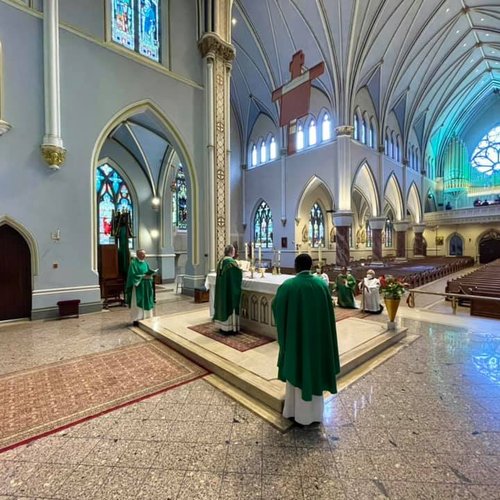
Speculating on what a “return to normal” could look like, Archbishop Miller said the only thing for certain is that it will be gradual.
One central question on his mind is when to reintroduce the Sunday obligation. A few U.S. dioceses have already done so, but with expanded dispensations for people who are ill, at high risk of complications from COVID-19, or so anxious about their health that they are apprehensive about attending Mass in a church.
Another consideration once religious gatherings are permitted again is how long virtual Masses should continue, said Archbishop Miller.
“We’ll always have some” livestream Masses for the home-bound and shut-in, he said, but how frequent they’ll be and at which parishes remains to be seen. There will likely be a transition period of several months for livestreams to decrease after churches re-open.
Asked how he’s been affected on a personal level by the pandemic, he said he misses his visits to parishes and participating in public functions. He is grateful the John Paul II Pastoral Centre never fully closed which meant never being entirely isolated from those he works with.
“Spiritually, there has been more quiet time, which has not been unwelcome,” he reflected. “It’s been a quieter year. A quiet year is fine, but I’d gladly renounce a bit of this now to go on to a busier, more outward year.”
Although uncertainty remains about when regular parish activity will return, he’s already looking forward to that “normal” life of the Church.
“Can you imagine going back to Mass and having a full choir sing? Everyone sing? That will be wonderful.”
As for the topic on the minds of many people, the COVID vaccine, he expects to roll up his sleeve and get vaccinated when his age category comes up. Given a choice, he would avoid the Johnson & Johnson vaccine because of its closer connection with abortion, he said, but he conceded it’s unlikely Canadians will have a choice of vaccines.
“The moral theologians are pretty much in agreement that if it’s the only choice available, it’s certainly morally permissible to do it in light of the greater good that is served” and the “pretty remote” connection to the abortion.
Archbishop Miller also praised parishes, schools, and organizations for their creativity in responding to lockdowns through online communication and livestream technology. Online gatherings reached hundreds of people at a time when many Catholics were facing isolation and worry about staying connected. The Catholic Educators’ Conference in February reached 1,600 people alone, and the Upper Room conference last fall was streamed to nearly 800.
Even after the pandemic is over, streaming and social media “will remain in our toolbox as means of evangelization,” he said.
“This is not going to be a year that we forget. This is one that we will remember all our lives, and maybe with the passage of time there will be some happier memories that will emerge,” he said.
“There are always blessings amidst trials and tribulations.”
Related: