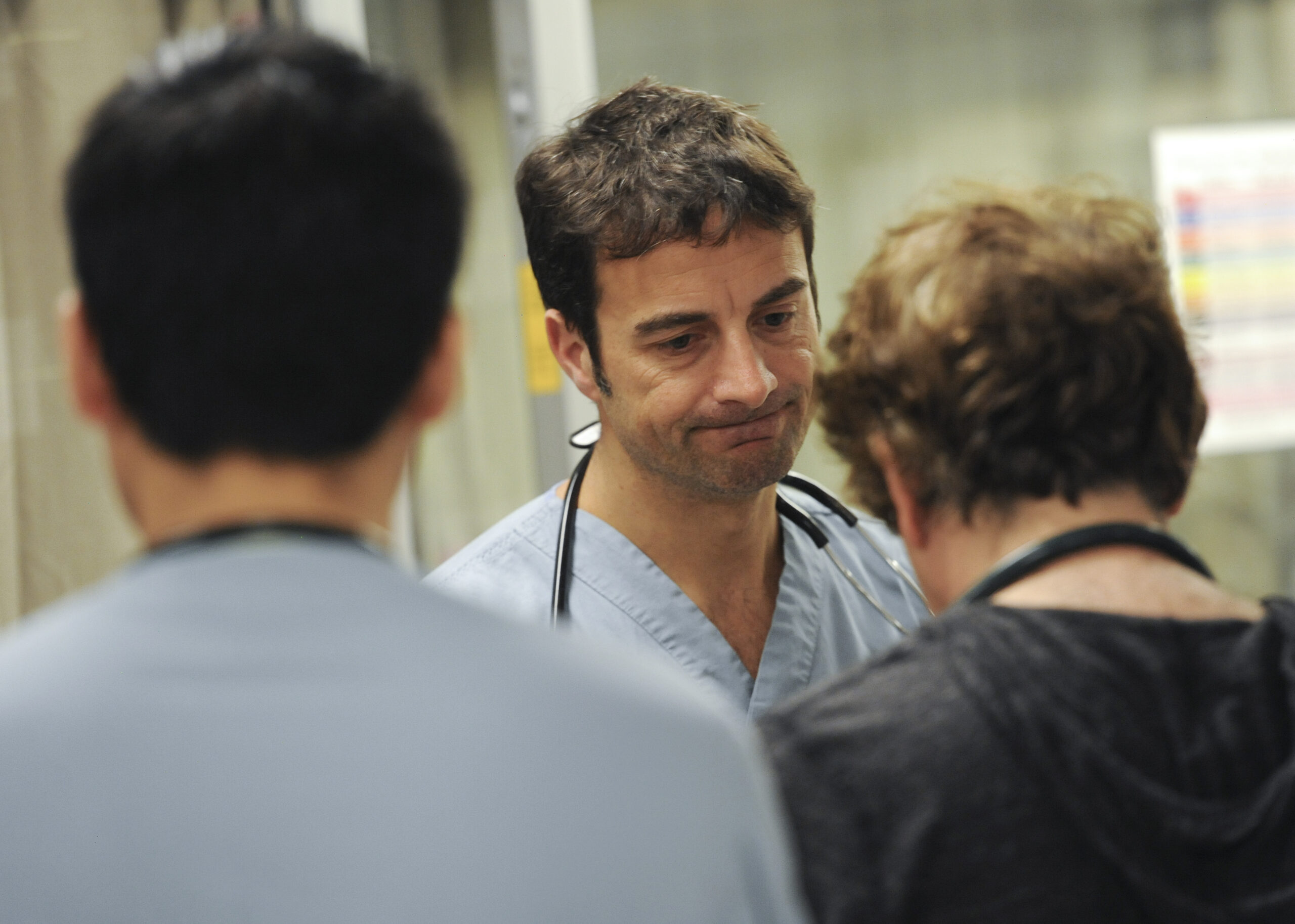

Over the past year as Dr. Daniel Kalla watched the latest news about “tent cities” at Oppenheimer Park in Vancouver or at “Anita’s Place” in Maple Ridge, he wasn’t seeing only a deplorable manifestation of the Lower Mainland’s addiction and housing crises. He also saw the perfect breeding ground for disease.
And not just any disease. In fact, Kalla, the Department Head for Emergency Medicine at St. Paul’s and Mount Saint Joseph hospitals in Vancouver, says the crowded, unsanitary conditions found in homeless camps are the same as those in 14th-century Europe’s cities.
It was those conditions that helped spread the most lethal pandemic to ever strike humanity – the Black Death, a particularly lethal form of the plague.
“There’s a lot of parallels,” notes Kalla, a Vancouver native who has worked for 25 years for Providence Health Care, the Catholic non-profit organization that provides healthcare services in partnership with Vancouver Coastal Health and the Provincial Health Services Authority.
“Something like it could come back in a form that we haven’t seen [for 700 years]. And I think the plague has the potential to storm back.”
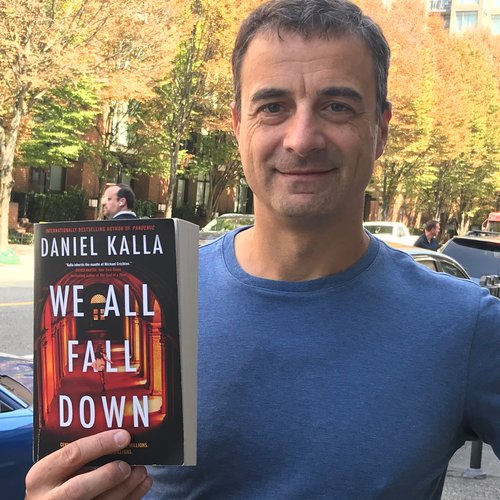
Kalla, whose gripping new novel We All Fall Down speculates about a fictional outbreak of the plague in modern-day Italy, is not alone in his concern. Multiple reports from Los Angeles point to a public-health crisis tied to growing numbers of homeless people, omnipresent uncollected trash, and a rapidly-increasing rat population.
Combine these factors with longer, hotter summers, and experts say the city has become a perfect breeding ground for diseases such as typhus and, most worrisomely, the plague.
“As more people live in closer contact with rodent fleas that can carry the plague bacterium, preventing an outbreak of one of the most frightening diseases in human history will require a stronger push to eradicate potential hosts,” the Los Angeles Times reported in May. Dr. Drew Pinsky, who is often quoted on national television in the U.S., says the bubonic plague bacterium is “likely” already present in Los Angeles.
The plague is caused by the Yersinia pestis bacterium, different strains of which can cause the bubonic plague (whose most notorious symptom is the swelling and blackening of lymph glands), the pneumonic plague (which attacks the lungs), and the Black Death, the especially-lethal type of plague that cut its deadly path through Medieval Europe.
“To talk about the bubonic plague that we have now in Africa, and a few cases in the U.S., and to compare that to the Black Death, is like … comparing strep throat to flesh-eating disease,” Kalla said.
“They’re caused by the same group-A strep [bacterium]. Strep throat is very common and very benign, and flesh-eating disease is one of the most devastating infections we know. And it’s the same bug. And that’s the point I’m trying to make.”
The World Health Organization recorded 3,248 cases of plague from 2010 to 2015, causing 584 deaths. In this country, Health Canada reports there’s been only one case of human plague, in 1939, since the federal government started tracking the disease 90 years ago.
Nevertheless, Kalla, 53, has seen enough in the emergency wards he oversees that he is sufficiently worried to write several novels about the rapid spread of lethal disease. “My whole interest in writing these kind of global thrillers – about pandemics – started with my experience with SARS [severe acute respiratory syndrome, which caused a global panic in 2003],” he says.
“Just seeing how quickly something like that could grip a city, could grip a medical community – how terrifying it was for those of us on the inside. We didn’t know, we felt vulnerable.”
Then came the H1N1 flu in 2009 and the Ebola outbreak in 2014. “It bothers me how quickly people become complacent to those infectious threats,” Dr. Kalla says. ”It’s put out of mind so quickly. But when they are real, when they are there, even when the death toll hasn’t risen yet, there’s a kind of pervasive fear.”
In fact, one of the primary themes of his novel is the fear that a plague epidemic would incite. “We might have evolved miles technologically and be so much more enlightened than they were 700 years ago, but the same base instincts, same panic, same blaming, same scapegoating – it’s a natural human instinct, and we can revert to that so quickly,” he warns.
We All Fall Down has its villains and heroes, of course, but in real life, the peril posed by the plague doesn’t need to be combatted with crack crisis response teams from NATO and the WHO. Rather, remembering our community’s squalid homeless camps, Kalla says local health officials should focus on root causes.
“I would start with the addiction epidemic, and address it,” he said, “because everything else spawns from that.”
.
Dr. Daniel Kalla has had a dual career as emergency room physician and novelist for more than 15 years, penning science thrillers and medical mysteries that examine topics ranging from superbugs and drug addiction to pandemics and patient abuse. His first medical thriller was Pandemic, based on his clinical experience dealing with the SARS crisis of 2003. We All Fall Down, his tenth novel, is a thriller and historical mystery that speculates on what might happen if the Black Death returned today from the Middle Ages. Kalla’s website is danielkalla.com.