
SASKATOON
(CCN)—The new bishop-elect for the Roman Catholic Diocese of
Saskatoon has a number of passions, including fostering a deeper
relationship with Indigenous people, pursuing the new evangelization,
furthering youth ministry, and supporting Catholic education.
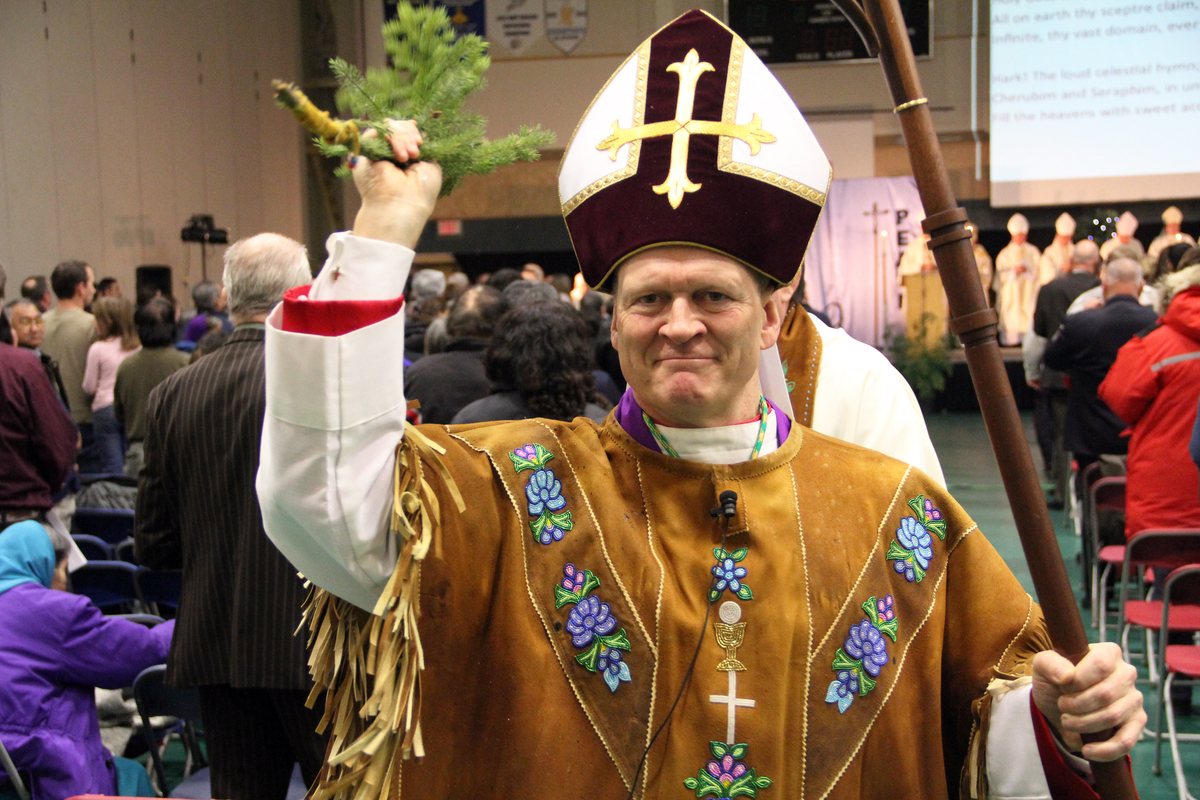
Bishop
Mark Hagemoen, 56, who has served for four years as bishop of the
northern Diocese of MacKenzie-Fort Smith, was named the eighth bishop of
the Roman Catholic Diocese of Saskatoon in an announcement by Pope
Francis released Sept. 12.
The Diocese of Saskatoon has
been without a bishop since Oct. 14, 2016, when former bishop Donald
Bolen was inaugurated as Archbishop of Regina. Father Kevin McGee has been
serving as diocesan administrator in the interim. The date for Bishop Hagemoen’s installation as Bishop of Saskatoon has not yet been
announced.
In an interview from his office in Yellowknife, the bishop-elect said the unexpected appointment is a bittersweet moment.
Saying
farewell to the people of Mackenzie-Fort Smith diocese is going to be
difficult, admits Bishop Hagemoen, who says he was surprised by Pope Francis’
decision to appoint him Bishop of Saskatoon.
“It does come at a
difficult time in the Diocese of Mackenzie-Fort Smith, as we are just
moving ahead with a number of programs and renovation projects,” he
says. “We accomplished a fair bit this year, after discerning and
gathering things up for a couple of years.”
He describes
Mackenzie-Fort Smith as an Aboriginal diocese. “Most of the Catholic
people here are Aboriginal. It has been a privilege and a learning experience for
me, and I still have lots to learn,” he says of his experience as
shepherd of the geographically large diocese covering the
Northwest Territories, part of western Nunavut, as well as the Athabasca
region of northern Saskatchewan.
“In my whole way of
approaching pastoral ministry, I have been shaped by walking with our
Aboriginal people here. In terms of how I pastor, and how I approach
things, that has been a real gift.”
Another passion for Bishop Hagemoen
is the need for a new evangelization. This includes “the whole issue of
outreach to the People of God, especially in the spirit of Pope
Francis,” he said. “What does it mean to go beyond the peripheries,
those existential peripheries, and what does that mean in our age, our
time, and place? That is fascinating to me.”
As a priest in the
Archdiocese of Vancouver, he spent some 10 years involved in youth
and young adult outreach and ministry, “so that is also always on my
radar,” he added.
Bishop Hagemoen also emphasizes the great importance
of Catholic education and the Catholic intellectual tradition. “Catholic
education is a real contributor to our society, and supporting Catholic
education is another passion for me.”
The first priority upon
coming to the Diocese of Saskatoon will be to get to know the diocese,
to listen, and to meet people, said Bishop Hagemoen.
“The Diocese of
Saskatoon seems to be a very dynamic diocese, with a rich history, a
strong Catholic legacy and culture, and I am looking forward to
contributing to that legacy with all my might and energy, as well as I
can, with the help of almighty God.”
Born and raised in
Vancouver, Bishop Hagemoen completed his undergraduate degree at the
University of British Columbia. After a year of travel throughout
southeast Asia, the Middle East and Europe, he entered St. Peter’s
Seminary in London, Ont., completing his masters of divinity degree in
1990.
He was ordained a priest in Vancouver by Bishop Lawrence
Sabatini on behalf of Archbishop James F. Carney in May 1990. His
pastoral assignments included 10 years as the director of the Office of
Youth Ministry, as well as serving in several parishes.
He
completed the national certificate in youth ministry studies and the
diploma for advanced studies in ministry in 1997. He earned a doctor of
ministry program at Trinity Western University, which he completed in
2007. In December 2007 he was honoured by Pope Benedict XVI, who
recognized him as Prelate of Honour for his work in the Archdiocese of
Vancouver.
Beginning in 2004 he was appointed for the
Archdiocese of Vancouver to several administrative roles, including
vicar of pastoral services; moderator of the curia, and vicar-general.
He was appointed principal of St. Mark’s College and president of Corpus Christi
Colleges in 2011. He also served on a number of church, school, and
other not-for-profit boards and committees.
Pope Francis
appointed him Bishop of MacKenzie-Fort Smith in October 2013 to
succeed then-Bishop Murray Chatlain (who had been appointed Archbishop
of Keewatin-LePas). Bishop Hagemoen’s episcopal ordination and installation was
celebrated in Yellowknife in December 2013.
As bishop, he has worked with the people of the Mackenzie-Fort Smith diocese on a
number of initiatives and projects, including the construction of a new
church at Fort Simpson, NWT, replacing a 90-year-old building that
was beyond repair. The new Sacred Heart Church will officially open
Sept. 17, on the 30th anniversary of the papal visit of St. John Paul II
to the community, about 500 km north of Yellowknife.
Bishop Hagemoen also currently serves on several committees of the Canadian Conference
of Catholic Bishops (CCCB), including the Canadian Catholic Aboriginal
Council and the Northern Bishops Council.
Saskatoon Diocesan Administrator Father Kevin McGee said the appointment is joyful news for the Diocese of Saskatoon.
“We
look forward to welcoming Bishop Mark Hagemoen,” said Father McGee. “I have no
doubt that our new bishop-elect has been chosen through the work of the
Holy Spirit – selected by the Holy Father to lead this vibrant diocese
in proclaiming and living the gospel of Jesus Christ.”
Father McGee added it was a privilege to serve as diocesan administrator for the
past year while the diocese has been without a bishop.
“There
is certainly a lot of good ministry happening in our diocese – it is a
place where clergy and laity work closely together, where we strive to
walk in support of our Indigenous brothers and sisters, to engage
closely with many Catholic, ecumenical and interfaith partners, and work
in solidarity with the broader community for the common good,” he said.
“We give thanks to God for our new shepherd and look forward to his arrival.”
The Prairie Messenger