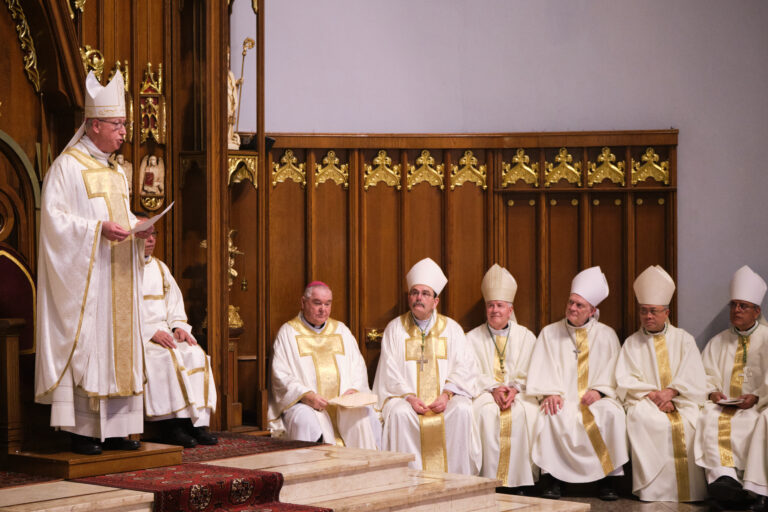

OTTAWA (CCN)—Canada’s bishops are warning the federal government that banning conversion therapy for minors in Canada could have serious repercussions for religious freedom and parental rights in Canada.
“In the Bill’s current form, a range of activity and well-intended actions, hitherto legitimate and lawful, that are also beneficial goals in support of individuals, could become subject to prosecution under the Criminal Code, despite the apparent claims to the contrary on the website of the Department of Justice,” said a statement from the Canadian Conference of Catholic Bishops.
The CCCB released the statement Oct. 7, one week after the minority Liberal government reintroduced a bill in the House of Commons on Oct. 1, 2020 that would ban conversion therapy for minors and put limits on how adults can access such therapy if they so choose. The Trudeau government has dismissed concerns raised repeatedly by religious groups about its push to ban the controversial therapy.
The statement from the Canadian bishops said the proposed ban is “generic in its scope and ambiguous in its language, and thus its application could be overextended and interpreted to include what are and should remain lawful activities.”
“The Bill makes no provision for legitimate diversity concerning viewpoints on human sexuality arising from religious beliefs, from philosophical debate, or from scientific and medical study; nor does it make any provision for conscientious dissent related to such matters in forums of teaching or public presentations,” the CCCB statement said.
Conversion therapy is an attempt to change an individual’s sexual orientation and has been condemned by numerous government and medical associations across North America. In 2001, the then U.S. Surgeon General David Satcher reported “there is no valid scientific evidence that sexual orientation can be changed.” Critics of conversion therapy say that for youth who have undergone conversion therapy, the practice can be harmful and even lead to suicide.
The federal government’s move to enact national conversion therapy-related legislation comes after the provinces of Ontario, Manitoba, Nova Scotia, and Prince Edward Island have taken steps through legislation or statements. In addition, some Canadian cities, including Vancouver, Calgary, and Edmonton, have banned or are in the process of banning conversion therapy within their city limits.
The Liberals have a minority in the House of Commons, so the government needs the support of opposition MPs to pass the proposed legislation. However, both the Bloc Quebecois and the NDP were supportive of taking action against conversion therapy in last year’s federal election and federal NDP leader Jagmeet Singh said last week his party will support the government bill in the House of Commons.
The new Conservative Party leader Erin O’Toole has said he personally supports a conversion therapy ban but has raised concerns about the wording of the proposed legislation. He has also said Conservative MPs can vote their conscience on the issue.
The government proposes new Criminal Code offences that would ban conversion therapy for minors, removing a minor from Canada to undergo conversion therapy abroad, causing a person to undergo conversion therapy against their will, profiting from providing conversion therapy, and/or advertising an offer to provide conversion therapy.
According to the federal government, “conversion therapy aims to change an individual’s sexual orientation to heterosexual, to repress or reduce non-heterosexual attraction or sexual behaviours, or to change an individual’s gender identity to match the sex they were assigned at birth.”
While the proposed bill specifically targets conversion therapy for minors and does nothing to stop an adult from seeking some form of conversion therapy, it would make it a crime to force someone into conversion therapy against their will regardless of age.
The Justice Department said, “these new offences would not apply to those who provide support to persons questioning their sexual orientation, sexual feelings or gender identity such as teachers, school counsellors, pastoral counsellors, faith leaders, doctors, mental health professionals, friends or family members.”
Critics remain concerned about the actual wording of the bill, saying it is less clear on these issues and thus open to interpretation by the courts.
“There is a real danger that Christian and other religious and ethical teaching with respect to human sexuality would be interpreted as criminal acts,” the CCCB said in its Oct 7. statement.
“The Bill could even criminalize Catholic ministries and groups, religious leaders, or pastors who encourage individuals with same-sex attraction to live chastely and in conformity with the teachings of the Gospel, the moral principles of the Catholic Church, and the dictates of their own conscience,” said the CCCB.
“The Bill’s current wording can also be interpreted as compelling competent professionals, including psychiatrists, psychologists, other medical practitioners, and social workers to withhold legitimate services and, as a corollary, prevent their patients or clients from accessing necessary medical treatment.”
In an interview with Canadian Catholic News in September, CCCB president and Winnipeg Archbishop Richard Gagnon said the Catholic Church does not support forcing anyone to undergo conversion therapy, but how a proposed ban is worded is important because a “loosely worded” bill leaves any future law open to interpretation if it “doesn’t clearly spell things out.”
“Interpretation is a problem if it is not clear,” Gagnon said. “There must be a balance that respects all Canadians’ rights, and that includes freedom of religion rights and conscience rights.”