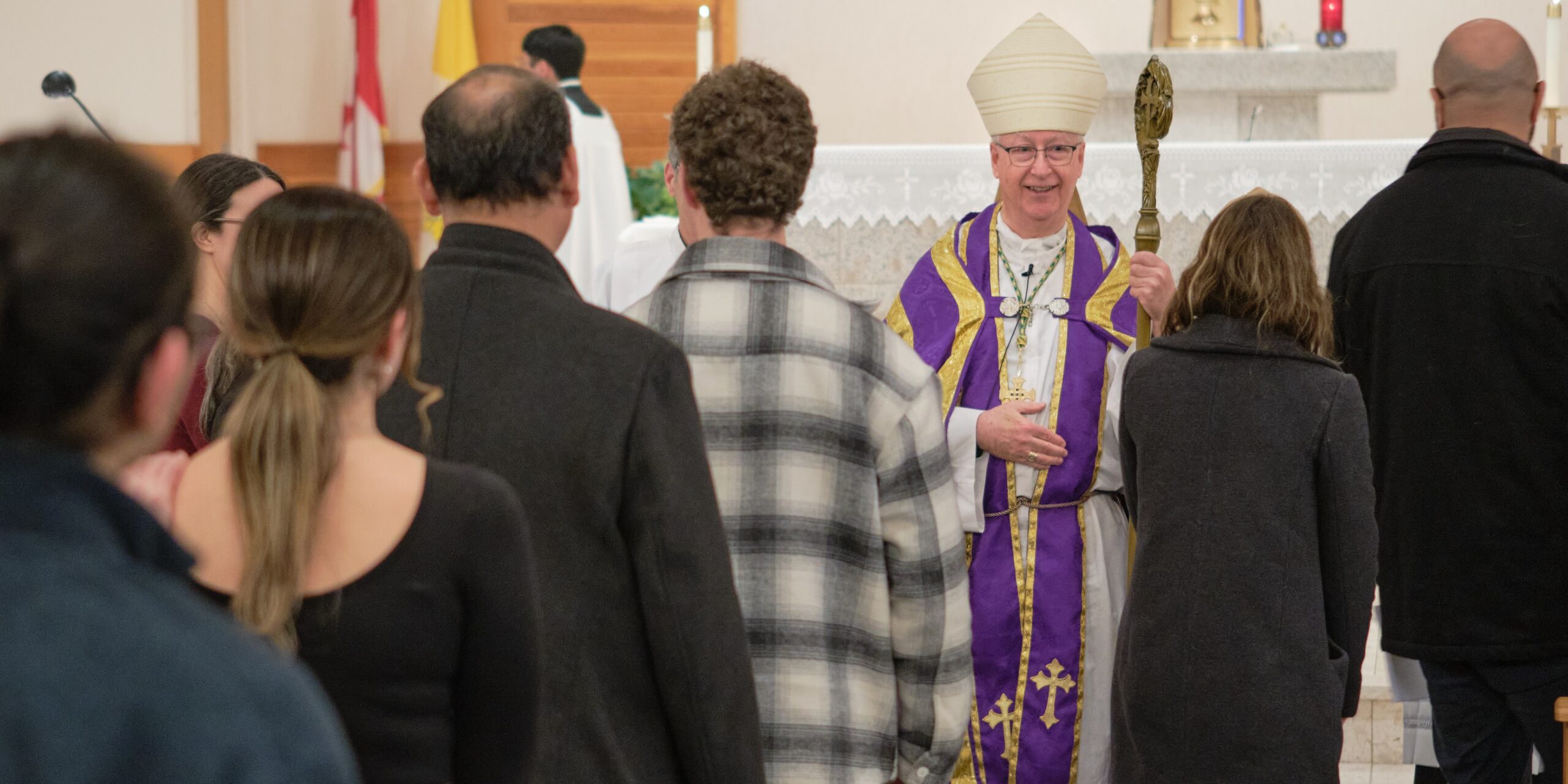

Archbishop Richard Smith has outlined a long-term vision for renewal in the Archdiocese of Vancouver, anchored in preparation for the 2,000th anniversary of the Paschal Mystery in 2033, marking 2,000 years since the Passion, Death, and Resurrection of Jesus Christ.
Speaking to staff at the pastoral centre April 3, the Archbishop said renewal is not about “managing decline,” but about responding with faith to what he described as a “tide of grace” already present in the local Church.
“Renewal must always remain at the heart of the Christian mindset,” he said, emphasizing that Christ’s work of making all things new is ongoing.
Archbishop Smith said his vision has taken shape through months of listening, prayer, and consultation with priests and others across the Archdiocese since his appointment in May 2025. He described Vancouver as “a very strong Archdiocese” with many fruitful initiatives already underway, but said he has consistently heard a desire to see those efforts strengthened and carried forward.
“This is not about reinventing anything,” he said, but about “taking all the good initiatives that have already been developing and finding ways to concretely move that forward.”
The process of renewal will focus on five key areas: priestly life and culture, parish life, Catholic schools, the liturgy, and infrastructure. These will be supported by efforts to strengthen financial sustainability and administrative life across the Archdiocese. Each of the seven areas will be led by designated leaders working with the Archbishop and an executive committee to guide implementation.
The Archbishop has been pointing in this direction since his first months in Vancouver. Speaking at the Archdiocese’s Archbishop’s Dinner last year, Archbishop Smith pointed to the existing strengths of the local Church — parish life, Catholic schools, health care, and outreach to the poor — and suggested the task ahead is to build on those, not replace them. He described priests already working with parishioners to discern how their communities can grow, indicating that renewal begins at the parish level and grows outward from there.
At the same time, he made clear that renewal is not primarily about structures, but about mission. The Church, he said, “is not bricks and mortar. She is mission,” stressing that its work must lead people to an encounter with Christ. He pointed repeatedly to evangelization — the proclamation of the Gospel — as the purpose behind everything the Church does.
That emphasis was reflected in his examples. He highlighted outreach to the poor and marginalized, the witness of consecrated communities, the work of Catholic schools, and the efforts of lay movements as signs of a Church already actively proclaiming the Gospel. Renewal, in that sense, is not starting from nothing, but strengthening and extending what is already bearing fruit.
He also suggested that this work requires active participation, not simply waiting for change. Speaking of the Church’s mission, he emphasized that God works through the efforts of his people, calling for a deeper response from clergy and laity alike. The direction he outlined points toward a more intentional, coordinated effort to support parish life, expand outreach, and focus the Church’s energies more clearly on evangelization.
Renewal, he added, does not mean managing decline. Rather, it calls for openness to growth and confidence in the work of the Holy Spirit. Reflecting on the Acts of the Apostles, he said the Church must remain attentive to the ways God is acting and ask how it can respond. Renewal, he said, points to the participation of the faithful in that movement of grace.
The horizon toward which the vision is directed is the year 2033, which will mark the 2,000th anniversary of the Paschal Mystery. The Archbishop also pointed to 2031, the 500th anniversary of the apparitions of Our Lady of Guadalupe, as an opportunity to entrust the renewal to her accompaniment.
The coming year, he said, will be a time of reflection, prayer, and discernment as the Archdiocese begins to envision and implement this process of renewal. Encouraging those present, he urged them to “think big and pray big,” expressing confidence in the capacity of the Archdiocese to respond generously to the call before it.
He said he has been encouraged by what he has seen in parishes across the Archdiocese, citing “zeal, desire for the Gospel, intelligence, and a heart for service” as signs of readiness for the work ahead.
The initiative, he said, is ultimately aimed at strengthening the Church’s mission to proclaim the Gospel in a time of widespread uncertainty and need.
Earlier in the gathering, Raphael Freston of Development and Peace, who was received into the Church at the Easter Vigil, shared his conversion story. Archbishop Smith pointed to such witness as a reminder that the Church exists “to give witness to the Gospel,” drawing those who are searching toward Christ.
Preparing for the 2,000th Anniversary of the Redemption
While the Church has recently turned the page on the 2025 Jubilee of Hope, a far more ancient milestone is beginning to shape the long-term vision of the Holy See and dioceses around the world.
In 2033, the Christian world will mark the bimillennial anniversary of the Paschal Mystery — the 2,000th anniversary of the Passion, Death, and Resurrection of Jesus Christ.
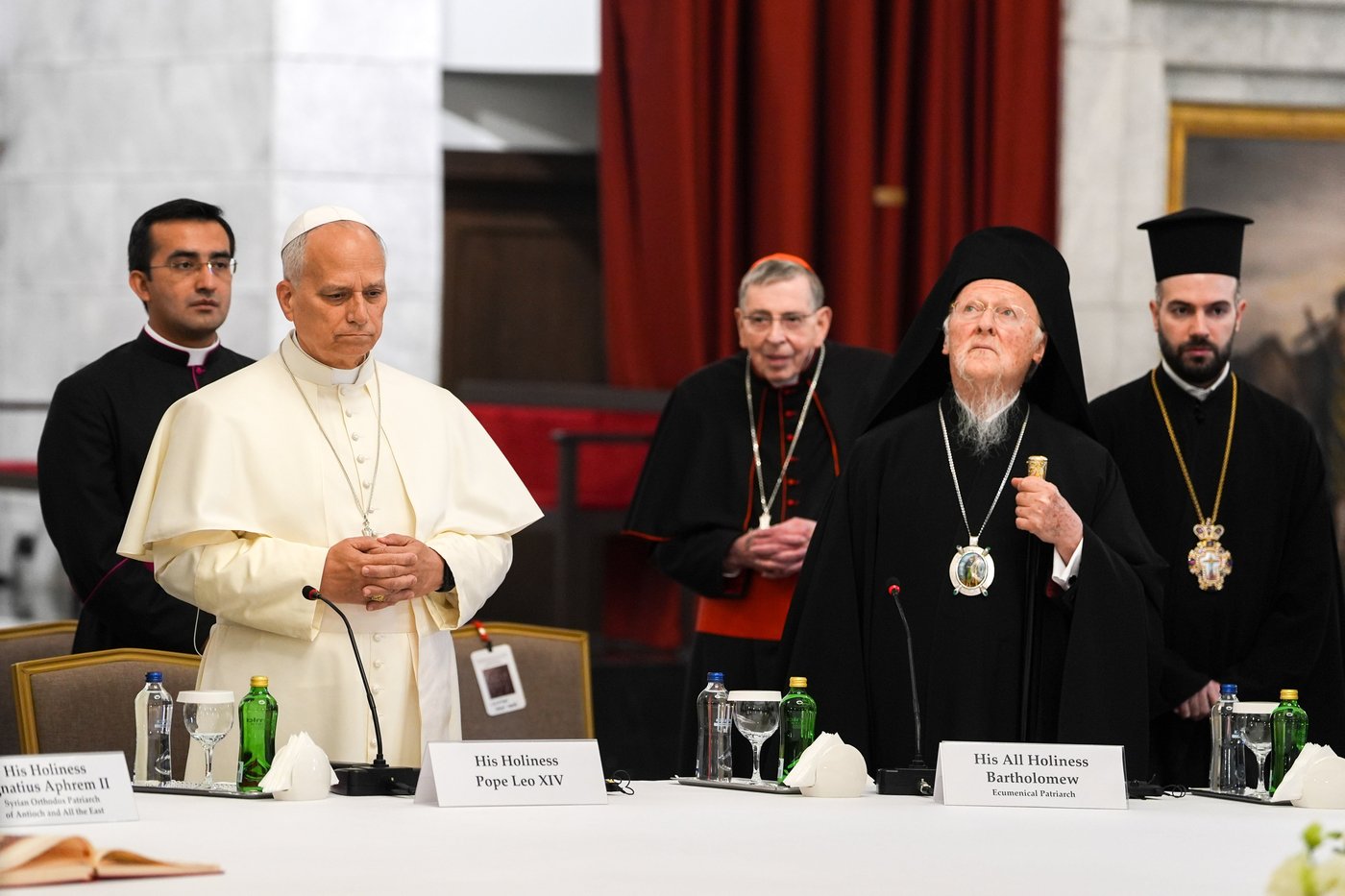
Speaking to Christian leaders in Turkey last year, Pope Leo XIV said he hoped they could meet in Jerusalem in 2033 to celebrate together the 2,000th anniversary of the death and resurrection of Jesus.
Later, in a joint declaration with Ecumenical Patriarch Bartholomew of Constantinople, he called on Christians of East and West to agree on a common date for Easter.
According to the Vatican press office, Pope Leo also spoke to the leaders about the possibility of a Jubilee 2033 celebration in Jerusalem.
He expressed a desire to celebrate “in the Cenacle, place of the Last Supper of Jesus with his disciples, where he washed their feet, and the place of Pentecost,” the press office said. To make such an encounter possible, he told them, progress toward full unity would be necessary, citing his episcopal motto, “In Illo uno unum,” or “In the One, we are one,” referring to faith in one Lord.
The website Jubilee 2033 says the year will be of exceptional significance, marking the 2,000th anniversary of the Redemption. An Extraordinary Jubilee is expected to draw millions of faithful from around the world, following the tradition of past Holy Years such as those of 1933 and 2025. The Church celebrated similar extraordinary years in 1933 under Pope Pius XI and again in 1983 under St. John Paul II, marking the 1,900th and 1,950th anniversaries of the Resurrection.
Rome will serve as the focal point of the celebrations, with the four papal basilicas — St. Peter’s, St. John Lateran, St. Mary Major, and St. Paul Outside the Walls — at the heart of the pilgrimage experience, including the symbolic passing through the Holy Door.
The website says the central message of the Jubilee is one of spiritual renewal, peace, reconciliation, and solidarity, inviting the faithful to reflect on Christ’s sacrifice and to obtain a plenary indulgence through prayer, the sacraments, and acts of mercy.
Preparations are already underway, with plans for prayer gatherings, catechesis, cultural events, concerts, and exhibitions highlighting the connection between faith and art. While Rome will remain the epicentre, every diocese worldwide is called to participate, reinforcing a sense of global Christian unity.
Your voice matters! Join the conversation by submitting a Letter to the Editor here.