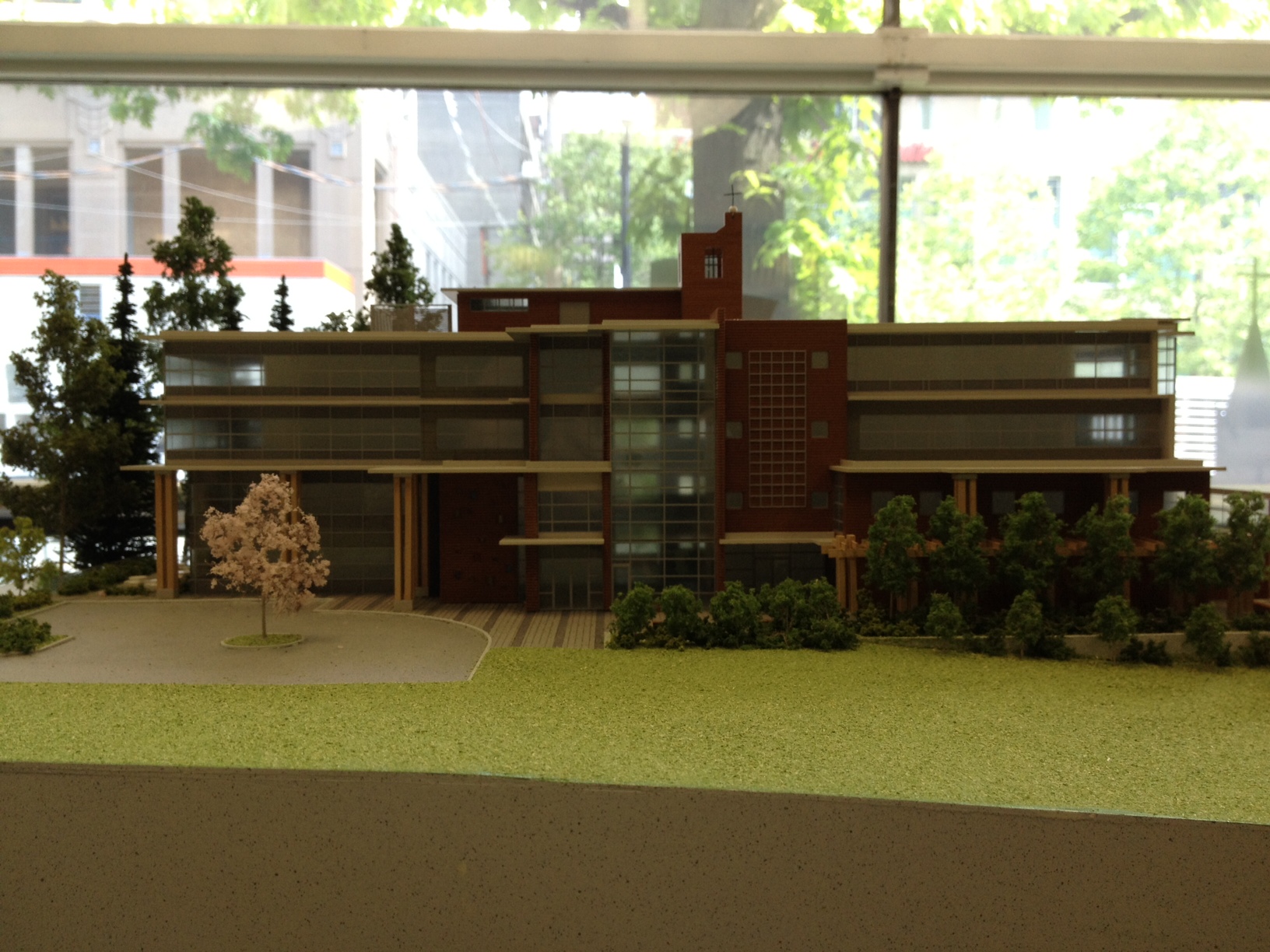

The archbishop says it’s time to move out of the former electrical warehouse that the archdiocesan offices have called home for more than 50 years. Within the next three months, the John Paul II Pastoral Centre will pack up and move south to a shiny new location near 33rd Avenue and Willow Street in Vancouver.
Archbishop J. Michael Miller, CSB, sat down with The B.C. Catholic to talk about how the move will affect employees and the people in the pews.
The B.C. Catholic: Why is the John Paul II Pastoral Centre moving from 150 Robson Street to 4885 Saint John Paul II Way?
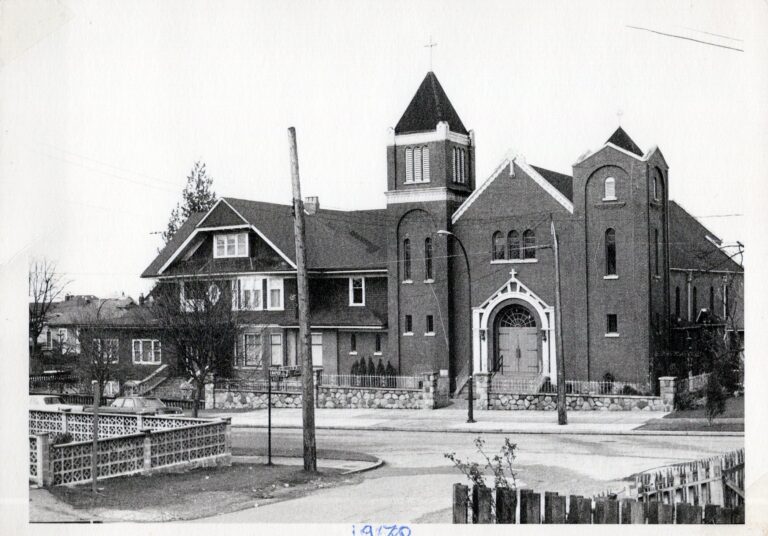
Archbishop Miller: I guess the major reason is that we’ve been at this location for 60 years and, although it has served very well, the building was never designed for the purposes it has filled wonderfully throughout the years.
It’s totally handicap-inaccessible. It doesn’t foster a collaborative working environment because we’re all divided up into these separate little places.
We were able to put up a new facility and at the same time fulfill a second need, to provide senior housing for our retired priests. Putting the two together on the site on land which we did not have to purchase; it was simply the right time. People have been talking about it for many years.
BCC: What are some benefits of the new location, just down the street from Queen Elizabeth Park?
AM: For one thing, there will be more parking. It is just as accessible since it’s on the Canada Line. There is bus service. For people coming from the south, it’s more accessible than bothering to come to the downtown corridor. I think, frankly, it’s more accessible because you don’t have to come downtown.
The big thing is the (housing for) retired priests.
It’s also a far better and far healthier, in every sense of the word, working environment. It fosters a more collaborative and cooperative atmosphere because it’s far more open.
BCC: How will the move affect the average Catholic in the pews on Sunday?
AM: The archdiocese will continue to render the same services. We’re not adding services provided to the parishes in any sense, so I think it should be a pretty seamless transition.
BCC: What changes are in store for the people who come to the archdiocese regularly for meetings?
AM: That’s a big benefit. There’s a large hall that will be able to seat 200 people and is more open to diocesan use. That’s a nice feature. The chapel is bigger. It’s not huge, but for 50 or 60 people. There’s a lot of meeting space.
BCC: The new John Paul II Pastoral Centre will be rated “gold” under the Leadership in Energy and Environmental Design certification. Why is it important that the archdiocesan headquarters be designed this way?
AM: This old building, as you know, is an ecological nightmare. In the middle of winter the air conditioning is on at the end of this corridor because the heat is so bad. Our bathrooms leave something to be desired. The men’s bathroom is a classic from the 1920s. This is not a good building from that point of view.
The new building will be far more energy-efficient, everything from the lighting to the electricity, and it will be set up for modern technology. It’s good for the future. You pay more up front, but they’re better to run. And stewarding the world’s resources: we’ll spend less on oil and so on.
BCC: Who’s paying for it?
AM: The construction costs of the new pastoral centre are being funded by the sale of this building, totally. The priests’ wing is being financed by gifts over the years to provide for retirement of priests.
The land was owned by the Sisters of Charity of the Immaculate Conception, who ran St. Vincent’s Hospital. When St. Vincent’s Hospital was taken down, they willed the property to Catholic Charities of the Archdiocese of Vancouver, with the provision that it be used as a campus for care.
They built Honoria Conway on the property, and there are plans for other care facilities.
We asked the sisters if they would allow us, because we’re putting up seniors housing, to build the chancery on (a section of the land). The sisters said yes, that would be in keeping with their wishes.
So we have the land. We didn’t have to pay for what would be very expensive land in the city of Vancouver. It was a godsend to be able to have that land.
BCC: You came to the Archdiocese of Vancouver as coadjutor bishop to Archbishop Raymond Roussin, SM, in 2007. Do you have any memories of the old building since those days?
AM: When I first saw it, it was an old building, and it has a certain character, there’s no doubt about it. But character is one thing and efficiency is another. Although it has a certain kind of ancient look, it’s not very efficient. The lack of handicap access is a real problem.
On the other hand, when you work in a place it becomes familiar, and it’s like liking an old dumpy house or cottage. It’s really the maze-like character that remains the most disappointing part of the building. You would never know that everybody in the building was working for the same cause.
I’m hoping the new building will foster more of a collaborative nature, which people have in their hearts. The geography of the old building doesn’t help it. When I first came here, I had to have a map. Our chapel is cute, but it is slightly claustrophobic. There are things like that.
BCC: Do you expect people will stop by to see the new chapel or the larger-than-life statue of Pope John Paul II, once they are finished?
AM: (The chapel) will be lovely. They will always have to pass through security, but I’m sure there will probably end up being some people who, just as the odd time here, want to come to Mass. There won’t be outside access to the chapel.
The statue will be pretty prominent. You’ll see it from the road. It is imposing. It will be nice.
I’m starting to get excited about the move!