
Three Vancouver Catholics—Archbishop J. Michael Miller, Paralympian Aaron Wong-Sing, and Ukrainian Catholic priest Father Mykhailo Ozorovych—have received King Charles III Coronation Medals in recognition of their exceptional service to Church, country, and community.
The medal honours Canadians who have made significant contributions to society or achieved accomplishments abroad that bring credit to the country. Thirty thousand medals were created for distribution across Canada.
Archbishop Miller was nominated by the Canadian Interfaith Conversation (CIC), a national coalition of faith-based organizations that promotes religious freedom and cooperation.
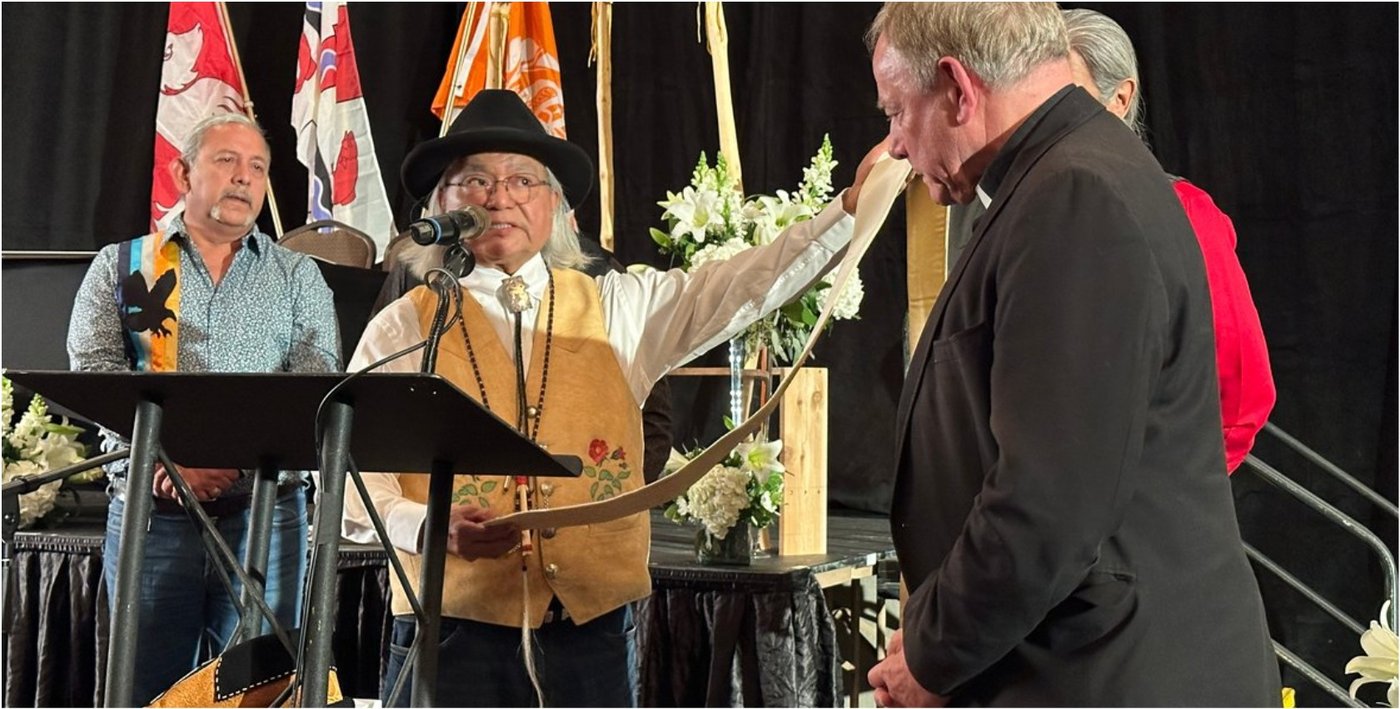
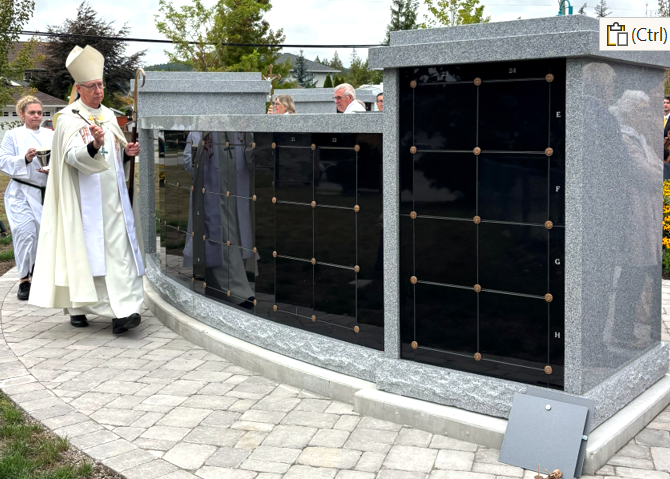
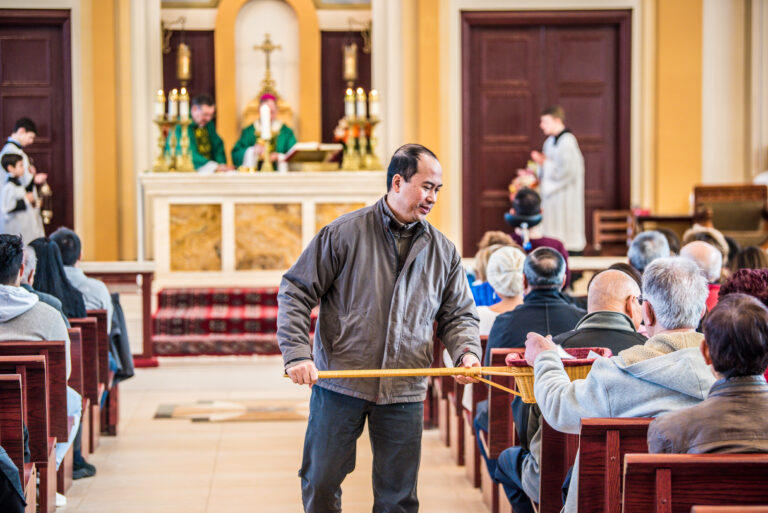
Archbishop Miller receives a stole on Easter Sunday of 2024, where he signed a Sacred Covenant with the Kamloops First Nation to forge a new relationship between the Church and Indigenous peoples in British Columbia. The event was cited in the Archbishop’s nomination for a King Charles III Coronation Medal. (Matthew Furtado/Archdiocese of Vancouver)
The organization recognized the Archbishop for his “outstanding service in fostering respect and understanding of religious traditions in Canada” and for his contributions to “the positive role faith communities make in Canadian civil society.”
Archbishop Miller was honoured for his pastoral work with diverse Catholic communities, including Filipino, Vietnamese, Korean, and Syro-Malabar Catholics; his support for national reconciliation efforts through Bill C-15, the federal legislation endorsing the UN Declaration on the Rights of Indigenous Peoples Act; and his leadership in promoting interfaith clinical pastoral education.
The CIC noted the Archbishop’s service at the Vatican’s Pontifical Council for the Pastoral Care of Migrants and Itinerant, and his establishing of offices for First Nations Ministry, Hispanic Ministry, Filipino Ministry, Chinese Ministry, and Ecumenism and Interfaith Relations.
The CIC also recognized his public stance against racism and anti-Semitism and his work with other faith leaders and the City of Vancouver mayor to address Vancouver’s Downtown Eastside challenges.
The CIC also noted that Archbishop Miller was a founding member of the Multifaith Summit Council of British Columbia and, in 2024, entered into a Sacred Covenant with the Tk’emlúps te Secwépemc people on behalf of the Archdiocese of Vancouver.
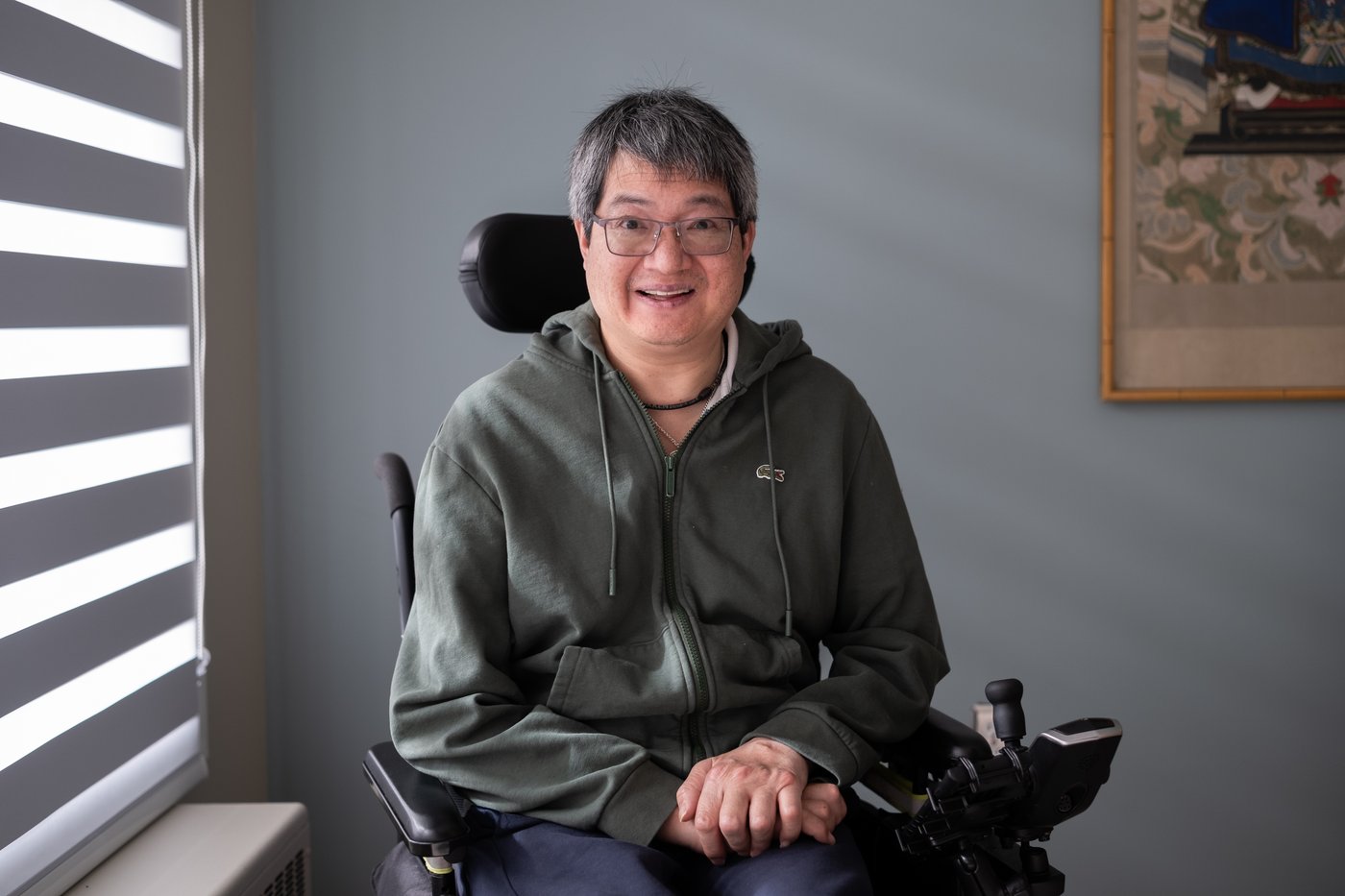
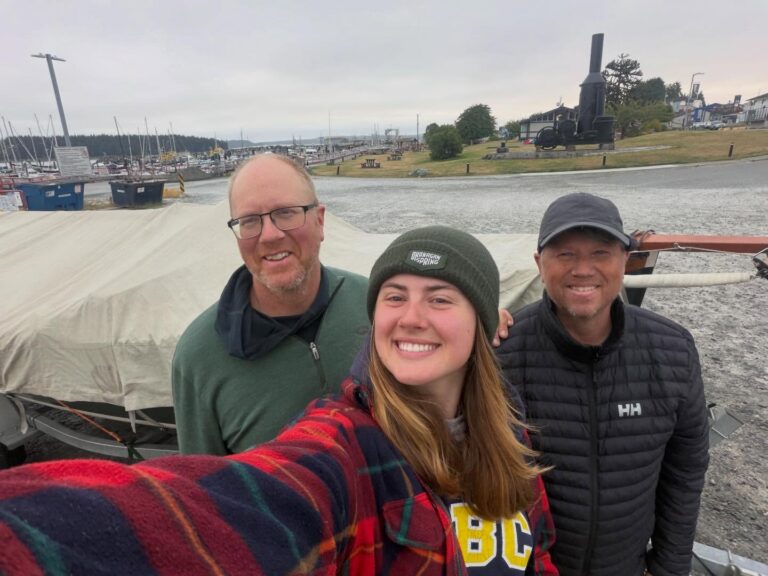
Aaron Wong-Sing.
Aaron Wong-Sing
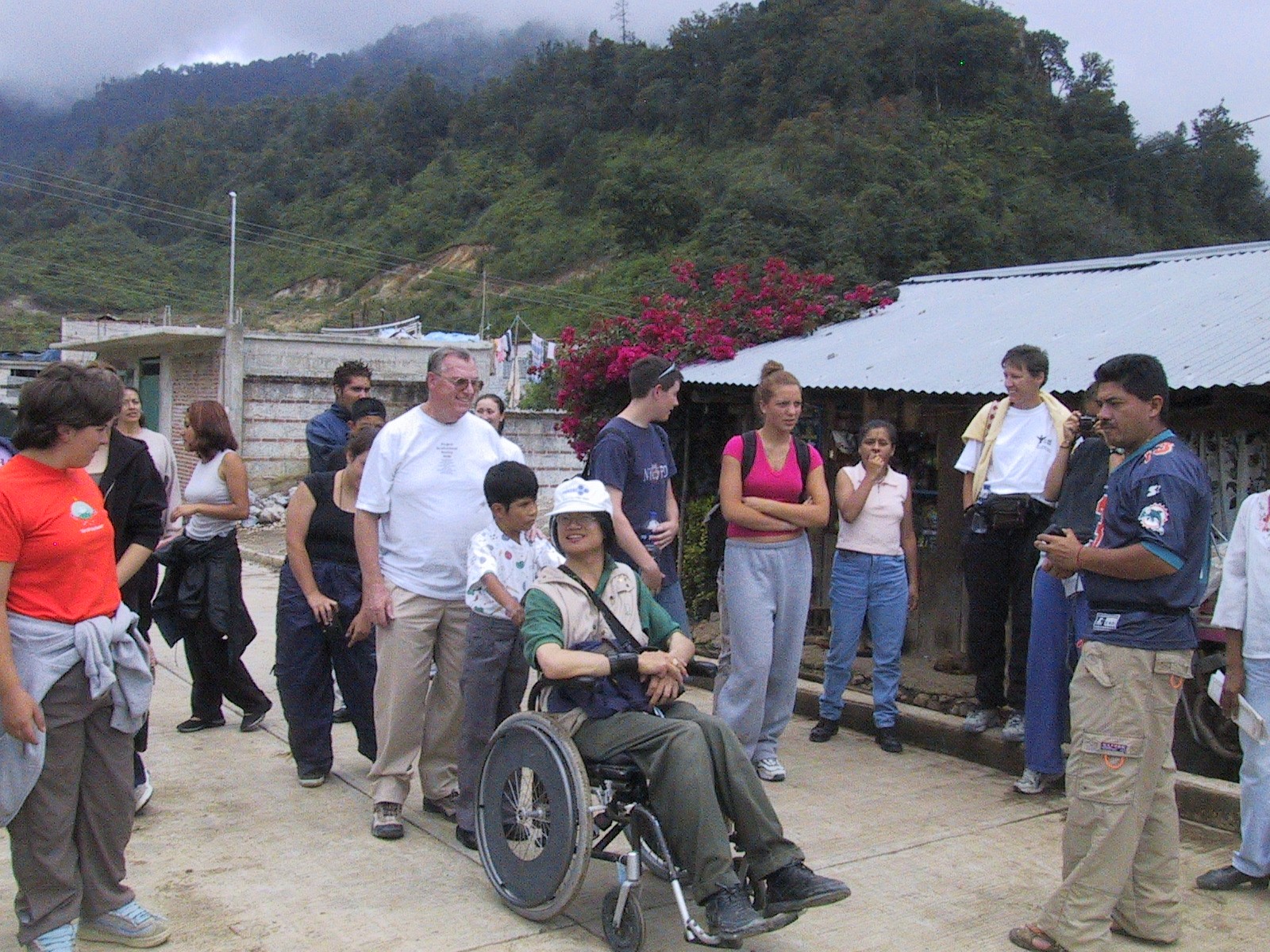
A lifetime of public service should be enough to warrant some recognition, but local charity founder and public servant Aaron Wong-Sing was still surprised and grateful to discover he was nominated for the Coronation Medal for two decades of service in the Canadian public sector. His nomination came from his colleagues in Ottawa, where he spent much of his career working on initiatives to support medically uninsured First Nations communities.
In 1991 he founded Project Brotherhood, an organization that raised funds to build houses and supply basic human resources to people in Mexico, South America, and Asia.
Wong-Sing, who was born with cerebral palsy, said his disability has presented challenges but has also strengthened his faith. “It’s helped me build strength of mind and strength of spirit,” he said. “It’s given many opportunities to pray and meditate.”
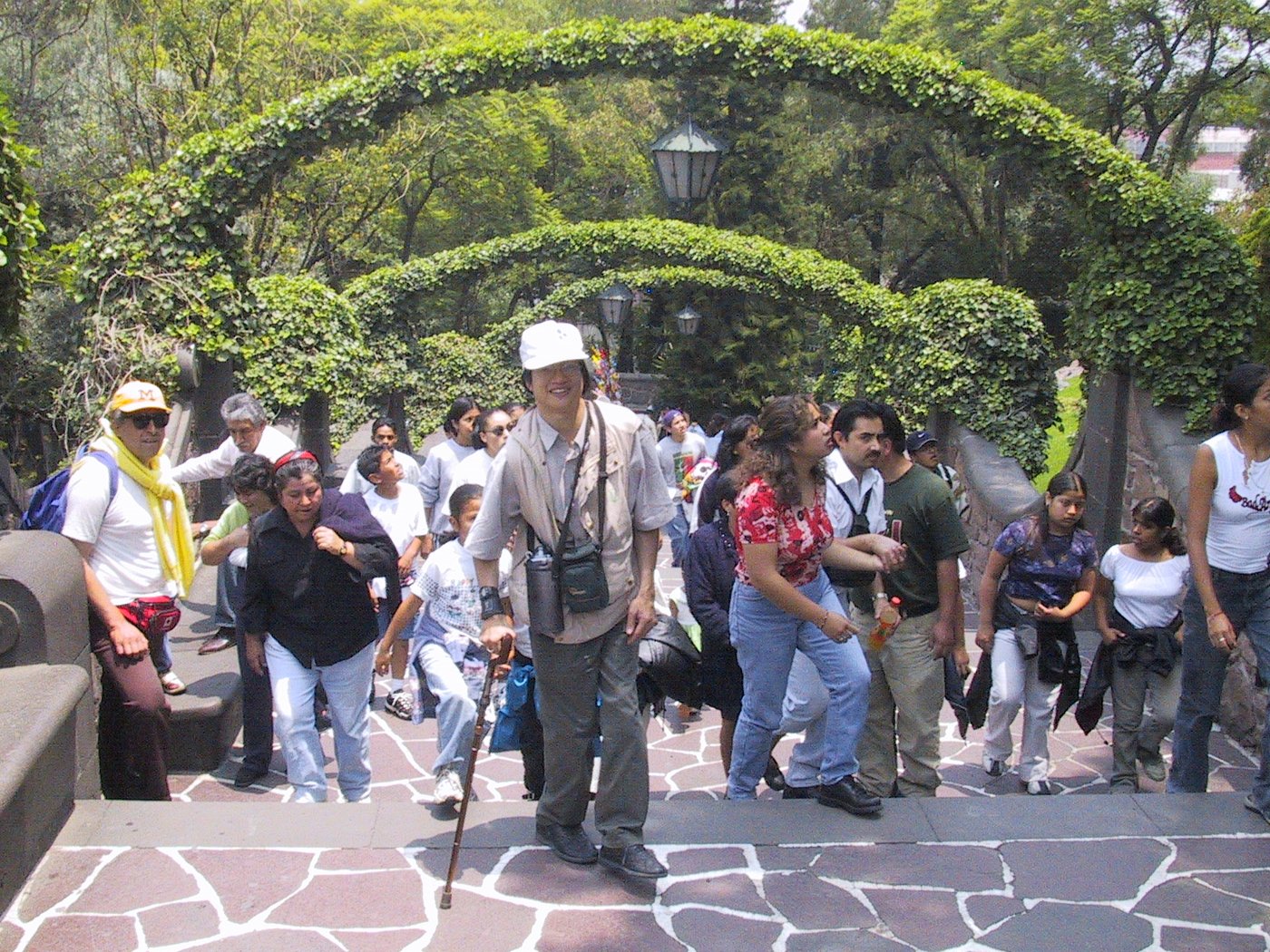
His resilience extended to sports, where he became a skilled Paralympic sailor, earning a silver medal at the 2017 Canada Summer Games.
Wong-Sing has since retired from public service due to declining health, and he received an ALS diagnosis in the spring of last year. He views this new chapter as another opportunity for growth. “It’s been humbling—I need to accept this is part of the plan,” he said.
Despite his health challenges, Wong-Sing remains committed to his faith and service, leaving a lasting impact on both his community and his country.
Father Mykhailo Ozorovych
The priest is the representative of his people. That’s why Father Mykhailo Ozorovych sees his reception of the Coronation Medal not as a commendation of his own accomplishments, but as recognition of the community of Holy Eucharist Cathedral in New Westminster, which supported 5,000 Ukrainian refugees who have arrived in Vancouver since the war in Ukraine began.
Receiving the medal was humbling, he said, so much so that he was tempted to decline it.
“Anyone who knows me knows I am not one for medals and awards,” he said.
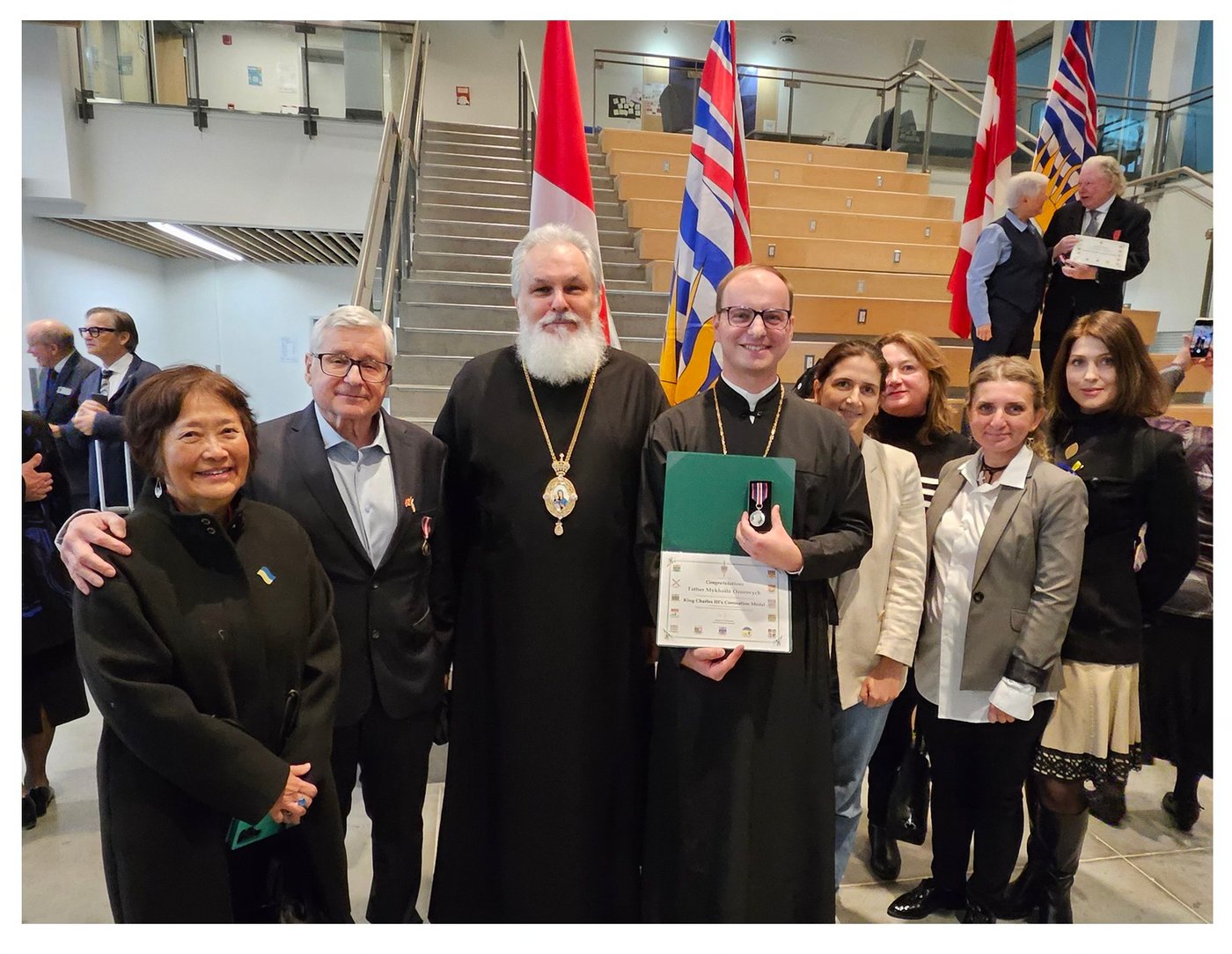
Since the start of the war, rising to public prominence has felt unnatural to him. Still, he saw a call from God to step up in a crisis.
When the war began, he was overwhelmed by the outpouring of support from ordinary Canadians but felt inadequate in the face of the immense need.
“It isn’t every day that a war starts in your home country,” he said. “You are never ready for something like this.”
Father Ozorovych is grateful for the support from local organizations and families, including the Nicola Foundation and the Archdiocese of Vancouver, which provided hundreds of thousands of dollars to aid Ukrainian refugees.
He was pleasantly surprised that a Catholic priest would be honoured in such a secular setting.
“Being a public witness of my faith was a good opportunity,” he said. “I hope it inspires other priests to be creative, confident, and courageous in giving witness to the Gospel—not only through the sacraments and liturgy but also in works of mercy.”
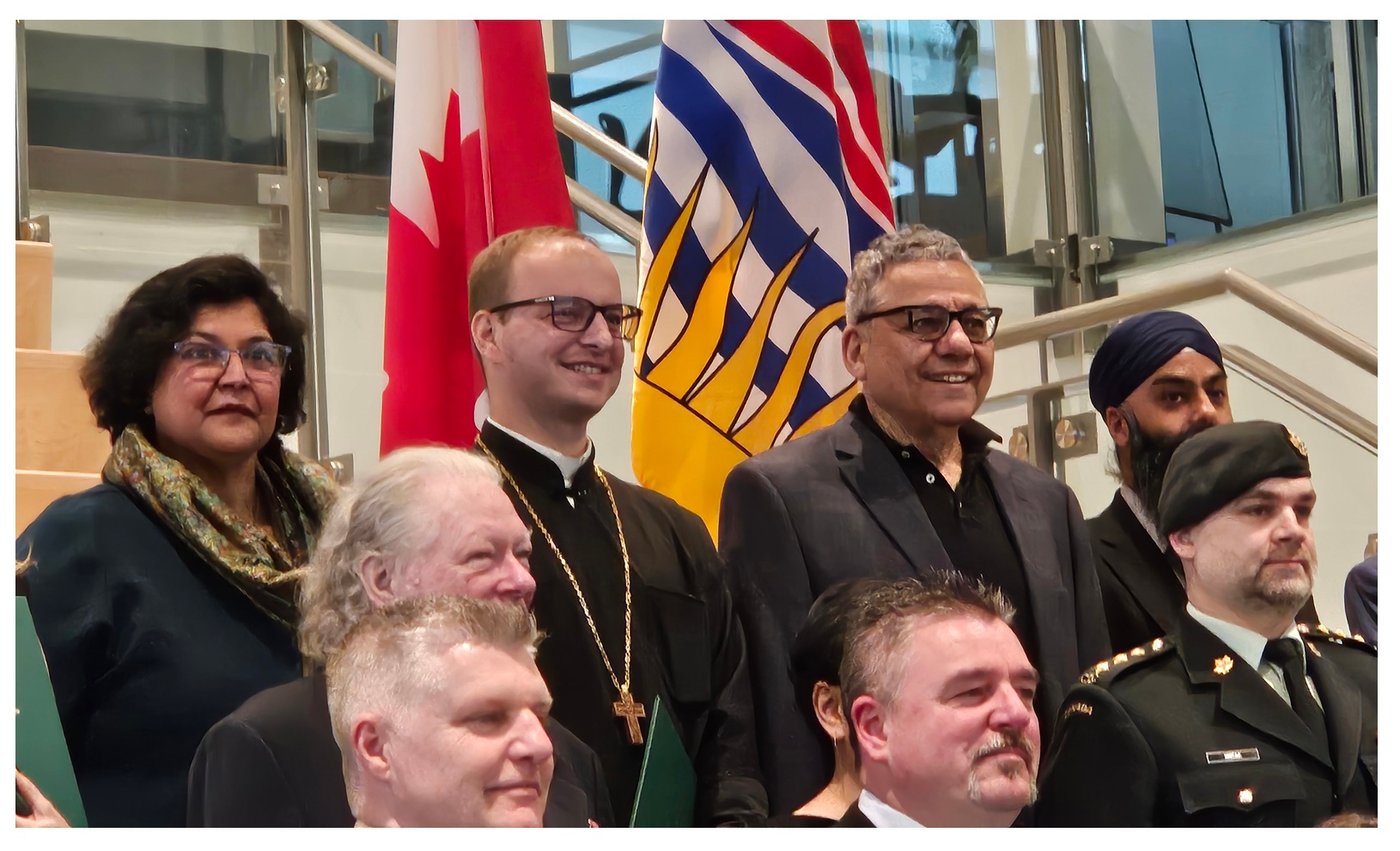
Father Ozorovych is proud of his parish’s work in housing refugees, coordinating English classes when government programs were slow to respond, and providing a safe space for those reeling from tragedy.
The parish is now planning a major development to expand its capacity to help. It hopes to acquire laneways southwest of its property to build housing on the land. Zoning is still being worked out, but Father Ozorovych is clear: whether it’s eight or 48 units, the parish is committed.
He hopes the project will inspire other church communities to explore similar initiatives.
“The generations [that came before us] did amazing work with land and buildings,” he said. “We need to be good stewards of that.”
The parish is accepting donations, with all contributions up to $150,000 matched by an anonymous donor.
To be eligible for the Coronation Medals, nominees must have made a significant contribution to Canada—whether nationally, provincially, regionally, or within their communities—or achieved outstanding accomplishments abroad that bring credit to the country.
While the British government initially produced 400,000 medals for distribution in the United Kingdom, Canadians could only receive a British medal if they attended a British ceremony with the Canadian government’s approval. To ensure broader recognition within Canada, an additional 30,000 medals were created for distribution here, designed in consultation with the Canadian Monarchist Society.
Both the British and Canadian medals feature an identical effigy of King Charles III on the front. However, the reverse side of the Canadian medal differs from its British counterpart; it replaces the British version’s Queen Camilla effigy with a crown and sunburst design.
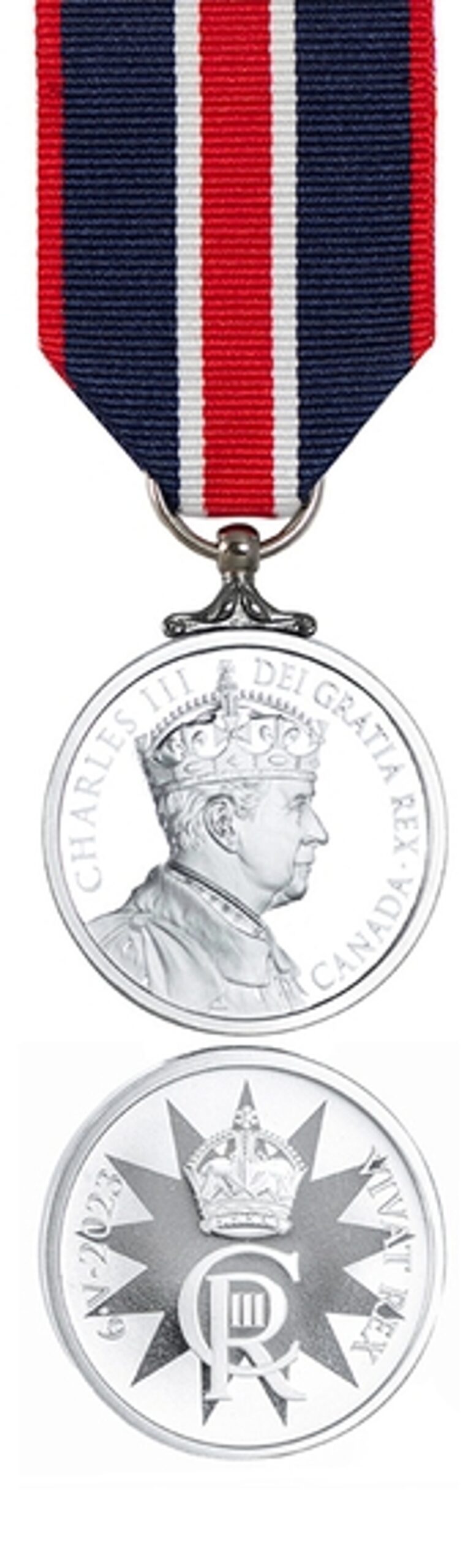
According to CBC News, the Canadian Monarchist Society opposed Queen Camilla’s inclusion, citing her absence from the Canadian order of precedence—a symbolic hierarchy of positions within the country’s governing institutions. The order of precedence does not carry legislative power but dictates ceremonial protocol.
The medals are part of a tradition dating back to the coronation of King Edward VI in 1547.
Your voice matters! Join the conversation by submitting a Letter to the Editor here.