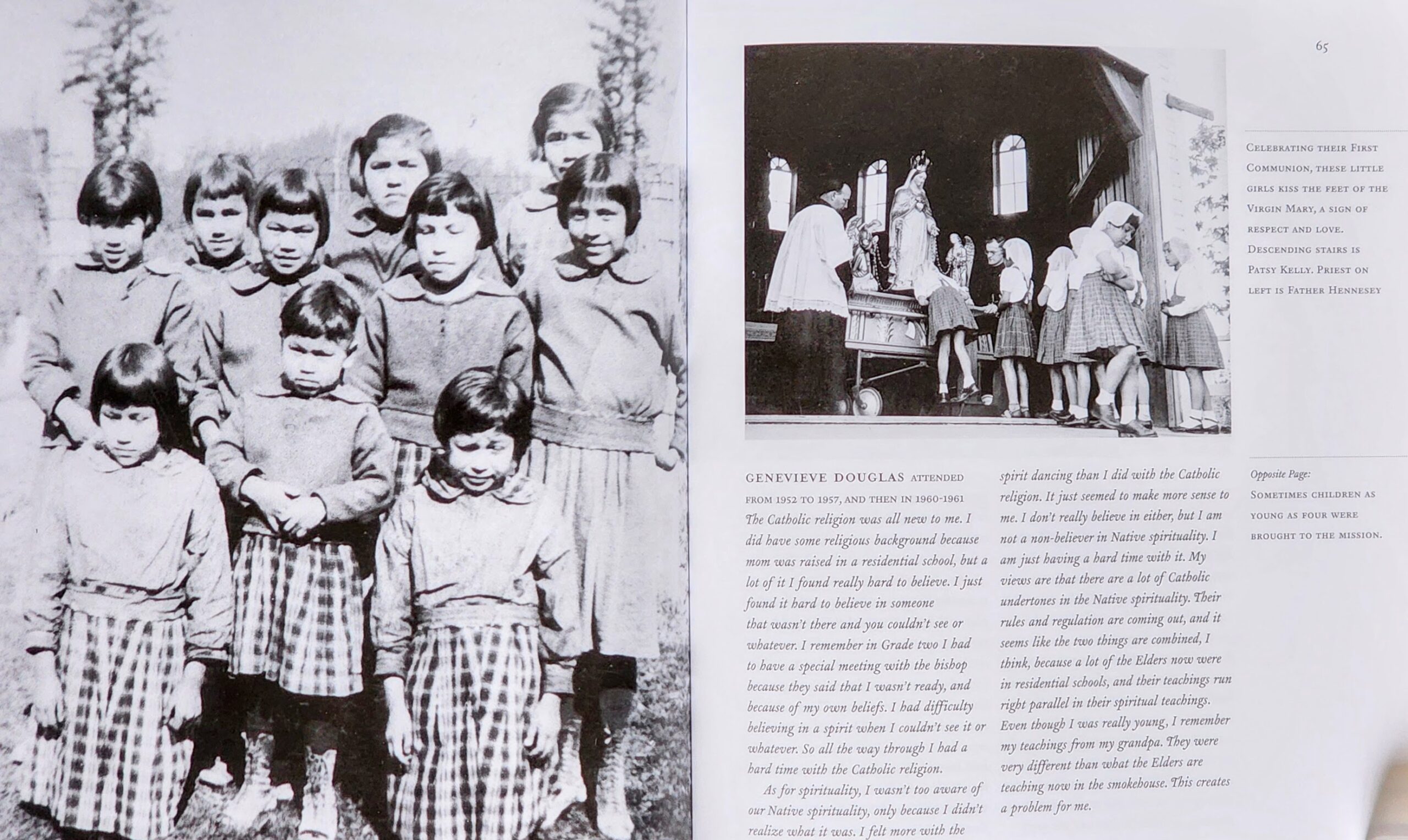

In the story of residential schools, “Catholics are victims too,” says author Terry Glavin.
“The people who suffered in residential schools were Catholics.”
Glavin spoke those words during an interview about the republishing of his 2002 book St. Mary’s: The Legacy of an Indian Residential School, which recounts the history of the former St. Mary’s Residential School in Mission.
The current edition has been expanded with additional testimonies and photos and was funded through the Archdiocese of Vancouver’s Indigenous Reconciliation Fund.
Glavin said he appreciates the additions, which maintain “the overall spectrum of the individual experiences of the Indigenous people” recorded in the original volume, which was titled Amongst God’s Own, the Enduring Legacy of St. Mary’s Mission and published in 2002.
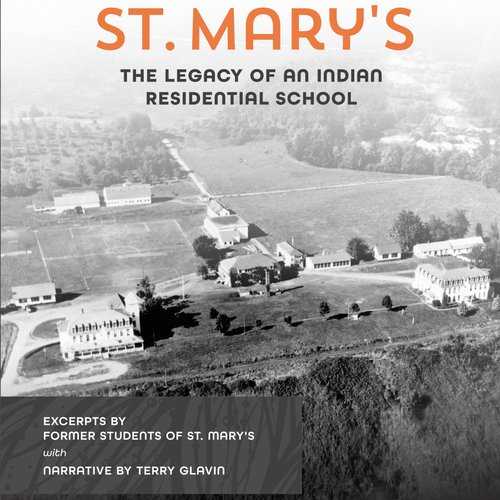
Glavin believes the book is a worthwhile contribution to the literature on the Indian residential school experience, and he hopes it will be something former St. Mary’s students can pass on to their children.
The book is about “one religious order and one residential school,” said Glavin. “I didn’t want the book to be a tribute to the school. I took great pains to present the gritty and nuanced experiences of the Aboriginal people.”
As such, it will be helpful for people who are “really interested in history,” he said, since the book plots “the interesting trajectory of Catholicism among the Indigenous people in what eventually became British Columbia.”
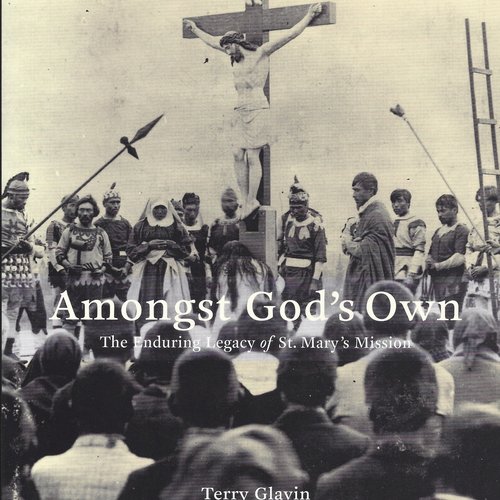
Glavin thinks people will be surprised by the counter-cultural narrative about the Oblates of Mary Immaculate presented in the book. The Oblates originally settled north of the 49th parallel after upsetting both Americans and Indigenous people with their appeals for peace in the Cayuse War in Oregon from 1847 to 1855. They remained controversial in the early 20th century with secular education inspectors when they refused to allow corporal punishment at St. Mary’s.
Because the book recounts the development of St. Mary’s before it became a residential school in the late 1800s, it offers an early vision of the school that is often at odds with contemporary narratives labelling residential schools as rife with systemic racism and abuse. For every story of horror and hurt, there is an account of a Sister of St. Anne staying up late with her young students or a fond memory of a priest coaching soccer teams or organizing dances.
Yet the ratio still skews toward negative stories, reflecting the reality of Indigenous opinions on St. Mary’s, said Glavin, who has close relationships with abuse survivors stretching back to his childhood. “It’s perfectly possible to sit at a table drinking coffee with some old guys, and one will have a happy memory about St. Mary’s, and one will have miserable memories,” he said.
“Most middle-class Canadians can understand that your high school experience can be ruined by a single mean teacher – imagine that in the context of a boarding school. Your family has no choice but to send you to a residential school because there are no day schools,” said Glavin.
Everything needs to be considered in its historical context, he said. “There are periods in the school’s history where everyone is happy, and there are periods where some have a good experience, and some didn’t.”
Perhaps the greatest tragedy of St. Mary’s is that near the end of its operation, the student testimonies are overwhelmingly negative. In the book’s final chapter, even the most positive student accounts acknowledge they would have left the school if given a choice.
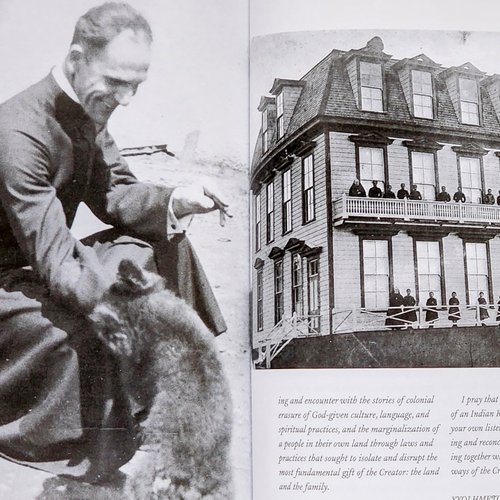
Because of this breadth of testimony, Glavin says the book’s reception has shifted over the years.
“Originally, it was well received, particularly among Indigenous people,” Glavin said. As the years passed, the book’s treatment of the school’s early history has increasingly become a stumbling block for the politically motivated who want to present Canadian history as universally racist and genocidal.
“It’s high fashion in the intelligentsia, in the universities, to tell a horrible story of Canada as an irredeemably racist colonial state. [The narrative] presents Indigenous people as a monolithic block that was oppressed and robbed – it’s a cartoon,” he said.
Human nature is complicated, and especially west of the Rockies, the relationship between settler populations and Indigenous people was considerably more complex than simplistic narratives would suggest, said Glavin.
Historical ignorance on the part of Canadians is partially to blame, and Canadians have a “peculiar habit” of “rediscovering residential schools every so often.”
Canada has a “long overdue reckoning” with its residential school history every 10 to 20 years, he said. It happened in the 1990s and again during the Truth and Reconciliation Commission from 2008 to 2015. The most recent instance of this “reckoning” was ignited when, in 2021, the New York Times labelled the over 200 ground-penetrating radar anomalies discovered at the Kamloops Residential School site a “mass grave.”
Ironically, said Glavin, Canadians reported “basically the same level of understanding of residential school policy” long after Kamloops. He can see nothing positive coming from the firestorm of anti-Catholic bigotry, church burnings, and Catholic self-flagellation that accompanied the event.
“Catholics need to rediscover their spines – just don’t take it,” he said. “You have absolutely nothing to apologize for. This is important for people to get into their heads: the sins of the father should not be visited on the head of the son. Catholics should know this.”
Review: ‘a tragedy of human errors’
By Nicholas Elbers
“This book is about a terrible story,” begins Terry Glavin’s preface to St. Mary’s: The Legacy of an Indian Residential School.
It’s also a wonderful story. And it is unfinished.
Reading the book in 2024 is a strange experience. The book contains none of the tropes you would expect in a volume on residential school history – no race-baiting, no shaming of religious people or their institutions, no calls for violence; only a clear and concise examination of one residential school’s history stretching back to the time before its founding.
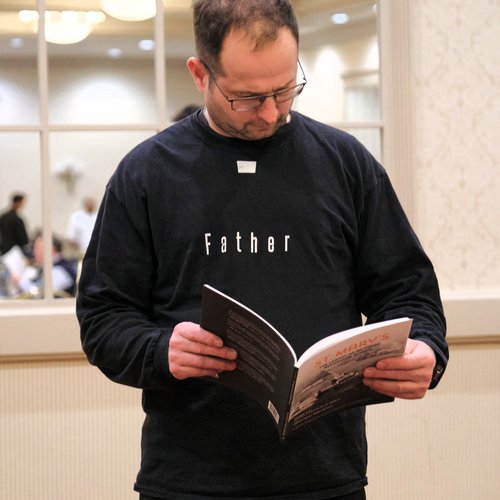
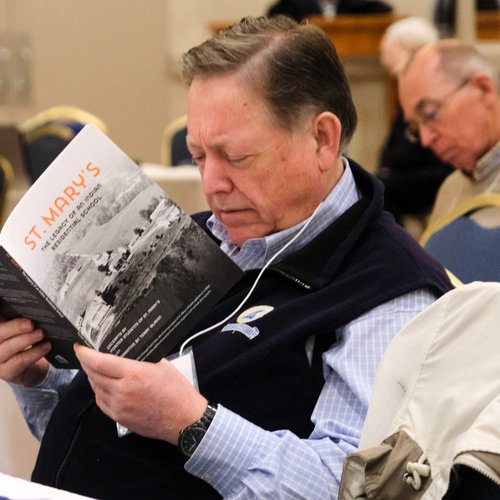
The book was first published in 2002 under a different title, and therefore it predates the Truth and Reconciliation Commission. This might give the illusion that it’s a relic of a more ignorant time, but Glavin offers a balanced and well-researched narrative, tackling the difficult topic with a journalist’s empathy and the meticulous attention of a historian. If nothing else, the book is worth its weight as a reminder that Truth and Reconciliation didn’t start with the TRC.
Perhaps this sounds too romantic – the book can be hard to read. How could it not be? The school has too many horrible stories, especially during its waning years. But – and it’s a large but – by centring the book around the regional history of the Oblates of Mary Immaculate, rather than narratives of colonial genocide, the story is tempered into a tragedy of human errors that elevates it above the shoddy political posturing of the present moment to offer some real insight into the human condition itself.
Reading the book, I found myself wondering what could have been if the school had never been integrated into the residential school system. It’s often been said that the devil creates the worst demons by corrupting the greatest angels, and St. Mary’s is a potent reminder.
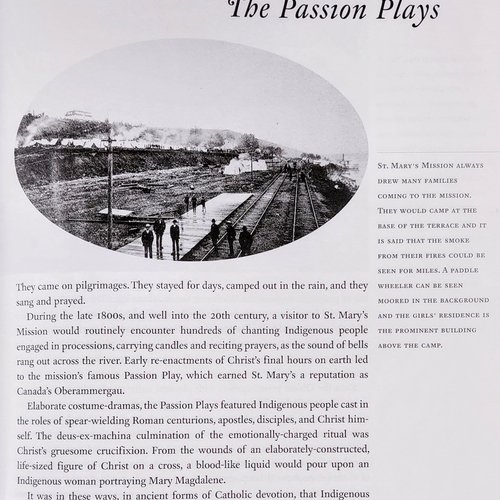
The school was literally constructed by local Indigenous communities in concert with the Oblates to educate their children. Unlike schools run under residential school policy, which focused on training Indigenous children for agricultural and industrial work, St. Mary’s was founded on an educational philosophy of academic instruction and religious education.
Additionally, the Oblates prohibited corporal punishment as a disciplinary tool – much to the confusion of government inspectors – and allowed students to take day trips into town and to have leave to visit their parents during the school year. None of these policies survived the school’s transition to a residential school.
The book’s early testimonies are often uplifting and paint a picture of sincere teachers and happy children. It isn’t until the post-Second World War period that the stories become overwhelmingly dark.
I won’t relate any of the survivor testimonies that make up the bulk of the book here. They are heartbreaking and difficult to read, and they are necessary. They describe not just the suffering of the students but the fall from God’s grace of the school’s Oblate administrators, which, in the final estimation, is one of the most depressing aspects of the entire book.
The final chapter’s closing line, noting that Oblate founder St. Eugene de Mazenod is now the patron saint of dysfunctional families, brought a tear to my eye with its poetic irony – or perhaps its sense of providence.
Share your thoughts and contribute to the ongoing conversation by sending us a Letter to the Editor.