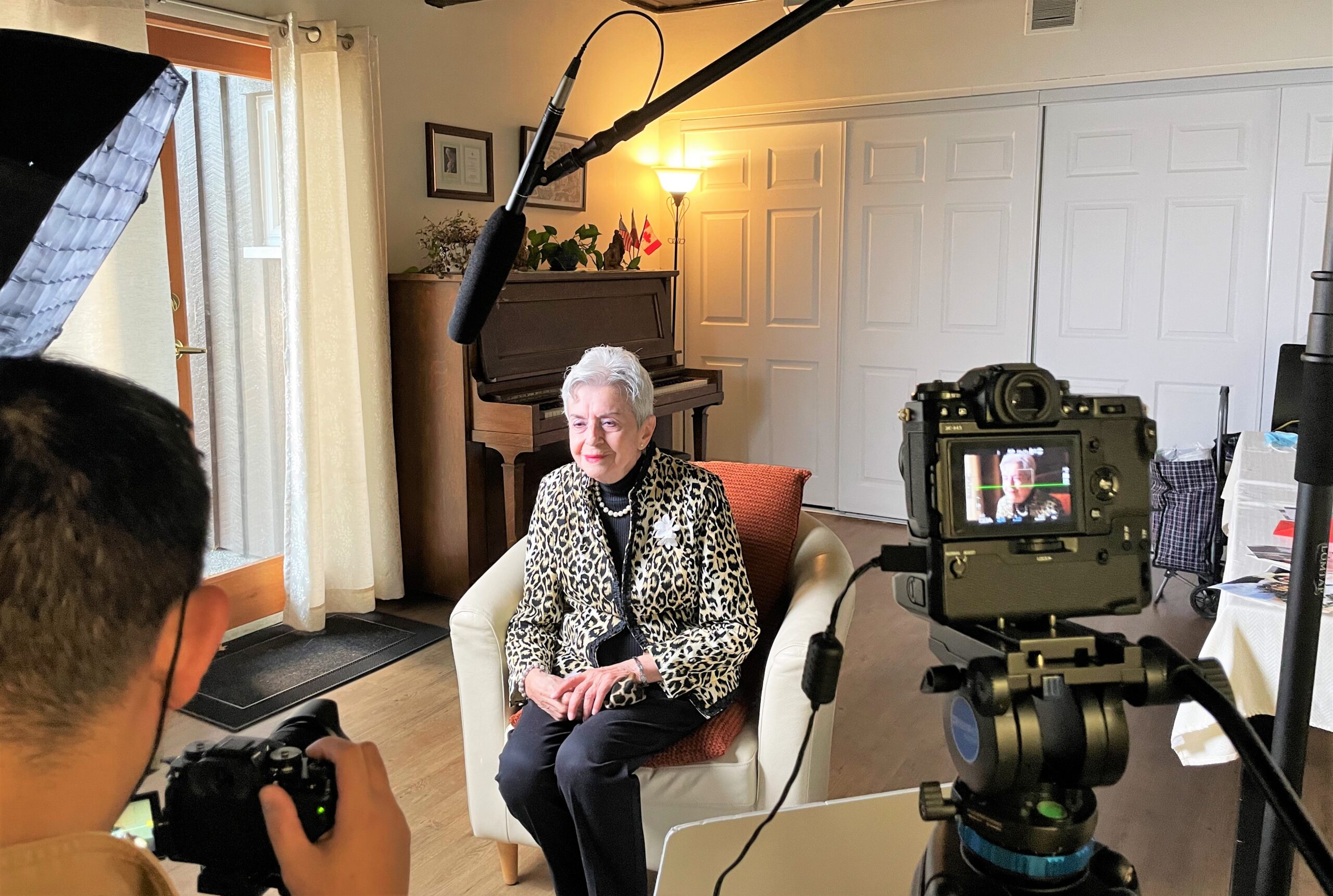

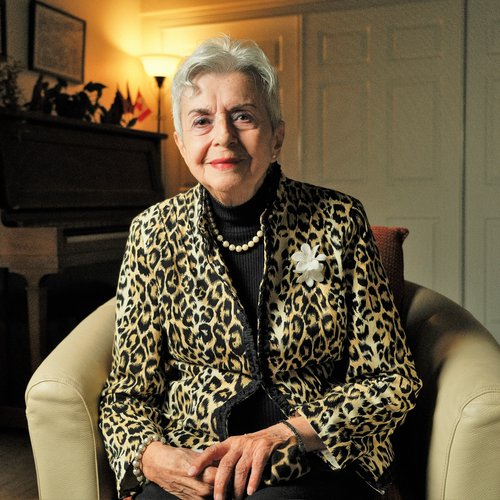
When Nina Pickburn got married 58 years ago she made a promise to raise her children in the Catholic faith. Fulfilling that promise proved to be more challenging than she expected.
That’s because her son, Manuel, was born with autism at a time when many educators, Catholic ones included, did not properly appreciate the capabilities and needs of disabled people.
In the end, not only did Manuel receive the catechism instruction his human dignity demanded, but Pickburn’s tenacity in fighting for her son led directly to the founding of Vancouver Special Education Catechesis (Vanspec), the Vancouver archdiocesan ministry devoted to catechizing children and young people with developmental and learning disabilities.
The Vanspec website says Archbishop James Carney founded it in 1981, but Vanspec Coordinator Laura Levera says the story should also recognize Pickburn’s crucial role in the ministry’s formation.
“We have been a ministry for 40 years and, without her, I don’t know if we would still be around,” Levera told The B.C. Catholic.
Harkening to the parable of the persistent widow, Pickburn herself recalls how she had to fight for her son, who was diagnosed as autistic before he was three. “Back then, [such a diagnosis] was very new,” she said. “I sort of knew what was coming. It was a lifelong disability.”
As sometimes happens, the diagnosis led to marital difficulties and an irreparable rift between Pickburn and her husband, which left her as Manuel’s sole caregiver.
When Manuel was about 10, Pickburn started to think about formal catechism instruction. At the time, special education of any kind was still in its infancy or simply not available, which Pickburn quickly found to be the case at the Vancouver parishes she contacted in an attempt to find catechism instruction for Manuel.
“I phoned my parish, Holy Name of Jesus – nothing doing,” she said. “I phoned all parishes and they had never heard of such a thing.”
The lack of available support for her son left her frustrated. She reached out to Archbishop Carney and says she would have gone to the Pope if need be.
She pestered Archbishop Carney for about 10 months. “Eventually he got sick of me and he said he would give me a priest to teach my son, but I said, ‘Not good enough, what about the other children who need this too?’”
Pickburn said she told the archbishop he was not doing his job properly. “I had a signed document [from her marriage preparation] that said I had to bring my son into the Catholic Church, and I needed support,” she said.
In her frustration, she also reached out to the then-Vancouver Auxiliary Bishop Lawrence Sabatini, CS. He, in turn, was instrumental in bringing three nuns, members of the Daughters of St. Mary of Providence, to Vancouver to help found Vanspec.
The order was already ministering to people with cognitive disabilities in Chicago, where Bishop Sabatini was born. The nuns served with Vanspec until 2017.
Pickburn was quick to point out that, despite her frustration with Archbishop Carney, she wrote him a letter expressing her sincere thanks for his help. She still has the letter he sent in response, thanking her for her perseverance and saying he was thankful he came around to seeing things her way.
Pickburn recalled that whenever she saw Archbishop Carney at a Church function he would ask, “How’s our boy doing?”
Manuel was one Vanspec’s first students. Despite his limited use of language, he was able to receive the sacrament of reconciliation and he eventually received the Eucharist at age 18.
Pickburn recalled that Manuel “liked to watch Mr. Rogers in those days. When Mr. Rogers did something nice he would touch his chest and say, ‘good feelings.’” Manuel did the same thing after receiving his First Communion.
Pickburn’s son today is substantially disabled and largely non-verbal, needing constant care. At 89, Pickburn visits him twice a week in the home where he lives.
Today, Vanspec has expanded its ministry to seven locations throughout the Lower Mainland, and serves 38 students, with 45 volunteers.
“The teachers get to know the students,” said Levera, and they “plan the lessons and adapt the lessons to the child’s needs and abilities so they can receive their sacraments and be full participants in their parish communities.”
Pickburn hopes that people who hear her story will feel inspired to push for change when they see a need.
“If something is not right, if there is something that needs to be done, just go and do it,” she said.
Send us a letter to the editor about this or any other article.