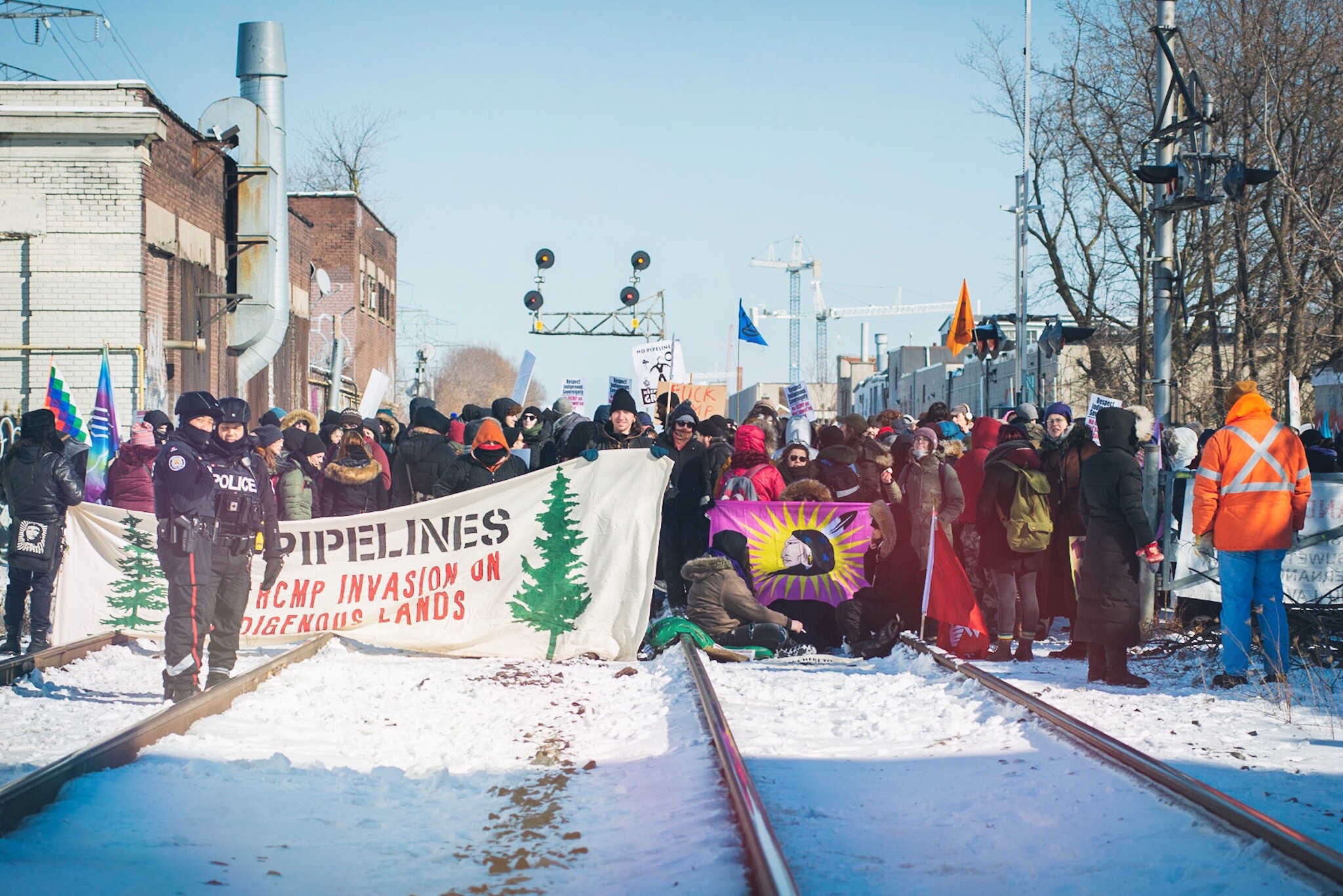

OTTAWA (CCN)—Nationwide protests and blockades over a B.C. pipeline project are putting reconciliation efforts with Canada’s Indigenous people at risk, say Catholic organizations across Canada, as well as a First Nations deacon in the Archdiocese of Vancouver.
The Jesuits, the Oblates in Canada, and the Canadian Religious Conference are among faith-based organizations that have expressed concerns over the ongoing dispute in the traditional territory of the Wet’suwet’en. It has led to protests across the country and blockades at rail crossings that paralyzed train traffic.
“The conflict on Wet’suwet’en territory highlights the need for a fundamental change in relations between the Government of Canada and Indigenous peoples, as well as for an ethical and legal framework to integrate the short-term good of economic development into the long-term good of ecological sustainability and integrity, which should include Indigenous wisdom and free participation,” states a Feb. 20 letter from Father Erik Oland, SJ, to Canada’s Minister of Crown-Indigenous Relations and Northern Affairs Carolyn Bennett.
“An end to violent removal of unarmed Indigenous people who seek to defend their land and rights would be a good step toward a decolonized shared future,” Father Oland, who is the provincial of the Jesuits of Canada said, adding “the opposition of the Hereditary Chiefs must not be ignored.”
“Reconciliation, and even the sustainability of our land, requires a transition from colonial structures and relations to new models of Indigenous self-determination and participation in Confederation,” he said.
The statement from the Canadian Jesuits joins a chorus of other faith-based organizations that are speaking out in support of the Wet’suwet’en hereditary chiefs who have demanded nation-to-nation talks with the federal government surrounding the Coastal GasLink pipeline that would run through their territory.
In Vancouver, Deacon Rennie Nahanee says he supports the Wet’suwet’en protest of the pipeline, even though he is a member of the Squamish Nation.
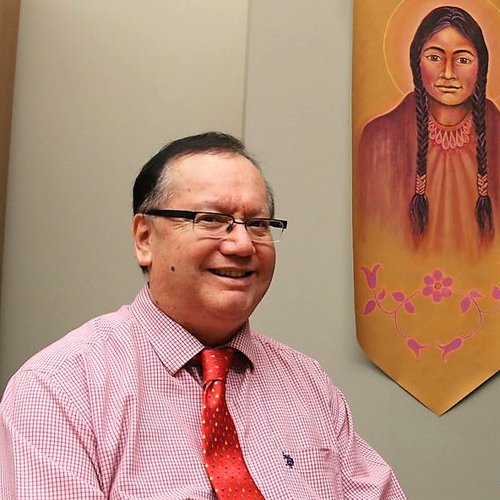
“We all face the same struggles as Indigenous people. All across Canada, all across North America, it’s the poor people and Indigenous people who are affected by corporations that are extracting minerals and oil from the ground to make money,” he said. “I’m not against progress; I’m against greedy corporations. God created this world for everyone.”
Deacon Nahanee recently contributed to Spirit of Reconciliation, a book published this year by the Canadian Race Relations Foundation and the Vancouver School of Theology about the ways people of various faiths (including Christians, Jews, Muslims, and others) can contribute to reconciliation with First Nations people.
“People have been poking the bear – that is, the indigenous people – for the last 500 years, and now they are getting some reaction from that bear,” said Deacon Nahanee.
The ongoing protests have wreaked havoc with passenger and freight rail service in some parts of the country and had effectively blocked passenger train service in the Toronto-Ottawa-Montreal corridor because of a protest near Belleville, Ont. The Ontario Provincial Police cleared the blockade on Feb. 24, but blockades sprang up at other crossings.
Father Ken Thorson, the provincial superior of OMI Lacombe Canada, said how this crisis is handled will have a major impact on reconciliation efforts with First Nations going forward.
“We are aware that government authorities are under intense pressure to end the accompanying blockades and protests,” Father Thorson said.
“These events, and the various responses of Canadians to them, are manifestations of how hard it is for Canadians to come to grips with centuries-old structural injustices in our treatment of Indigenous peoples. This is especially evident now with conflicting views being held not only within the wider Canadian community but also within Indigenous communities.
“How Canadians respond to the Wet’suwet’en concerns will illustrate our commitment to justice and peace in the creation of necessary new relationships of reconciliation,” Father Thorson said.
The Canadian Religious Conference, an organization of leaders of 240 Catholic congregations, issued a similar statement echoing the concerns.
“This conflict shines a light on the need for a fundamental change in relations between the government of Canada and Indigenous communities,” the conference’s Alain Ambeault said.
“The current negotiation and consultation structures in which governments and industries work only through the Indian Act Band Councils are highly problematic. This pattern results in confusion and conflict, particularly in unceded territories such as Wet’suwet’en.”
Many First Nation band councils that run along the pipeline route actually support the project, including Wet’suwet’en band councils. As well, some Wet’suwet’en hereditary subchiefs and matriarchs have also spoken out against the Wet’suwet’en hereditary chiefs’ opposition to the project. However, many supporters of the Wet’suwet’en hereditary chiefs’ position dismiss band councils as a holdover of an unjust colonial system.
With files from The B.C. Catholic.