
This story was updated Nov. 18 to include a Nov. 9 statement from the Canadian Conference of Catholic Bishops to the parliamentary committee studying Bill C-7, which would remove safeguards for assisted suicide.
By Brian Dryden
Canadian Catholic News
OTTAWA—A new public opinion poll indicates that Canadians are not as supportive of major changes to the federal MAiD (medical assistance in dying) system as the federal government claims.
The poll comes as hearings on Bill C-7 ended Nov. 12 despite requests from Conservative MPs on the committee to extend the review.
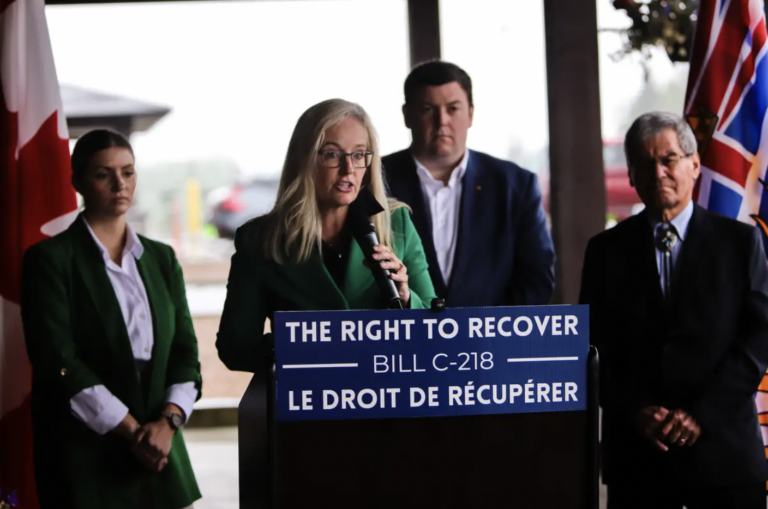
Opponents of Ottawa’s legislation to expand access to legal medically-assisted suicide say the Trudeau government tried to silence its critics when it fast-tracked special committee hearings into the government’s proposed bill.
Public opinion polls have generally shown Canadians support having the option of access to assisted suicide in cases where a person is suffering and will die soon, but when asked more detailed questions about how the existing assisted suicide system should work, a majority start to balk at expanding “MAiD” beyond the already restrictive guidelines, according to a new poll from the Angus Reid Institute.
In a press release from the religious think tank, Cardus said, “Canadians have deep and genuine concerns about the expansion of medical assistance in dying.”
“As federal politicians consider Bill C-7, which would expand access to MAiD to include people with disabilities and chronic illnesses while also undoing most safeguards, mainstream Canadians say decision-makers should consider several potential problems,” according to Cardus, which commissioned the Angus Reid survey that was released Nov. 10.
“The same poll found enthusiastic MAiD supporters, who push for eliminating safeguards and the broadest possible eligibility, represent just 33 per cent of Canadians. Outside Quebec, that proportion drops to slightly more than a quarter of Canadians,” Cardus said in its press release.

“About half of all Canadians are cautiously supportive of MAiD – the vast majority expressing worries about its expansion – while one in five oppose it.”
According to the Angus Reid survey, the majority of Canadians are uncomfortable with expanding assisted suicide system too much.
“Those pushing for a massive expansion of MAiD are loud, but they’re a minority,” said the institute’s Dr. Angus Reid.
“Most Canadians are in the mainstream, where general support for MAiD comes with significant concerns and caveats that leaders must heed,” he said.
Cardus executive vice-president Ray Pennings said the survey shows Canadians are worried that the system for providing euthanasia is being expanded too broadly.
“Polling numbers suggest Canadians know that expanding MAiD has implications for aging and vulnerable Canadians as well as the health care system,” Pennings said.
“MAiD affects more than just the patient-doctor relationship. It’s time the politicians accepted that reality too,” he said.
The poll results indicate that 69 per cent are concerned expanding euthanasia will lead to people with mental health issues such as depression will choose death rather than dealing with the underlying causes of their condition, 65 per cent fear it will lead to people with disabilities or those who are elderly feeling more pressure to choose death in order to avoid being a burden on others, and 62 per cent worry the health care system will start to ignore long-term care and chronic disease in the elderly as assisted suicide becomes more available.
The Angus Reid survey comes as the federal government finalized the committee stage of the debate on changes to the system with the last of four committee hearings being held on Nov. 12.
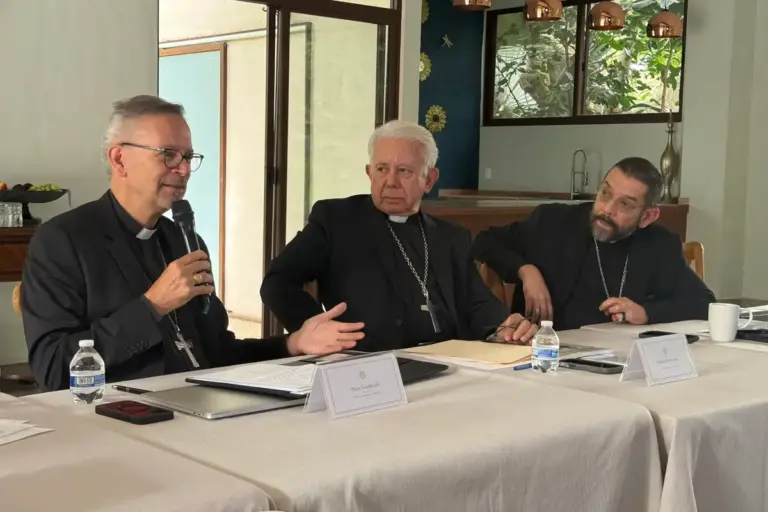
In a Nov. 9 statement filed with the committee, the Canadian Conference of Catholic Bishops joined with other opponents of euthanasia to question why the government is not putting more effort into improving care for Canadians rather than making it easier for Canadians to legally commit suicide.
The CCCB said it is “deeply troubled and perplexed that the federal government chose not to appeal the Quebec Superior Court ‘Truchon v. Attorney General of Canada’ ruling which requires the eligibility criteria for euthanasia and assisted suicide to be expanded by removing the ‘reasonable foreseeability of natural death’ criterion,” the CCCB said.
The government’s decision not to appeal postponed a parliamentary review of assisted suicide of the state of palliative care in Canada that was to have started this year, the CCCB statement pointed out.
“Palliative care, which has yet to become fully available and accessible in our own country, offers a compelling answer – the only respectful, comprehensive and ethical alternative to what the government is trying to address through the legalization of euthanasia and assisted suicide,” the CCCB statement said.
“When sufficient emotional, psychological and spiritual support is lacking, individuals are not truly free to choose appropriate medical care or options and thus are led to having no other alternative than the tragic failure presented by euthanasia and assisted suicide,” said the CCCB statement, which was signed by USCCB President Archbishop Richard Gagnon of Winnipeg.
“Palliative care provides the choice of a better option which is not truly accessible to all Canadians. It alleviates pain, addresses loneliness, fear, distress, and despair in a compassionate manner through the support of family and community. This choice of care and support respects the dignity of the person and recognizes that human life has an objective and transcendent value. A human person’s life is not defined or limited by one’s illness or one’s situation in life, for each human being processes an inherent dignity from birth until natural death,” the CCCB said.
The federal Liberal government claims the changes are a straightforward reaction to a 2019 Quebec court decision that ruled that the requirement that a person’s death be “reasonably foreseeable” was too restrictive and thus unconstitutional.
However, rather than just change that aspect of the existing law, what the federal government proposes in its legislation goes beyond that and eliminates some other safeguards such as the number of witnesses needed when a person consents to assisted suicide, eliminates a 10-day waiting period to perform an assisted suicide after consent is given and opens the door to advanced directives that could see a person be put to death even if they are mentally incapable of consenting at the time they are euthanized.
Parliament’s standing committee on justice and human rights set only four sessions to discuss the proposed MAiD changes with the last session on Nov. 12.
One of the most vocal organizations against euthanasia in Canada and the expansion of the system, the Euthanasia Prevention Coalition (EPC), charges that the Liberal government’s decision to fast-track the committee hearings, with the support of the NDP and the Bloc Quebecois, means that outspoken critics such as the EPC were blocked from speaking during the hearings.
“While the Supreme Court of Canada ruled that the coalition had a meaningful contribution to make to the court on the questions before it, including the prospect of how such regimes have been implemented in other jurisdiction, the parliamentary committee on justice and human rights has refused to hear from the coalition on parliament’s recent efforts to expand euthanasia and assisted suicide through Bill 7,” said a Nov. 10 EPC statement.
“During the first hearing, the committee chose to fast-track the hearings and proposed changes to the law without hearing from leading opposing voices or from experts who may hold a different view,” said Alex Schadenberg, executive director of the EPC.
“The previous legislation was passed without defining key terms in the legislation which caused confusion, unprecedented expansion of the law and litigation,” he said of when the MAiD system was first adopted in Canada.
“The same will occur if Bill C-7 is passed in its current form,” Schadenberg said. “But it appears that the committee is not interested in hearing our voice.”