
Before the town of Lytton was nearly wiped off the map by a devastating fire last month, local First Nations people relied on regular donations of food from a small food bank on the Chehalis (Sts’ailes) First Nation, 160 kilometres away.
Now dozens of evacuees from the charred town of Lytton have temporarily taken up residence in a retreat centre near the Chehalis Indian Band, with more on the way, and the food bank is coming to their aid again.
“The reserve up there (in Lytton) apparently had it really tough,” said Deacon Jamie Meskas, a permanent deacon with the Archdiocese of Vancouver, who serves the Chehalis and Seabird Island people.
“They lost everything” in the fire, which destroyed 90 per cent of the town and killed two people June 30.
Deacon Meskas runs a food bank in the Chehalis community. Before the inferno hit Lytton, he had connections in the town and had been regularly sending pickup truck loads of food for distribution to elders in remote areas.
The blaze left even more Lytton residents in a place of need, so Deacon Meskas had two pickup trucks loaded up for them and has since continued to include the 45 evacuees and counting moving into his neighbourhood as part of his food bank program.
“They didn’t have places to put people so they were basically spread out in different places. Some were camping. It took a few days for people to get organized and get places to take them in.”
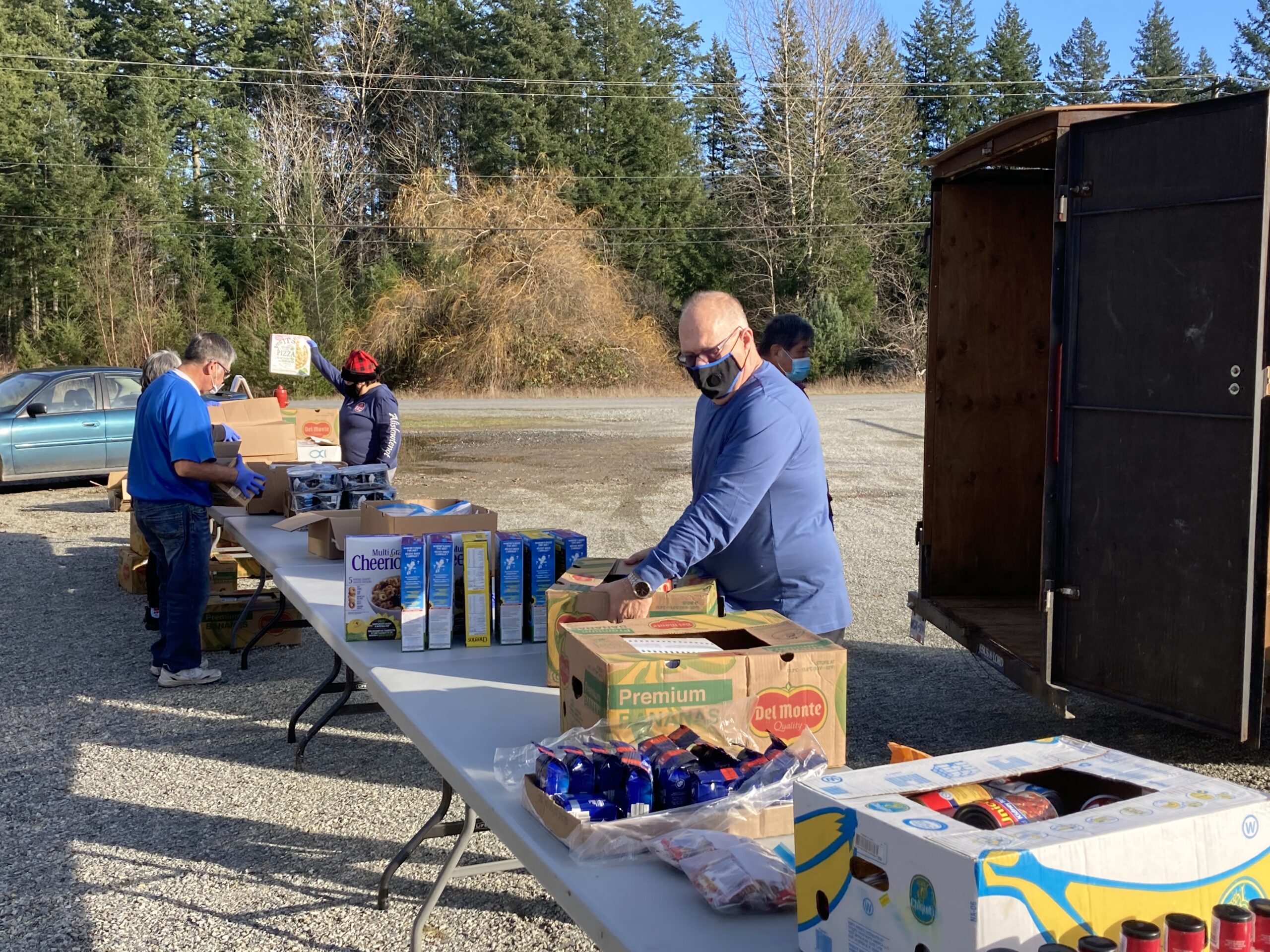
Meskas, who started the local food bank two years ago, picks up food items from St. Joseph’s Food Bank in Mission with two volunteers and a 12-foot by 10-foot trailer every two weeks. He estimates 120 people in his Chehalis community were counting on the service before evacuees began arriving.
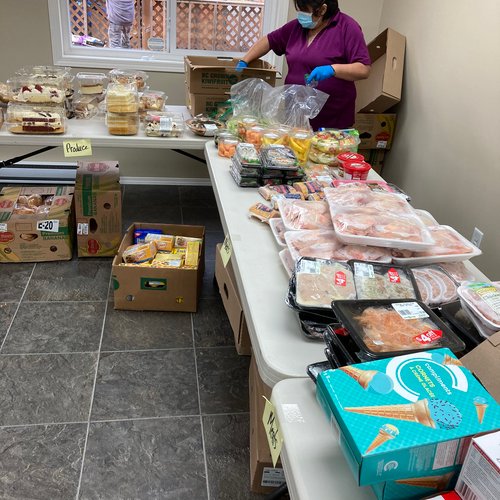
St. Joseph’s Food Bank manager Sandra Cascaden told The B.C. Catholic the food stores are a little lower than usual these days.
“Our volunteers are working harder making deliveries and pickups,” she said. “I have to do a bit of extra searching for the food.”
The destruction that sent all 250 Lytton residents fleeing is only one small, recent tug on St. Joseph’s supplies. During the COVID-19 pandemic, as Cascaden steadily sought out more more people in need, the organization went from feeding 400 families monthly to 900 families a month over the last 14 months.
That doesn’t include the many needy people they support with food for the homeless in the Mission area, food programs for the Leq’a:mel (Lakahahmen) First Nation near Deroche, B.C., and other services.
“Last year we were putting out about $1.2 million worth of food a year. We’re now giving out $4.2 million a year,” said Cascaden.
Cascaden has established partnerships with FreshCo, Save On Foods, Superstore, and Walmart for picking up foods nearing their expiry date – “I don’t give any food to our clients that I wouldn’t eat myself” – but sometimes even the stores don’t have enough for her needs and she has to go up to their distributors.
“We’re busy and I send a lot of food.”
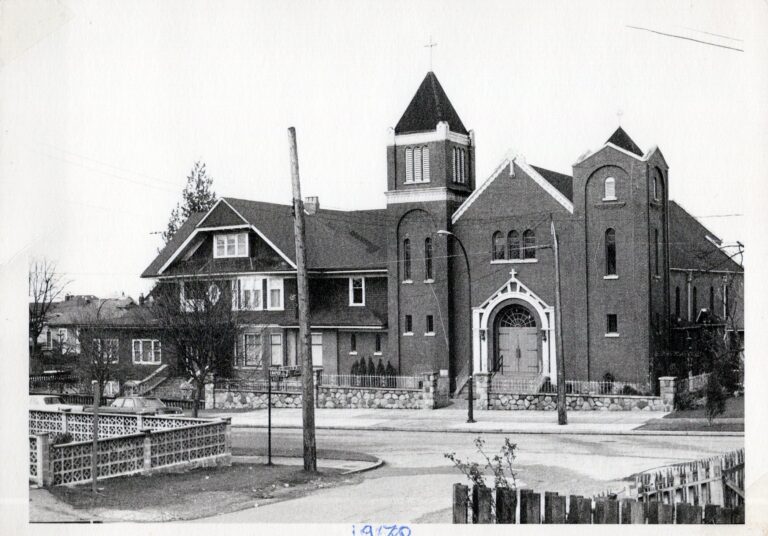
St. Joseph’s Food Bank was established in the basement of the Catholic parish of the same name in 1990. It became the official registered food bank for the city of Mission in 2008, around the same time it outgrew the basement and set its sights on expansion.
A new, dedicated food bank was opened on church property in 2015 so the organization could better serve the community.
Cascaden, who has been manager for just over a year, believes she was meant to take on the role in such a time as this.
“God had a mission for me,” she said. “If COVID hit and we didn’t have this extra energy, we wouldn’t have been able to serve the extra families.”
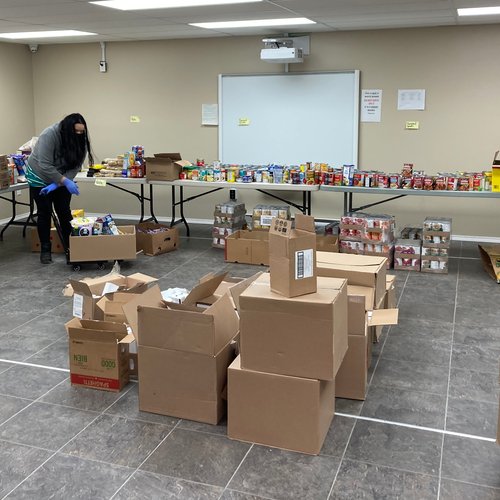
Deacon Meskas sees his food distribution efforts as a way people of faith can reach out to vulnerable people in tangible ways.
“The Church here has to look like the presence of Christ. It can’t look like an institution. It has to look like compassion,” said Deacon Meskas, who moved into the First Nations community after he was ordained a deacon in 2015.
He launched the local food bank after realizing there was no bus service or easy access to some services in the community for those without a car. There are also limited job opportunities in the area and many people live on income assistance or with mental health or physical challenges.
The food bank and a clothes bank started operating inside Our Lady of Fatima Church (a mission of St. Anthony of Padua Parish in Agassiz) two years ago. After the space became too small, it moved several times until COVID hit, forcing Deacon Meskas to change gears and launch a drive-by food bank location. Every two weeks, volunteers create hampers to be loaded into the trunks of neighbours driving by, or delivered on doorsteps of those unable to leave their homes.
“It’s been quite successful. The people are very grateful, they are always thanking us.”
Once all pandemic restrictions lift, plans are to return to normal food bank operations and extend the food bank to reach the First Nations community of Seabird Island, too.
“This not an institutionalized Church waiting for you to come in the door before we say hello. This is a bit like it was in the apostles’ time. We go to you and look at all your needs, not just the spiritual.”
That goes for his neighbours from Chehalis, Lytton, Seabird Island, and anyone else he, his wife, and his small team of volunteers can manage to reach.
Related: