The Sisters of St. Ann have followed through on a commitment made after last year’s Kamloops Indian Residential School announcement to make their historical records more accessible.
The sisters, who operated a handful of Canadian residential schools, have signed a letter of agreement with the Royal BC Museum to provide the museum and archives with full responsibility for their archives, as well as to “expedite the transfer and digitization” of the sisters’ records at the museum.
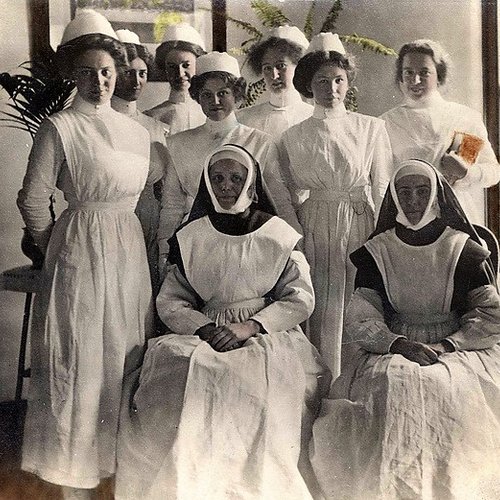
The sisters have been working with the museum since last June to provide access to their archives, and the new agreement is “an important milestone” toward the transfer of ownership of the sisters’ archives to the museum, said a June 1 statement from the two parties.
Last year, the sisters signed a memorandum of understanding to “provide enhanced access” of their private archival records to the museum and to the Indian Residential School History and Dialogue Centre at UBC.
“We affirm our commitment to collaborate in finding the truth and will assist in the process in whatever way we can,” Sister Marie Zarowny, the sisters’ president and board chair, said at the time.
Access to the archives, she said, is “just a single step towards reconciliation,” which “begins with truth.”
The sisters hope the archive transfer and digitization “will contribute towards a greater understanding of what took place in the residential school system, and of the arm and trauma students experienced,” Sister Zarowny said. “It is our belief that this transparent search for truth will lead the way towards restorative healing.”
Alicia Dubois, CEO of the Royal BC Museum, said transparent access to comprehensive residential school records is “essential to truth and reconciliation efforts” and called the expedited transfer and digitization of the records in the sisters’ archives “a positive step forward in this collective pursuit for justice.”
The sisters provided all records related to Indian Residential Schools to the Truth and Reconciliation Commission in 2012. The records were then transferred to the National Centre for Truth and Reconciliation, said the statement.
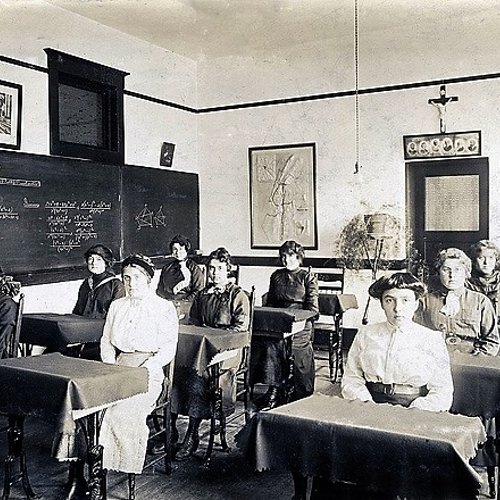
Through this agreement, the Sisters of Saint Ann will fully fund an archivist at the Royal BC Museum to aid in the transparent management of the archives, the two parties said. “Archivists at the Royal BC Museum are highly experienced in navigating the provincial and federal privacy laws that govern access to the records, and with this agreement will be responsible for facilitating ongoing access to the records by residential school survivors, their families and Indigenous communities,” said the statement.
The sisters and the museum said they will work together throughout the process of record transfer “in the spirit of and according to the principles of the United Nations Declaration on the Rights of Indigenous Peoples, the Truth and Reconciliation Commission Calls to Action, the United Nations Joinet-Orentlicher Principles, and the B.C. Declaration on the Rights of Indigenous Peoples Act.
The Archdiocese of Vancouver has said all records it holds regarding residential schools were submitted to the Truth and Reconciliation Commission in 2013 and remain available for review. Archbishop J. Michael Miller repeated his commitment to transparency of records June 2.
More information about the archdiocese’s response and reconciliation efforts is at rcav.org/first-nations.
The Sisters of St. Ann were founded in 1850 by Bl. Marie Anne Blondin in Vaudreuil, Que., and have served in the Pacific Northwest since 1858. They staffed more than 30 schools and opened 10 hospitals in B.C., the Yukon, and Alaska.