
In 2020, when everyone was being locked down because of COVID-19, former Vancouver writer John Paul Sonnen turned the time of isolation into something constructive. The author finished an account of the history of his favourite church in Rome, Sant’Onofrio al Gianicolo.
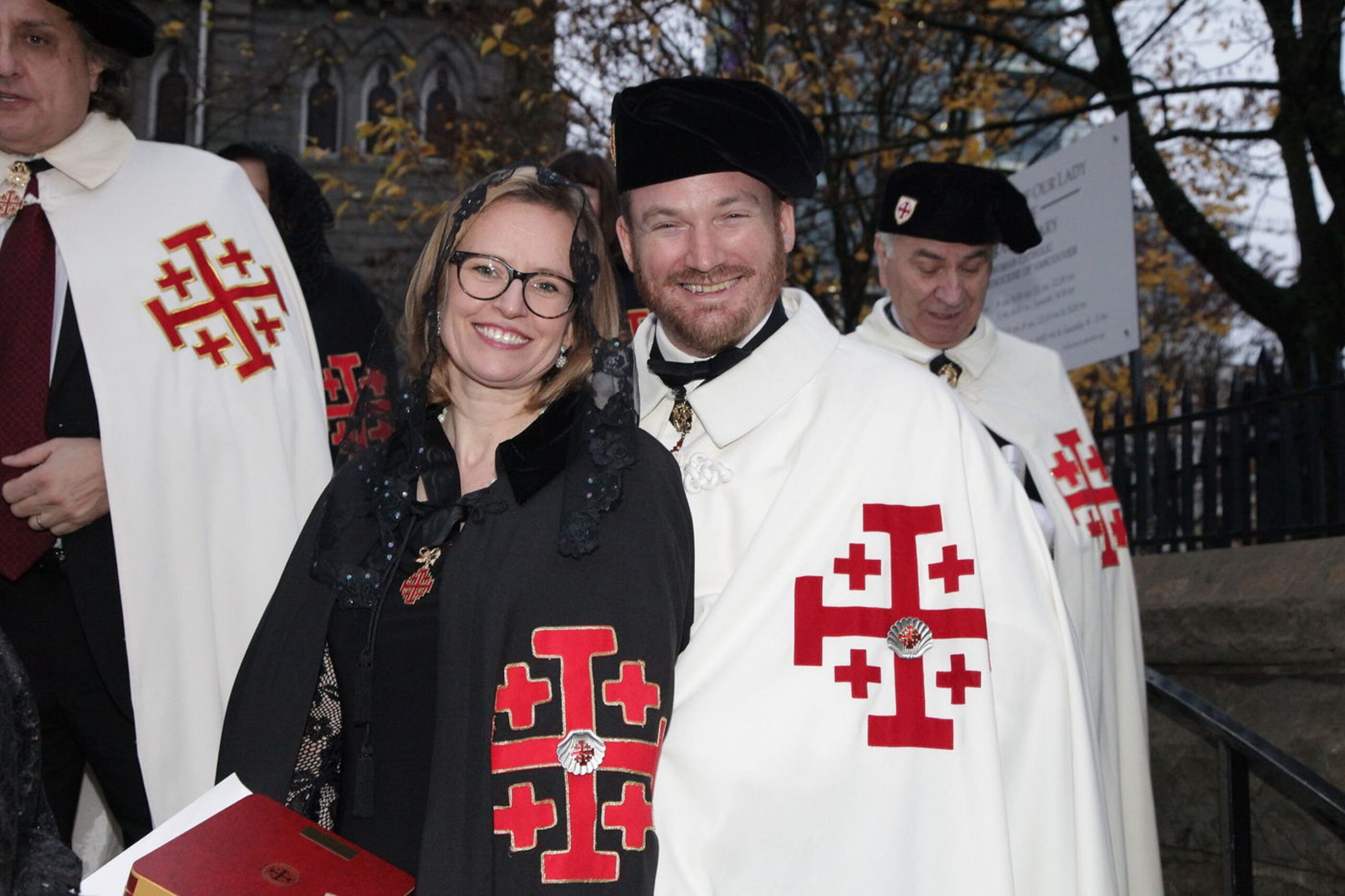
The sometimes-overlooked church is the spiritual centre in Rome for the Equestrian Order of the Holy Sepulchre of Jerusalem. In 2014 Sonnen was invested in the order in a centuries-old knighthood ceremony at Holy Rosary Cathedral in Vancouver.
The author first visited Sant’Onofrio al Gianicolo (dedicated to Saint Onuphrius and located on Janiculum Hill) as a teenager in 1998, and he describes it as one of Rome’s “best kept secrets.”
From the moment he first encountered the church, stumbling upon it with friends, Sant’Onofrio became for him a personal favourite amongst a locus of churches. Over the years his affinity for Sant’Onofrio has only grown since he moved to Rome for graduate studies and over time acquired an increased knowledge and passion for Renaissance art and architecture.
Sonnen finished writing the book, Sant’Onofrio al Gianicolo: Journeying to a Citadel of Faith (AROUCA Press, 2021), during the 2020 COVID lockdown and dedicated it to his wife Natalie, who grew up at Holy Trinity in North Vancouver and whom he met and married in Rome.
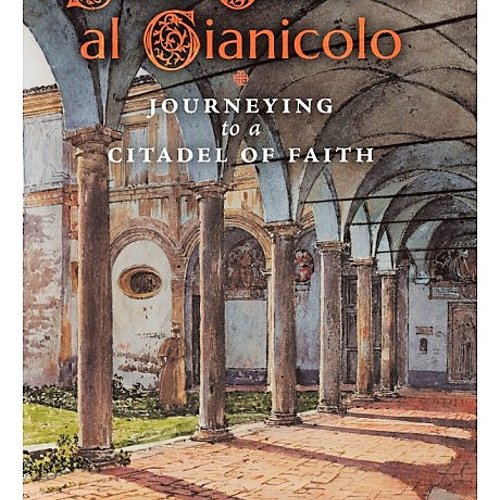
The contents of the chapters were assembled from bits of papers and notes Sonnen kept while he was a history docent and tour guide in Rome and the Vatican. Written and laid out with the help of a Vancouver editor, the book has the pilgrim in mind and concludes by offering a self-guided tour with a map and illustrations aimed at inspiring pilgrims who will hopefully one day visit the church themselves.
Sant’Onofrio has an illustrious history that goes back to its construction in the late 15th century, a period that coincided with the High Renaissance. It was an exceptional period that produced some of the most magnificent works of art in history, especially in Rome where Renaissance art was seen everywhere. The most prominent images in Sant’Onofrio are attributed to the famous architect Baldassare Peruzzi.
The designation of Sant’Onofrio as the Roman chapel of the Equestrian order dates back to the days of Venerable Pius XII at the end of the Second World War, when the Pope providentially foresaw the order would continue to expand in the postwar years.
In response to the growing needs of the order, on Aug 15, 1945, he issued from the Vatican a Motu Proprio decree granting to the order for perpetuity the use of the church of Sant’Onofrio together with its adjoining monastery and Torquato Tasso Museum. This privilege gives members of the order a convenient meeting place in the centre of Rome for carrying out religious ceremonies and works of charity in a spirit of unity and mission.
Inside Sant’Onofrio is found the final resting place of Torquato Tasso (1544-1595), the greatest bard of the conquest of Jerusalem. He was a famous Renaissance poet who lived his last months at the adjoining monastery and died there at the age of 51. Tasso’s immortal work was entitled Jerusalem Delivered, an epic poem that sang of Sir Godfrey of Bouillon, ruler of the Kingdom of Jerusalem and victor of the First Crusade.
In the words of Pius XII: “In this church, in fact, there still lives the memory of Torquato Tasso, illustrious poet, who sang in exquisite verse the deeds of the Crusaders who struggled to restore freedom to the Holy Sepulchre of Jerusalem: and there, too, is an ancient monastery, which – after the legitimate cessation of the Order of Hermits of St. Jerome [the monks who initially inhabited the site] – can fittingly accommodate this Equestrian Order and can provide it with a convenient center for the carrying out of its religious ceremonies and its acts of piety and works of charity.”
The Church’s universality is seen and felt as nowhere else in the city of Rome. Each year many thousands of people visit this church and take in the picturesque view of Rome from its front garden. Sant’Onofrio is therefore a crossroads for people from all over the world who visit, many for different reasons. As visitors gather on the small grassy knoll with splashing fountain and benches in front of the church, they can sometimes be heard discussing their keen interest in various aspects of the church, with varying interests that include both art or architecture, history and legend, knights and dames, poetry, saints, and sinners.
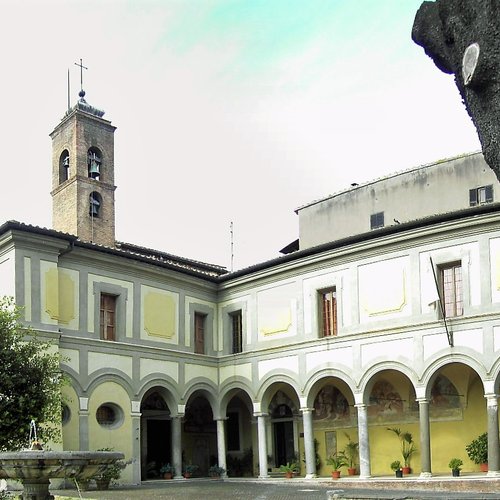
A main draw is not only the Renaissance church and front gardens, but also the outdoor Renaissance cloister attached to the church – a well-known attraction for its charming and peaceful atmosphere, topped by a portico-style gallery balcony. The sight is charming to behold any time of the year, while especially on a rainy day.
The gardens of Sant’Onofrio were in fact a favourite gathering place for St. Philip Neri who during his lifetime (which coincided with Tasso), he lived for many years in Rome and led gatherings on the slopes of Sant’Onofrio amid its vineyards for groups of youth that were immensely popular for generations.
The Torquato Tasso Museum (Museo Tassiano) also draws visitors, housed in the upper floor of the old monastery attached to the church. The museum, although small, contains some interesting artifacts related to Tasso’s life and death. Visitors enter by appointment only, to see the room where the poet passed away and to admire original items associated with his life. Tasso remains to this day a prominent Renaissance figure and is considered the greatest poet of that period, a link between the fading medieval culture and the new Renaissance culture that came after it.
In the book readers are reminded that Sant’Onofrio is forever a spiritual home in Rome – and a site worth visiting, located conveniently close to the Vatican. Indeed, the cupola of St. Peter’s Basilica can be seen from the attached convent and gardens, where a gentle breeze is sometimes felt amid colourful flowers in full bloom during the summer months.