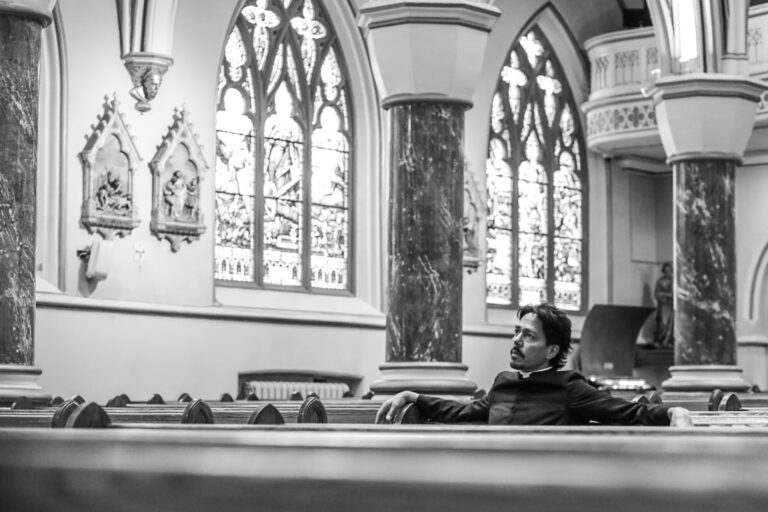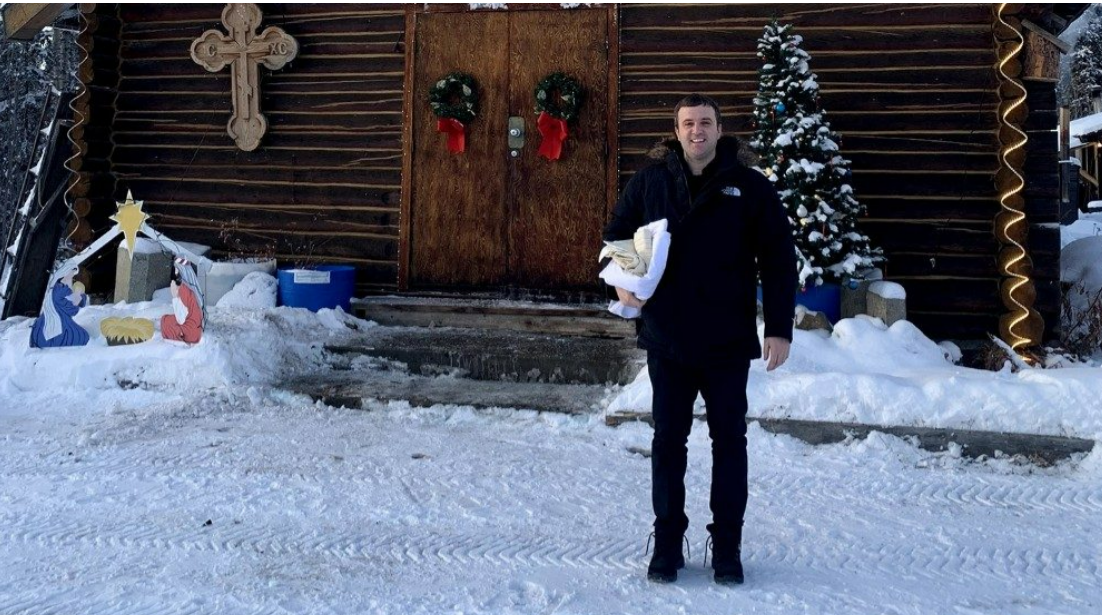

Born and raised in Rome, Father Francesco Voltaggio moved to Vancouver in 2013 to attend the Archdiocesan Missionary Seminary Redemptoris Mater and was ordained in 2017 in the Archdiocese of Vancouver. He lived among First Nations peoples in the Yukon over several months in 2020-2021 and then returned to Italy this year to further his education at the Gregorian University in Rome.
Father Voltaggio spoke recently with Vatican-based journalist Debora Donnini about his experiences living among the First Nations at a time when Canada and the Church were dedicating themselves to reconciliation with Indigenous peoples. Here is an edited and translated transcript of that interview, which was conducted in Italian:
Donnini: What is your experience in the reconciliation process?
Voltaggio: I cannot speak of reconciliation without testifying that it is through it that I am here today. I was ordained a deacon in the Year of Mercy. I’m sure it’s out of sheer mercy that I’m here today! I say this because the greatest desire that the Lord arouses in my vocation is precisely to announce to others God’s mercy, reconciliation, his love.
What led me to speak today is precisely this: that it opened my mouth when I was dumb, that it allowed me to see the beauty of life when at times I thought that it had no meaning, that it gave me strength to get up when I was crushed by so many sins that the burden seemed so great that I thought I could not go on. The Lord approached me and attracted me to him because he is the only one who loved me when I did not love myself or others, and he did so through concrete people, families, and priests, through whom he announced his unconditional love.
Pope Francis has always likened the Church to a field hospital, and he has always encouraged we priests to be witnesses of God’s mercy. I had the opportunity to do just that during a few memorable encounters on the streets of Canada and Italy, when people I encounter need to talk to someone about humanly unbearable situations, to find an answer to their suffering. A day that I will never forget is when, on the streets of Vancouver, I stopped a girl, whose eyes were swollen with tears, to ask her if she needed help. From this simple question, the Lord then slowly entered her life, and so he saved her.
It is also important for me to remind you of a statement by Pope Emeritus Benedict XVI, taken up by Pope Francis, when he said that “the Church grows not by proselytism, but by attraction, by witness.” In other words, people need to be attracted to testimony.
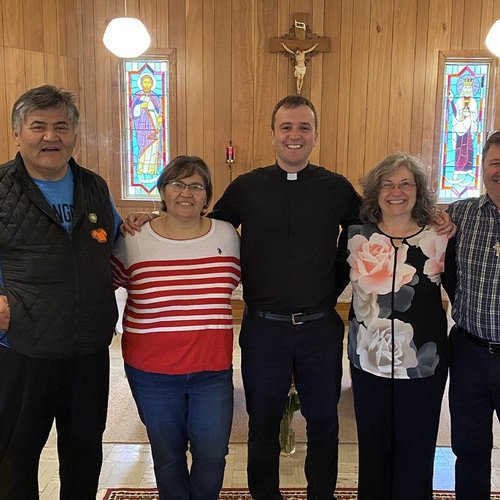
Donnini: What was your mission among the First Nations people?
Voltaggio: Last year, on May 21, my birthday, I received a great gift from the Lord. In Vancouver, playing soccer with families and children from my parish [St. Anthony of Padua, in Vancouver], I ruptured my Achilles tendon. It meant that, instead of going to Asia on a mission, I had to rest and heal. It was during this difficult time that I developed a desire to go and help the Bishop of Whitehorse in the beautiful and very cold Yukon Territory. And so, with the permission of my archbishop, I left. And from there, the Lord has truly worked wonders.
During my first month there, I accompanied the bishop of Whitehorse, Héctor Vila, who helped me understand not only the history of Yukon, but also the wounds carried by its people. With him, I had the wonderful experience of going to visit prisons, to share God’s love with the inmates. I also met some Natives – there they are called First Nations – who spoke to us about the sufferings and difficulties of their life.
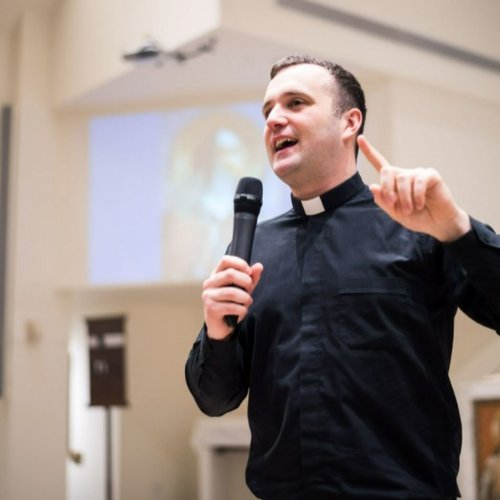
I then felt a strong desire to go even further north, to visit more First Nations villages. Upon receiving permission, I loaded my studded-tire-equipped car with extra gasoline cans and survival gear, and began my long journey along the icy, desolate roads. It was much more common to encounter a moose, deer, lynx, or wolf than to see a car go by, especially in winter when temperatures range from -30 to -50 degrees!
I ended up spending time in three remote villages of about 300 people each and spaced 200 kilometers from each other. Little by little, I got to know the Natives and the others who lived in there. I went to school to learn how to carve wood to try to get to know people, listen and answer their questions. They certainly were curious about how an Italian from Rome ended up in their village! I was also able to meet people who had been forced to attend residential schools, and I grew to understand how traumatic it was for them to be torn from their homes.
Donnini: Compared to Rome, where you were born and raised, life in those villages must have seemed very different to you.
Voltaggio: Yes, it was a very different experience to go from big cities like Rome or Vancouver – from a modern life – to these beautiful but very cold places. Going to -30, 40 or 50 degrees meant adapting, learning to make firewood, constantly cleaning snow from the wooden church roof, clearing the streets of ice.
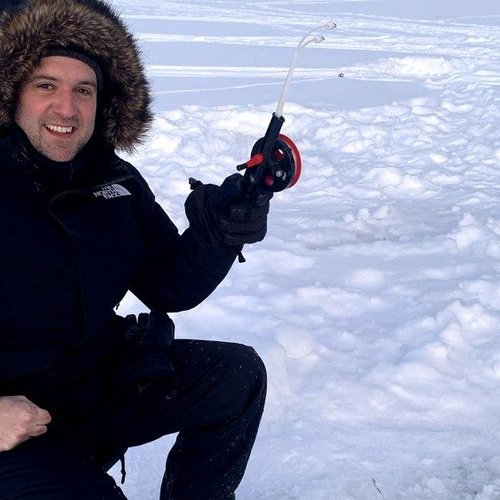
And one thing we are not at all used in modern cities is also loneliness, because many times I was alone, traveling alone. I tried, little by little, to make get to know people. I defined my mission very simply: to be alone with Christ and at the same time to listen. That is, to listen to others, to listen to experiences, to listen to people. That led to my having experiences that I never thought I would have in my life. The Natives took me to ice fish, to drive across frozen rivers to find a person in a remote place. The Lord certainly moved me from my established way of living life, opening me to something completely new. And in the way you open yourself to the other, you also open yourself to Christ.
Donnini: It’s been said that, through the Gospels, we learn that Jesus is the face of God’s mercy. What experiences did you have in this sense?
Voltaggio: A huge gift that I carry in my heart is the memory of a day when an elderly lady asked me to lead meetings to teach about the faith – to lead catechism classes. I invited people I had met, including, for example, a man who had been the head of the village. That night, to my amazement, I found myself in front of about 18 people. I opened my heart and shared my experiences – what God has done in my life, how I have known God – and I also talked about the Gospel.
Then, one by one, audience members began sharing their experiences – their suffering, the problems they also have in their life, family problems, even alcohol or drug problems. As they opened up, it struck me that to speak of Christ, of the truth that loves and does not force, also opens the other to an encounter with God.
These men and women were also very generous. Some would come a day early to light a fire in the church so that it would be warm for our meeting. Some brought campers where the families who helped me stage the meetings could stay to sleep and not take a long journey home in the cold. They had enormous foresight because they felt loved.
Little by little, the Lord worked with tenderness in their lives, but even more – and perhaps they did not realize it – the Lord worked in my life, too, allowing me to see that Christ truly has the power to help us, that Christ puts himself at service. These meetings went on for some time and ended up giving birth to a community that still meets today.
Originally published by Vatican News.