
When it comes to dark roast, non-coffee drinker Jason Dimaculangan used to be quite in the dark.
“Before I met my wife, I wouldn’t know what to drink at Starbucks,” Dimaculangan told The B.C. Catholic “I didn’t know what espresso was.”
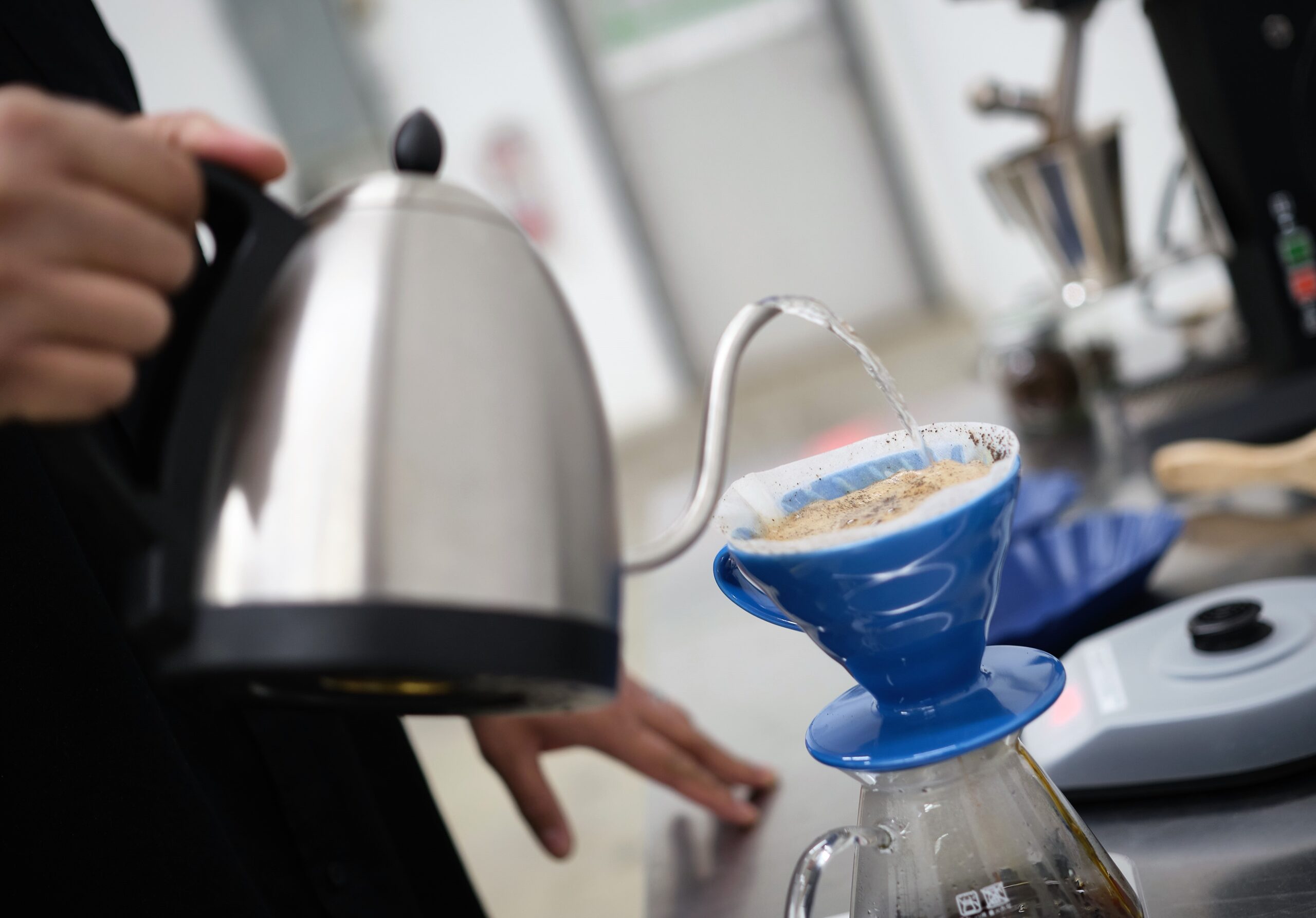
Then the Our Lady of Good Counsel parishioner married into a coffee-loving family and his caffeine ignorance became a passion. He now roasts his own coffee beans at his Surrey business, Quirico Coffee.
To learn the craft he researched coffee from his native Philippines. Everything developed from there.
Now he is a coffee roaster with credentials from the Canadian chapter of the Specialty Coffee Association which has a school on Granville Island. Quirico was blessed and founded on the feast of St. Joseph the Worker in 2020.
Dimaculangan named the business after his grandfather, Quirico. As a small child growing up in the Philippines, his grandfather was the only person he knew who refused to drink instant coffee.
His grandfather’s insistence that “if I’m going to have a cup of coffee, I want it to be a good one,” informed (whose entire life?) entire life – family, faith, business, and all – so he named the business to honour him.
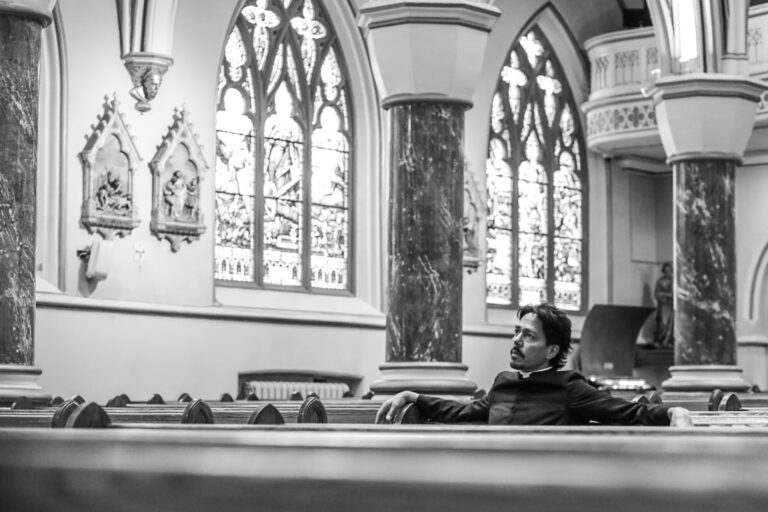
Dimaculangan’s Catholic faith has always been front and centre to the decision to start the business.
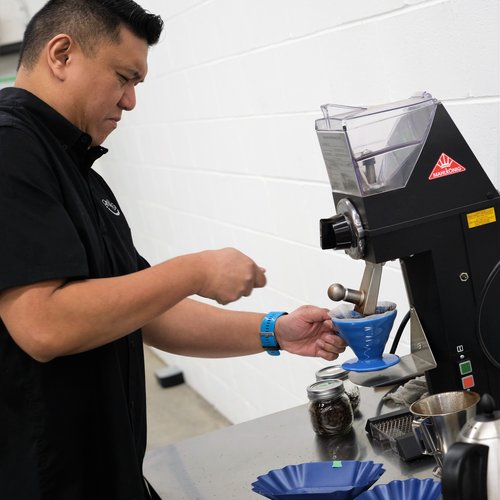
“The good thing about coffee is that it can always start a conversation,” says Jason Dimaculangan.
Raised in a Filipino household, Dimaculangan said Catholicism was always a part of his life, but he didn’t really make it his own until his early twenties when he joined Couples for Christ.
The organization is still an important part of his life, and both Quirico’s architect, Aerigor Architecture, and its electrician, Trivino Electrical Services, were discovered through other members of Couples for Christ.
Even their plumber, Bro Marv Plumbing, came from Our Lady of Good Counsel. “It was definitely a blessing having our community help out and be a part of our passion,” Dimaculangan said.
“Every step of the process has been a result of conversations with Christ,” he said, recalling how he and his wife decided to start the business after asking God, “Is there a way to build our family and contribute to our community and Church?”
The answer they got was God’s call to adventure and growth and Quirico Coffee was born.
Dimaculangan named his coffee roaster “Clement” after Pope Clement VIII, who – the story goes – was was approached by some clerics to ban the so-called “Devil’s drink.”
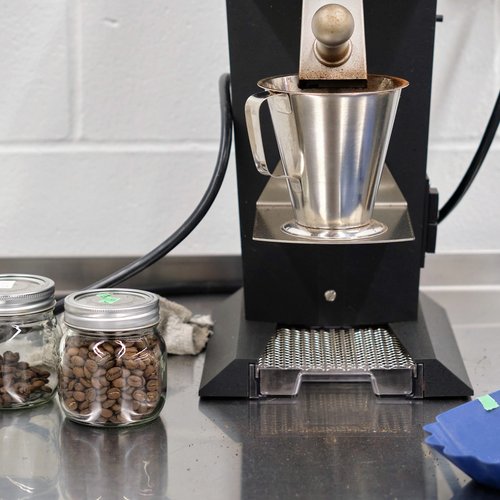
It’s said that Clement refused to take action until he had tasted the drink. Upon finishing a cup he declared, “Why, this Satan’s drink is so delicious that it would be a pity to let the infidels have exclusive use of it!” It’s alleged that he also said coffee should be blessed and that it seemed more beneficial than alcohol.
The decision to start the business was risky, but Dimaculangan said God has supported the couple through it all.
The client base is diverse and growing, and Dimaculangan counts Holy Grounds, the coffee shop at St. Patrick’s in Maple Ridge, as one of his best clients.
For now, Dimaculangan sources fairly standard coffees, but Quirico Coffee is founded on deep family, cultural, and religious traditions, and he hopes to honour those roots by branching out in the near future.
“We are trying to get authentic ‘Barako’ coffee,” the colloquial name for Liberica, a rare species of coffee grown in central Luzon in the Philippines.
“It is traditionally roasted extremely dark, ground really fine, and then brewed by steeping in boiling water,” he said. “This makes ‘Barako’ a very strong cup of coffee.”
Quirico Coffee is about more than just local business and good coffee for Dimaculangan, who hopes Quirico can have an international impact on communities that rely on coffee for their economic well-being.
Inspired by the charitable work of one of his favourite charities Answering the Cry of the Poor (ANCOP), which promotes spiritual, economic, and social development of poor communities around the world. Dimaculangan hopes to play a part in helping small coffee communities and farms get their product to market and gain financial security.
He wants to travel to coffee plantations in El Salvador or Kenya to sample their crops, allowing him to ensure the quality of his product and help families that rely on the coffee trade for their well-being. A regular monthly order the size of a shipping container can bring a lot of peace of mind to a small farm, he said.
Dimaculangan also hopes to help communities that produce good coffee but don’t have access to good drinking water, he said.
“It’s about a dual benefit. Good water is needed to drink, but also to wash the beans,” maintaining the beans’ quality.
Share your thoughts about this story. Send us a letter to the editor.