
Archbishop J. Michael Miller told a recent Mass for scientists that despite their profession’s many gifts to humanity, science alone does not and cannot answer fundamental questions about existence. Religion must also be part of the equation.
“What we urgently need is continued dialogue and cooperation between the world of science and the world of faith,” he said.
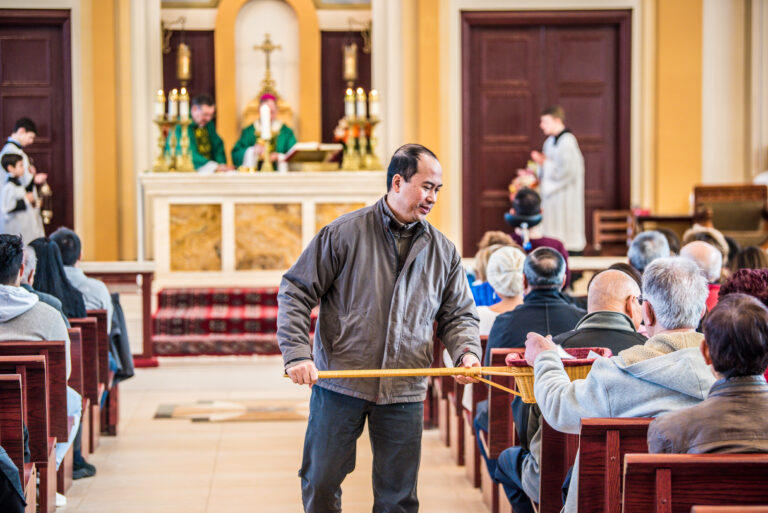
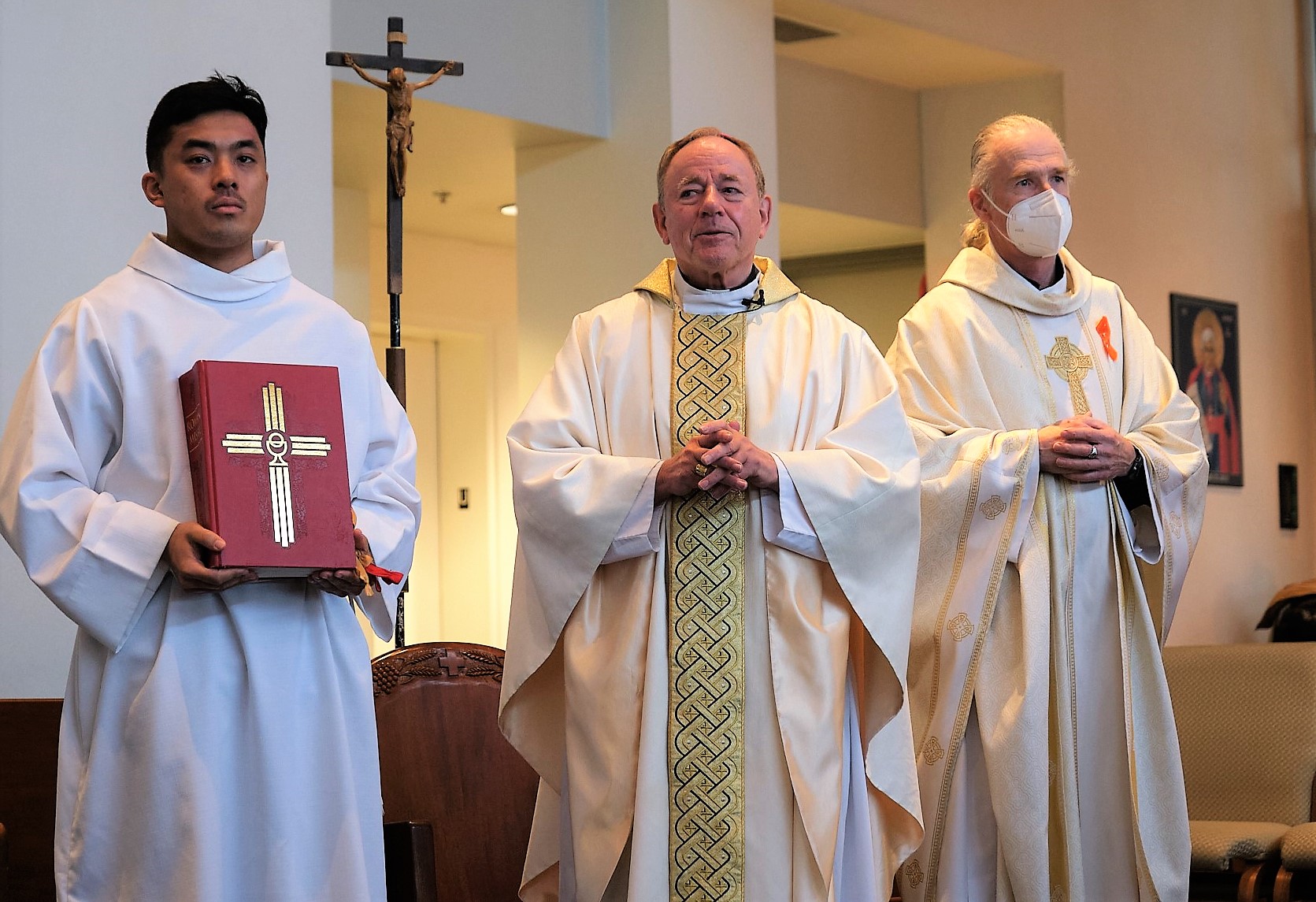
Archbishop Miller made the comment in his homily at the Gold Mass for Scientists, held Nov. 23 at St. Mark’s at UBC.
The Gold Mass for Scientists honours St. Albert the Great, patron saint of natural sciences. The archdiocese also celebrates a Red Mass for lawyers and lawmakers and a White Mass for health-care professionals.
Archbishop Miller said the countless advances of science might lead some to conclude that science alone can answer all the questions of human existence, but “giving a totalitarian place to science is not sufficient.”
“Ultimately, science cannot replace faith, because it cannot give an exhaustive answer to our most radical questions – questions about the meaning of life and death, about ultimate values, and about the nature of progress itself.”
The issues raised by Archbishop Miller came into sharp focus following the Gold Mass when a UBC medical student told The B.C. Catholic that he was worried about his future in medicine because of its embrace of practices that are antithetical to his Catholic beliefs, such as abortion and assisted suicide.
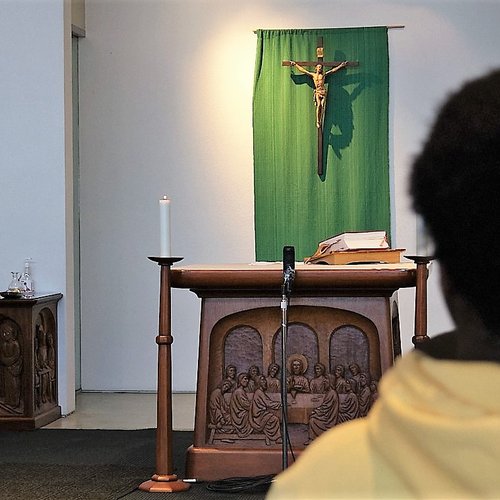
“What we urgently need is continued dialogue and cooperation between the world of science and the world of faith,” Archbishop Miller said at the Gold Mass.
He said the Faculty of Medicine assumes that its students are pro-abortion and pro-Medical Assistance in Dying (MAiD), and that there is no room for difference of opinion. As a result, he fears that some professional paths, such as obstetrics and gynecology, and geriatric medicine will be closed to him.
He said he believes Canada needs Catholic doctors because they bring a valuable perspective and offer care and medical advice in line with Church teaching on key issues such as birth control and palliative care.
Geoffrey Woolard, a UBC graduate student who heads the university’s chapter of The Society of Catholic Scientists, said that as part of his group’s mentorship program he would connect the student with a successful Catholic doctor who practises in the field of obstetrics and gynecology.
The student was grateful for the connection, noting that if forced to choose between his faith and a medical career he would choose his faith.
The society that Woolard leads is one of two initiatives at UBC aimed at bringing together science and faith. “Religion allows you to accept the limitations of science,” Woolard said, adding that he wants the society to stage events that emphasize the “synergistic” relationship between faith and science.
He told The B.C. Catholic he also wants to evangelize scientists because he believes there is a need in the scientific community for religion. He said the menial tasks of science, such as the collection of data and repetitive experiments, leave scientists desperate for something to help give perspective and meaning to their work.
The second UBC organization focussed on faith-science dialogue is the Science and Faith Reflection Group run by St. Mark’s pastor Father Robert Allore, SJ. The group offers bi-weekly lectures and discussions on scientific topics at St. Mark’s.
Each meeting centres on a scientific issue that is in the news. Meetings start with prayer and a reading of the daily Gospel, and then continue with a discussion aimed at connecting the readings and the current event.
The discussion group is an extension of a similar initiative Father Allore ran while he was a researcher at The University of Toronto.
The group is a “space where scientists of faith can learn to articulate how their pursuit of scientific truth integrates with faith,” Father Allore said in an interview.
In answer to a question about how religion and faith complement each other, he said “both science and faith are an invitation to enter into something deep and mysterious.”
Father Allore said the late Canadian scientist Ursula Franklin, a Quaker, had profound insights into the relationship between science and faith. He recalled that Franklin once told his Toronto discussion group about her view of the scientific process.
“First you read the paper,” he recalled that she said, “then you sketch the experiment, then you do the math, then you do the experiment, then you step into the mystery.”
Father Allore said Franklin’s words get to the heart of what science actually offers humanity and where it intersects with faith as a truth mechanism.
For more information about the Society of Catholic Scientists in Vancouver visit catholicscientistsvan.org.
Click here to send us a letter to the editor about this or any other article.