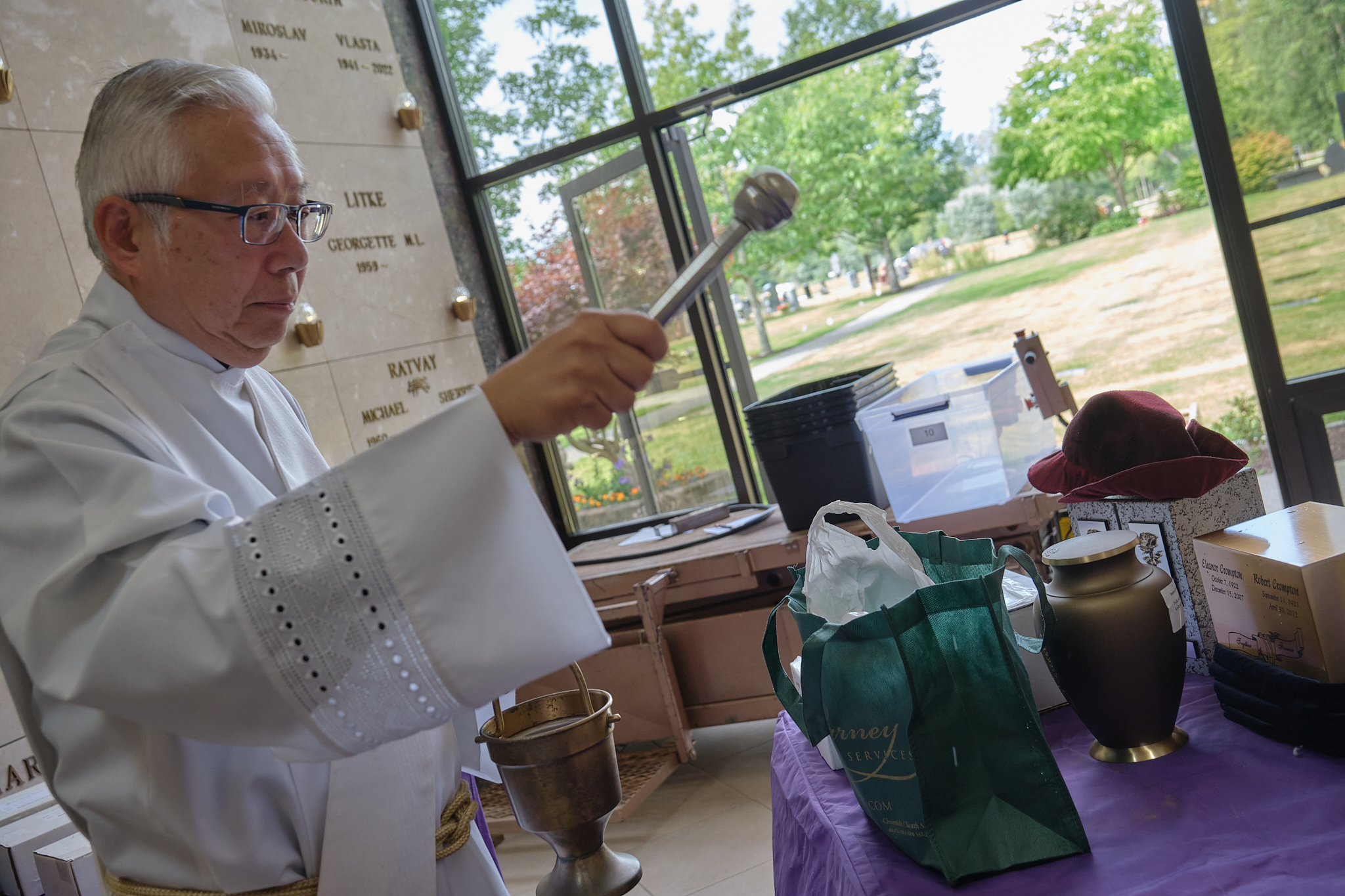

Working around death is part and parcel of working for a Catholic cemetery, but Gardens of Gethsemani groundskeeper George Morgan was still shocked when last October he found ashes strewn across the ground of a future grave site.
Morgan knew at a glance what the ashes were, and he quickly gathered as much of the remains as possible into a container.
“We can’t just leave them laying out there, that’s not the right thing to do,” Morgan told The B.C. Catholic. “I cleaned them up, put them in a container; we labelled them, and then the deacon blessed them.”
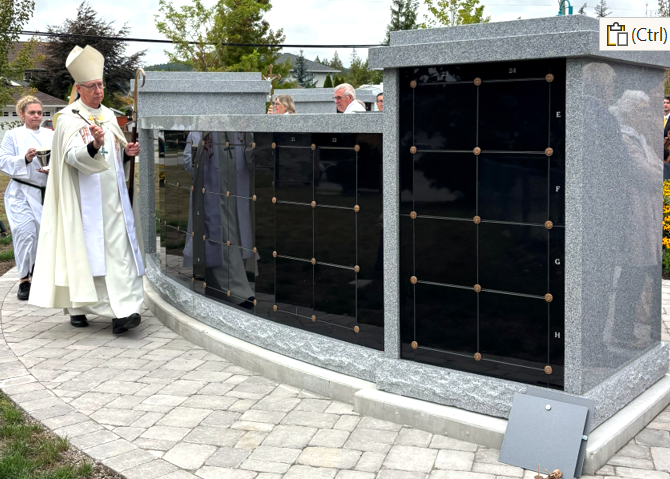
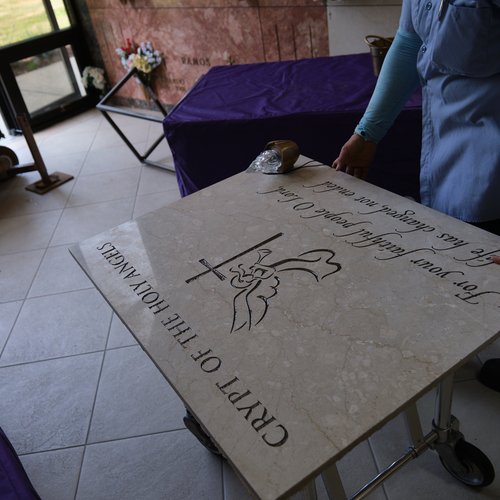
Over the last decade, the cemetery has been doing what it can to prevent similar incidents. In 2014 Gardens dedicated a crypt engraved Crypt of the Holy Angels for the interment of ashes needing a proper burial.
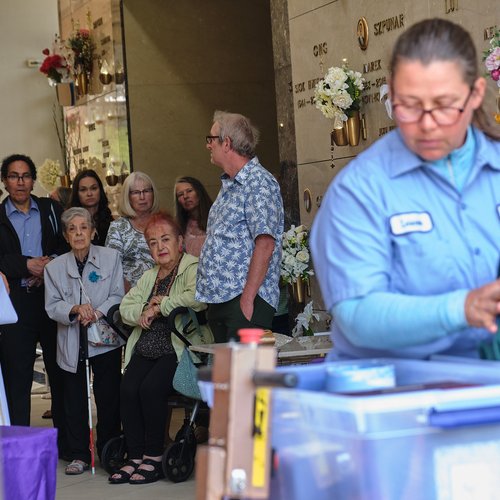
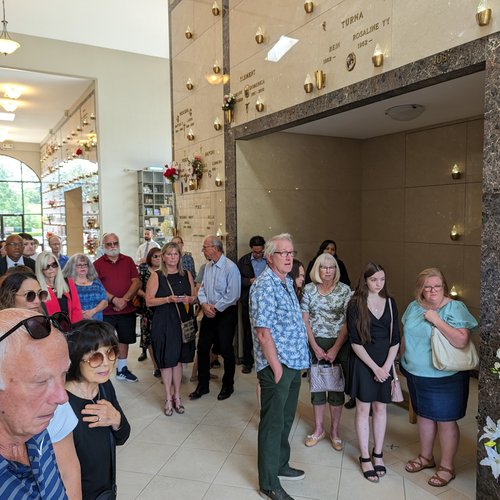
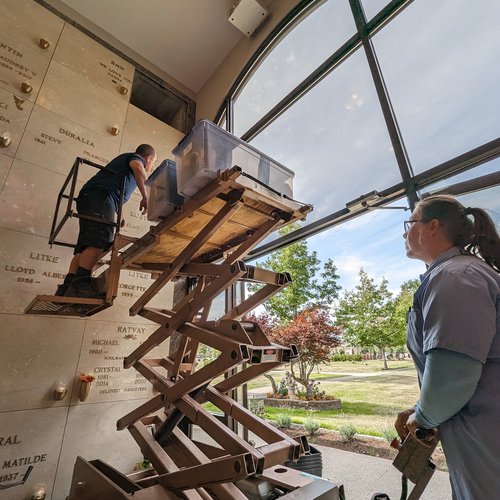
On July 29, the unknown ashes found on the cemetery grounds were among 30 urns added to the crypt in the cemetery’s fourth Reverently Laid to Rest ceremony. The event is not a regular annual occurrence, happening only when sufficient need arises.
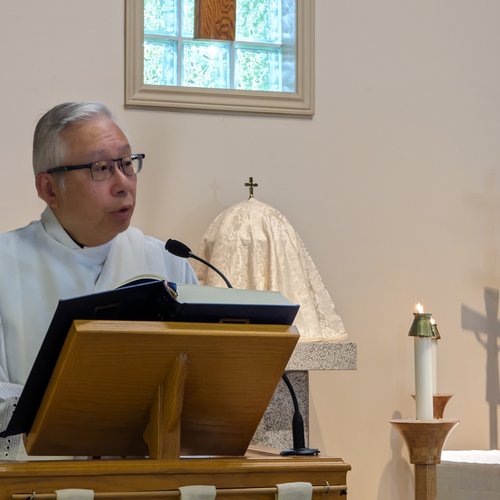
In a simple ceremony, Family Service Adviser Deacon Ken Fung read from the Gospel before giving a brief homily in the cemetery chapel before processing to the crypt to bless the remains for interment.
In his homily, the deacon described Catholic beliefs around death and burial. He explained to the gathering that the common crypt and the interment are a way for Catholics to fulfill their obligation to the corporal and spiritual acts of mercy. Both the Crypt of the Holy Angels and the Laid to Rest event offer individuals and families the opportunity to reverently and inexpensively bury any remains in their possession.

As a ministry of hope and healing, the burial is meant to help families with closure by moving remains from their homes to a place of reverence, said Deacon Fung, continuing a long cemetery tradition of common burial, graves to provide unknown or poor individuals with the dignity of a proper burial on sacred ground.
Remains interred in the crypt must generally have been in a home or with an individual for at least three years or there must be financial need. But there are exceptions, such as remains that were interred this year after being found outside a local parish. Evidence suggests the urn contained the ashes of a small baby, probably left by a mother in distress.
Laid to Rest organizer Anne-Marie White told The B.C. Catholic she hopes putting the remains in the crypt will bring closure to the mother, whoever she is.
“The little urn that showed up really touched my heart and I think about it almost every day,” said White.
“God works in mysterious ways, and obviously he knew it would end up with us,” she said. “There is sadness in all of this, without a doubt, but it brings me joy to know that we can help them with their healing process.”
Some remains have undergone a complicated journey before making their way to the crypt.
Francisco Salinas attended the ceremony to say prayers and lay to rest the remains of a female friend who died nearly 25 years ago while she was visiting him in Canada.
Salinas had been left to take care of the urn when her husband went on a trip to Vegas, but remarkably the husband passed away leaving the remains in his possession. Unsure about what to do at the time, he left the remains with a friend for safekeeping when he emigrated to Venezuela 20 years ago.
Upon his recent return to Canada, Salinas was surprised to find the remains sitting in a wine cellar. While there was some talk of scattering the ashes, he said in light of his faith it didn’t feel like an acceptable solution. Ultimately, he reached out to Gardens, and now his friend has been given a proper burial.
While the Vatican has allowed the dead to be cremated since the 1960s, the Church teaches remains must remain together in a proper vessel and kept in an appropriate location like a church or cemetery.
White wants people to know, “We are going to do whatever we can to assist these families to give them the respect they deserve.” She also hopes this attention and care for unburied urns will signal that human remains have dignity and will give people pause when they consider how to deal with remains.
“I hope we are giving the message to people who might consider scattering [the ashes],” she said. “Perhaps rethink that a little bit.”
We welcome letters to the editor about articles in The B.C. Catholic.