
The synodal process does not allow for subversion of papal authority on questions of faith and morals, Archbishop J. Michael Miller said during a panel discussion on synodality hosted by the Archdiocese of Toronto.
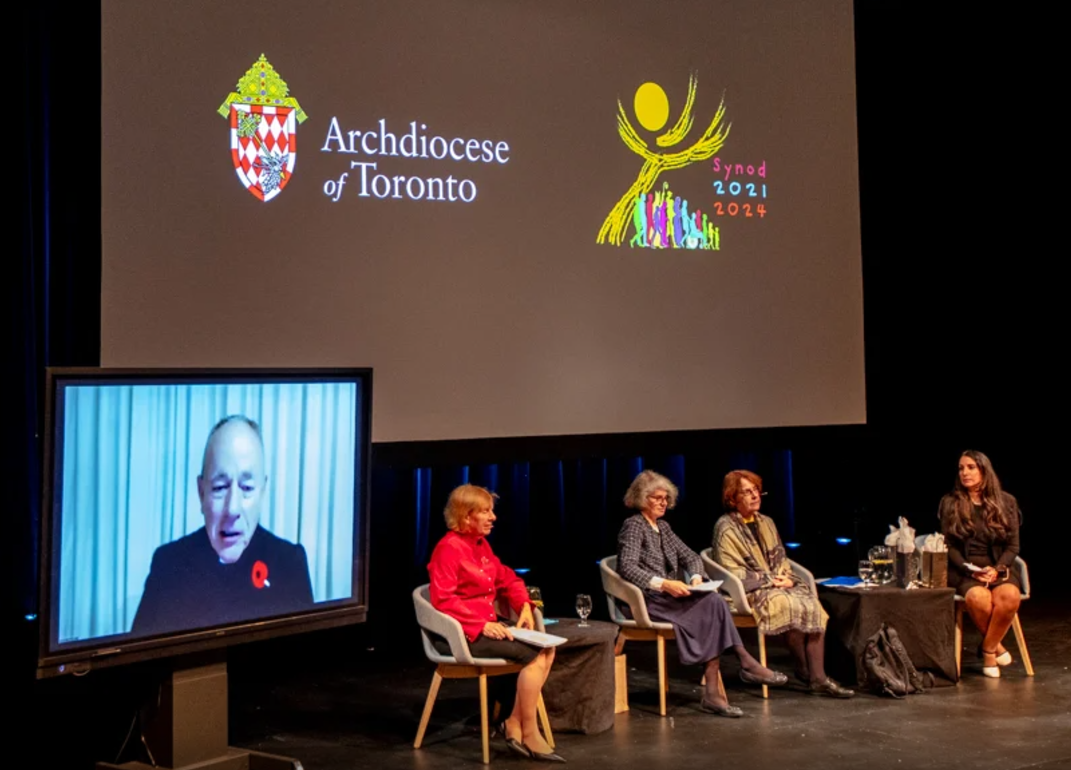
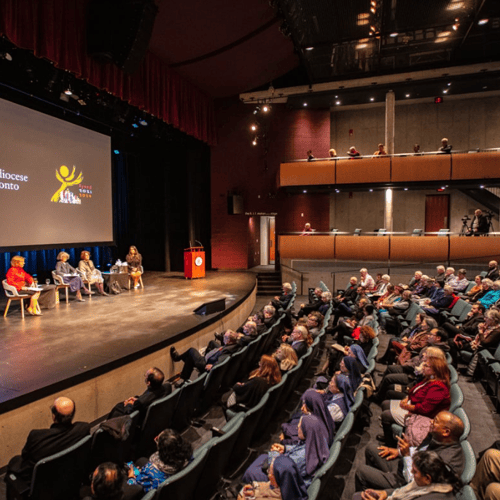
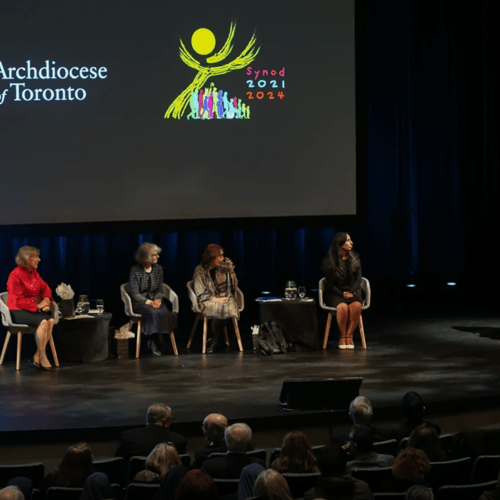
The event, titled Unpacking the Synod on Synodality – Listening, Dialogue & Shared Wisdom, brought together members of the clergy, laity, and religious life from across the Toronto area.
The discussion was moderated by Dr. Josephine Lombardi and featured Archbishop J. Michael Miller, CSB, who joined by streaming and recently participated in the synod of bishops in Rome; Sister Nathalie Becquart, XMCJ, undersecretary of the Synod of Bishops; and theologians Dr. Moira McQueen and Sister Gill Goulding, CJ.
In response to a question about concerns some may have about the synodal process “opening the door to the democratization of the Church that is not consistent with its divine structure,” the Archbishop responded with a question: “What do you mean by democratization?” he asked.
“If you look at the document, there is no question that the Church is not slipping away from its hierarchical constitution,” he said. “Everything that the Holy Father says more than emphasizes the importance of the Petrine ministry.”
He speculated that concerned Catholics may question the synodal process because “they hear the buzz that is going around outside the synod about pressure groups and influences that these might have on the taking of final decision.”
“Here I think it’s very important to distinguish between discussions in the Church that touch matters of doctrine,” and contrast them with “matters of pastoral awareness and pastoral outreach to people,” he said.
He said there is nothing wrong with getting as much input as possible when it comes to decisions that do not require the exercise of episcopal or papal authority.
Addressing the core concern that interest groups might be able to sway the teachings of the Church, the Archbishop was clear: “Matters of doctrine are not subject to ordinary parliamentary rules of engagement and consensus on the final taking of a decision,” he said.
“I have certainly heard this objection from people particularly, say, around the question of whether women should be admitted to diaconal ordination,” he offered. However, “it is very clear how this is being handled by the Holy See,” he said. “This is not a matter of finding a number of people in a synod hall voting that the end result would be approval of a particular question.”
There is no need to “worry that there is any compromise that synodality brings – there is not,” he said. “[Synodality] actually invites people to be part of a process,” in which “they are listening to the voice of the Holy Spirit.”
Archbishop Miller pointed out that the Church has “a divinely given constitution, but within that, there is lots of room, as synodality is pointing out, for input and consultation. Although certainly on matters of faith and morals decisions are ultimately taken by those to whom the Lord has trusted the taking of those decisions.”
The Pope “is very clear that the synod, for example, works sub and cum Pietro,” said the Archbishop. It works cum Pietro, “with Peter,” but ultimately, sub Pietro, “under Peter.”
The Archbishop shared some suggestions from the final synodal document that caught his attention.
“The local churches are asked to continue their daily journey with a synodal methodology of consultation and discernment, identifying concrete ways and formation pathways to bring about a tangible synodal conversion in the various synodal context,” he said.
As such, Vancouver’s synod team will continue its work and is “ready and willing to bring many proposals forward using consultation with the spirit to our parishes and communities.”
Also of interest is the synod document’s recommendation that the “Church must listen with particular attention to the voice of victims and survivors of abuse,” including sexual, spiritual, economic, and institutional, he said.
“In Vancouver, we have the beginning of a pretty good procedure for sexual abuse,” he said, “but we don’t really think about spiritual or institutional abuse.” The Archbishop believes this is where deeper understanding will emerge because abuse has become a focal point of certain synod conversations.
Additionally, the Archbishop commended as a “particular fruit” the synod’s encouragement to create a research institution for the better integration of disabled people into the life of the Church.
Finally, the Archbishop said he was interested in the recommendation that the laity be more involved in the selection of bishops.
Your voice matters! Join the conversation by submitting a Letter to the Editor here.