
Archbishop J. Michael Miller is clear about the future direction of the Church in Vancouver, and it stems from the ongoing synod of synodality.
He sums it up this way: shared leadership and a renewed focus on evangelization will be centred on the co-responsibility of both clergy and laity.
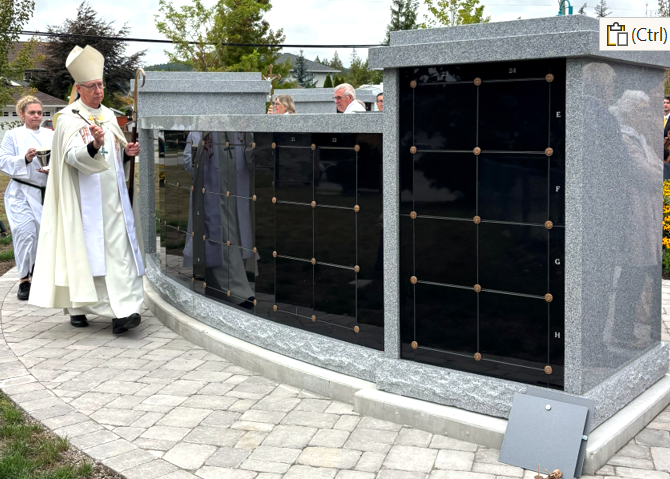
In an interview with The B.C. Catholic, he highlighted the importance of laypeople stepping up to take active roles in their parishes. It’s been a strong theme of the synod sessions he attended in Rome last year and this month. “It’s about how to lead. That was very clear at the synod.”
In a parish, everyone is responsible because of their equal dignity in the sacrament of baptism, Archbishop Miller said. Each is called to participate in accordance with the charism they are given. “This is fundamental to the life of the Church,” he said, pointing out the emphasis on the co-responsibility of the laity isn’t about reducing the priest’s role but about the majority accepting their place within the parish and the Church.
In the past, the pastor took on specific responsibilities of leadership out of necessity, especially if he was often expected to be the most educated and well-connected person in the community. As a result the pastor was expected to make decisions on his own. None of this is necessarily true anymore, said the Archbishop. The pastor is no longer the sole person on whose shoulders decisions are placed. Rather, the emphasis is now on a communal or even “synodal” approach to the pastoral life of the parish.
Decisions have to be made, said the Archbishop, “But usually, if it is a well-functioning community, issues can be worked out through consensus.”
While the pastor may have the last word, “You don’t want to invoke that every time” because it shuts off community engagement in leadership and decision-making.
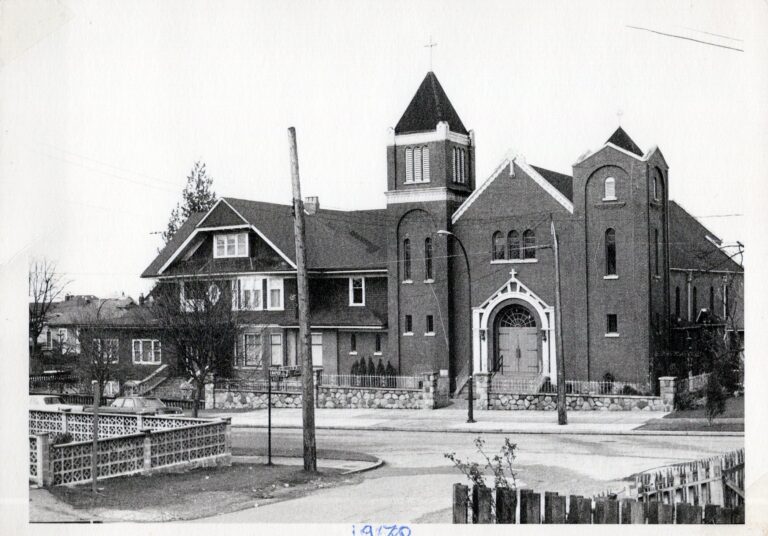
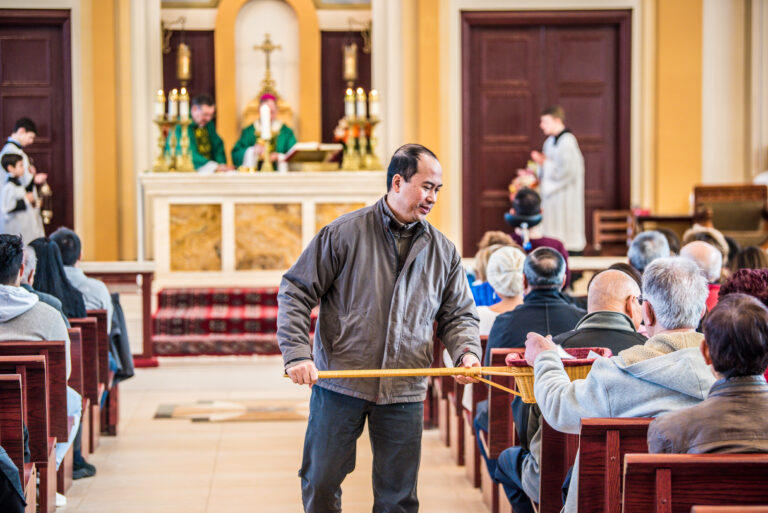
Among the parishes across the Archdiocese of Vancouver already embracing the renewed vision is Vancouver’s Corpus Christi, under the leadership of Father Bruce Hamilton. It has embarked on a 10-year parish renewal plan that enshrines principles of lay leadership, evangelical hospitality, and tradition.
It’s a move that Father Hamilton views as essential to the future of the Church, with the laity being called to take greater responsibility for parish operations and leadership. “It’s really the model of Jesus if we think about it,” said Father Hamilton. “Jesus didn’t just share his ministry with his apostles, he shared his power with them.”
Humility is key, both on the part of the pastor and the community. “There has to be a willingness for people not always to get something right,” he said, noting that everyone needs to be comfortable with the mistakes that come with learning and growth. Laypeople, when formed properly, still look to the priest for leadership but are edified when the priest is willing to share power.
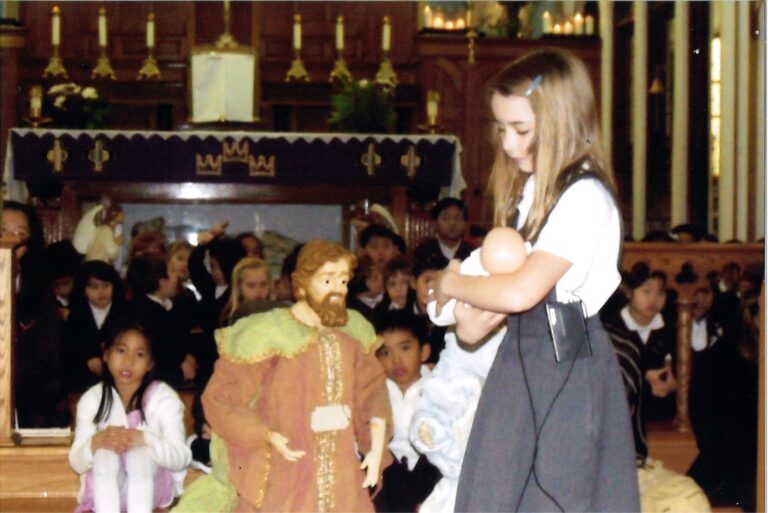
Events such as after-Mass socials organized by parishioners like Mary Vandencia have become a cornerstone of the renewed community spirit. The gatherings bring together groups within the parish, from youth to the Knights of Columbus, fostering a deeper sense of belonging and engagement. “It’s really a chance to show the face of God when you can come together like this,” said Vandencia.
She reflected on how her involvement in organizing the socials in 2022 became a turning point in her faith and enriched her life. “This has given me a way to feel engaged. It’s something we take a lot of pride in,” she said.
What started as a small initiative has grown to include nearly the entire parish community, offering something for everyone, from craft tables for children to casual conversations for adults. The atmosphere has become one where school parents, the youth group, and others come together in community. “It’s a way to live my faith in a really tangible way,” Vandencia said.
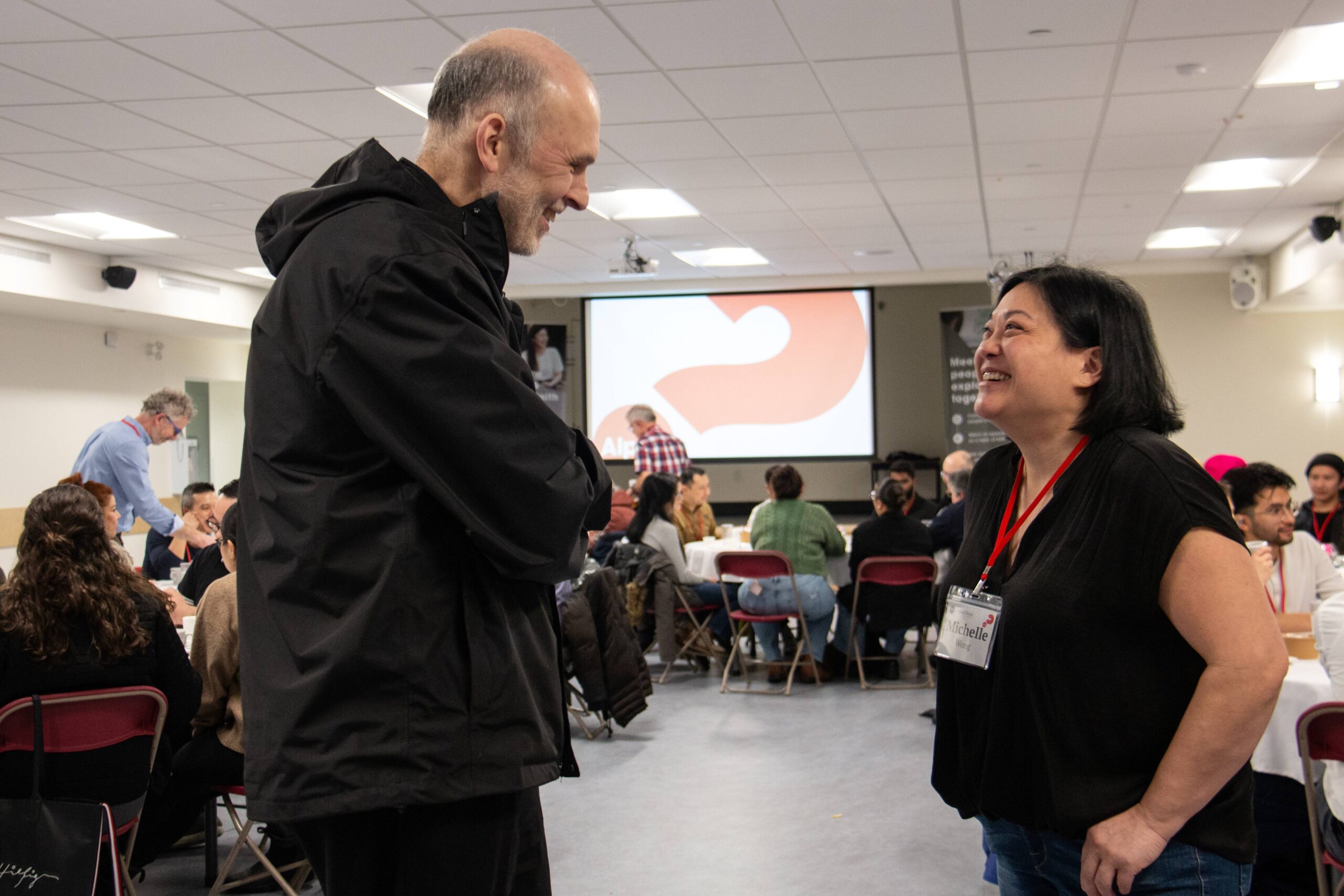
Lay involvement has also flourished through initiatives like Alpha, a program designed to create engaged disciples and multiply leaders. Michelle Wong, a lifelong parishioner at Corpus Christi, went from casual participant to becoming a key leader in the parish’s Alpha program. “I really loved the idea of people saying ‘yes,’ and then figuring out how they could help,” said Wong.
Her perspective on parish involvement changed after Father Hamilton introduced the 10-year vision. Before the renewal process, she would hesitate to volunteer, considering only what fit her schedule. Now, Wong actively seeks out opportunities to contribute. Her initial experience as an Alpha table host soon led to her becoming the program’s coordinator.
“It ended up being a really emotional experience. From there I was definitely hooked on Alpha. I wanted to facilitate it at the parish,” Wong said.
The program has not only strengthened her own faith but also fostered a deeper sense of community among participants. “Alpha gives us time together to learn to share,” she said. People who were once strangers now engage in meaningful conversations about their faith. “People now seem genuinely happy to see you … They feel that they have more permission or comfort to talk about faith topics.”
The transformation of parish culture has been remarkable. “People are energized,” said Wong. “They want to help with Alpha, or they want to help with other ministries in the Church. They want to share.”
In the past, while there was goodwill among parishioners, only a select few would get involved as needed. Now, there is a growing sense of initiative, with people looking for ways to help the parish grow and thrive. “They aren’t just looking to maintain, but are asking how we can make this grow and thrive,” Wong said.
Compared with other parishes, Father Hamilton and his team at Corpus Christi are at a more advanced stage of their renewal plan. Father Hamilton worked closely with Brett Powell, the Archbishop’s Delegate for Ministries and Development, to develop a comprehensive vision that reimagines the role of laity within the parish. While the big-picture application of the plan has been unfolding for several years, the parish is now using money from the Parish Enhancement Fund (explain) to pay for leadership consultations and resources from organizations like Divine Renovation.
At St. Francis de Sales Parish, Father Mark McGuckin and his renewal team are at the start of creating their own parish renewal plan. Their focus, according to Father McGuckin, is “attending to the broken-hearted, those who are looking for a safe haven, for a relationship with God, for authentic wholeness.”
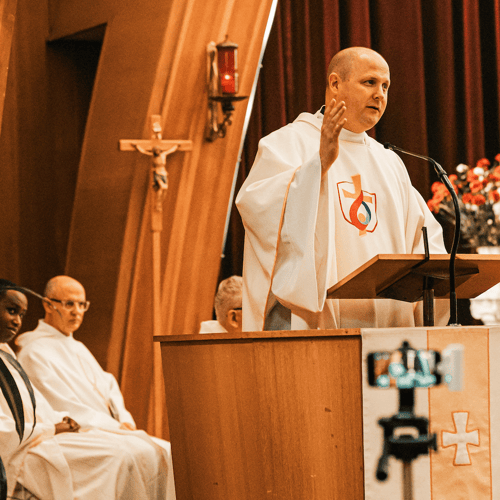
Most of the planning so far has been centred on evangelization and building relationships with those in need. “In this day and age, there needs to be a little more emphasis on going out with a net,” Father McGuckin said. “It can be challenging, but ultimately, it’s the early Church, it’s the Gospel.”
Father McGuckin credits Father Medard Kamanzi, the newly ordained assistant pastor, with bringing clarity to the parish renewal efforts. During their summer planning, Father Kamanzi quickly identified that St. Francis de Sales’ Alpha program represented the parish’s gifts well. That insight helped guide the parish’s renewal process, which is also supported by monthly meetings with Divine Renovation coach Debbie Riddle.
Father McGuckin said that words like “gathering,” “community,” “mission,” and “worship” now form the bedrock of the parish vision. “We want to move hearts with this language,” he said. And while parish enhancement is only in its infancy at St. Francis de Sales, Father McGuckin says all good things come with time. “It’s in the oven, but it has to be there long enough to be ready.”
Archbishop Miller said Corpus Christi and St. Francis de Sales are highlighting the movement toward lay co-responsibility and a collaborative, synodal approach to parish life.
“The lay faithful need to step up to the plate. You are not passive recipients of sacramental grace distributed by the priest; that is not what your baptism commits you to.”
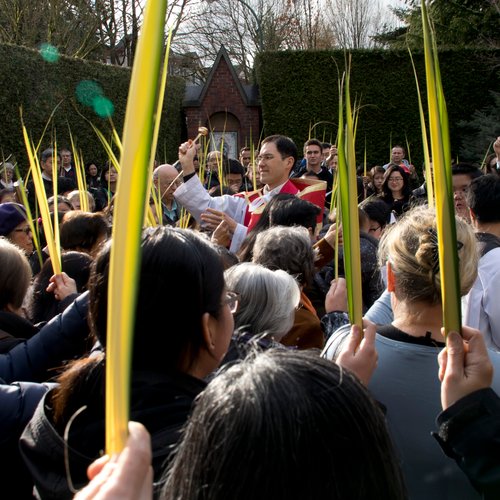
Seasons of renewal: transforming a parish through faith, failure, and perseverance
By Father Justin Huang
Every now and again, I read a remarkable story or article about a parish being renewed and I get discouraged.
A pastor implemented Alpha and now every week a young adult requests baptism.
Another parish emphasizes Eucharistic adoration, fidelity to Church teaching, more reverent liturgies, and now that parish is packed.
From 10 years of attempting renewal at St. Anthony of Padua in Vancouver, and from the wisdom of fruitful pastors in renewal, we all agree that God should be praised for this rapid and smooth growth.
But such change is the exception, not the rule.
There are two graces I would like to share with my brothers and sisters engaged in mission:
1) Parish renewal involves regular failure;
2) The pastor is the one who must change the most.
The normal process of renewal is slow and organic because, ultimately, what God the Father wants is for hearts to change, not just programs, and for us to love him and others more.
All of which takes time. We pastors must change because, like it or not, we hold most of the figurative keys to the doors in the parish. One of the greatest mistakes in parish leadership is thinking about how the parishioners need to improve, when the road to their growth is through the change of the priest and parish leadership.
In the next few weeks I’ll illustrate how I learned about these graces over and over again through the four seasons of parish renewal, starting with spring.
Spring
In 2014, I was blessed to inherit a parish that was relatively stable, with 842 good people coming every Sunday, healthy finances, and no headaches!
The following year, we started some successful initiatives: a senior leadership team, a parish vision meeting with 70 leaders in attendance, the launch of Catholic Christian Outreach Faith Studies with 100 people signing up, then 130 more, and finally another 100.
Make no mistake, however. Although many people experienced a profound spiritual awakening, certainly not all did.
In 2016, there was a similar pattern. We launched Alpha in a nearby café and, while many parishioners grew in their faith and eagerness to share it, almost no non-Christian became Catholic.
It was the Year of Mercy, so we began all-day confessions on First Saturdays, offering nine hours of confessions, with people typically coming for seven! It was a level of activity that I couldn’t physically sustain in the long run.
Believing that we were making a huge spiritual impact, I thought we would attract spiritual talent, but our first hire lasted for three months, leading to my first moment of panic as a pastor.
Looking back, I thought I was humble, but I wasn’t really.
Related to pride is pastoral envy. That year, I was blessed to be offered a spot in the newly formed Divine Renovation Network, the Halifax-based ministry of Father James Mallon who helps parishes worldwide move from maintenance to mission by fostering discipleship, community and reliance on the Holy Spirit.
I resisted, believing I didn’t need coaching.
More subtly, I didn’t want St. Anthony’s to become like St. Benedict’s, which was transformed into a vibrant, mission-focused community through innovative leadership and evangelization.
I also didn’t want to be compared to Father Mallon. Pastoral envy is a reality among us priests and parish leaders which we don’t discuss: We’re aware of who has a better parish, who doesn’t, whose is growing, and whose isn’t.
Even now I experience pastoral envy when I hear, for instance, about a young priest who receives a million dollars for a chapel without having to ask, while St. Anthony’s still struggles to fundraise for a similar amount.
In 2017, we finally joined the the Divine Renovation Network after admitting that we didn’t know where to go next. The Good Lord was kind enough to bless that act of humility a hundredfold.
Summer
In every season of parish renewal, there is one danger to be avoided, one virtue to be cultivated, and one Scripture passage to guide us.
In the springtime, the danger is overthinking, being too hesitant or too prudent to launch. The corrective virtue is boldness, and Ecclesiastes 11:4,6 says, “One who pays heed to the wind will never sow, and one who watches the clouds will never reap … In the morning sow your seed, and at evening withhold not your hand, for you do not know which will prosper, this or that, or whether both alike will be good.”
During this period, St. Anthony’s reached the height of its Sunday Mass attendance (1,081); over 599 people had taken the first level of Faith Studies, which was then being offered four times a year; around 400 guests had participated in Alpha, run biennially; we renovated our chapel and 307 signed up for weekly eucharistic adoration; our capital campaign went from raising roughly $250,000 to over one million annually; we even had three parishioners share their stories of God’s healing from abortion.
During the first Sunday of our COVID lockdown, we set up a laptop to livestream our Mass and eventually had over 3,000 people view our Masses weekly. Divine Renovation had challenged me to create a bold vision and announce it, which was well outside of my comfort zone. The Holy Spirit was indeed working in our hearts!
But that’s not the whole story. In 2018, for example, we invited people to volunteer for works of mercy and hundreds filled out cards in the pews, yet the whole thing died because our leadership fell through. Likewise, in 2019 we had 134 guests come to Alpha, with only half of them returning the following week.
Numbers certainly tell part of the story, but we learned the hard way to keep on tracking them without riding the emotional waves of the ups and downs.
Since then, our team now focuses more on primary statistics (e.g. the number of self-designated disciples in our annual Christ the King Challenge, number of adult baptisms, number of regular Eucharistic adorers, number of attendees in our 40 Days for Life campaign, and vocations to consecrated life) rather than secondary statistics (Sunday Mass attendance, weekly collection, participation in spiritual ministries).
Both are important: primary statistics aim at measuring conversion and mission, while secondary metrics indicate engagement.
In the summer season, the one danger to avoid is pride.
We had seen a pattern: New people would come, compliment us, be encouraged and nourished at our parish, even join us for a year or two, and then leave.
I became a slave to the highs and lows of ministry, feeling pressure to give an amazing homily every Sunday in order to retain people, and overthinking when I didn’t get the same response.
So, the corrective virtue is gratitude, not just in general, but to the Trinity specifically.
St. Paul writes, “I planted, Apollos watered, but God gave the growth” (1 Cor 3:6).
As our parish leadership grew, we all experienced the tension between dependence on God and our necessary cooperation. Now, with every year, we endeavour to rely more on the Trinity while, at the same time, applying ourselves more.
It’s not one or the other, but both grow in tandem, such that there is a beautiful interplay between grace and nature.
Fall
In December 2020, after returning from 10 weeks of rest to recuperate from sheer exhaustion, I wondered: Where are the leaders? Why aren’t people inviting others?
Fatigue had set in among roughly 150 volunteers, and many, who had experienced real conversions in the past years, were undergoing a sort of spiritual marital crisis with Jesus. We didn’t have enough mature disciples to accompany them through this natural stage of the spiritual journey. We had also exhausted our evangelizing capital: Parishioners had already invited practically everyone they knew to Alpha and there was no one left to invite!
Participation levels had all decreased and many facilitators were tired of leading others, instead craving deeper spiritual growth for themselves.
Sharing these facts with my lay Divine Renovation coach, I asked, “What does the Lord want us to do for 2021?” We had been launching new programs and bold spiritual goals for years now, and I knew this had to pause; we simply had to hold things together and stabilize our parish family.
In this season, the danger is to keep on launching programs. What is needed is the virtue of discernment/pruning. As our Lord teaches, “Every branch of mine that bears no fruit, he takes away, and every branch that does bear fruit he prunes, that it may bear more fruit.”
So, from the conversation with my coach, I discerned three simple goals for that year: 1) A simple consecration to St. Joseph for all our disciples needing healing; 2) A gentle invitation for couples to try the Alpha Marriage Course; 3) Revitalize youth ministry (which is still struggling to this date!)
Yet, two other changes would later prove impactful. First, attempting to run a deficit budget.
We had been unable to hire great staff, partially due to a scarcity mindset: Will we be able to afford competitive salaries? What if we run out of money?
After prayer and discussion with the leadership team and the finance council, we announced that we would follow some fruitful evangelical parishes who spent aggressively on spiritual growth, trusting that the Lord would provide the resources to maintain it. This decision made no impact at the time, but, in the next three years, it allowed us to hire confidently.
Second, for years I knew about the Pentecost Challenge at St. Benedict’s, Father Mallon’s Halifax parish, yet I was too afraid of failure to try it. So we created one for our parish: the Christ the King Challenge, where on the solemnity of Christ the King during the homily, we would ask people to raise their hands if they’ve made Jesus the centre of their lives.
I couldn’t see it at the time, but this annual initiative began to normalize the language of conversion in profound ways, allowing everyone in our parish family, at even the most ordinary moments, to discuss this reality.
Winter
The continued absence of visible growth made me doubt if I should remain as pastor, if we would be able to grow again, and if we were cooperating with the Holy Spirit. After all, since we had implemented what other parishes had, why weren’t we seeing the same results?
The virtue we needed was patience, because the danger was to make excuses, such as, “We’re already good enough,” or, “Things aren’t that bad.”
Leviticus 25:4 reads: “In the seventh year there shall be a sabbath of solemn rest for the land, a sabbath to the Lord; you shall not sow your field or prune your vineyard.”
Parish communities, which are spiritual organisms, need rest, too.
I learned this truth while sharing my doubts with an Evangelical pastor, who said, “Father Justin, you can’t bear fruit all year long. My husband and I have been at our parish for over 25 years, and there are seasons of growth.”
Her words clued me in to the four seasons of renewal, giving me context for our failures and my own need for growth. It also allowed me to be more open about our failures.
At one point, during a Divine Renovation webinar about evangelization with hundreds of people, I admitted that we had been running Alpha for six years and hadn’t seen much fruit—that was embarrassing. Father Simon Lobo of St. Benedict’s later wrote me that that admission inspired him. Little did he know how much his affirmation meant to me.
The less visible changes made during the fall season continued during our winter. We spent two years discerning a new parish vision, and though the Strategic Planning Council died after these years, its fundamental fruit was a vision that was truly evangelical.
As someone who is naturally a teacher and more focused on growth in holiness, it was completely outside of my comfort zone and skills to focus on evangelizing people who had never heard of the Gospel. Yet, years of exposure to Divine Renovation had touched my heart and mind to understand that evangelization was in no way opposed to holiness but was the deepest expression of love of neighbour.
This forced me to adapt my Sunday homilies, keeping in mind the need to proclaim the kerygma, being more gentle in my tone, smiling more, and preaching difficult moral topics like abortion, IVF, and transgender issues from a vantage point of empathy and mercy.
Modifying the Sunday homily was more important than people realize because it set the tone for the rest of the parish’s culture. At the same time, however, the daily Mass homilies changed in the opposite direction! Daily Mass attendees hungered for deeper spiritual growth, so, from my typical exhortatory homilies, I started giving more Scripture-based reflections.
In terms of parish leadership, two changes were in order. First, our Senior Leadership Team had been used to leading doers, rather than leading leaders. Though it required a long time for me, the team, and the parishioners to accept this mindset, in the end, everyone grew.
Second, I decided to pause our English Alpha for a season (the Chinese Alpha team had always borne fruit) and rebuild the team. I instructed the new Alpha team to focus on quality of accompaniment rather than numbers, to focus on inviting non-believers rather than inviting Sunday Mass-goers.
Slowly, there were new graces: we had our first homegrown vocation to religious life; for the first time, some 13 Grade 7 students from our school signed up for Faith Studies; and we were able to hire some gifted staff to take better care of our leaders. On this last point, I marvelled at something which can only be perceived after many losses: Whenever a good staff member left, God eventually gave us someone better. Certainly, there was often a gap in hiring, but we learned to stop holding on to people, to stop lamenting their leaving, and to improve ourselves so that we didn’t repeat the same mistakes which led to their departure.
Spring … Again
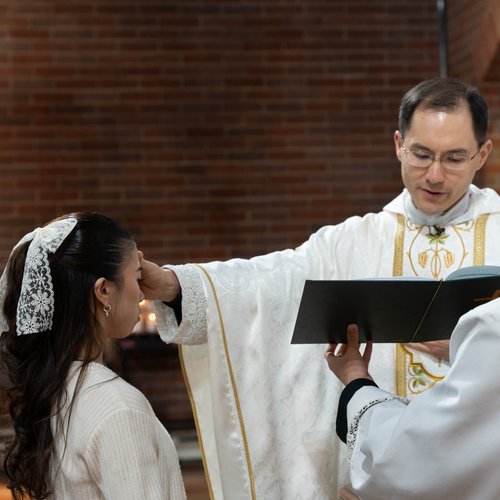
In August 2023, I suddenly discovered that we had a dozen people in RCIA, and, by the end of that year, we were blessed to have accompanied 11 adults to baptism, our previous record having been six in a year. This was the first sign that we were in a new springtime.
By 2024 were were journeying with 13 adults to baptism. In those two years, Alpha saw average attendance of around 40 per season but with much higher retention, more non-Catholics participating, and more conversions.
Other ministries in our Discipleship Pathway (Faith Studies, Journey Through Scripture, Marian Consecration, Life Groups, Called & Gifted) likewise had stronger attendance.
Very beautifully, a large group of our teenagers and elementary school students showed steady signs of spiritual growth, due, in large part, to their parents’ spiritual growth. The deficit budget had also allowed us to have a pastoral staff of 12.
Suffice it to say, with a plethora of weaknesses, our improvements and changes continue. Very recent feedback prompted us to scrap running an aggressive deficit budget; our weaknesses in leading leaders, along with our years of difficulties in bearing fruit, inspired us to embrace the Intentional Accompaniment model of Catholic Christian Outreach as our main pastoral strategy; and we are currently discerning how to relaunch Eucharistic adoration in 2026.
I pray you are encouraged by this sharing of the two graces: the reality of failure and the need for the pastor to change.
One spiritual rule to which I subscribe is: Discouragement never comes from God. While trials and desolation are allowed and sometimes even guilt is given by the Holy Spirit, if, at any moment along your journey of renewal, you experience discouragement, you must resist it because it’s not of God.
Had fruitfulness come easily, we would never have grown in generosity, humility, prayerfulness, patience, and boldness. For the same reason, the changes I’ve embraced are worth it. It’s not pious words when I say that the biggest problem in St. Anthony’s renewal is I, and thus the biggest opportunity is for me to become more like Christ, particularly in his spiritual leadership.
Father Justin Huang is pastor of St. Anthony’s Parish in Vancouver.
Your voice matters! Join the conversation by submitting a Letter to the Editor here.