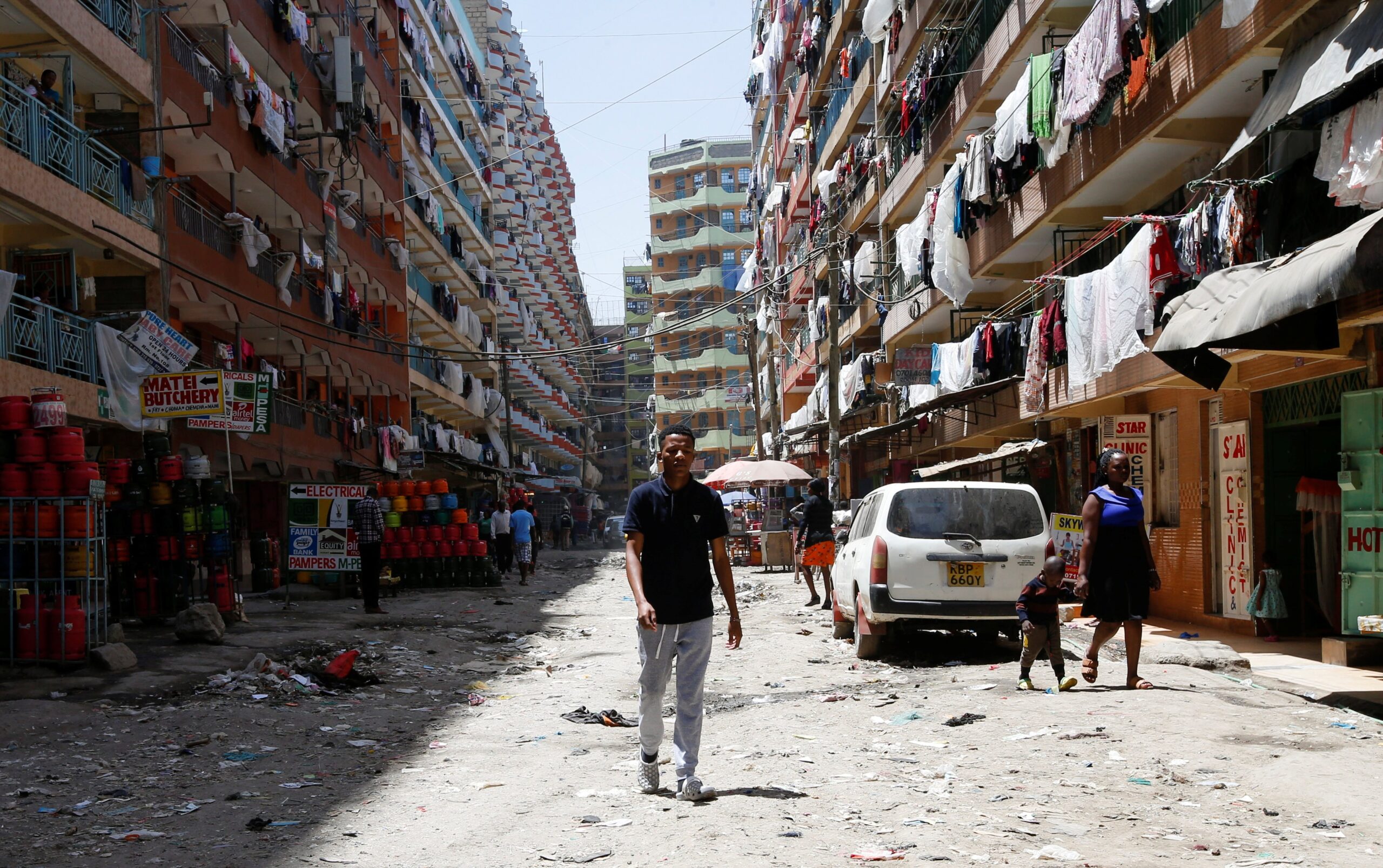

Faith-based organizations are praising a new pastoral letter from the Canadian Conference of Catholic Bishops (CCCB) that urges the Global North to cancel the crippling debt of low-income countries and acknowledge the ecological burdens placed on the Global South.
Forgive Us Our Debts: Pastoral Letter on Debt Forgiveness in the Jubilee Year, released July 28 by the CCCB’s Episcopal Commission for Justice and Peace, continues the bishops’ tradition of calling for debt relief during Jubilee years of grace in the Catholic Church.
Dean Dettloff, research and advocacy officer for Development and Peace – Caritas Canada, said the bishops’ letter “meets the moment.”
“Their new letter shows that today’s debt crisis requires even more ambition, providing not only urgent debt forgiveness, but also changing the financial structures that have created these problems,” he said. “The spiritual and moral clarity of the letter helps us to deepen our engagement with the Jubilee Year, reviving the pulse of the biblical jubilee and becoming pilgrims of hope.”
The CCCB letter also criticizes creditors for actions that can worsen the debt crisis.
“To receive a loan, creditors sometimes require debtor countries to enact austerity conditions and privatize key sectors, making countries more dependent on foreign exports and denying the right of countries to develop on their own terms,” it states. “Creditors have also at times given loans to corrupt governments, where political leaders may use the money to enrich themselves or repress their citizens rather than to fund development.”
In this Jubilee year, the CCCB deems it appropriate for creditors to cancel debts “that oppress and hold back integral human development.”
Beth Lorimer, ecological justice program coordinator for KAIROS Canada, welcomed the bishops’ attention to “ecological debt.”
She said she is pleased the bishops are “amplifying the call from movements in the Global South, but also from Pope Francis, to address ecological debt.”
The letter references Laudato si’, Pope Francis’ 2015 encyclical, which notes that “countries in the Global South often host an abundance of land and resources but are exploited for the sake of profit and consumption in the Global North.” The bishops add: “Given the effects on the environment caused by commercial imbalances between North and South, we can speak of the existence of an ‘ecological debt.’ ”
Lorimer said KAIROS has long urged Canadians and their leaders to “be talking about ecological debt and the responsibilities that we have as that Global North country in addressing debt.”
Calling Canada “greatly blessed with abundant natural resources, a stable political system, resilient infrastructure and a strong economy,” the bishops suggest that “to whom much has been given, much will be required of us.”
They argue that because Canada’s “privileged situation” was created in part through access to the raw materials of the Global South, Canadians have a duty to assist countries that lack those advantages.
From June 12–15, Development and Peace – Caritas Canada, KAIROS Canada, and other faith-based organizations hosted the G7 Jubilee People’s Forum ahead of the G7 Leaders’ Summit in Kananaskis, Alta. Hundreds gathered at Ambrose University in Calgary to explore the same issues highlighted in the CCCB letter.
Participants were also encouraged to support the ongoing Turn Debt into Hope campaign. The petition, which has garnered more than 40,000 of a 100,000-signature goal, calls for the cancellation of “unjust and unsustainable debts,” reforms to the global financial system to prevent future crises, and the creation of a transparent and binding United Nations debt resolution framework.
The CCCB closes its letter by calling on Canadian Catholics to support this campaign and raise their voices. By doing so, the bishops write, “we might become, in the words of Pope Leo XIII, ‘a Church that always seeks peace, that always seeks charity, that always seeks to be close above all to those who are suffering.’ ”
The full letter is available at cccb.ca.
Your voice matters! Join the conversation by submitting a Letter to the Editor here.