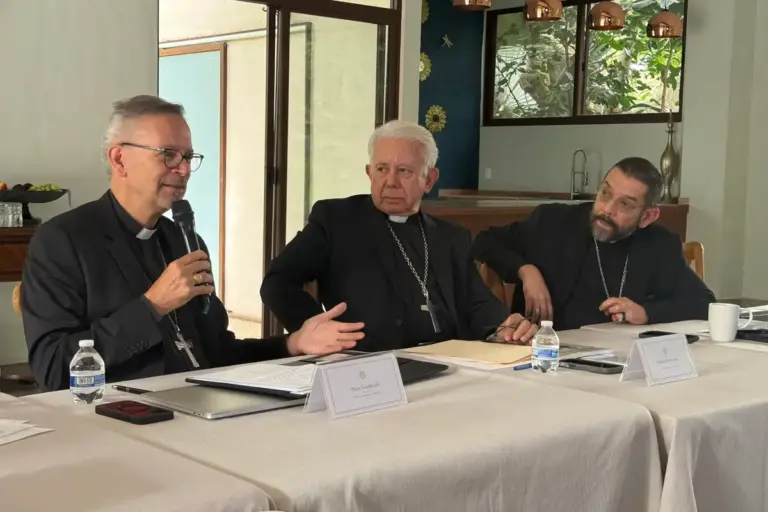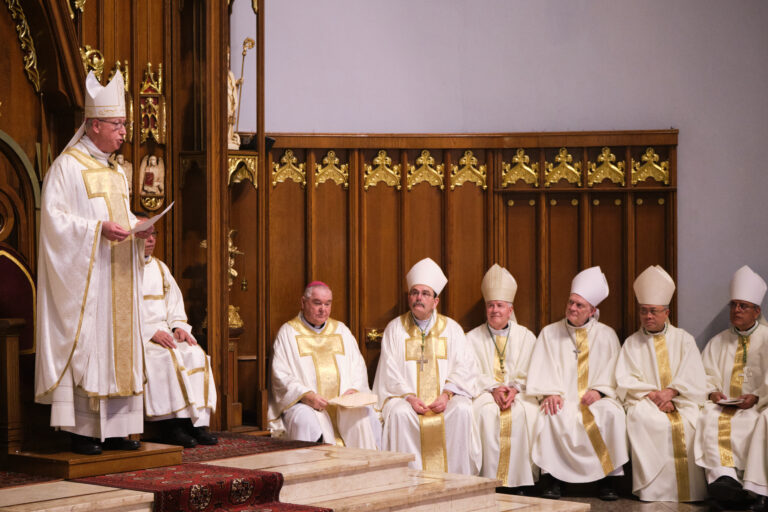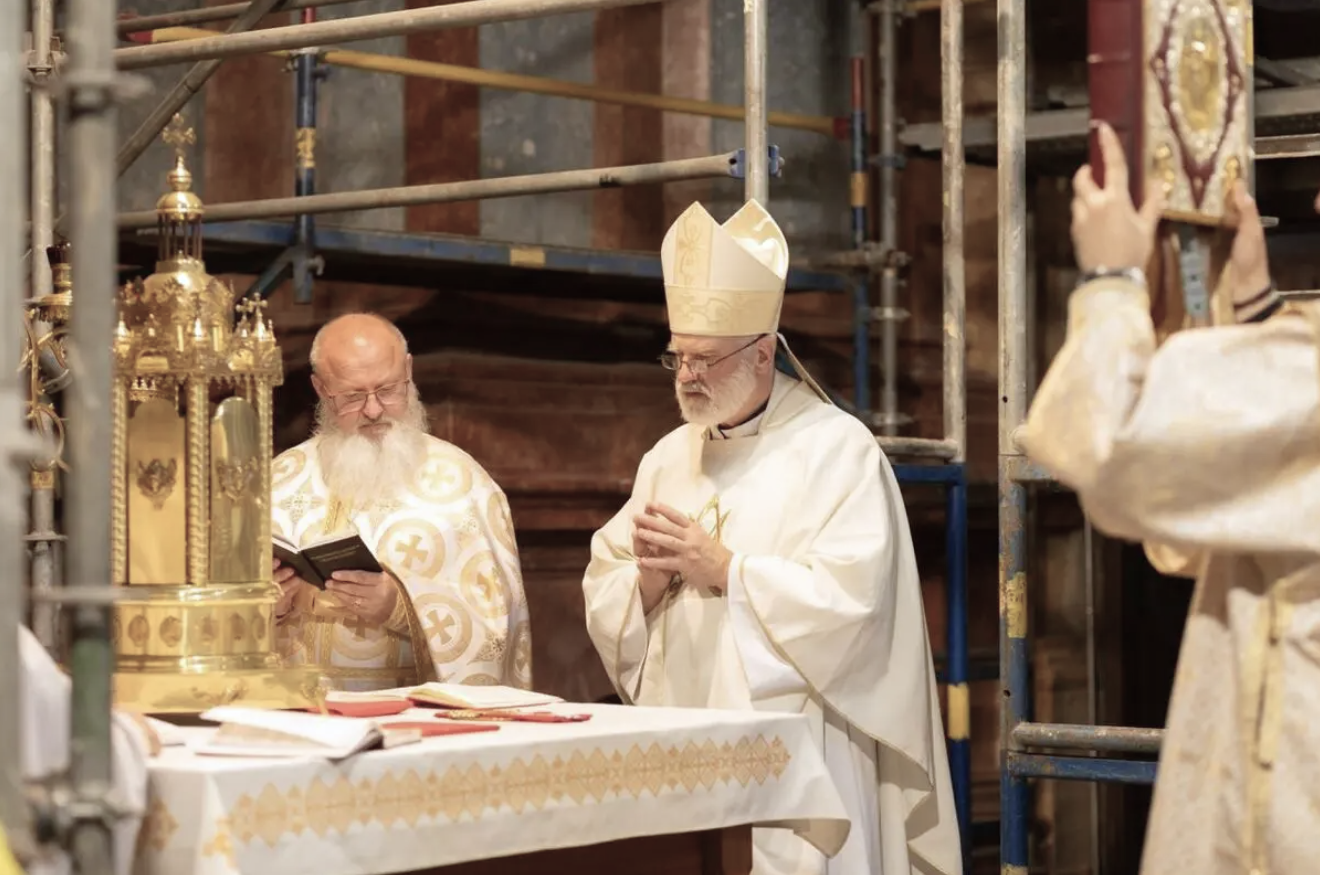

As Bishop Scott McCaig finds himself back home after leading last month’s spiritual retreat for military chaplains in Ukraine, the weight of what he witnessed during his week in Lviv still looms large in his mind.
“I’m still processing it, to be honest,” said Bishop McCaig, bishop of the Roman Catholic Military Ordinariate of Canada.
“On the Eastern equivalent of All Souls Day, I visited the graves of thousands upon thousands of fallen soldiers and prayed with their families — little children, people all grieving their fathers, children, brothers and sisters. The grief and senselessness of it all were heart-wrenching and made vivid how the destruction is so unnecessary. It was a trip that truly left its mark.
“These are people who just want to live in peace but have been illegally invaded by a foreign nation, regardless of the complexities of the history and the politics of the situation. Their houses are being bombed, and they are losing their children to a war they don’t want to fight.”
During a unique spiritual retreat from June 13 to 20, Bishop McCaig and Father Terry Cherwick, lieutenant-colonel of the 3rd Canadian Division, walked alongside Ukrainian chaplains who have endured over three years of front-line service since Russia’s full-scale invasion. They offered spiritual tools to navigate the “unseen warfare” of faith, hope and charity while serving a nation under siege.
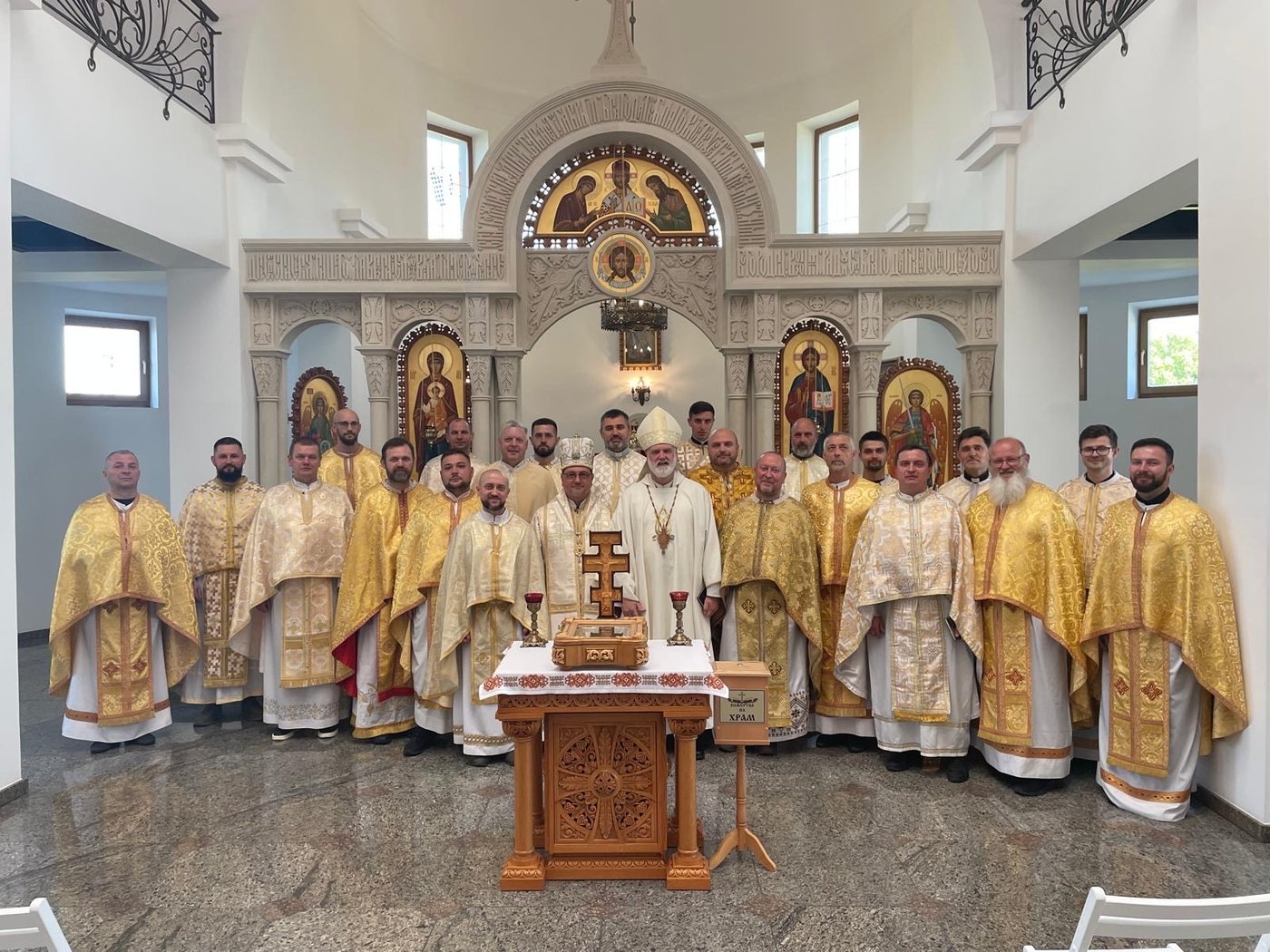
Supported by Bishop Wiesław Lechowicz, the military bishop of Poland, the week-long mission brought the two Canadians together with roughly 40 Ukrainian military chaplains, many of whom have been ministering in conditions marked by combat, trauma and loss.
Given the reality many of them face, Bishop McCaig addressed their exposure to the horrors of war and offered ways to combat growing despair while building resilience.
“I spoke to them about this battle of faith in dealing with all of the death and how they can recognize the Lord Jesus as the one who triumphs over death. The Book of Revelation, which we took as a theme, talks about Jesus as dead, but now alive, as the Alpha and the Omega, the living one, and him holding the keys of death and Hades,” said Bishop McCaig.
“We wanted them to truly grasp that there is something bigger going on here and to keep their eyes focused on the Lord, who is ultimately the one who has the last word. It is never death that has the last word, but our Lord Jesus. That reminder alone was felt deeply.”
Through a combination of preaching, conferences, Divine Liturgy, personal reflection and table sharing, Bishop McCaig and Father Cherwick explored the difference between optimism and theological hope, citing God’s presence even in a broken, sin-filled world.
Bishop McCaig also emphasized the importance of forgiveness and overcoming evil with good, drawing on St. Augustine’s notion that a Catholic soldier fights to secure a just and lasting peace.
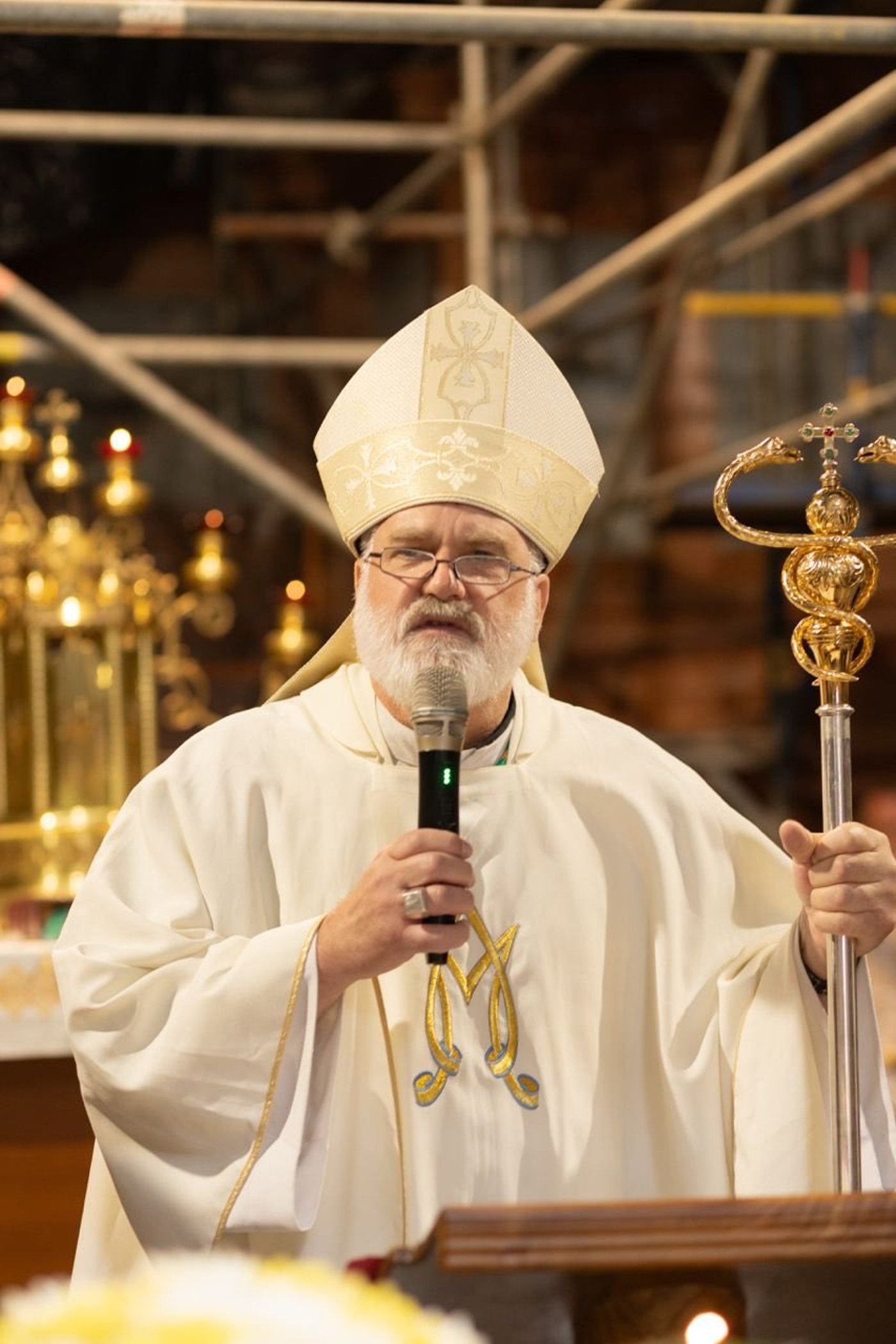
“The goal is always peace and charity, and so even when the temptation to hate is so strong, we have to continue to remind ourselves of this. One can justly defend the country while at the same time forgiving our enemies,” he said.
“Author G.K. Chesterton put it very succinctly when he said that a Christian soldier does not fight because they hate what is in front of them; they fight because they love what is behind them.”
Although the schedule left little time for rest — Bishop McCaig was woken on multiple occasions by air raid sirens signalling drone and missile attacks — he says the journey reinforced the critical role of Catholic chaplains and the resilience they draw from faith.
“Chaplains are trained to provide a sort of generic role of assistance and counselling, but the conviction was very strong that while that is good and important, it’s simply not enough. What these chaplains were telling us was that they want and need to reach into the deepest places of meaning and purpose in their lives, and that is something that can only come from a relationship with the living God,” he said.
“Encouraging words and optimism are great, but they’re not enough in those sorts of situations. The risen Christ, who is alive, has power over death and the ultimate last word on everything — that’s what we need to receive. That’s how we get the spiritual resiliency that is necessary in those situations.”
Now back in Canada, Bishop McCaig hopes his experience will serve as a reminder to Catholics here at home. With Canada absent from wartime conditions since its involvement in Afghanistan, he worries the country has forgotten the importance of spiritual resilience in military chaplaincy, especially the faith, hope and charity rooted in the Catholic tradition.
And while most people can’t stand in the trenches — literal or figurative — as military chaplains do, they can offer crucial support through prayer.
“Pope Francis and now Pope Leo XIV are calling the country the martyred Ukraine. They truly do need our prayers. There’s a lot of pressure for them to just surrender themselves to Russian political and cultural domination, which is a reality they’re facing. [They are] begging for prayers not to forget them, and we can remember them as we pray the Rosary,” said Bishop McCaig.
Your voice matters! Join the conversation by submitting a Letter to the Editor here.