
Catholics across the Archdiocese of Vancouver and beyond are joining the universal Church in welcoming the election of Cardinal Robert Francis Prevost, OSA, as Pope Leo XIV — the 267th successor of St. Peter.
Archbishop J. Michael Miller, CSB, was celebrating Mass at Sacred Heart Church in Ladner for pro-life pilgrims preparing to travel to the March for Life in Victoria when he heard the news Thursday morning.
Praising Pope Leo XIV’s missionary background, theological depth, and leadership, Archbishop Miller called the new Pope’s name choice — Leo — a likely signal of his commitment to Catholic social teaching.
He noted that he was celebrating Mass Sacred Heart, an Augustinian parish and the same religious community Pope Leo once led. “I believe this is a providential sign for our local Church,” he said, “and a reminder of how closely united we are, across continents and communities, in the Body of Christ.”
Mass was to be celebrated at Holy Rosary Cathedral Thursday at 5:10 p.m. in thanksgiving for the new Pope — one of the first Masses in Vancouver where the name “Leo, our Pope” would be included in the Eucharistic Prayer.
“While widely respected, Cardinal Prevost was not considered a frontrunner by most commentators,” the Archbishop said in a statement. “The Holy Spirit reminds us that God’s ways often exceed our expectations.”
Local clergy in Rome witness history
Father Richard Conlin, a priest of the Archdiocese of Vancouver currently studying in Rome, was in St. Peter’s Square when Pope Leo XIV appeared.
“Standing in St. Peter’s Square, I received this gift of peace with profound gratitude,” he said. “In a world aching for reconciliation and hope, these words were more than a greeting — they were a blessing, a mission, and a renewal.”
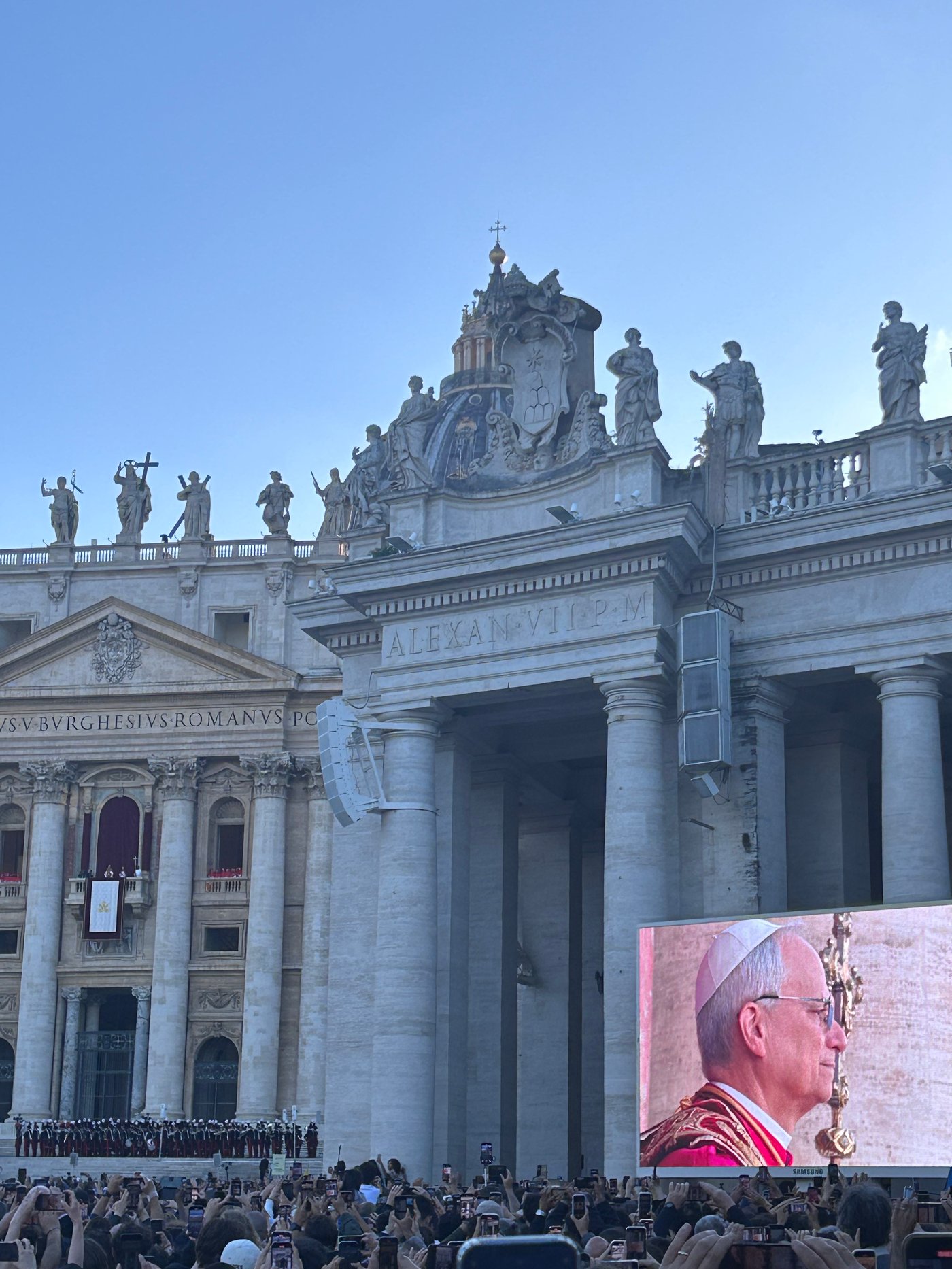
He said he was filled with joy and thanksgiving, calling the new Pope’s presence one of “gentle authority and fatherly presence.”
Father Guy Zidago, also in Rome, was attending a lecture at the Angelicum when word of the white smoke broke. “There was a delightful chaos in the air — computers, books, papers, and lecture notes flying into bags — as we raced across the streets toward St. Peter’s Square, hearts pounding with anticipation,” he recalled.
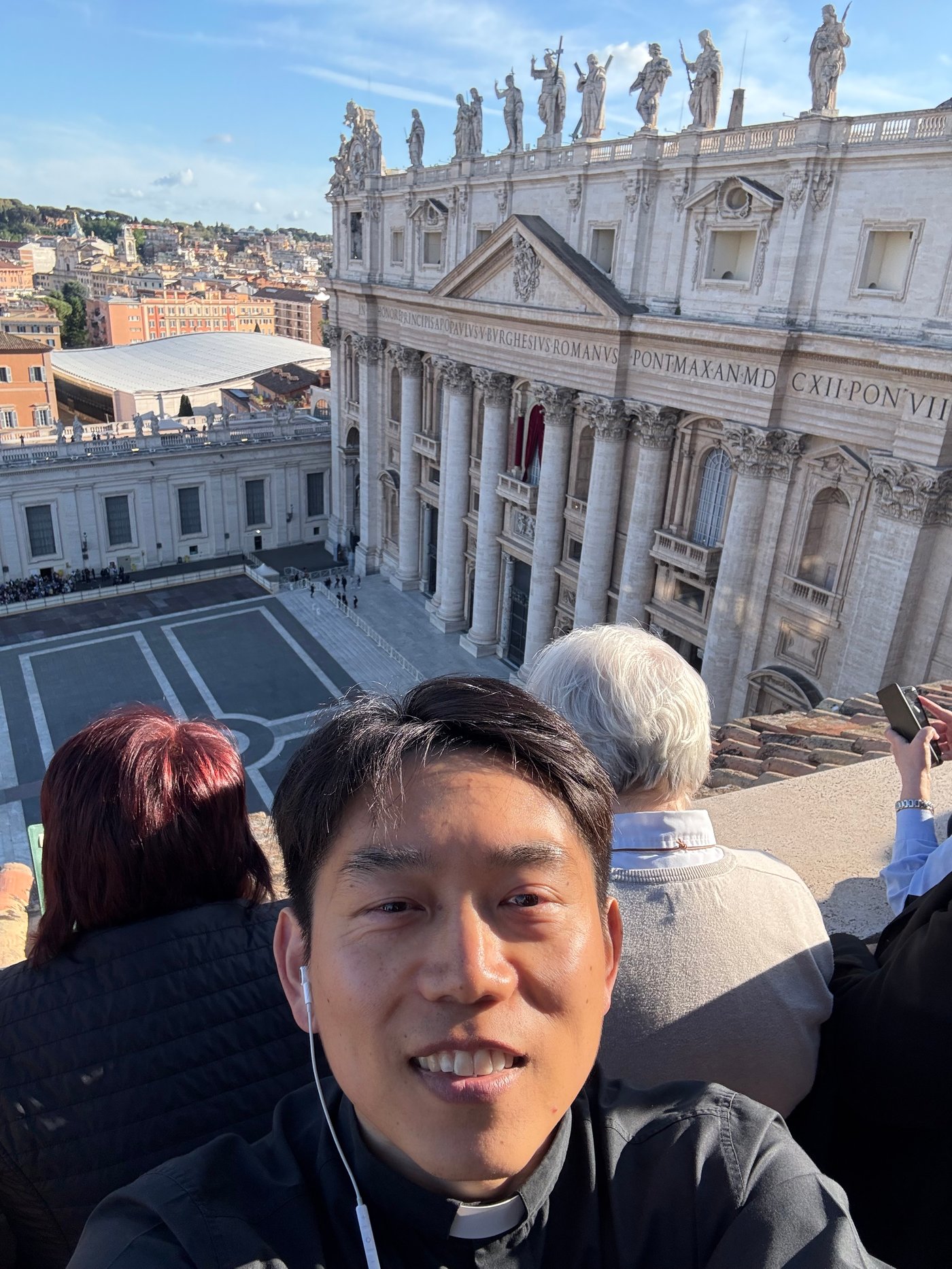
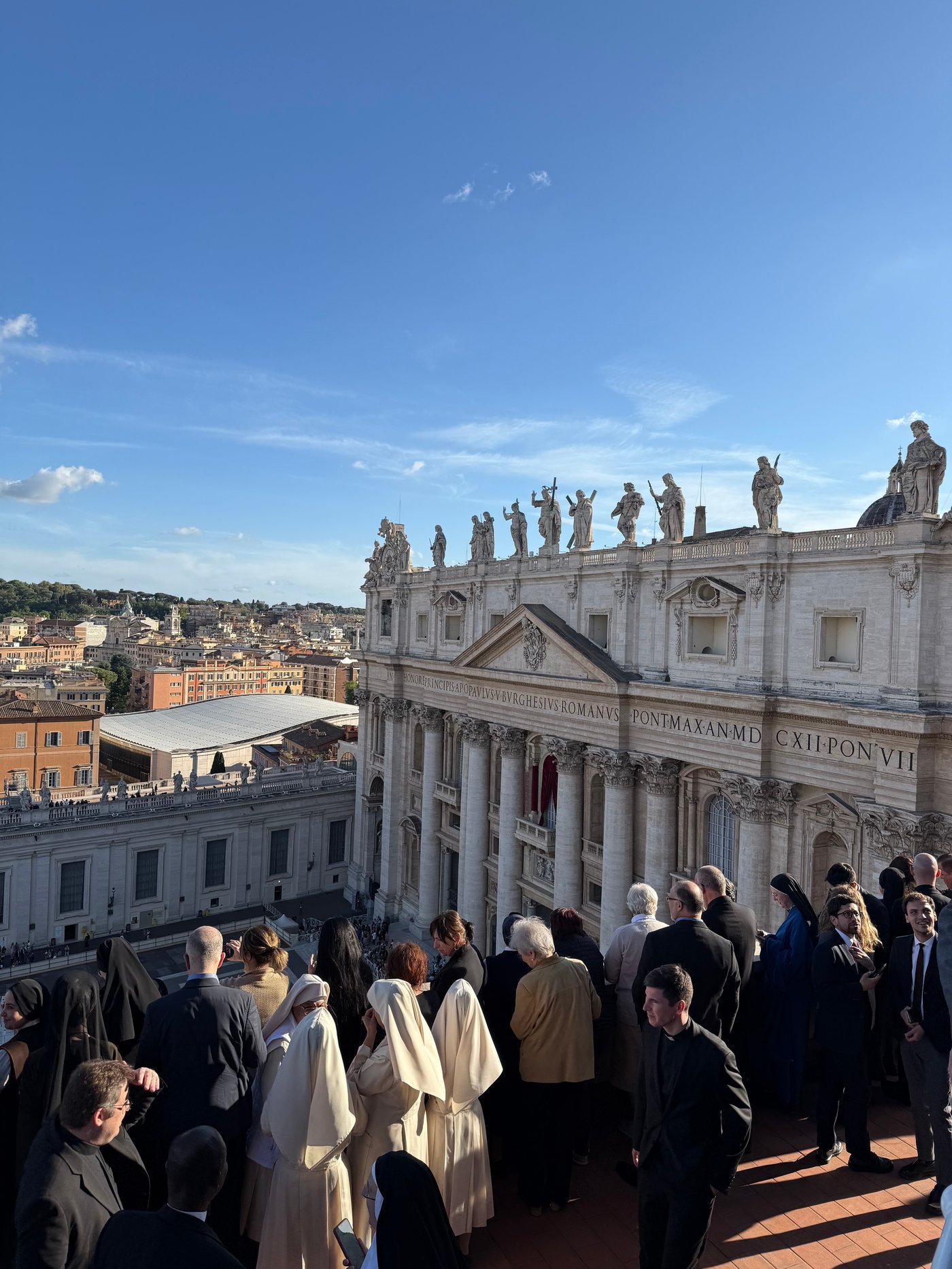
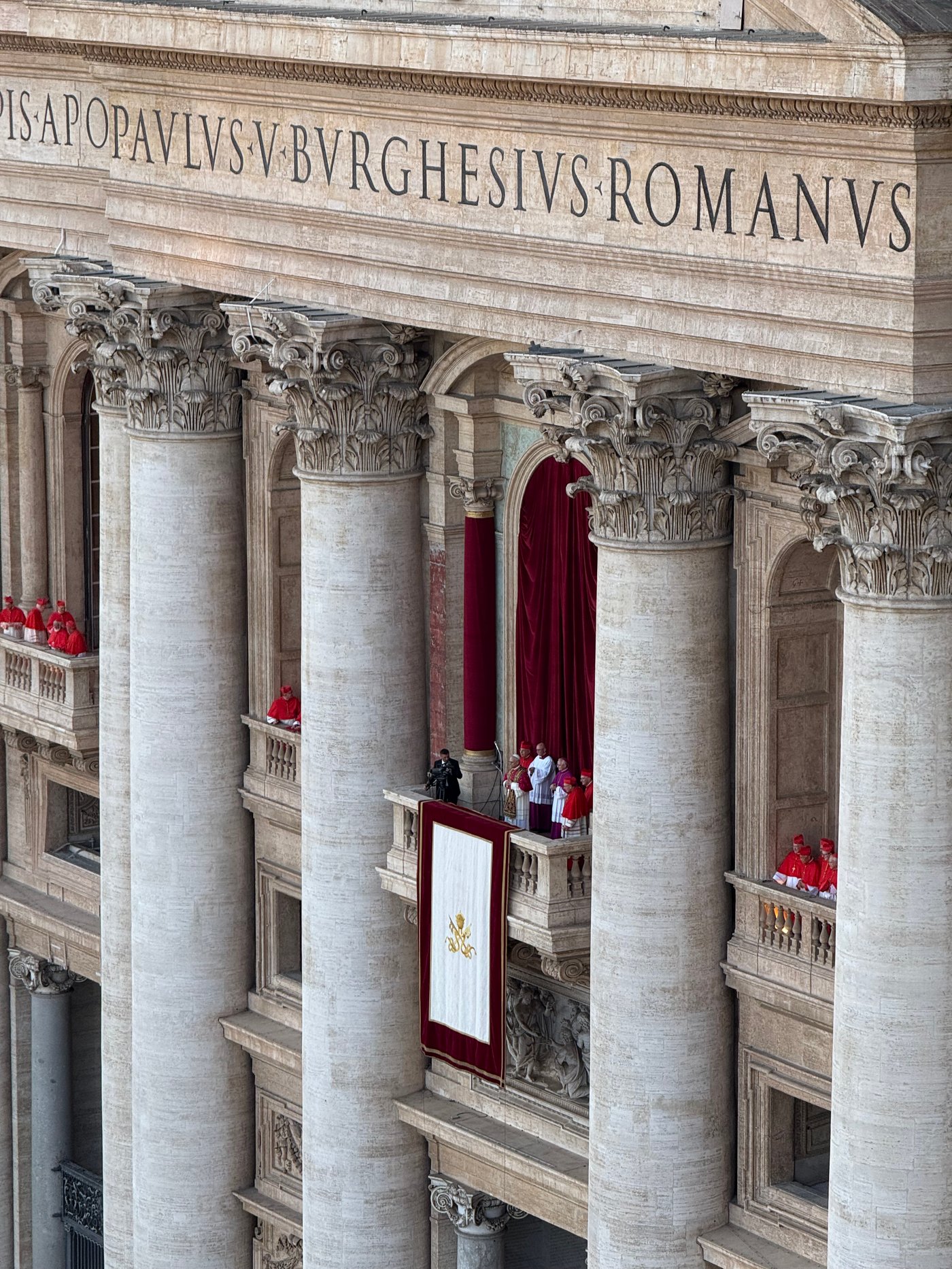
Reached in Rome for reaction, he added simply: “C’était fantastique…!!!” He described the scene as “an extraordinary sense of unity, like a heartbeat shared by a million souls.”
In his first address, Pope Leo XIV said, “The world needs Christ’s light. Humanity needs him to be the bridge so that God and his love can reach us.” Father Zidago called it “a promise of unity, a call to reconciliation, and a reminder that faith can indeed bind us together.”
Father Paul Goo, currently working at the Vatican, witnessed the white smoke from a terrace above his office in the Apostolic Palace.
“When the new Holy Father appeared, St. Peter’s Square erupted in joy,” he said. “Hollywood could not have choreographed a more striking moment.”
He said he was especially moved by the Pope’s peace greeting, his references to Pope Francis, and his attention to the people of Rome and Marian devotion. “Tonight, I celebrate the dawn of a new chapter in the life of the Holy Catholic Church — with a bottle of champagne shared among American priest friends and the joy of witnessing history unfold.”
From the Apostolic Palace: on witnessing history
“Witnessing the first moments of a new pontificate is an extraordinary experience for any Catholic — even more so when one happens to be under the same roof as the conclave.”
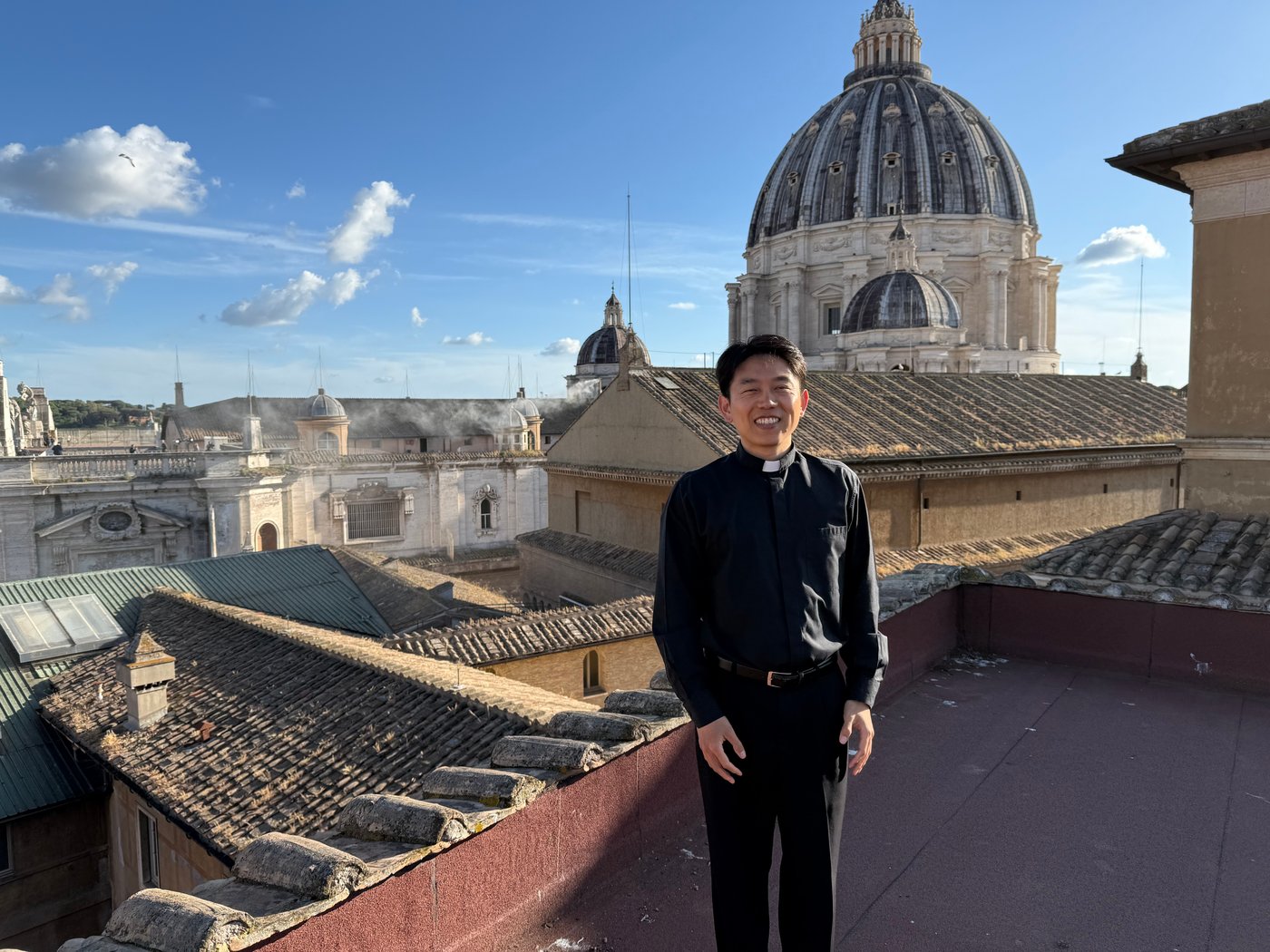
Father Paul Goo, a priest of the Archdiocese of Vancouver currently in the English-language section of the Vatican’s Secretariat of State, recalled the moment white smoke emerged from the Sistine Chapel chimney.
“When the white smoke appeared, I quickly made my way to the terrace just above my office in the Apostolic Palace. From there, I could see the chimney clearly and even catch the scent of the smoke rising into the Roman sky.”
As the bells of St. Peter’s Basilica began to ring, he joined colleagues on the main terrace, waiting in anticipation.
“The excitement grew steadily until the moment the red drapes on the balcony were drawn back.”
“When the new Holy Father, Pope Leo XIV, appeared, St. Peter’s Square erupted in joy. The scene was breathtaking — Hollywood could not have choreographed a more striking moment, with the setting sun casting a golden glow behind the Basilica.”
Father Goo was particularly moved by the Pope’s gestures and tone.
“His first words, invoking the peace of Christ, were particularly timely, coming just a day after the outbreak of yet another violent conflict in the world.”
“I was especially moved by his choice to wear the mozzetta — the traditional papal shoulder cape — and by his repeated expressions of gratitude to Pope Francis,” he said.
“Addressing the people of Rome as their proper Bishop, and recalling the Feast of Our Lady of Pompeii—so dear to Italian Catholics—seemed exactly the kind of thing a Pastor would do.”
Looking ahead, Father Goo reflected on the personal significance of the moment.
“How the new pontificate will shape the daily work of those of us who serve here remains to be seen. But for now, I simply give thanks.”
“Tonight, I celebrate the dawn of a new chapter in the life of the Holy Catholic Church — with a bottle of champagne shared among American priest friends and the joy of witnessing history unfold.”
Vancouver deacons reflect on their meeting with the future Pope
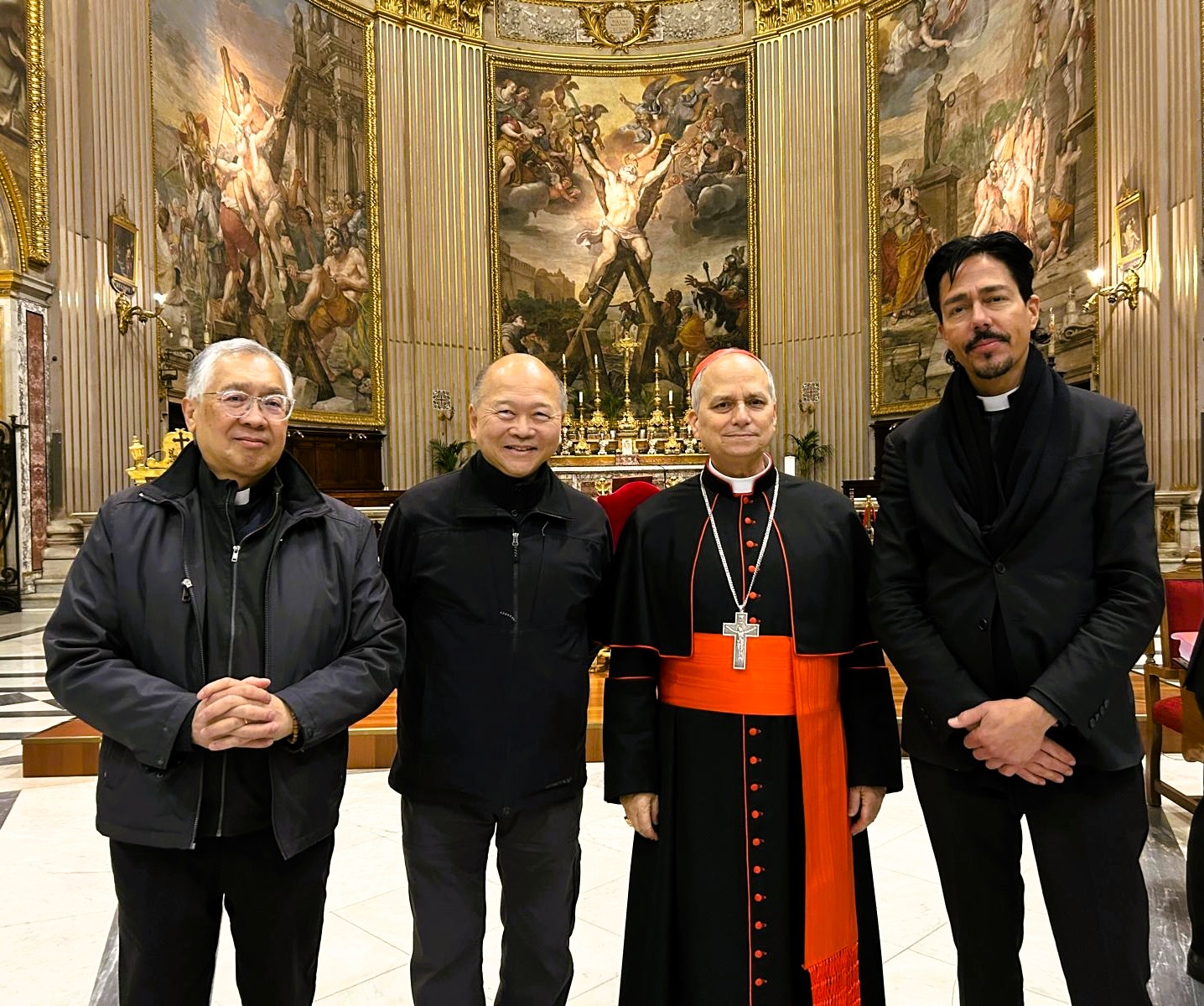
For three Vancouver permanent deacons, the news of Cardinal Prevost’s election as Pope hit close to home. Deacons Richard Chau, Wilfred Victoria, and Zak Santiago met Cardinal Prevost just weeks before his election, during the Jubilee of Deacons in Rome.
The three were the only Canadians attending, and Deacon Chau described the Feb. 21 catechesis session, which focused on the theme “Concrete signs of hope in the ministry of deacons,” as “enlightening and motivating.”
He said the Cardinal reminded them that deacons are not “half-priests” but are called to a primary ministry of service, administration, and charity — especially to the poor and sick. “He spoke with conviction from the heart,” said Deacon Chau, recalling his words about humility, marriage, and synodal formation. “He emphasized the danger of clericalism and the need for a Church that is welcoming, where people find solace. He encouraged us to be sentinels of God’s love, guiding people to the Lord with humble conviction.”
Deacon Victoria said the Cardinal made a strong impression. “He struck me as one very intense and one who connects to his audience,” he said. “When you talk to him, he is with you.”
Deacon Santiago also reflected on the encounter, calling it “wonderful to meet our new Pope in Rome,” where he had the chance to ask Cardinal Prevost a theological question about the evolving role of the diaconate. “I found the new Pope to be very thoughtful, wisely reflective, with a global and modern perspective,” he said. “It was quite an honour.”
Reflections from Rome: on meeting Pope Leo XIV
Deacon Richard Chau, Ecumenical and Interfaith Relations Officer for the Archdiocese of Vancouver, was at the Basilica of Sant’Andrea della Valle for the Jubilee of Deacons, led by Cardinal Robert Prevost — now Pope Leo XIV — and called the session “enlightening and motivating.”
Deacon Chau said the future Pope was “very approachable and a very good listener,” taking time to thoughtfully answer questions posed by deacons from around the world.
“Cardinal Prevost reminded us of the essence of the ministry of deacons,” said Deacon Chau, noting the Cardinal’s reference to St. Lawrence.
“He said deacons are not half-priests, not second-grade priests, not altar servers — but have a primary role of service, administration, and charity, especially to the poor and sick.”
The Cardinal also spoke about marriage and family life, encouraging deacons to embrace communion in their vocation and family life.
“He said God does not call us to division but communion, including authentic communion in marriage — the deacon and wife sharing their vocation in life-giving ways.”
He shared three guiding principles for diaconal ministry:
Be humble — “Your work is between you and God, not for others to see.”
Be a good husband and parent — serving in humility.
Be a sentinel — “Watch for others in need and see beyond, to recognize the Lord in those you serve.”
“He spoke with conviction from the heart,” said Chau. “He emphasized the priestly duty versus ministry of service and the danger of clericalism. He said roles are different but not above.”
Cardinal Prevost quoted St. Teresa, saying that the Church is “a heart inflamed by love to serve.” He also spoke of the movement of the Holy Spirit since Vatican II and the need for a Church where people find solace.
“The Church must be a welcoming Church,” Chau said. “He is a great promoter and believer in teamwork through synodal spiritual formation.”
Cardinal Prevost also emphasized shared baptism, walking with others, and lay witness in the world.
“He answered Deacon Zak’s question by saying that ‘a deacon can be yeast — an influence in the world on social justice.’”
“May the Spirit continue to lead the Church to bear witness for Christ for the glory of God.”
Broader Canadian reaction
At Corpus Christi and St. Mark’s Colleges, president Gerry Turcotte said Pope Leo XIV will likely champion many of Pope Francis’s priorities, especially in social justice and interfaith understanding.
“Although he is American-born, he has strong ties to Latin America,” said Turcotte. “How a Chicago-born, Augustinian, Latin American enters into these polarized and wounded times is the question everyone will be watching.”
Bishop Hector Vila of Whitehorse, who was born in Peru, said he felt “immense joy” to see a former missionary bishop from his motherland elected pope.
“Pope Leo XIV’s journey from the United States to Peru to Italy to the papacy is a testament to God’s boundless love and providence,” he said.
Bishop Mark Hagemoen of Saskatoon called the moment one of “joy and hope” and praised Pope Leo XIV’s work in governance, dialogue, and reform. “We unite in prayer and hope for the papal leadership of Pope Leo XIV, and the future of our Church in this Jubilee Year of Hope.”
From Prince George, Bishop Stephen Jensen noted the broader significance of the moment: “This is a reminder of the universality of the Church — a second Pope from the New World and a son of the United States. Perhaps, also, evidence that the young Churches of the western hemisphere have matured to take their place alongside the older Churches of Europe.”