
As the Catholic Church concludes the 2025 Jubilee Year of Hope, one remote Fraser Valley parish is looking back on a year that brought thousands of visitors to its doors, pilgrims who left with a sense that something unexpected and grace-filled is happening in Agassiz.
When St. Anthony of Padua was designated one of the Archdiocese of Vancouver’s three official pilgrimage sites for the Jubilee, the community was overjoyed.
“It was really an honour and a privilege to have been chosen as one of the pilgrimage sites,” pastor Father Dennis Flores told The B.C. Catholic. “We didn’t expect it to happen, but we’re so honoured.”
The year that followed became a time of encounter, history, and rediscovery. It also, perhaps fittingly for a Jubilee, opened a hopeful path toward a new future for the growing rural community.
The Jubilee Year began with a bang. Hundreds made the trip to Agassiz in January 2025 for the national tour of the relics of the Canadian martyrs and St. Kateri Tekakwitha.
“It was a big, big success, having the relics of the Canadian martyrs, St. Jean de Brebeuf and companions, and also St. Kateri Tekakwitha,” Father Flores recalled. “I think there were 1,200 people who came here to venerate the relics.”
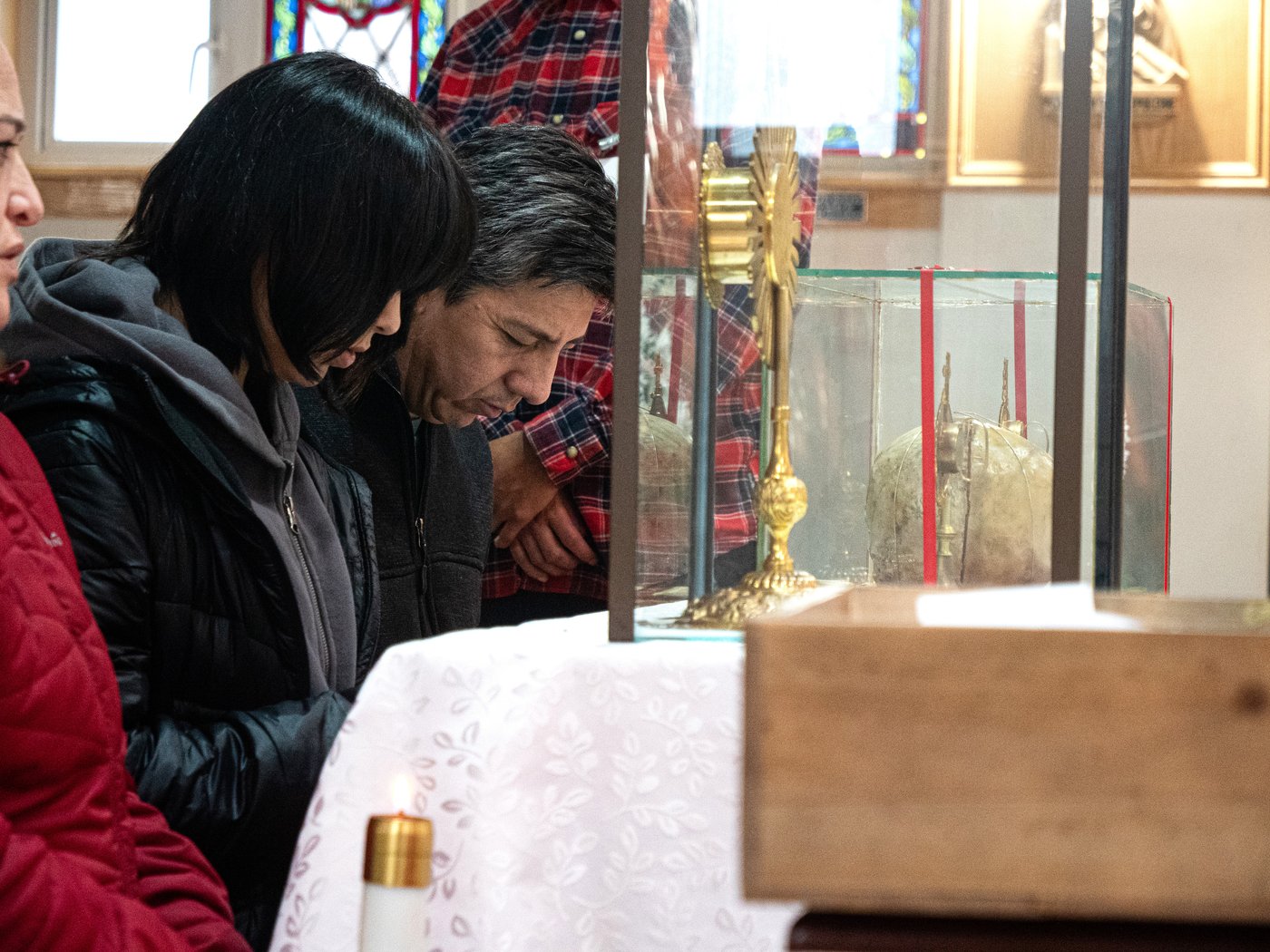
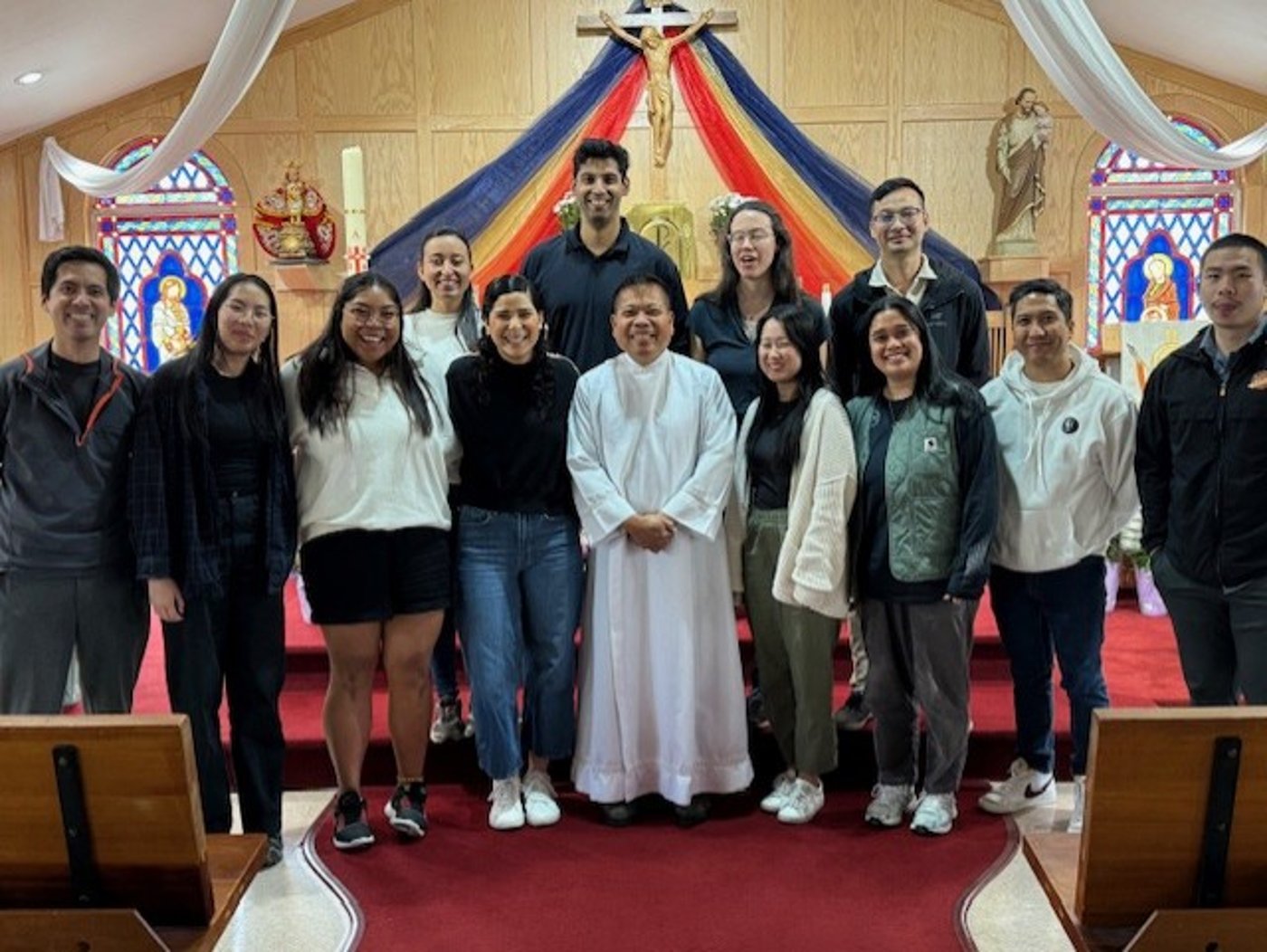
That moment set the tone. By November, the parish had welcomed 52 organized pilgrimage groups, totalling more than 3,000 people, not counting the many individuals and families who arrived without formal planning.
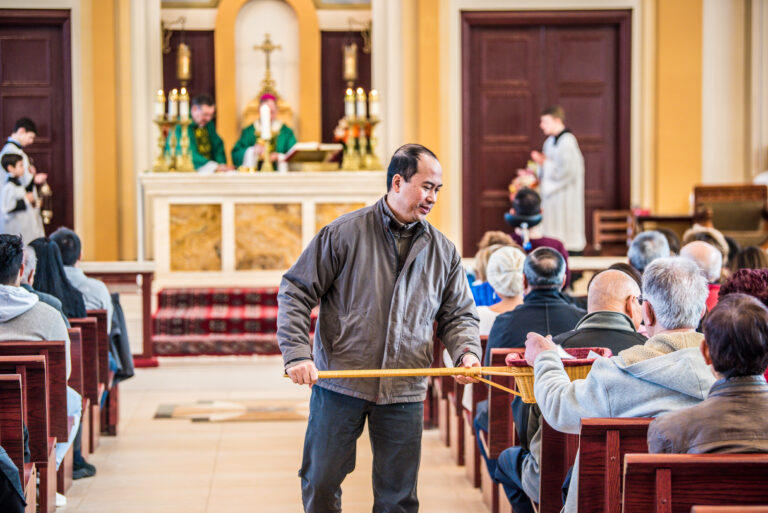
“Just this morning there were visitors, three pilgrims from White Rock,” Father Flores said. “The first thing they did was go to confession, all three of them, and then they stayed for Mass.”
Many visitors said they were excited to make the trip out to Agassiz after visiting the Vancouver pilgrimage churches, St. Jude and Holy Rosary Cathedral. “They wanted a place farther, because they hadn’t been to Agassiz.”
The Jubilee year not only brought pilgrims to the parish, it brought the parish on a journey back to its own beginnings.
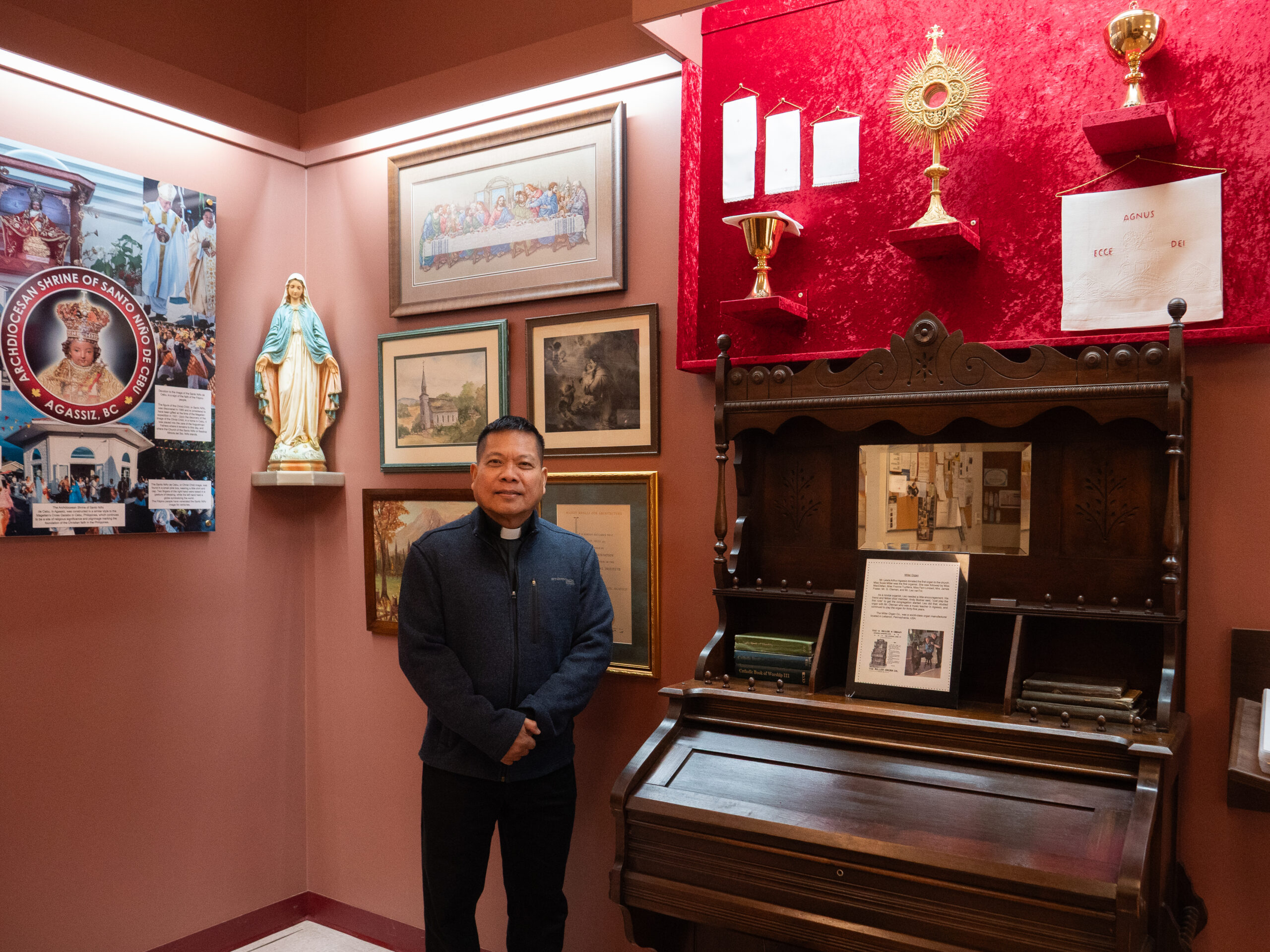
A major parish initiative for 2025 was the creation of a new historical exhibit, including a curated wall of artifacts, photographs, and archival data spanning more than a century.
For receptionist Beccie Bokenfohr, who has served the parish for 25 years, the project was a long time coming.
“When I first came here, it was just in a big pile in the old directory,” she said. “And I like history, so I collected it. And it’s been sitting in my office for how long? I’ve been moving it and keeping it.”
The Jubilee finally gave them a reason, and a deadline, to bring order to the story.
With the help of an army of parish volunteers, the history wall became not only a tribute to the past but a point of pride for the entire community.
“Everybody who sees this, they’re so happy and delighted,” Father Flores said. “We have all the information there from day one to the present.”
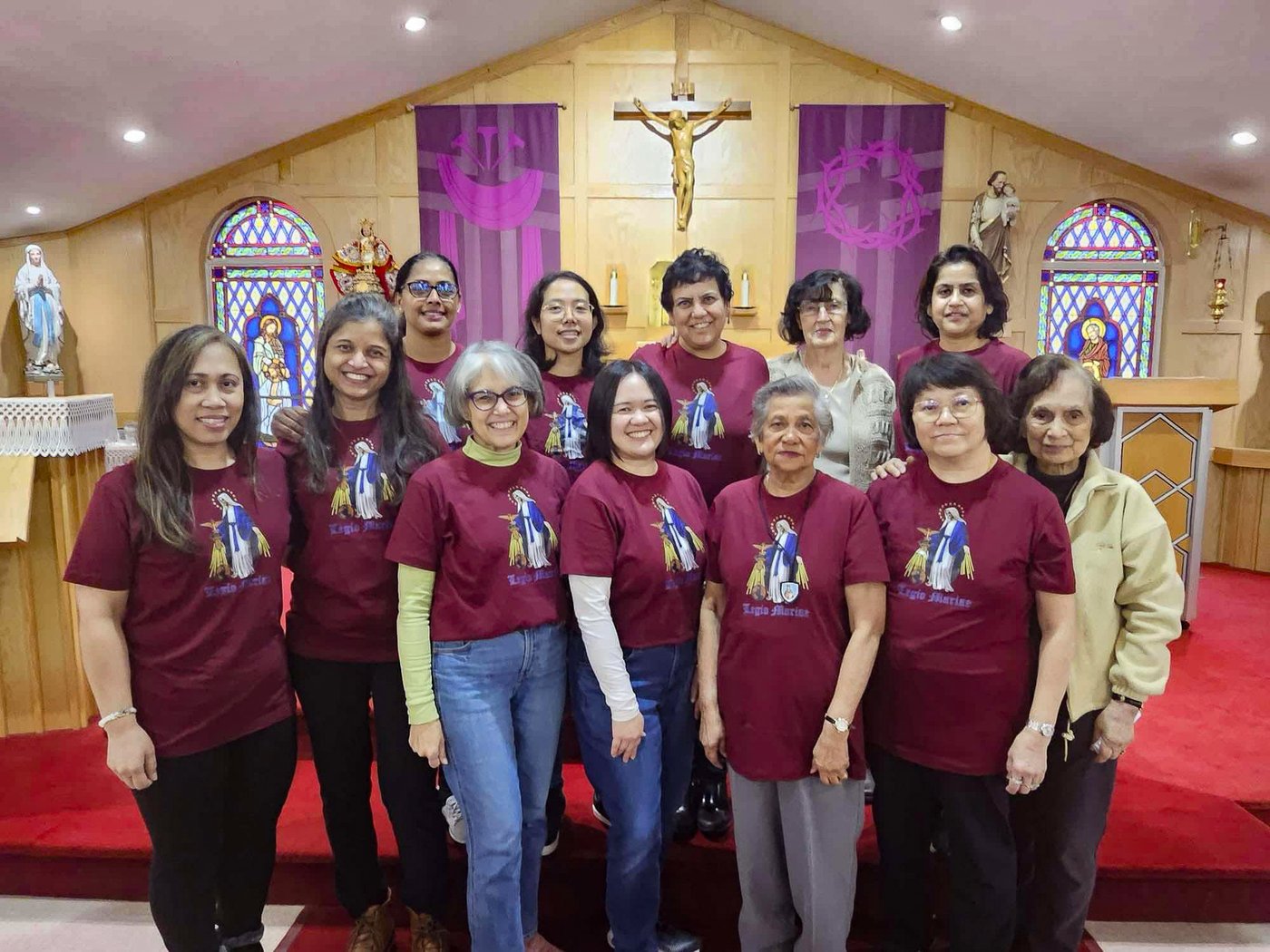
For such a small, remote parish, St. Anthony’s has undergone extraordinary growth in recent years. When Father Flores arrived in 2018, there were fewer than 150 families. “At this time, over 400 people, 250 registered families,” he said.
Some of this growth is due to rising housing costs that have pushed families farther east. But much of it, he believes, is tied to the Shrine of Santo Niño, dedicated in 2022 and a highlight for pilgrims visiting the parish.
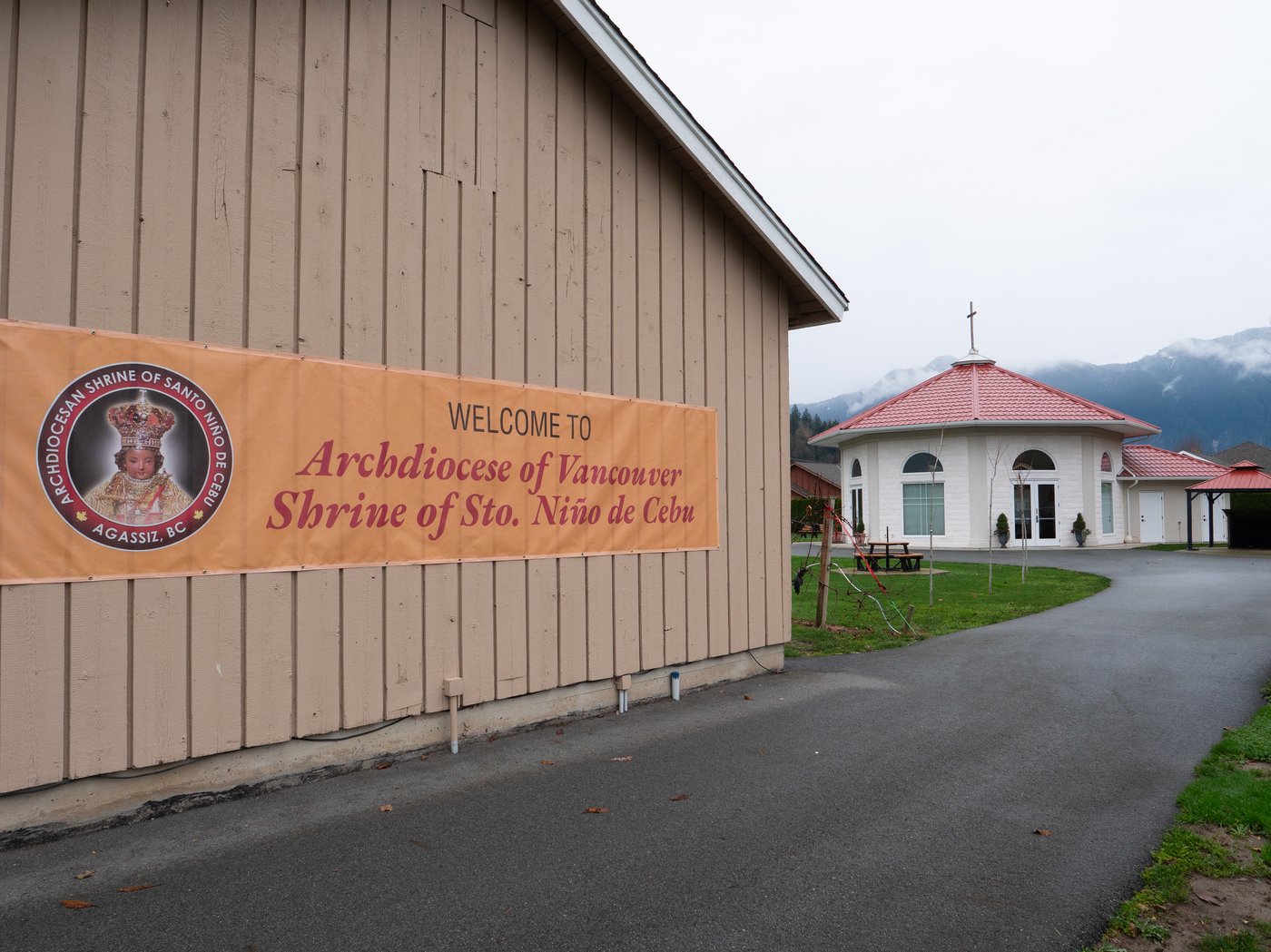
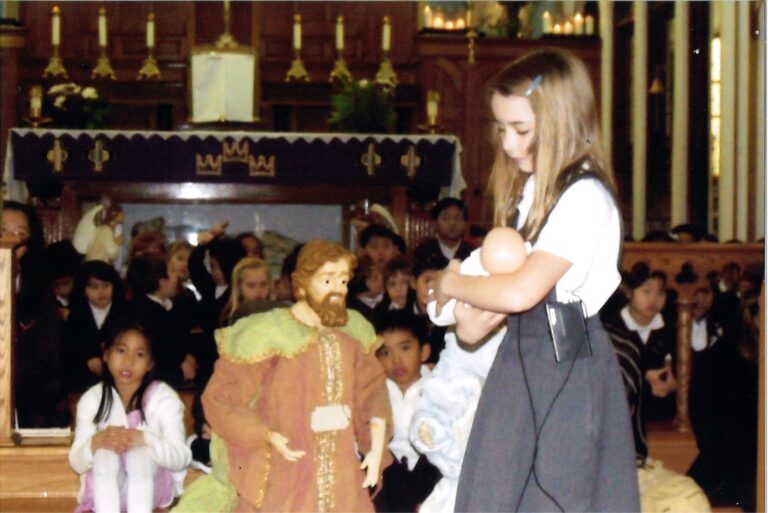
This welcome sign directs people to the Shrine of Santo Niño de Cebu. (Nicholas Elbers photo)
“After the dedication of that shrine, people didn’t stop coming here, every day,” he said. Visitors have come not only from across B.C. and Alberta but from the United States as well, including Washington, Oregon, and California.
The parish grounds now include a landscaped garden, new paving, and a peaceful atmosphere that visitors remark upon immediately. “There was one lady who told us that when you enter the parish, it’s like you are at peace already,” Father Flores said.
With the end of the Jubilee Year, the parish is looking beyond commemoration to the future. The sudden increase in parishioners, the surge of pilgrims, and the growing number of ministries have made one reality unavoidable. St. Anthony’s is outgrowing its space.
The Jubilee’s energy and welcoming nature, Father Flores believes, has become a kind of catalyst, offering the parish an opportunity to build for the future, which might even include a new church building.
What is clear is that the Jubilee year did more than mark a moment in the Church’s calendar. It made St. Anthony’s newly visible, not only to pilgrims, but to itself.
“Being with the people, knowing their aspirations, their dreams, that helped us make our own parish vision,” Father Flores said. The parish council, he added, helped craft the mission statement that now guides their forward planning. He is deeply moved by what he has witnessed in the past year. “I never thought this would happen. It’s just an inspiration, one day at a time.”
St. Anthony of Padua: A Century of Faith
St. Anthony of Padua Parish has roots stretching back to 1912, when the Oblates established a mission church in the eastern Fraser Valley. At that time, priests stationed in Chilliwack travelled by horse and boat to serve the growing Catholic community scattered across Agassiz and nearby Seabird Island.
The land for the church was donated by Lewis Arthur Agassiz, the town’s namesake, out of consideration for his housekeeper, Susie Miller. Although Agassiz was not Catholic, he did not want her making the long journey to Chilliwack for Mass.
In addition to the land, Agassiz also donated the church’s first organ, now a centrepiece of the parish’s history exhibit.
“This was the first church,” said longtime receptionist Beccie Bokenfohr, gesturing to a sepia photograph preserved on the newly built history wall.
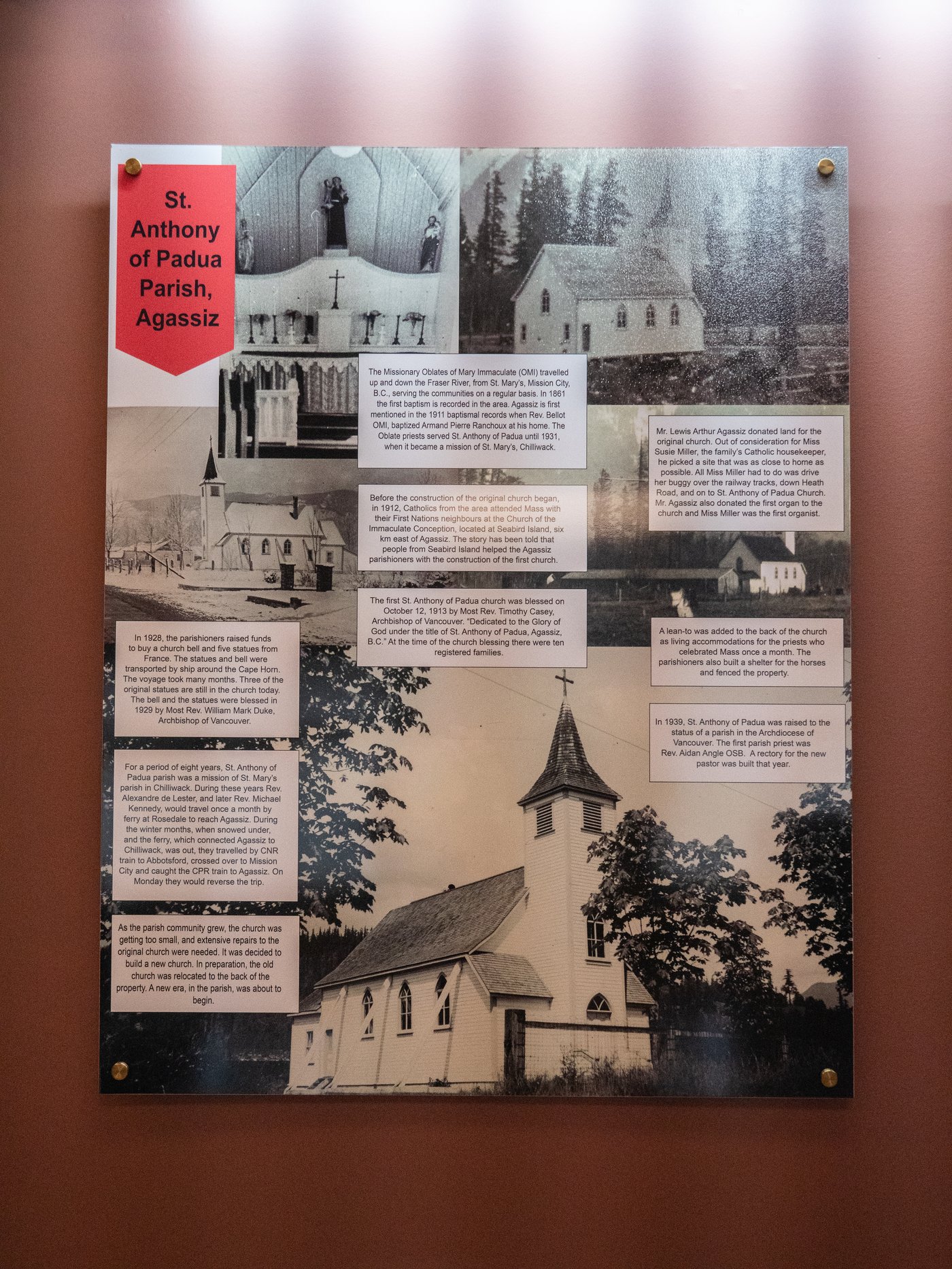
The parish’s First Nations connections were strong from the beginning, she noted, with the priest arriving once a month to a simple wooden structure surrounded by fields and horses. The Seabird Island nation was instrumental in helping to build it, Bokenfohr said.
Many of the parish’s most cherished devotional items arrived in dramatic fashion. “The statues came originally from France, and they’re all still in the sanctuary,” Bokenfohr said. They were shipped around Cape Horn, the final voyage before the Panama Canal opened, then transported up the Fraser River by boat. “We’ve often talked about what that must have taken, with no email, just letters, to organize it, pay for it, ship it.”
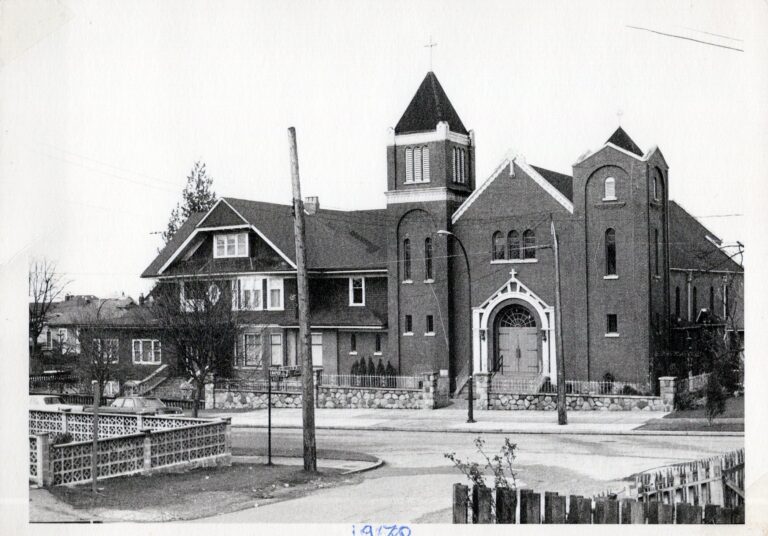
The first church was torn down in 1954 and replaced by a new building that won prizes for its architecture by the firm of Gardiner, Thornton, Gathe, and Associates. It received a Massey Awards silver medal in 1955 and an excellence of design award in 1956 by the Church Property Administration.
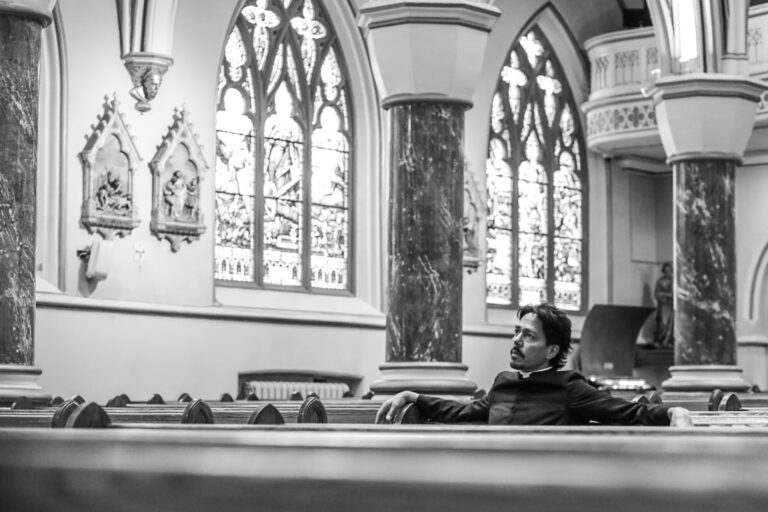
Over the decades, the parish added stained glass windows, renovated its rectory, and uncovered hidden treasures, including a 1600s print found behind a furnace and religious items that later surfaced through the parish thrift store.
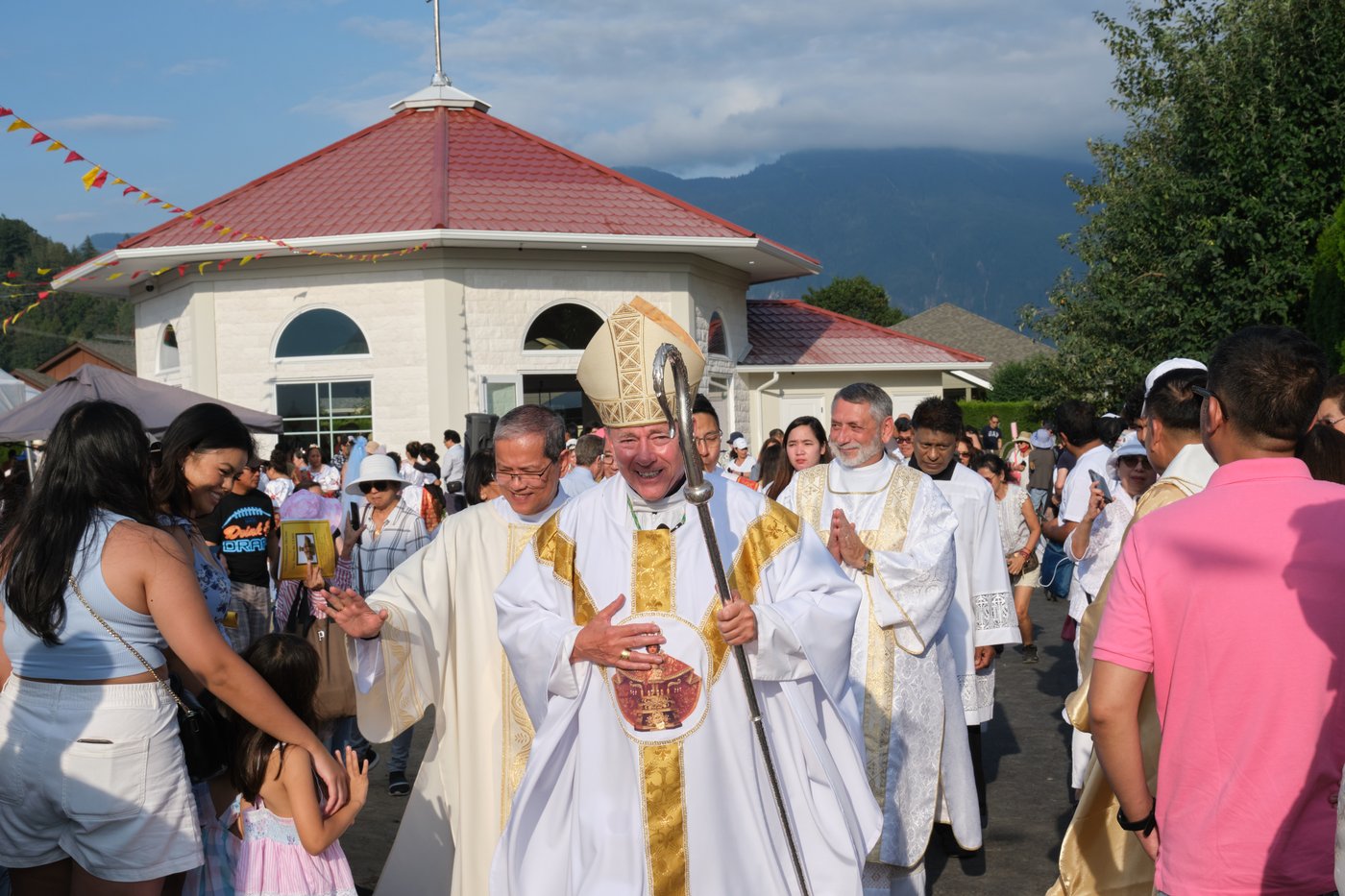
In 2022, the Shrine of Santo Niño was dedicated by Archbishop J. Michael Miller, a development that has blessed the parish many times over.
Your voice matters! Join the conversation by submitting a Letter to the Editor here.