Prelate urges Canada’s bishops to refute false euthanasia arguments
By Deborah Gyapong
CORNWALL, Ont. (CCN)
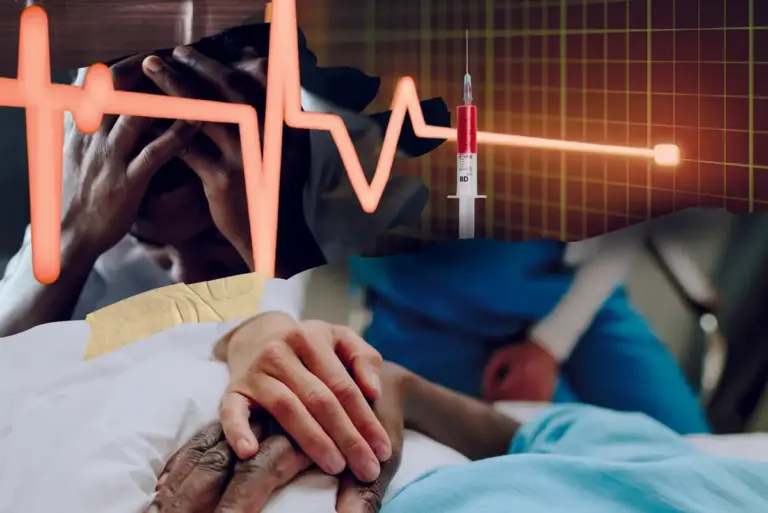
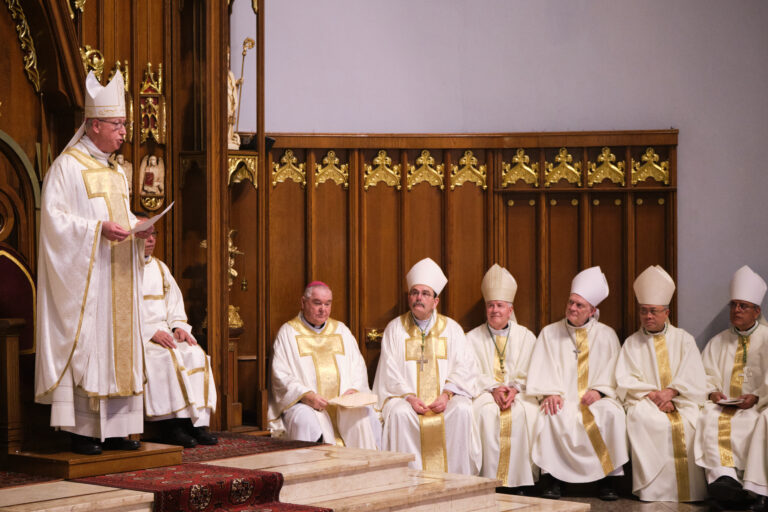
Dutch Cardinal Willem Eijk, Archbishop of Utrecht, says Canadian bishops should continue to refute false arguments for euthanasia and advance true palliative care.
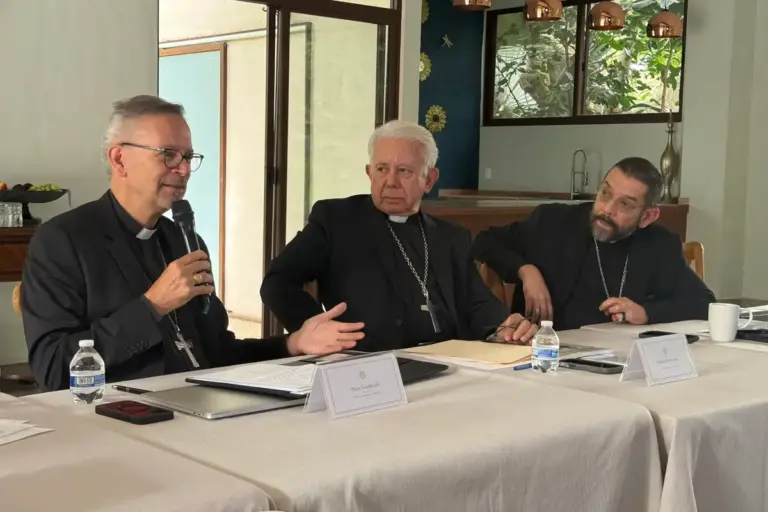
He also told the Canadian Conference of Catholic Bishops’ annual plenary Sept. 26 the slippery slope is real based on the experience of the Netherlands, the first country to allow euthanasia and assisted suicide. “That is something experience teaches us,” he said in an interview.
Cardinal Eijk however, sees Canada moving much faster in a less time. “We had 50 years. You’ve only had one year. It’s not too easy to put the feet on the brakes.”
When the debate started in Holland, euthanasia and assisted suicide was only contemplated for those with severe physical illness at end of life, he said. Afterwards, it was expanded to those with psychiatric disorders, then to those with dementia who had made an advanced directives.
Then “the last barrier was crossed to create the medical possibility of ending the life of persons without their request, in the case of handicapped newborns,” he said.
He also urged Canadians to stand firm in protecting conscience rights of healthcare workers and medical professionals. In the Netherlands, only 15 per cent of physicians refuse to participate in euthanasia and he does not know of any difficulties any has faced because of refusing to comply.
However, if a physician is looking for work and he or she is asked ‘Are you willing to comply?’ in “Some cases it creates difficulties,” he said. But bishops can be effective if they raise their voices.
“I think it’s very important to watch,” he said. “Some years ago there was a proposal at the level of the Council of Europe and the idea was to prevent doctors from having moral objections against abortion: they might lose their job.”
“Many of us protested against that as bishops of the European Union, by being clear, by expressing our views, by approaching politicians and making them aware of the risks,” he said. Ultimately, the “doctors obtained their possibility to apply for conscientious objection against abortion.”
Palliative care has been shown to reduce the number of requests for euthanasia in Holland, he told the bishops. However, in Holland, palliative care “has only just been discovered lately,” and was “only introduced in the second half of the 1990s” when the minister of health, a left-wing politician, introduced a bill regarding palliative care in parliament.
Until then, palliative care had only existed in some small centres run by Christians, he said. The minister who introduced the bill said good palliative care should include requests for euthanasia as well.
Cardinal Eijk noted Canada had many excellent palliative care centres. Canada’s bishops should “take care not to introduce euthanasia into these centres.”
The debate in Holland began in 1969 after a booklet described a number of extreme cases of suffering made even worse by extraordinary medical interventions. In one case, a man with multiple problems, including cancer, underwent the amputation of both his legs and his pelvis. The photograph of the patient after the operation, showing the head, the two arms and the torso that ends at the thorax, “shocks the reader,” he said.
The booklet illustrated these extreme cases as “victims of medical power,” of new technologies to keep people alive who formerly had incurable diseases, the cardinal said.
The booklet’s author argued that with the huge medical advances, a change in medical ethics was needed. He argued the absolute principle to preserve life, no matter what the circumstances, applied as long as “the physician cannot accomplish much.”
The booklet argued that life should only be prolonged “where and when it is meaningful,” and advocated the terminating of lives of these “victims of medical, technical power.”
Cardinal Eijk said the booklet argued that stopping medical treatment and thus allowing death to take its course was no different morally from a physician giving a lethal injection to end a patient’s life because you had the same results. He rejected that argument and stressed “no new ethics is needed.”
“Apart from the radical cultural changes in society, the immediate cause of the euthanasia discussion was the problem of medical overtreatment in the 1950s and 60s,” Cardinal Eijk said. “Medical doctors had to learn how to deal with their new technical power.”
Resistance against legalizing assisted suicide and euthanasia was fierce at first, he said. Cardinal Eijk had been trained as a doctor, and 40 years ago, in the late 70s, half the staff where he worked were in favour of voluntary euthanasia. A small proportion were in favour of involuntary euthanasia: without the consent of the patient. Younger doctors, however, were more willing to perform these acts.
“I refused to perform or to cooperate,” he said. In the years to come, however, the number of adherents would grow, and in the last decade they became a big majority.
Cardinal Eijk said at the basis of the law, a physician is acting in conflict of duties. On one hand, he is called to save and protect life; on the other hand, he should relieve suffering that in some cases can only be done by ending the life of the patients.
“Ending suffering by ending life is not eliminating suffering but eliminating the suffering person,” the cardinal stressed. “The termination of life, both as a request of the patient with or without his request, is an intrinsically evil act. It’s never allowed to perform it under any circumstances, even at the request of the patient.”
A duty of a physician is not to take away all suffering but to reduce suffering to bearable proportions, he said. “The way to achieve this is palliative care.”